







On our production line, I've watched great wood fire starter marketing copy sell out a private label 1 — and generic copy bury an identical product BSCI social compliance 2. The difference is brand story alignment.
To align wood fire starter marketing copy with your outdoor grilling brand story, anchor every claim in your brand's core promise, pair one functional proof point with one emotional payoff, highlight certifications and natural materials, and keep voice, imagery, and packaging consistent across all channels.
That sounds simple. In practice, most brands get it wrong in the same four places. This article walks through each one, using what I've learned supplying fire-starting goods to buyers in over 30 countries.
What certifications should I highlight to build trust with grilling customers?
A German distributor once rejected our first quotation without discussing price. His only question was whether we held SGS 3 test reports. That conversation reshaped how I think about trust.
Highlight third-party safety and quality certifications such as CE marking, SGS or Intertek test reports, and ISO 9001 manufacturing standards. Add BSCI social compliance for retail buyers, and clearly state chemical-free, natural-material composition on packaging to reassure grilling customers.

Certifications do two jobs in your marketing copy. First, they satisfy retail gatekeepers. Second, they become consumer-facing trust signals. Most brands only use them for the first job and waste the second.
In our experience exporting to the US, Germany, and the UK, buyers treat compliance as a hard requirement, not a nice-to-have. But your end customer at the grill sees things differently. They do not read test reports. They read shorthand. "Chemical-free firelighting" and "no harmful additives" mean more to a backyard cook than an ISO number. So your copy should translate certifications into plain benefits.
Which certification matters to which audience?
| Certification | Who cares | How to phrase it in copy |
|---|---|---|
| CE marking 4 | EU retailers and importers | "Certified safe for European markets" |
| SGS / Intertek reports | Retail sourcing teams, large chains | "Independently lab-tested for safety" |
| ISO 9001 5 | Purchasing managers | "Consistent quality, batch after batch" |
| BSCI | Big-box and ethical retailers | "Responsibly produced" |
| Natural composition claims | End consumers | "100% natural wood wool, chemical-free" |
Turning compliance into consumer language
Do not print a wall of logos and stop there. Connect each mark to the eating experience. For a grilling audience, the strongest bridge is flavor. Copy like "lab-tested and odorless, so your smoke stays pure" links a certificate to the live-fire cooking 6 experience the customer actually bought your grill brand for. When we help clients design private-label boxes, we place one compliance statement near the composition text — for example, "50% wood fiber, 50% paraffin" or an odorless vegetable wax formula — so the safety story and the ingredient story reinforce each other. Trust is built where regulation meets flavor.
How can I match wood fire starter messaging to my brand's outdoor lifestyle image?
There's a trade-off I weigh on every OEM project: lean rustic and artisanal, or clean and modern? The wrong choice quietly breaks a client's brand story.
Match your fire starter messaging to your lifestyle image by auditing your brand's existing voice, values, and imagery, then writing copy that frames ignition as part of the same ritual — backyard gathering, campfire cooking, or pitmaster craft — using consistent tone, photography, and sensory language.
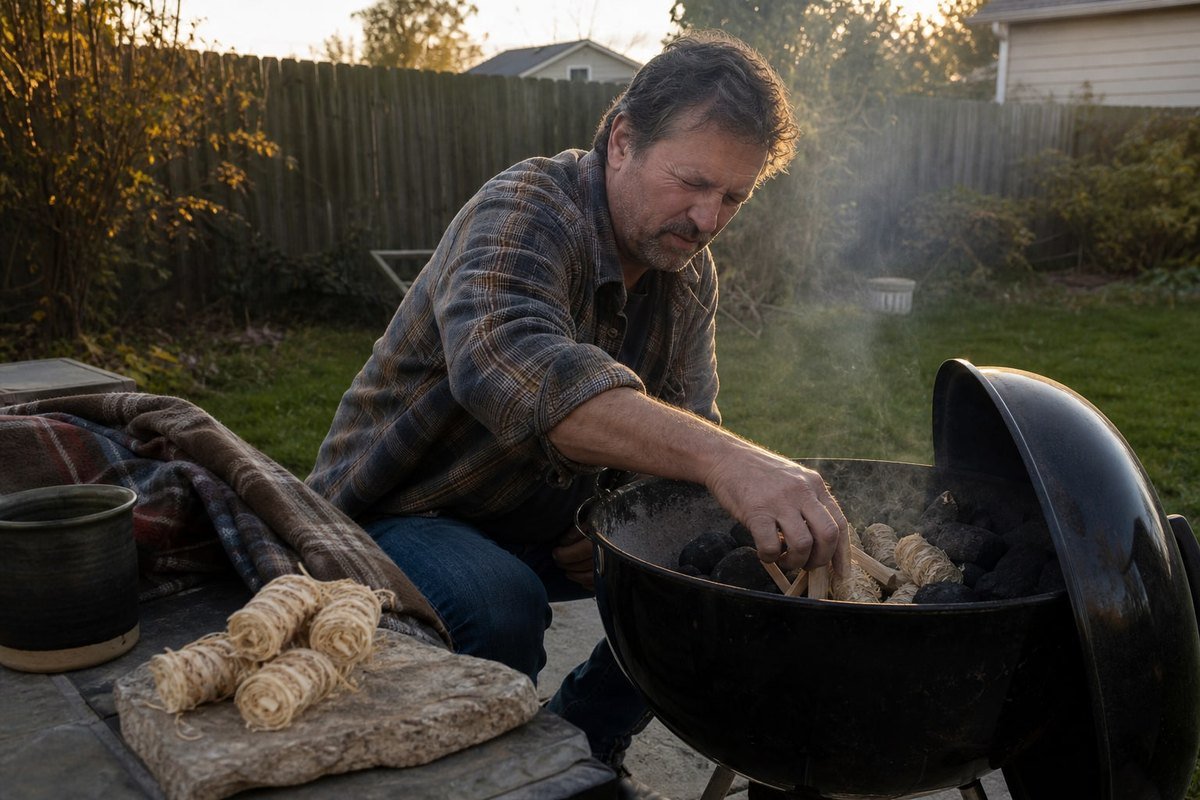
The strongest grilling brands sell a way of life, not hardware. Traeger built its identity around outdoor culture, community, and approachable wood-fired cooking. Your fire starter is a small product, but it must carry that same big promise. A starter that sounds industrial next to a brand that sounds like a Sunday cookout creates friction the customer feels, even if they cannot name it.
Start with a brand story audit
Before writing a single line, I ask clients three questions. What does your customer feel when they light the grill? What words already appear on your grills, rubs, and apparel? What imagery do you never use? The answers become guardrails. A pitmaster brand identity calls for craft language — "the fire deserves the same care as the food." An eco-conscious grilling lifestyle brand calls for material honesty — natural wood wool, sustainable charcoal ignition, nothing artificial.
Map lifestyle positioning to copy tone
| Brand lifestyle image | Copy tone | Example message territory |
|---|---|---|
| Rugged, outdoorsy, camping | Direct, weather-tested | "Weather-resistant fire starters that light when the wind won't quit" |
| Family backyard entertaining | Warm, social | "The spark that gets everyone around the grill sooner" |
| Craft barbecue / pitmaster | Reverent, detailed | "Your fire is the first ingredient — start it right" |
| Eco-modern | Clean, transparent | "Natural fibers and odorless vegetable wax, nothing else" |
One more lesson from our factory floor: imagery must match the words. When a client's copy says "handcrafted ritual" but the product photo shows a plastic-wrapped brick under studio lighting, the story collapses. Style the starter inside the scene — stone slab, kettle grill, glowing embers — so the customer can visualize the whole experience, not an isolated object.
What product benefits matter most when marketing fire starters to grilling audiences?
A US buyer once told me his customers' number one complaint was never the grill. It was damp wood and slow starts ruining Saturday afternoons.
Grilling audiences care most about fast, reliable ignition in real conditions, chemical-free composition that protects smoke flavor, clean and mess-free handling, and consistent burn time. Lead with the frustration solved, then connect it to flavor integrity and more time cooking with guests.

Not every benefit deserves equal billing. The trick is ranking them by what your specific audience feels most acutely, then proving each claim instead of asserting it. "Fast and easy" is wallpaper. "Lights damp charcoal in wind" is a promise someone remembers.
Rank benefits by audience segment
- Reliability under real conditions. Wind, humidity, and cheap lighters defeat most kindling. Positioning your product as the fail-safe answer to damp wood builds brand reliability that transfers to your whole line. Weather-resistant fire starters earn repeat purchases because they remove the single worst moment in grilling.
- Flavor integrity. Serious cooks worry that petroleum smells taint the smoke profile. Copy that frames the starter as "the first ingredient" — clean-burning, odorless, made from natural wood wool — speaks directly to the live-fire cooking experience they are chasing.
- Clean, simple handling. Wax-dipped wood rolls do not crumble, leak, or leave residue on hands. For family entertainers, "no mess, no fuss" matters more than burn chemistry.
- Sensory and ritual payoff. The crackle, the glow, the first curl of aroma. Sensory-rich copy triggers anticipation for the meal. It also marks the ignition moment as a psychological switch: work ends, leisure begins.
- Sustainability. Premium kindling alternatives made from renewable fibers appeal to eco-conscious buyers and justify a higher shelf price than paraffin cubes or lighter fluid.
In our development work, we tune burn time and roll density so these claims survive testing. A benefit you cannot demonstrate on video is a liability, because grilling audiences share failures loudly.
How do I keep packaging and copy consistent across my private-label product line?
Early in our private-label work, a client shipped three SKUs with three different taglines. Retail feedback was blunt: shoppers didn't realize the products were related.
Keep packaging and copy consistent by creating a one-page brand messaging guide covering tagline, tone, key claims, and visual rules, then applying it to every SKU, box, display, warning label, landing page, and ad. Audit each new asset against the guide before printing.

Consistency is not decoration. It is compounding recognition. Every touchpoint — retail box, e-commerce listing, social clip, in-store display — either deposits into your brand story or withdraws from it. Because we handle full OEM/ODM packaging, from custom boxes to warning labels and barcodes, I see where consistency breaks down. It is almost never the logo. It is the copy hierarchy and the claims.
Build a messaging system, not just a design file
A practical guide needs only one page. Define your master tagline, your two lead claims, your composition statement, and three words you never use. Then lock the order. If "chemical-free" leads on the 24-piece box, it must lead on the 100-piece box too. Authentic brand storytelling 7 depends on repetition; shoppers need to meet the same story five times before it sticks.
Consistency checkpoints across channels
| Touchpoint | What must stay identical | What can flex |
|---|---|---|
| Retail box | Tagline, lead claim, composition text, colors | Piece count, box size |
| E-commerce listing | Voice, hero benefit, certification language | Longer proof detail, FAQ |
| Video and social ads | Tone, imagery style, ritual framing | Format, length, hook |
| In-store display | Lifestyle scene, brand colors | Seasonal occasion angle |
| Warning labels | Compliance wording per market | Language localization |
Test the copy, don't guess
Consistency does not mean frozen. Run A/B tests on ad hooks — convenience versus flavor versus community — and let the winner update your guide. What must never change is the underlying story: less friction, better fire, more time around the grill. Occasion-based variants like "quick weeknight sear" and "low-and-slow Sunday" can coexist happily under one consistent voice, because they are the same promise told at two speeds.
Conclusion
Weak fire starter copy wastes shelf space and dilutes your brand. Strong copy turns a small product into your story's opening line — ignition, ritual, flavor, and gathering, told consistently everywhere.
Footnotes
1. Defines private-label manufacturing model central to the article's OEM/ODM discussion. ↩︎
2. Official source describing the BSCI ethical audit program mentioned for retail buyers. ↩︎
3. Official page for the testing and certification body referenced for lab verification. ↩︎
4. Explains the EU compliance mark referenced as a key certification for grilling products. ↩︎
5. Authoritative Wikipedia entry for the ISO 9001 quality management standard. ↩︎
6. Background reference on barbecue and live-fire cooking culture discussed throughout the article. ↩︎
7. Academic (.edu) source explaining the role of narrative and storytelling in brand marketing. ↩︎



Join the Conversation