






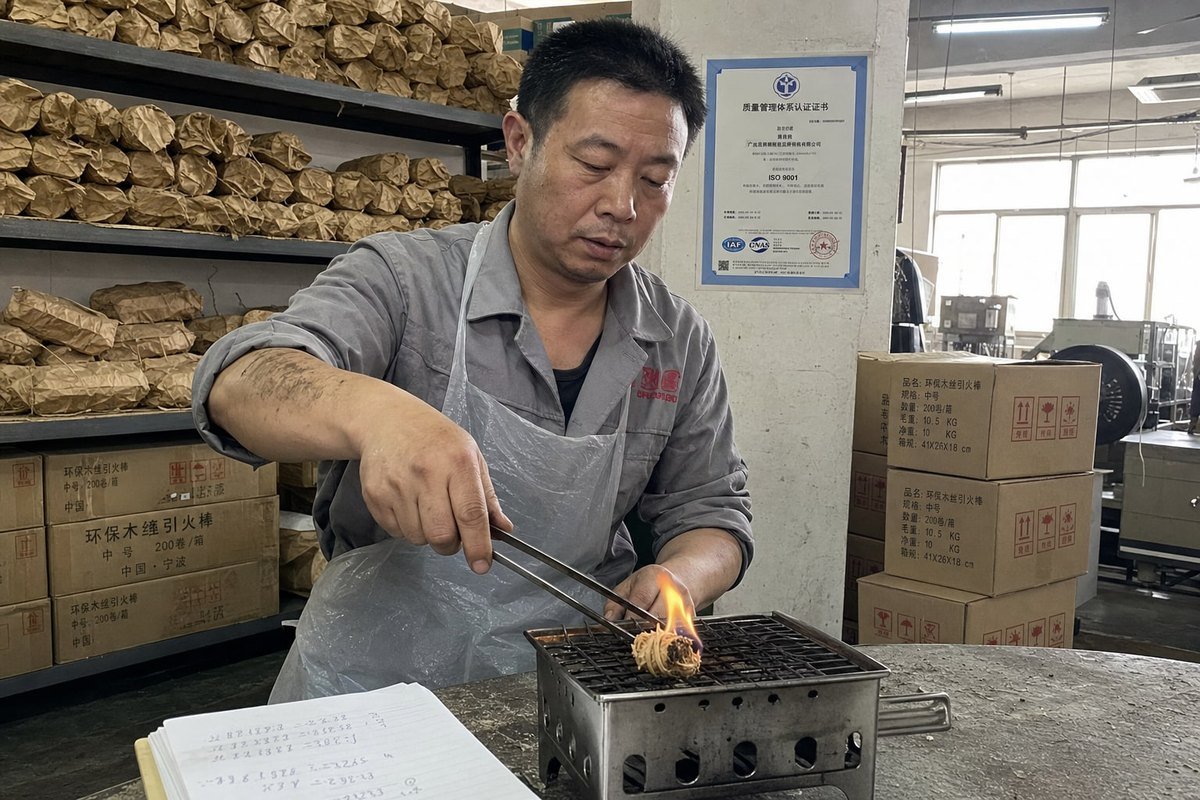
Nothing kills a grilling brand faster than food that tastes like fuel ISO 9001 quality management certification 1. On our production line, verifying wood fire starters for flavor safety is the first thing every buyer asks about.
To verify wood fire starters won't affect grilled food flavor, confirm they contain only untreated natural wood wool and food-grade paraffin wax or vegetable wax, request SGS or Intertek combustion residue test reports, check for petroleum-free accelerants, and ensure the starter burns off completely before cooking begins.
That is the short answer. The full picture involves lab testing, ingredient screening, supplier documentation, and certifications BSCI social compliance audits 2. I will walk you through each step below, in the order a real sourcing process follows.
What lab or third-party tests confirm my wood fire starters are free of harmful residues?
A few years back, a German distributor rejected an entire container from another supplier over one failed emissions report. That story shaped how our factory approaches third-party testing today.
Third-party labs like SGS and Intertek can confirm harmful-residue absence through combustion emission analysis, heavy metal screening (RoHS-style), PAH testing, VOC off-gassing tests, and ash residue chemical analysis. Request batch-specific reports, not generic certificates, to verify the wood fire starters you actually receive.
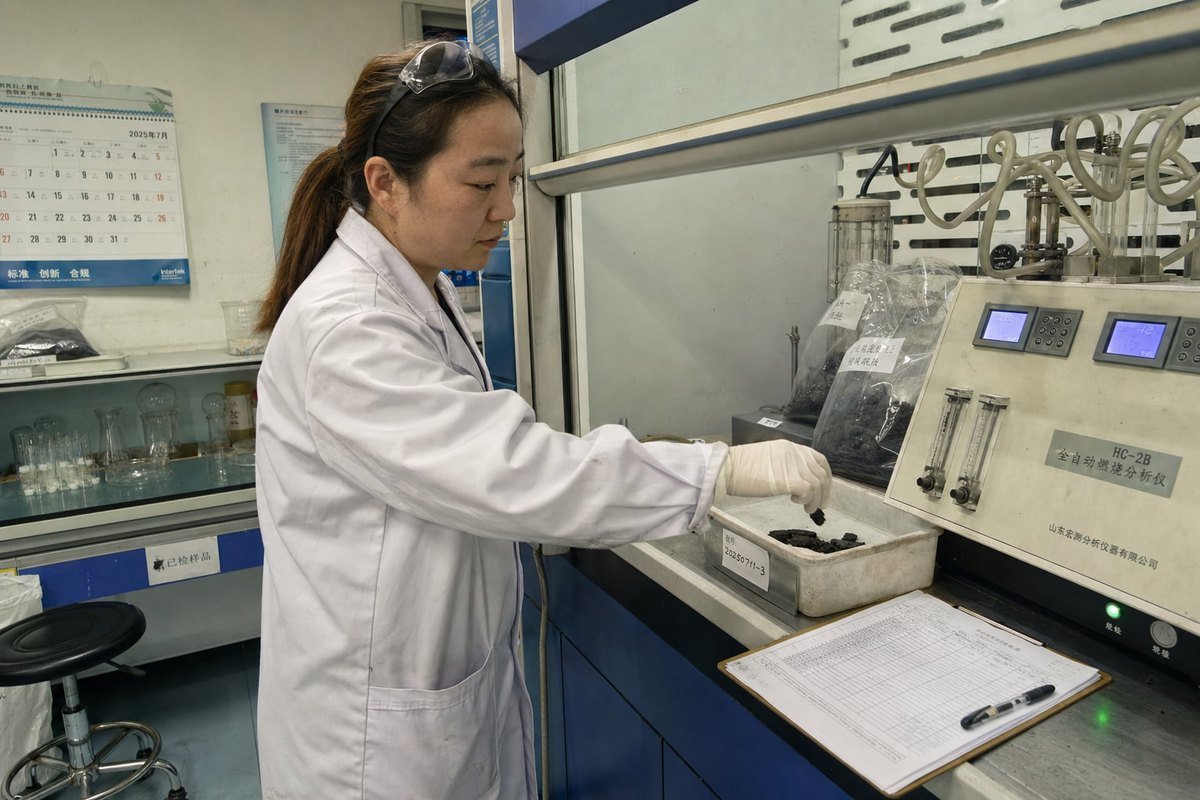
Testing is where marketing claims either survive or collapse. A label can say "odorless fire starters" or "will not flavor food," but only a lab report proves it. In our experience exporting to 30+ countries, buyers in the US and EU increasingly treat these reports as a hard gate, not a nice-to-have.
The tests that actually matter
Not all tests are equally relevant to flavor safety. Here is how I rank them when a buyer asks what to request.
| Test Type | What It Detects | Why It Matters for Flavor |
|---|---|---|
| Combustion emission analysis | Gases and particulates released during burning | Directly shows what your food's environment contains |
| PAH screening | Polycyclic aromatic hydrocarbons | PAHs cause acrid, chemical aftertaste and health risk |
| Heavy metal analysis | Lead, cadmium, mercury in wax or wood | Treated or recycled wood can carry contaminants |
| VOC off-gassing | Volatile organic compounds from binders | VOCs create the "lighter fluid" taste on food |
| Ash residue analysis | Chemical composition of leftover ash | Residue on coals can transfer to grates and food |
How to read a report critically
First, check the sample source. A report on a competitor's product or a two-year-old batch proves nothing about your shipment. Ask for reports tied to a production lot number. Second, check the test standard cited. SGS and Intertek reports reference specific methods, and a vague "passed safety test" line without a method number is a red flag. Third, look at detection limits. "Not detected" at a loose threshold is weaker than "not detected" at a tight one.
We keep our SGS and Intertek reports on file for exactly this reason. When a purchasing manager asks, we send the actual document within a day, because we know that response speed itself signals whether a factory has something to hide.
Which raw materials and additives should I avoid when sourcing food-safe fire starters?
Our QC team once traced a faint solvent smell in a competitor's sample to a chemical glue binder. That single sniff explained months of customer complaints the brand had received.
Avoid fire starters containing lighter fluid, petroleum distillates, kerosene, chemical glues, synthetic accelerants, treated or painted wood, and unrefined industrial wax. Choose untreated natural wood wool, fatwood sticks, compressed sawdust, and food-grade paraffin wax, beeswax, or non-GMO vegetable wax instead.
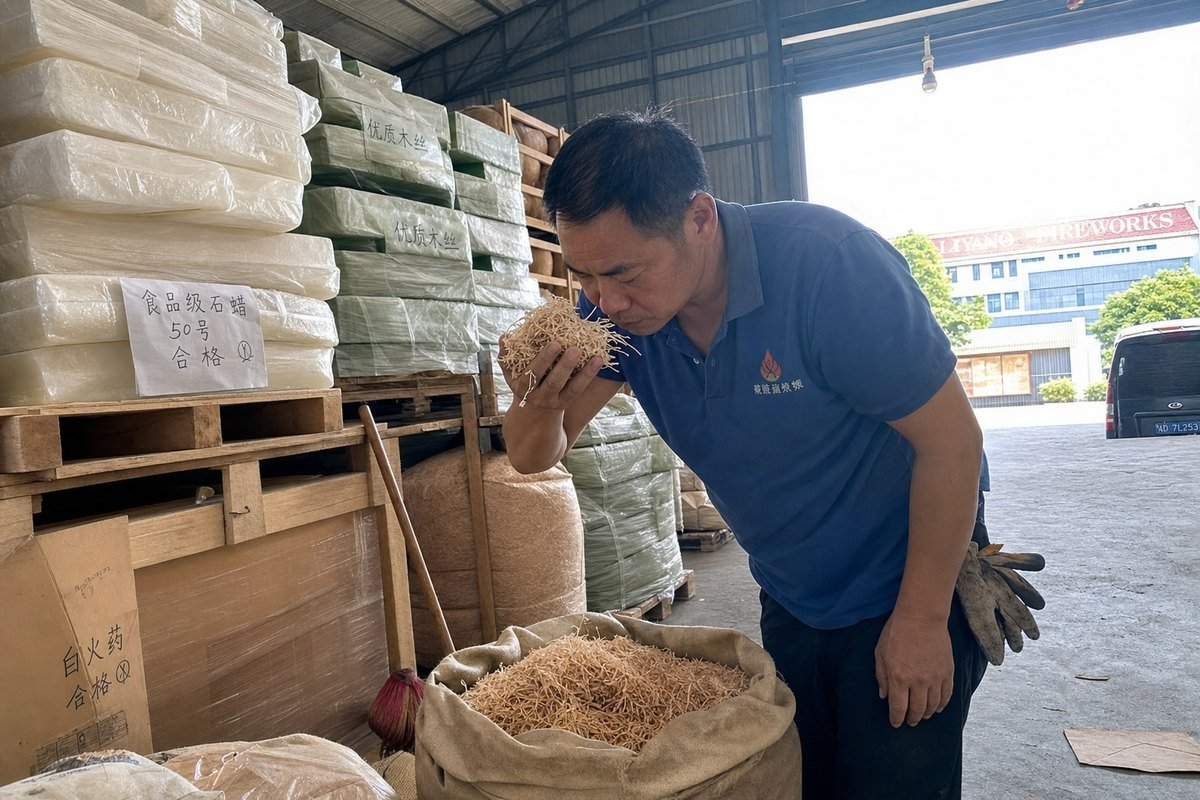
Raw material screening is the cheapest verification step, because it happens before you ever place an order. The core principle is simple. Anything that burns dirty, or leaves residue that survives the flame, is a flavor risk. Everything else is detail.
The avoid list, explained
Lighter fluid and petroleum distillates 3 are the obvious offenders. They produce a chemical aftertaste when food goes on before full burn-off, and they coat grill interiors with residue. But subtler risks matter too. Chemical glues used as binders in cheap compressed starters off-gas during combustion. Treated, painted, or pressure-preserved wood scrap 4 can release heavy metals. Even some "natural" choices carry risk. Resin-heavy softwoods burn hot and fast, which is useful for ignition, but excessive resin content in a poorly formulated starter creates thick, sooty smoke instead of a clean smoke profile.
| Material Category | Safe for Food-Adjacent Use | Avoid |
|---|---|---|
| Wood base | Untreated wood wool, natural wood shavings, fatwood sticks in moderation | Painted, stained, or pressure-treated wood scrap |
| Binder | Food-grade paraffin wax, beeswax, vegetable wax | Chemical glues, industrial wax blends, unknown binders |
| Accelerant | None needed — wax is the accelerant | Lighter fluid, kerosene, petroleum distillates |
| Moisture state | Dried fibers below controlled moisture content | Damp wood wool prone to creosote buildup |
Why moisture is the hidden variable
Buyers rarely ask about moisture, but they should. Damp natural wood wool smolders instead of flaming, and smoldering produces bitter creosote 5 that taints food even with zero chemical additives. At our Ningbo facility, we control drying before the wax dip precisely because a wet core defeats the purpose of a clean formulation. Petroleum-free accelerants only deliver their flavor advantage when the fiber underneath burns fully and fast.
How can I request supplier documentation proving no flavor transfer during combustion?
Documentation requests reveal a supplier's character faster than any factory tour. When we quote a new BBQ distributor, our compliance file usually goes out before the price sheet does.
Request a full ingredient declaration with wax grade specified, batch-linked SGS or Intertek combustion test reports, a food-contact-adjacent safety statement, burn-off time data, and MSDS documentation. A credible supplier provides these within days; evasive or generic responses indicate flavor-transfer risk.

Flavor transfer is hard to measure directly, so documentation works by triangulation. No single paper proves "no taste." Instead, you assemble evidence that the product contains nothing capable of transferring flavor, and that it burns out before food is exposed.
The document request sequence
I recommend requesting documents in a deliberate order, because each answer tells you whether the next request is worth making.
- Full ingredient declaration. Ask for exact materials, including the wax grade. "Wax" is not an answer. "Fully refined food-grade paraffin wax" is.
- MSDS or SDS sheets. These list hazardous components and combustion byproducts. A clean SDS supports flavor neutrality.
- Batch-linked test reports. Match the lot number on the report to the lot number on your goods.
- Burn-off time specification. Reputable starters state a 10 to 20 minute burn window. This tells your end customers when the starter is fully consumed and cooking can begin safely.
- Written flavor-neutrality statement. Ask the supplier to state, on letterhead, that the product will not flavor food when used as directed. Factories confident in their formulation sign this. Trading companies reselling unknown goods usually hesitate.
Reading between the lines
Response behavior is itself documentation. In 17+ years of exporting, I have learned that a supplier who takes three weeks to produce an ingredient list either does not control production or does not know what is in the product. Both are disqualifying. We answer these requests in English within one business day, because our buyers in the US and Europe treat responsiveness as a proxy for quality control. They are right to.
Also ask how consistency is maintained batch to batch. A perfect first sample means little if mass production swaps in cheaper wax. Our position has always been that the first sample must reflect mass-production quality, and documentation should commit the supplier to that in writing.
What certifications should I look for to ensure my fire starters meet food-contact safety standards?
Certification questions dominate our first calls with European importers. One Dutch buyer told me plainly that without a recognized audit trail, price is irrelevant, and I agreed with him.
Look for ISO 9001 quality management certification, BSCI social compliance audits, CE marking where applicable, and SGS or Intertek product test reports. No universal "food-contact fire starter" certificate exists, so combine factory-level certifications with product-level combustion and residue testing.
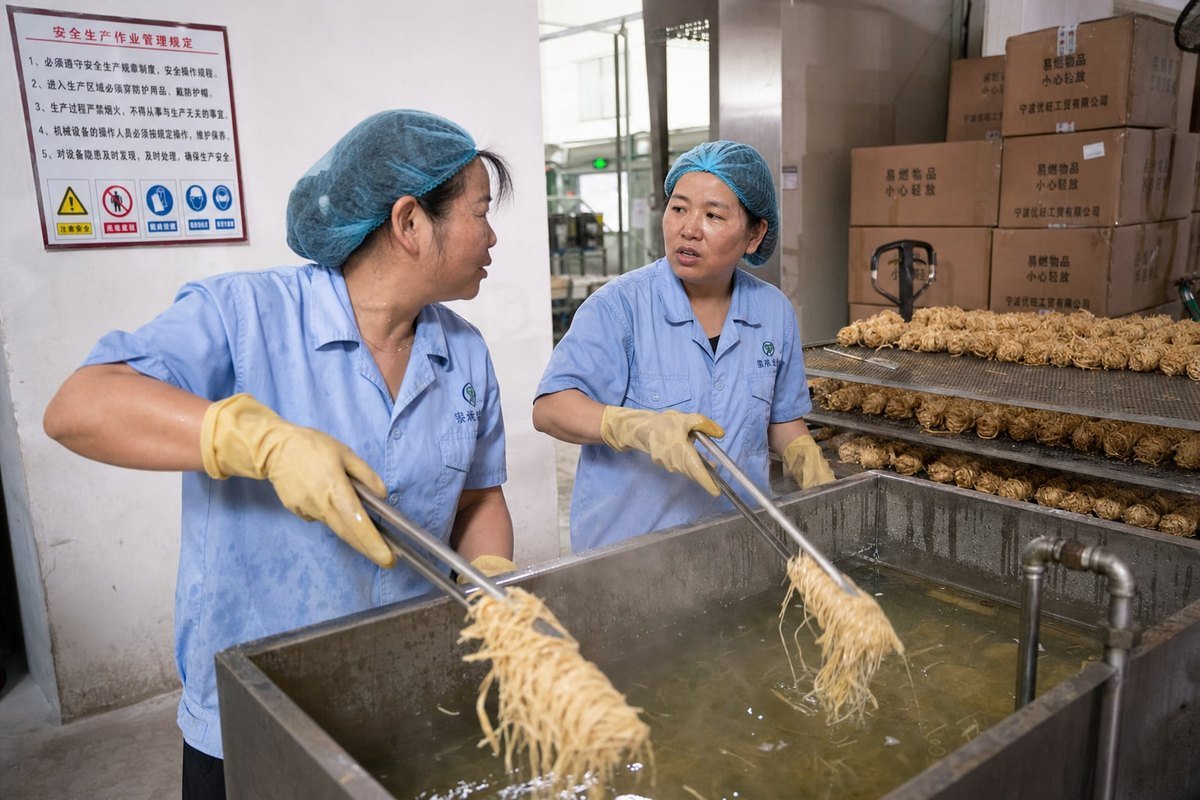
Here is the uncomfortable truth of this category. Fire starters are not food, so no regulator issues a single "food-safe fire starter" license. That gap is exactly where weak suppliers hide, and where informed buyers separate real compliance from decorative logos on a box.
Building a certification stack
Since no single certificate covers everything, you verify in layers. Each layer answers a different question.
| Certification / Report | Level | Question It Answers |
|---|---|---|
| ISO 9001 | Factory | Does the supplier run controlled, repeatable production? |
| BSCI | Factory | Is the facility audited for ethical, transparent operations? |
| CE marking | Product | Does the product meet applicable EU safety directives? |
| SGS / Intertek reports | Product batch | Does this batch burn clean, free of harmful residues? |
| Ingredient declarations | Formulation | Is the wax food-grade and the wood untreated? |
Our factory holds ISO 9001 and BSCI, carries CE marking, and maintains SGS and Intertek test files, because buyers sourcing for Home Depot–type retail channels audit all four layers before a trial order ships.
What certification cannot replace
Even a perfect certification stack does not override physics. A starter must complete its burn-off time before food meets heat. That is why we recommend distributors print usage guidance on packaging: light the starter in a charcoal chimney starter 6, wait for the flame to consume the roll, and cook only once coals show white ash and the smoke has thinned. Thin blue smoke signals a clean, flavor-neutral fire. Thick white smoke means incomplete combustion 7 is still underway. Certifications prove the product can be flavor-neutral. Correct use makes it flavor-neutral. Your packaging, which we customize for private-label buyers including warning labels and barcodes, is where those two things meet.
Conclusion
Chemical-tasting food destroys trust in a grilling brand overnight. The fix is systematic verification, and I have seen it protect buyers across 30+ export markets.
Verifying wood fire starters comes down to four layers working together. Screen ingredients for untreated natural wood wool and food-grade paraffin wax, and reject anything with petroleum distillates or chemical binders. Demand batch-linked lab reports, not generic certificates. Collect supplier documentation that commits the factory in writing. Then stack ISO 9001, BSCI, CE, and SGS or Intertek evidence, because no single certificate covers this category. Finally, teach your end customers proper burn-off technique, since even the cleanest starter needs to be fully consumed before food hits the grate. Get those layers right, and flavor complaints disappear from your returns data. If you want a partner that treats compliance as the starting point rather than an upsell, that is exactly how we have built our factory for the past 17 years.
Footnotes
1. Official international standard for quality management systems ensuring consistent and safe manufacturing processes. ↩︎
2. Global standard for social compliance and ethical sourcing in manufacturing and supply chains. ↩︎
3. Explains the chemical nature of petroleum-based accelerants that can cause off-flavors in grilled food. ↩︎
4. Updated EPA URL for chromated arsenicals (CCA), the primary chemical in pressure-treated wood. ↩︎
5. EPA resource explaining how wood smoke byproducts like creosote can impact food safety and air quality. ↩︎
6. Provides technical context on the proper equipment used to ensure clean ignition of charcoal. ↩︎
7. Scientific explanation of how incomplete burning of materials leads to smoke and residue transfer to food. ↩︎



 English
  Spanish
  German
  French
  Arabic
  Portuguese
Join the Conversation