






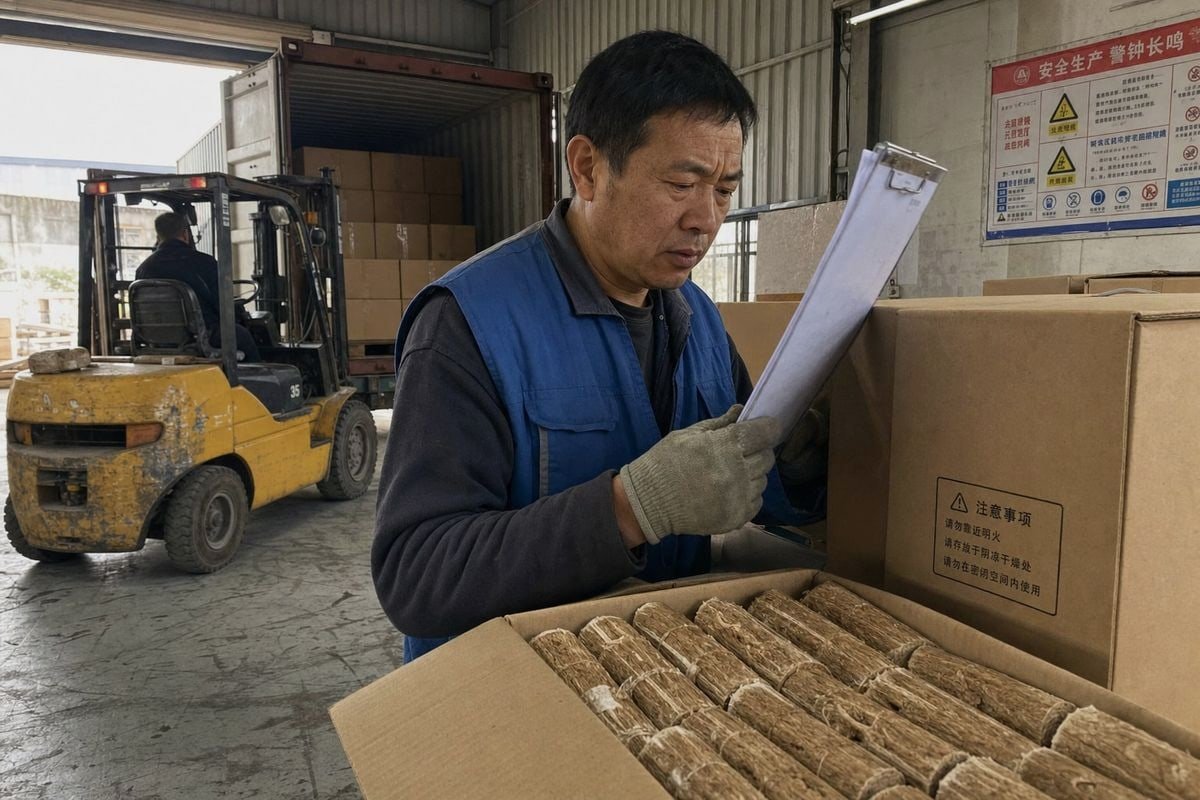
Extra labeling for wood fire starters trips up more wholesalers than any pricing issue we see BSCI social audit reports 1. On our production line, we've watched shipments stall at customs over one missing warning line.
Yes, hardware and garden wholesalers usually need extra labeling for wood fire starters. Requirements depend on formulation, destination market, and retailer rules, and can include FHSA flammability warnings, an SDS, California Proposition 65 statements, VOC compliance marks, and net-quantity declarations under the FPLA.
The good news is that this is manageable. Once you know which rules apply to your specific product, labeling becomes a checklist, not a mystery. Let me walk you through each layer.
What certifications and warning labels do I need for wood fire starters sold in my market?
A German distributor once asked me why his competitor's product carried three warning icons while his sample carried none. The answer came down to formulation and destination — not luck.
Required labels depend on your market: US sales typically need FHSA flammability warnings, FPLA identity and net-quantity text, and "keep out of reach of children" statements. California adds Proposition 65 and CARB VOC rules. EU sales require CE-relevant conformity and local packaging-law registration.

Wood fire starters are not one regulated category. A wax-dipped wood-wool roll with 50% wood fiber and 50% paraffin sits in a different compliance bucket than a liquid-accelerant product. That distinction drives everything. Under CPSC labeling requirements 2, a household product only triggers mandatory cautionary labeling when it is flammable, combustible, toxic, or otherwise hazardous under reasonably foreseeable use. Many solid wood-based starters test as non-hazardous under GHS hazard communication rules 3, and their Safety Data Sheet may even state "no label elements required." But you cannot assume that. You must confirm it with a current SDS for your exact formulation.
The main regulatory layers
| Layer | What it requires | Applies when |
|---|---|---|
| FHSA compliance (US federal) | Signal word, principal hazard statement (e.g., FLAMMABLE), first-aid text, "keep out of reach of children" | Product meets hazardous classification |
| FPLA (US federal) | Product identity, net quantity, name and address of manufacturer/packer/distributor | All consumer commodities |
| California Proposition 65 | Warning naming at least one listed chemical (short-form warnings are being phased out under 2025 updates) | Listed chemical exposure above threshold |
| CARB / VOC compliance | Certification, usage instructions, manufacture date or date code on the container | Charcoal lighter materials 4 sold in California |
| EU packaging laws (e.g., Germany) | Producer registration and system participation for packaging waste | Selling packaged goods into that country |
Certifications buyers actually ask for
In our seventeen-plus years exporting to the US, Germany, the UK, and France, the documents buyers request most are ISO 9001 factory certification 5, BSCI social audit reports, and SGS or Intertek test reports for the finished product. These are not legally mandated labels, but large retail sourcing channels treat them as entry tickets. Retail packaging standards from chains like Home Depot-type buyers often exceed the legal minimum, so build to the retailer spec, not just the law.
How can I get compliant, custom private-label packaging without ordering a huge MOQ?
Trial orders are where most of our partnerships start. A Dutch garden-supply importer once tested us with a single pallet of private-label boxes before committing to container volumes the next season.
You can get compliant private-label packaging at low MOQ by working with a factory that offers in-house OEM/ODM services. Look for suppliers who provide pre-approved label templates, digital printing for small runs, and staged MOQs that scale artwork costs across trial and repeat orders.
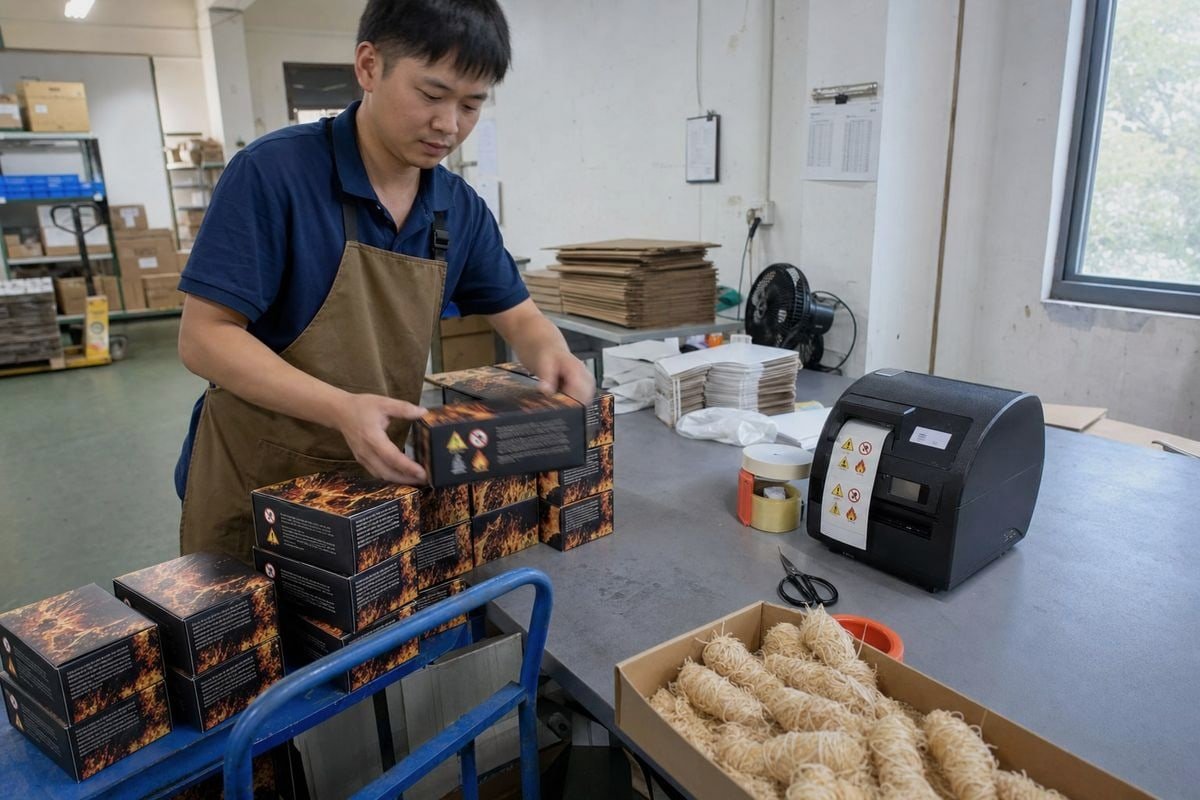
Private labeling adds a legal wrinkle many wholesalers miss. Once your brand name goes on the box, you become the responsible party in the eyes of regulators and retailers. That means your name and place of business must appear on the package under the FPLA, and product liability risk 6 shifts toward you if the labeling is wrong. So low MOQ alone is not enough. The packaging must be compliant from the first small run.
Here is how we structure it at our factory, and what you should demand from any supplier:
- Start with a compliant master template. We maintain label artwork that already carries the FHSA-style flammability warning block, usage directions, composition statement (for example, 50% wood fiber, 50% paraffin), and net-quantity line. Your designer only swaps in brand elements.
- Use digital printing for trial runs. Offset printing forces high MOQs. Digital printing lets us produce a few hundred branded boxes so you can test the market without warehousing a year of stock.
- Lock the regulatory text, free the branding. We treat warning language, date codes, and barcodes as locked fields. Colors, logos, and taglines stay fully customizable. This prevents a designer from accidentally shrinking a mandatory warning below readable size.
- Stage your MOQ. A typical path is a sample set, then a trial order of one pallet, then container quantities. Artwork approval carries over, so batch two matches batch one exactly.
One more practical tip: ask your supplier to place a Prop 65 warning zone on the artwork even if you are not selling in California yet. Adding it later means reprinting everything.
Will my supplier provide barcodes, SDS, and test reports so customs clearance goes smoothly?
Document gaps cause more customs delays than product defects, in my experience shipping to thirty-plus countries. One missing SDS once held a Brazilian shipment for two weeks.
A capable supplier should provide GS1-compatible barcodes, a current 16-section GHS-format Safety Data Sheet, third-party test reports from labs like SGS or Intertek, and transport classification documents. Confirm all four exist before production starts, not after the container ships.

Customs officers and freight forwarders work from paper, not from the product itself. If the paperwork is ambiguous, the shipment waits. For fire-starting goods, the critical question is hazardous materials classification for transport. Some fire starters ship as ordinary goods; others get classified as Flammable Solids (Class 4.1) 7 under DOT rules, which requires hazmat placards on outer shipping containers and changes your freight cost. Your supplier's SDS and transport test data determine which path your product takes. We run this classification during product development, not at booking time, because switching a shipment from general cargo to hazmat mid-transit is expensive and slow.
The document pack every SKU needs
| Document | Purpose | Who provides it |
|---|---|---|
| Safety Data Sheet (SDS) | GHS hazard communication for customs, retailers, and logistics | Factory, updated per formulation |
| SGS/Intertek test report | Proves composition and safety claims | Third-party lab, arranged by factory |
| GS1 barcode (EAN/UPC) | Retail scanning and inventory | Buyer's GS1 account or factory support |
| Transport classification letter | Confirms hazmat or non-hazmat shipping status | Factory with lab support |
| Certificate of Origin | Duty rates and trade compliance | Factory or chamber of commerce |
Two things worth asking about
First, ask whether the SDS matches the exact formulation you are buying. A generic SDS pulled from the internet is a red flag, and mismatched documents create real product liability risk. Second, consider GS1 Digital Link QR codes on the packaging. They let you serve region-specific SDS files and compliance updates online without reprinting boxes for every state or country. We have started offering this to buyers who sell across multiple regulatory regions, and it noticeably reduces artwork revisions.
How do I confirm labeling consistency across every production batch before I place a bulk order?
Batch drift taught us a hard lesson early on. Years ago, a printing subcontractor changed ink density between runs, and a retailer flagged the mismatch on shelf. We brought that checkpoint in-house afterward.
Confirm batch consistency by requiring a golden sample agreement, pre-production label proofs, in-line QC checkpoints for print and placement, and a photographed pre-shipment inspection of each batch. Compare every batch against the sealed golden sample, and reserve the right to third-party inspection.
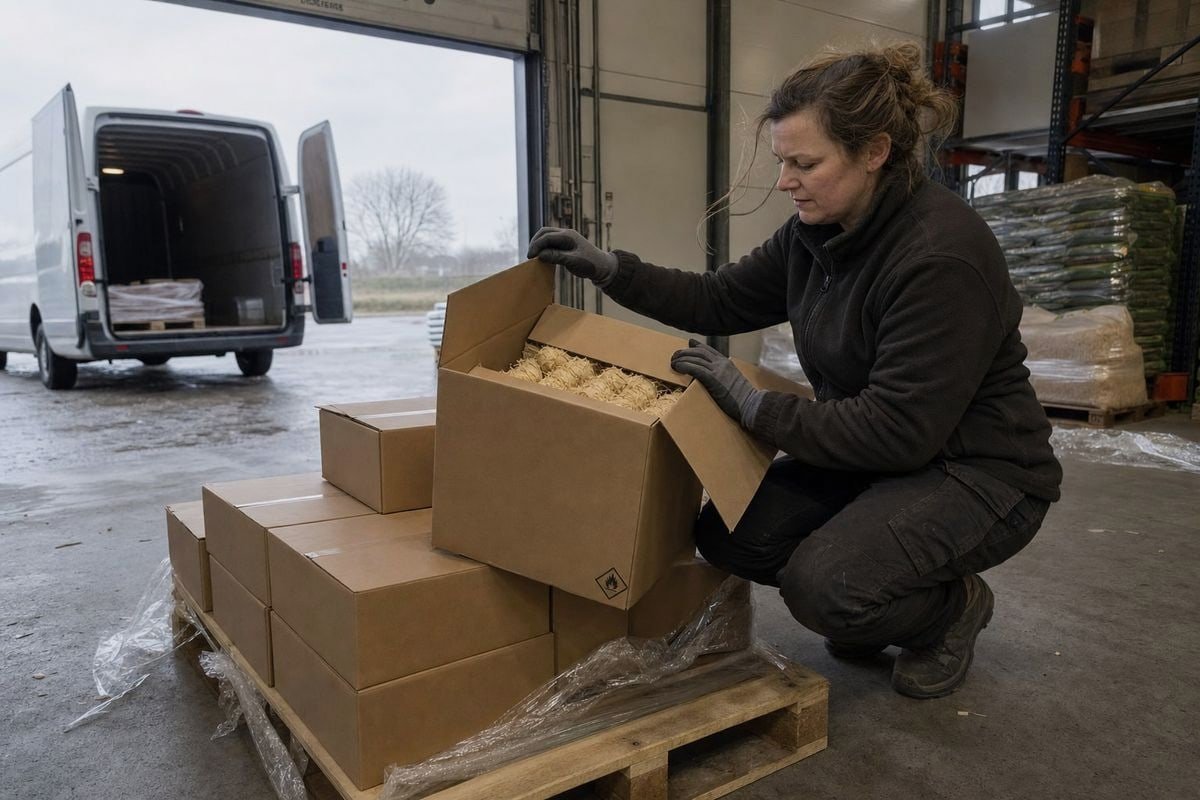
Consistency is a process problem, not a trust problem. Even honest factories drift if no one anchors the standard. The anchor is a golden sample: a physically sealed, mutually signed reference unit that defines correct label content, print quality, color, warning placement, and date-code format. Every future batch answers to that sample. At our facility in Ningbo, the golden sample sits in the QC office, and the line supervisor checks the first units of each run against it before mass printing continues.
A batch-verification workflow you can copy
| Stage | Check | What to request from the supplier |
|---|---|---|
| Pre-production | Label artwork, warning text, barcode digits, date-code logic | Digital proof plus one printed proof photo |
| First article | First finished unit vs. golden sample | Photos of front, back, and warning panel |
| In-line QC | Print alignment, wax coverage, label adhesion | QC checklist per batch, shared on request |
| Pre-shipment | Random sampling across cartons | Inspection report with batch photos |
| Post-shipment | Retained samples from each batch | Supplier keeps sealed retention samples |
Why date codes matter more than you think
California's CARB rules for charcoal lighter materials require every container to show the manufacture date or a decodable date code, and even for non-regulated solid starters, retailers increasingly demand traceability. A consistent date-code system means that if one batch ever has an issue, you recall one batch — not your entire inventory. Ask your supplier to explain their date-code format in writing. If they cannot decode their own labels, walk away. Flammability warning labels, barcodes, and composition text should also be verified digit-by-digit at first article stage, because a single wrong barcode digit fails retailer scanning audits and can trigger chargebacks that erase your margin.
Conclusion
Extra labeling for wood fire starters is real, layered, and manageable. Verify your SDS, lock compliant artwork, demand full documentation, and anchor every batch to a golden sample.
Footnotes
1. Official amfori page detailing the BSCI social audit and supply chain monitoring. ↩︎
2. Official US government guidance on labeling requirements for hazardous household substances under the FHSA. ↩︎
3. Overview of the international standard for chemical classification and hazard communication on labels and SDS. ↩︎
4. California Air Resources Board regulations governing VOC emissions and labeling for charcoal lighter products. ↩︎
5. Official page for the international standard that specifies requirements for a quality management system. ↩︎
6. Comprehensive guide to product liability and risk management from the Insurance Information Institute. ↩︎
7. Technical definition and classification of hazardous materials, specifically flammable solids used in transport. ↩︎



 English
  Spanish
  German
  French
  Arabic
  Portuguese
Join the Conversation