






Wood fire starters that fail in cold wind cost distributors returns and reviews. I have watched buyers lose whole seasons over this. Our production line in Ningbo was built to solve exactly that problem.
Wood fire starters ignite in low temperatures and wind because their paraffin wax coating and wood wool core deliver concentrated, sustained heat that pushes kindling past its combustion temperature faster than cold air and wind can strip that heat away.
That short answer hides a lot of engineering. Let me walk you through the science, the certifications, the customization options, and the quality control behind reliable ignition.
What Makes Your Wood Fire Starters Perform Reliably in Cold and Windy Conditions?
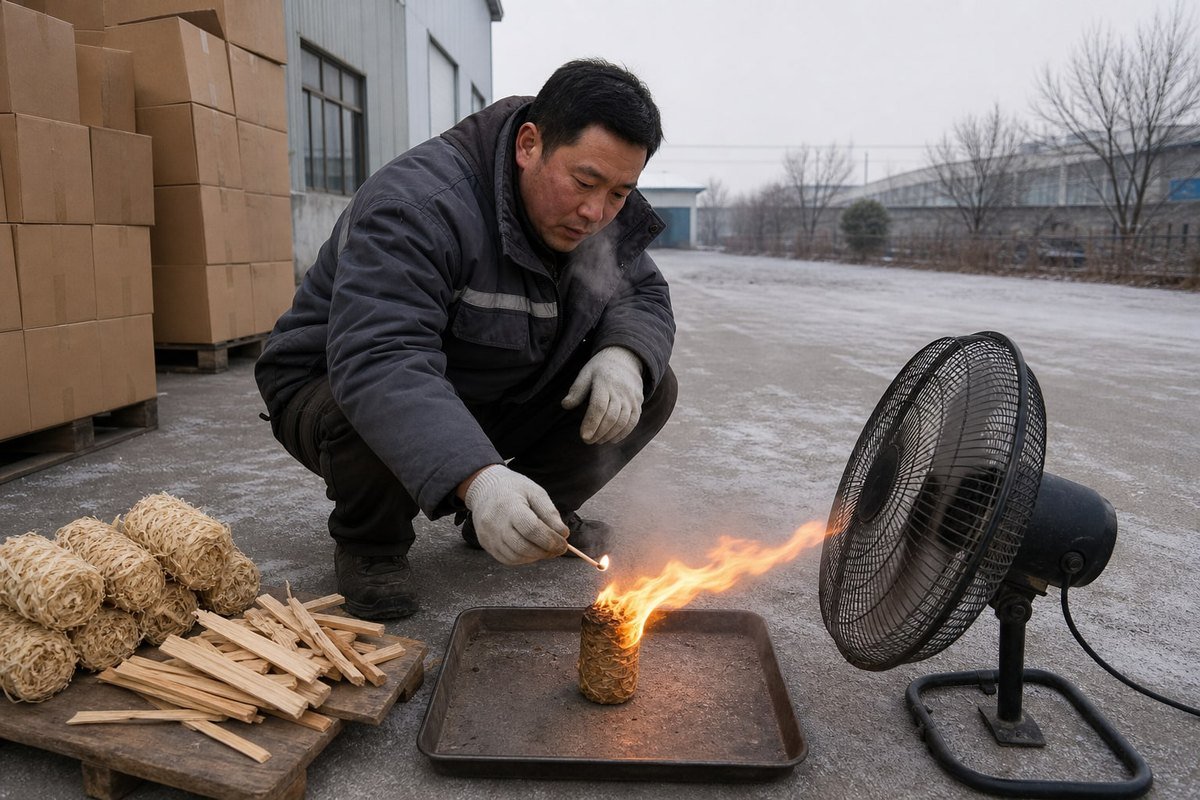
During a winter validation run at our Ningbo facility, we lit samples outdoors at near-freezing temperatures with a fan simulating gusts. The lesson from 17+ years of testing is simple: design beats luck.
Reliable cold-weather performance comes from three design factors: near-zero moisture content in the wood wool, a paraffin wax coating with a low flash point for easy lighting, and a dense core that sustains heat transfer despite wind-driven cooling.
Ignition is not one event. It is a race between heat delivery and heat loss. A fire starter wins that race when it clears three barriers in sequence: it must catch a spark or match flame, it must keep burning long enough, and it must transfer enough heat into the next fuel layer before wind and cold carry that heat away.
Why Cold and Wind Make Ignition Hard
Cold air acts as a heat sink. Frozen or damp kindling wastes energy turning moisture into steam before any pyrolysis 1 begins. Wind is double-edged. It raises oxygen concentration at the flame, which helps combustion once established. But before ignition, wind strips heat from the surface and can blow the flame off the fuel entirely. Wood needs roughly 250°C for short-term external ignition under worst-case conditions, and piloted flaming ignition often lands between 300°C and 365°C depending on species and heat flux. In cold wind, reaching and holding those temperatures is the whole challenge.
How Our Design Answers Each Barrier
| Barrier | Cold/Wind Problem | Design Solution |
|---|---|---|
| Catching a flame | Cold fuel resists lighting | Paraffin wax coating lowers the effective flash point of the surface fuel |
| Staying lit | Gusts extinguish weak flames | Dense wound wood wool 2 core burns like a pilot light, hard to blow out |
| Transferring heat | Cold air removes heat fast | 8–10 minute burn time sustains heat flux into kindling |
| Fighting moisture | Damp fuel steals energy | Wax-sealed rolls keep moisture content near zero in storage |
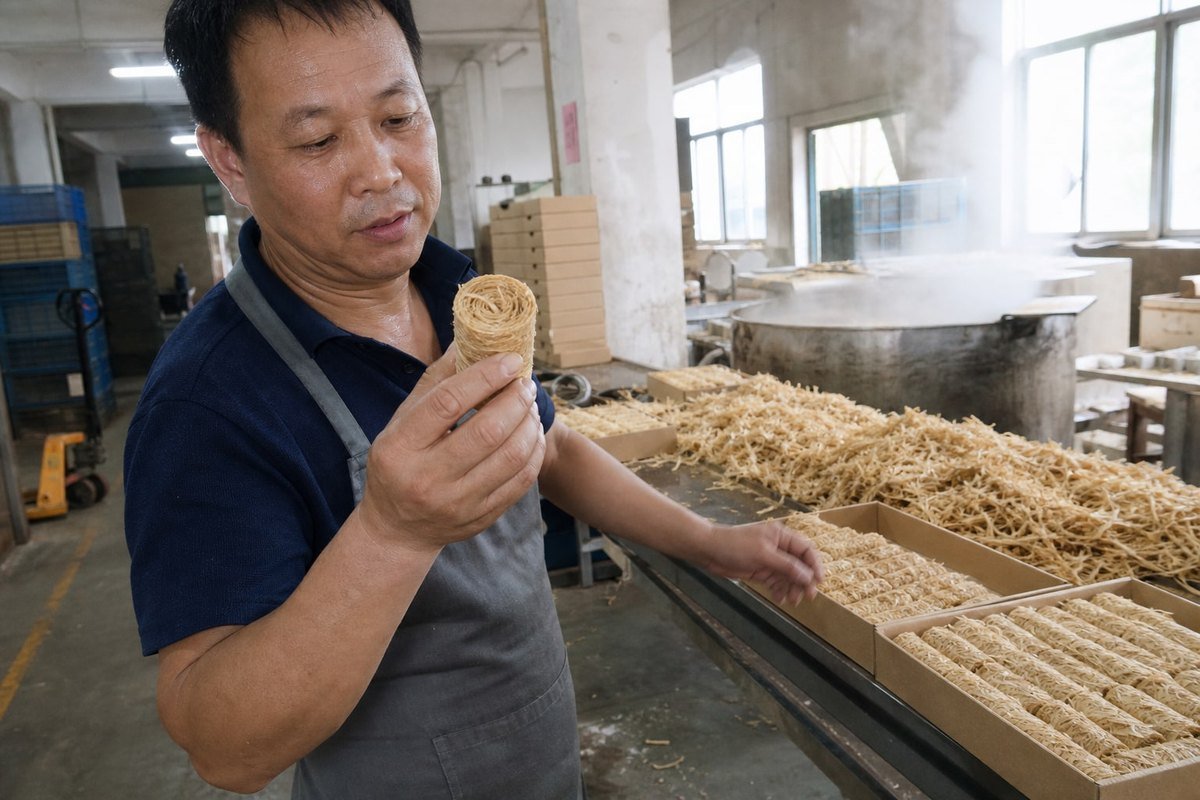
The wound-roll structure matters too. The shredded strands create a high surface area to volume ratio, so oxygen reaches the fuel easily. Meanwhile, melting wax wicks along the fibers by capillary action 3, feeding vapor to the flame continuously. That vapor envelope shields the flame base from convective cooling. This is why our wax-dipped wood rolls hold a stable flame in gusts that would kill a bare match or paper.
Which Certifications Should I Look for to Verify Wax Formulation Safety and Performance?
A German distributor once told me his previous supplier's shipment sat in customs for six weeks over missing test reports. That conversation shaped how we handle compliance documentation today.
Look for ISO 9001 quality management certification, BSCI social compliance audits, CE marking for the EU market, and third-party SGS or Intertek test reports verifying the wax formulation is free of harmful chemicals and burns cleanly.

Certifications are not paperwork for us. They are the entry ticket to shelves in the US, Germany, the UK, and France. Our buyers treat them as a hard requirement, and so do we. A fire product with an unverified wax formulation is a liability risk no serious importer should accept.
What Each Certification Actually Verifies
| Certification | What It Covers | Why It Matters to Buyers |
|---|---|---|
| ISO 9001 | Quality management system across production | Batch-to-batch consistency you can audit |
| BSCI | Ethical labor and factory conditions | Required by many EU and US retail chains |
| CE | EU product safety conformity | Legal market access across Europe |
| SGS 4 / Intertek reports | Independent lab testing of materials and burn behavior | Third-party proof the paraffin wax coating contains no harmful chemicals |
Questions to Ask Any Supplier
First, ask for the actual test reports, not just logos on a website. We provide SGS and Intertek 5 documents with every serious inquiry. Second, confirm the wax composition. Our standard formulation is 50% wood fiber and 50% paraffin, printed on the packaging along with usage instructions and warning labels. Third, check whether the supplier is a real factory. Trading companies cannot control combustion temperature consistency 6 or wax purity because they never touch the production line. We run ours in Ningbo, with headquarters in Liuyang, Hunan, so quality issues get fixed at the source, not negotiated over email. Finally, verify that warning labels and barcodes 7 meet your destination market rules. We prepare compliant labels for 30+ export countries, which saves buyers costly relabeling at the port.
Can I Customize Burn Time and Wax Composition for My Target Climate Market?
Balancing wax load against burn duration is a trade-off we weigh on nearly every OEM project. More paraffin extends burn time but raises cost and changes how the roll lights in the first ten seconds.
Yes. Burn time, wax-to-fiber ratio, roll size, and packaging are all customizable. Cold-climate markets typically need longer burns and heavier wax loads, while mild-climate BBQ markets prioritize fast, clean lighting and lower unit cost.
Climate should drive product spec. A fire starter tuned for a Brazilian barbecue distributor would underperform badly for a Canadian winter camping brand. That is why our one-stop OEM/ODM process starts with your market, not with a stock catalog.
How Climate Changes the Ideal Specification
| Target Market | Typical Conditions | Recommended Spec Direction |
|---|---|---|
| Canada, Poland, Nordics | Sub-zero temperatures, damp kindling | Longer burn time, higher paraffin ratio, larger rolls for heat retention |
| US, Germany, UK fireplace use | Indoor, controlled airflow | Standard 50/50 formulation, clean low-smoke burn |
| Australia, Brazil BBQ | Warm, dry, fast lighting expected | Smaller rolls, quick flash point response, cost-optimized wax load |
| Coastal and mountain camping | High wind, variable moisture | Denser core winding for windproof ignition, sealed packaging |
What Else We Customize
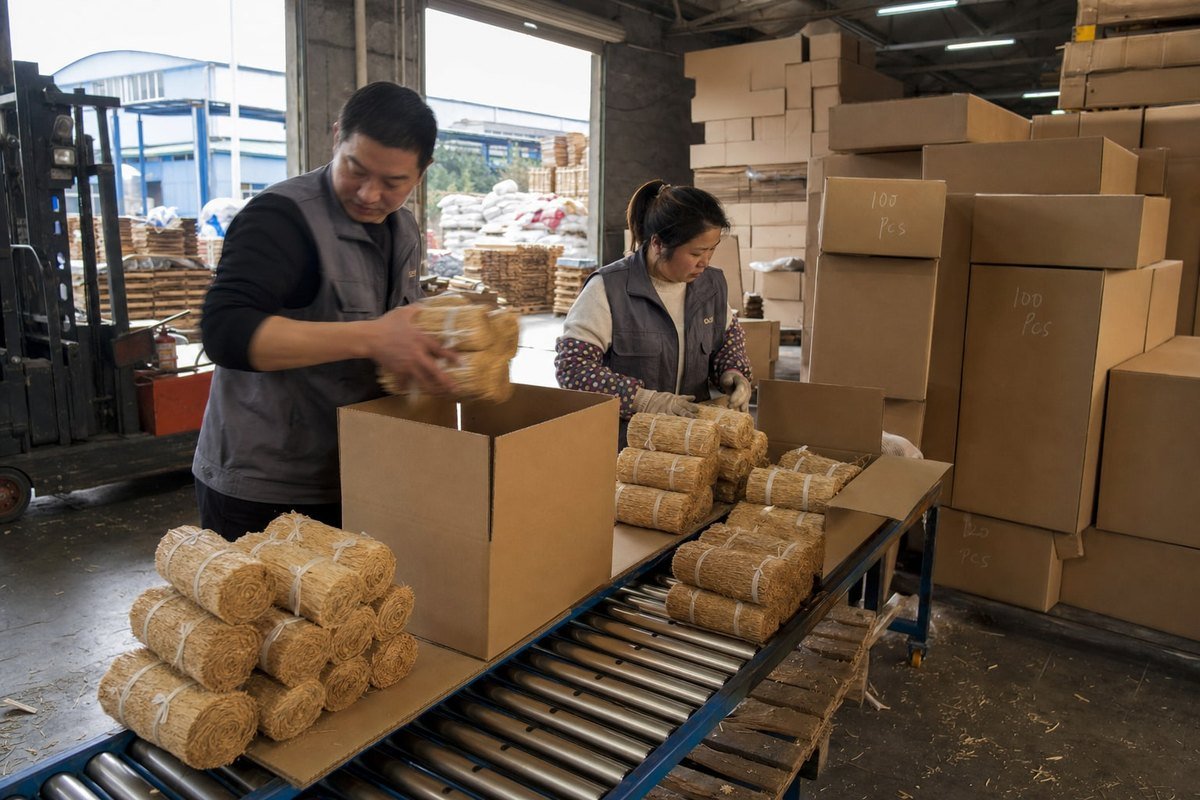
Beyond the core formulation, we adjust roll diameter and length, pieces per box, and the packaging format itself — retail boxes, display packaging, kraft bags, or bulk cartons. Private-label branding covers your box artwork, barcodes, and market-specific warning labels. We also pair fire starters with our other lines, such as color-flame pinecones or Magic Fire packets, when buyers want a themed hearth assortment. For trial orders, we keep MOQs flexible so a purchasing manager can validate sell-through in one region before committing to container volumes. Every custom spec goes through the same burn testing as our standard product, including timed burns and wind simulation, so the sample you approve reflects mass production.
How Do I Confirm Consistent Ignition Quality Across Every Production Batch?
Early in our export history, we learned that one inconsistent batch damages a brand more than a late shipment does. That lesson built our current batch-control system, refined over 17+ years.
Confirm consistency by requiring documented batch QC: incoming wood wool moisture checks, wax temperature and dip-time controls, per-batch sample burn tests measuring ignition speed and burn duration, and retained samples matched against your approved golden sample.
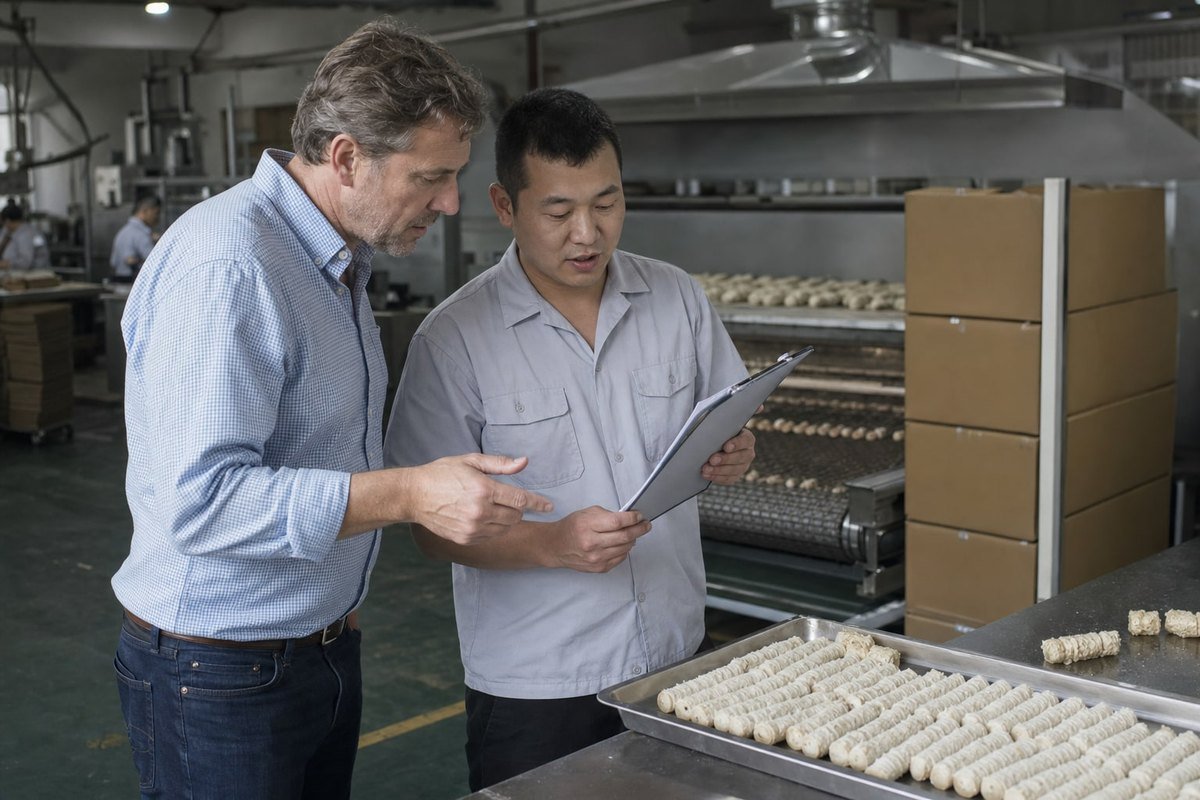
Consistency is where real factories separate from trading companies. A trading company sources from whichever workshop has capacity that month. We run one production line under one quality system, so the first sample you approve reliably predicts the ten-thousandth unit.
Our Batch Control Process, Step by Step
- Incoming material inspection. We check wood wool for moisture content before it enters production. Wet fiber absorbs wax unevenly and slows ignition.
- Wax bath control. Paraffin temperature and dip time are held within set tolerances. Too cool, and the wax coats only the surface. Too hot, and it soaks in and changes the lighting behavior.
- Roll density checks. Operators verify winding tightness. Density controls the pilot-light effect that resists wind, so loose rolls get rejected.
- Per-batch burn testing. We pull random samples from every batch and time three things: seconds to full ignition, total burn duration, and flame stability under a fan.
- Golden sample comparison. Each batch is checked against the retained sample from your original approval, covering size, weight, wax load, and appearance.
- Documentation. Batch records are kept and available, which supports our ISO 9001 audits and gives buyers traceability if a question ever arises.
What You Can Do on Your Side
Ask for burn-test data with each shipment. Request retained samples from your production runs. Spot-test cartons on arrival with a simple timed burn. If your incoming units light within the agreed window and burn for the specified duration, your shelf product will perform in the field — whether that field is a windy Canadian campsite or a German living-room fireplace.
Conclusion
Wood fire starters beat cold and wind through engineered heat retention, wax chemistry, and dense fiber structure — and certified, batch-tested manufacturing is what makes that performance repeatable on your shelf.
Footnotes
1. Explains the thermal decomposition process that precedes wood ignition. ↩︎
2. Background on the shredded wood fiber material used as the fire starter core. ↩︎
3. Explains the physical mechanism by which melted wax wicks through fibers. ↩︎
4. SGS is a globally recognized third-party testing and certification body for product safety. ↩︎
5. Intertek independently verifies material safety and burn performance for exporters. ↩︎
6. NFPA sets authoritative fire safety and combustion standards referenced by manufacturers. ↩︎
7. CPSC governs product warning label and safety labeling requirements for consumer goods. ↩︎



 English
  Spanish
  German
  French
  Arabic
  Portuguese
Join the Conversation