






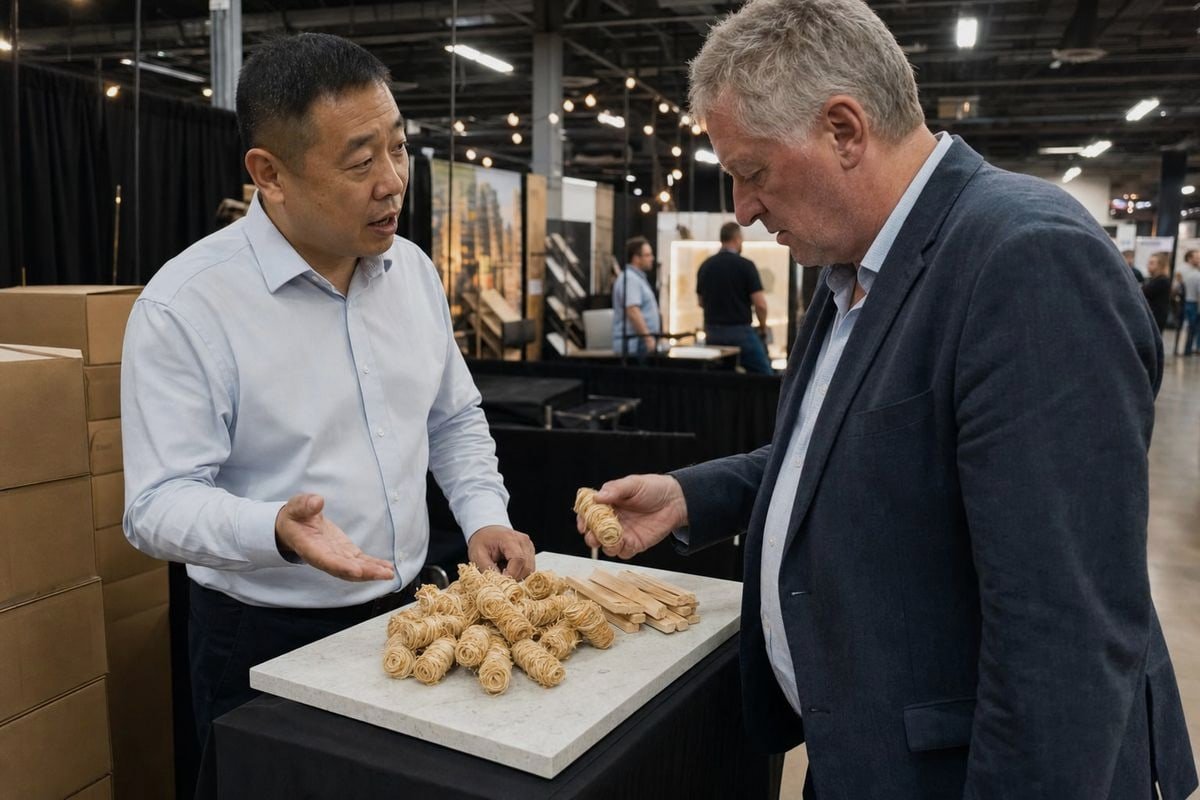
Wood fire starter specs make or break booth conversations ISO 9001 quality certification 1. I have watched suppliers lose serious buyers in minutes because our industry's buyers ask sharp questions — and vague answers end deals fast.
Trade show buyers prioritize four wood fire starter specs above all: consistent burn time duration of 8–15 minutes, ignition within seconds of flame contact, moisture and wind resistance, and documented safety certifications. Packaging readiness, MOQ flexibility, and lead time reliability follow immediately after performance specs.
Those four specs decide whether a buyer stays at your booth or walks on. Let me break down each one, based on what buyers actually ask us at shows.
What Burn Time and Ignition Speed Do Buyers Expect From Wood Fire Starters?
At our booth in Germany last year, the very first question from a fireplace distributor was not price. It was: "Show me your burn time test data, batch by batch."
Buyers expect wood fire starters to ignite within 3–8 seconds of flame contact and sustain a flame for at least 8 minutes, with 10–15 minutes preferred for fireplace and BBQ channels. Consistency across batches matters more to buyers than peak performance from a single sample.
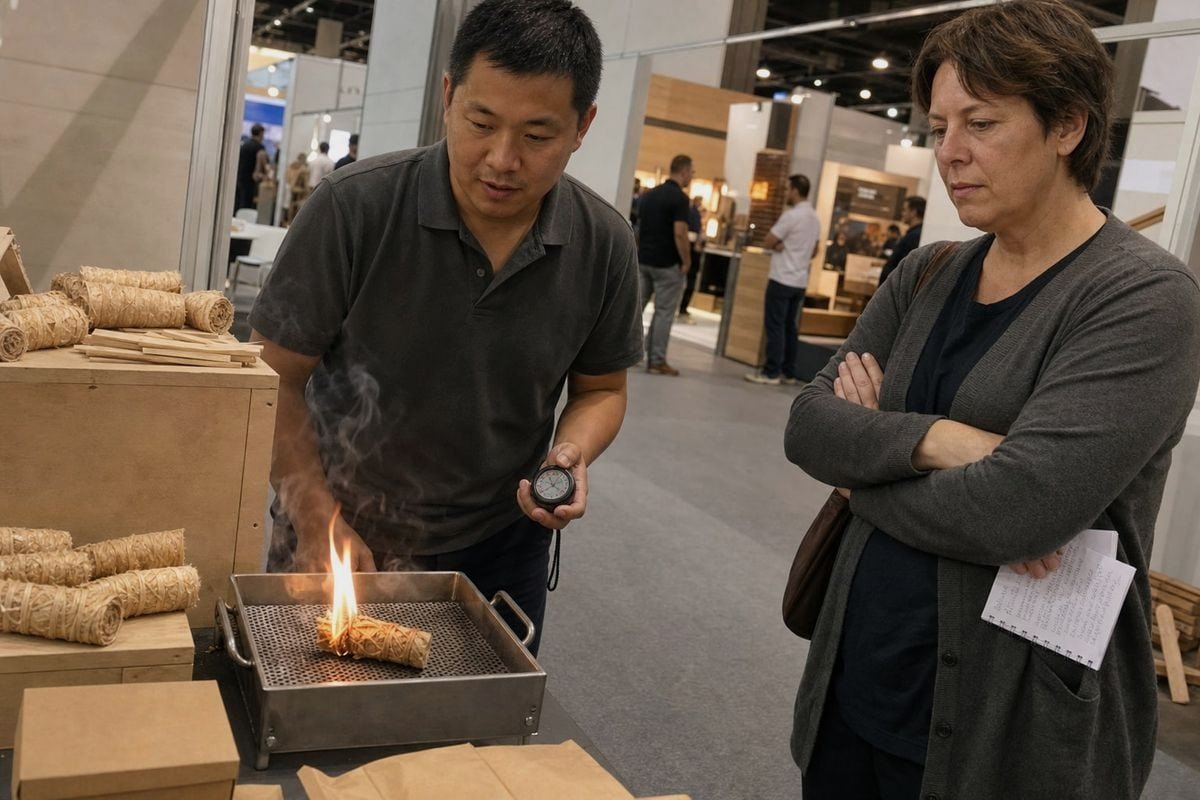
Buyers do not shop for the "best" fire starter in the abstract. They shop for the starter that fits their end use. A camping brand needs odorless ignition in wind and damp air. A grilling distributor needs enough heat output to light charcoal without chemical off-flavors. A fireplace retailer needs a burn window long enough to catch large logs without extra kindling. Our wax-dipped wood rolls are calibrated differently depending on which channel the buyer serves, and that conversation is exactly what happens at the booth.
Burn Time Targets by Buyer Segment
Here is the practical hierarchy we see repeated at almost every show:
| Buyer Segment | Expected Burn Time | Ignition Expectation | Key Concern |
|---|---|---|---|
| Fireplace / home heating retail | 10–15 minutes | Under 5 seconds | Lights large logs, low soot |
| BBQ / food service distribution | 8–12 minutes | Under 3 seconds | Odorless, food-safe, no residue |
| Outdoor / camping brands | 8–15 minutes | Fast in wind and damp | All-weather reliability |
| Industrial / institutional | 15–30 minutes | Repeatable, documented | Tolerance specs, volume pricing |
Why Consistency Beats Peak Performance
One flashy 20-minute sample means nothing if the next carton burns for 9. Buyers know this. They have been burned — figuratively — by suppliers whose first sample never matched mass production. This is where genuine manufacturing depth matters. We control moisture content 2 percentage in the wood wool 3 before wax dipping, because moisture variation is the single biggest cause of inconsistent burn time duration. Buyers who hear that explanation lean in, because it tells them we understand their real risk: returns and delisted SKUs.
Material composition drives this conversation too. Wood wool firelighters made from natural biomass materials with a wax binder give the most repeatable burn window. Pure natural-fiber options appeal to eco-focused buyers but can vary more. Smart suppliers bring test data for both formats.
Which Certifications Should I Show Trade Show Buyers to Prove Compliance?
There is a trade-off I weigh before every show: which documents to print and which to keep digital. After 17 years exporting to 30+ countries, I have learned that compliance paperwork opens more doors than any product demo.
Show trade show buyers ISO 9001 quality certification, BSCI social audits, CE marking, and third-party test reports from SGS or Intertek. European fireplace and BBQ buyers may also ask about EN 1860-3 conformity, FSC certified wood sourcing, and non-toxic material declarations.
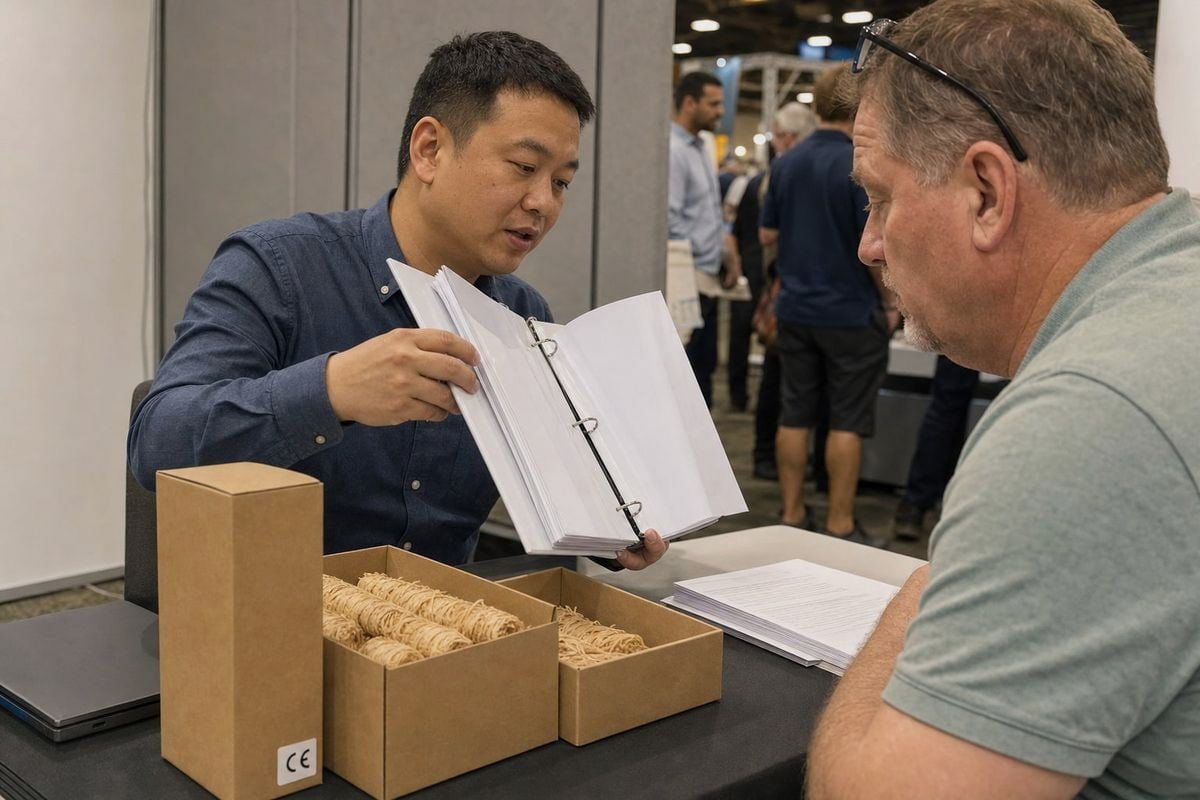
Compliance is not a nice-to-have for serious importers. It is a hard gate. A purchasing manager at an established US or European distributor cannot even submit a supplier to their internal review without documentation. If you cannot hand over test reports at the booth, the conversation is effectively over — no matter how well your product burns.
The Certification Stack Buyers Ask For
Different buyers ask for different layers. Here is how we organize our compliance folder at shows:
| Document Type | What It Proves | Who Asks For It |
|---|---|---|
| ISO 9001 | Quality management system | Nearly all B2B buyers |
| BSCI audit | Ethical and social compliance | Large retail sourcing channels |
| CE marking 4 | EU market conformity | European distributors |
| SGS / Intertek reports | Independent product testing | Retailers, importers, chains |
| Material declarations | Non-toxic, eco-friendly composition | Outdoor and eco-focused brands |
Present Documents, Not Claims
Anyone can say "we are certified" at a booth. Buyers have heard it a thousand times. What works is handing over an actual test report with a scannable verification number. We keep both printed copies and a QR code linking to digital files. When a UK buyer once challenged our smoke and residue claims on the spot, we pulled up the third-party lab data within a minute. That order closed two weeks later.
One more point: buyers from big-box retail channels increasingly ask about sustainable sourcing. Being able to discuss FSC certified wood 5 inputs and natural biomass materials — with paperwork, not slogans — separates a manufacturing partner from a trading company reselling unknown stock.
How Do I Present Packaging and Private-Label Options at a Trade Show Booth?
A Dutch importer once told me she decides within 30 seconds whether a booth's packaging is "shelf-real" or just a mockup. That comment changed how we prepare every display we ship to shows.
Present packaging in three tiers at your booth: retail-ready boxes with barcodes and warning labels, point of purchase displays showing shelf placement, and wholesale bulk packaging samples. Show at least one finished private-label example so buyers can visualize their own brand on the product.
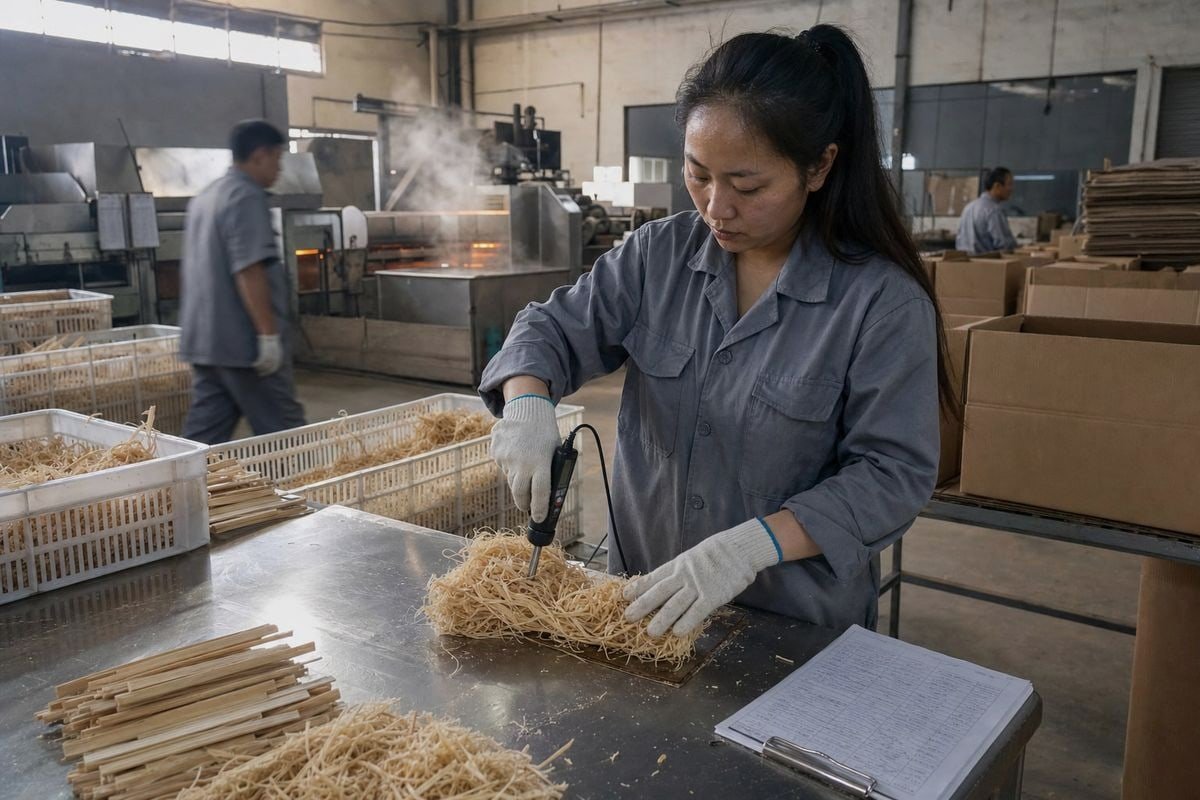
Buyers do not buy fire starters. They buy a shelf-ready product their customers will pick up. So the booth must answer the merchandising question before the buyer even asks it. Our approach is to display the same wax-dipped wood roll in multiple formats: a 100-piece retail carton with flame graphics, a kraft-look eco box for outdoor brands, and a bulk case for wholesalers. Each format targets a different visitor walking the aisle.
The Three-Tier Booth Display Method
- Retail tier. Show finished consumer boxes with printed barcodes, multilingual warning labels, and clear composition text such as "50% wood fiber, 50% paraffin 6." Buyers check label compliance immediately.
- Merchandising tier. Set up actual point of purchase displays — counter units and shelf trays. Retail buyers want to see the footprint the product occupies in-store.
- Logistics tier. Open a master carton. Show inner pack counts, pallet configuration, and how the units survive transit without wax damage or fiber crush.
Private-Label Proof, Not Promises
Private label manufacturing 7 is where the real B2B margin lives, and buyers know it. The strongest move is showing a genuine OEM example: a custom box size, a custom burn time spec, a brand we produced for (with permission), or an anonymized version. We walk buyers through the full customization path — size, burn time duration, box artwork, display packaging, warning labels, and barcodes — as one integrated service. When a buyer sees that the factory handles all of it in-house, the "who else do I need to coordinate?" anxiety disappears. That is often the moment a booth chat turns into a sample request.
Emerging formats deserve a mention too. Some European buyers now ask about slim, flat-pack designs suited to letterbox shipping for subscription models, and about gift-box formats for the seasonal festival trade. Bringing even one concept sample signals that you follow the market, not just the machine.
What MOQ and Lead Time Details Do Buyers Ask About Most at Trade Shows?
The lesson I learned early in our export business: a buyer who asks about MOQ is not haggling. They are testing whether you will support a trial order before they commit their reputation to your product.
Buyers most often ask about trial-order MOQs, standard production lead times of 25–45 days, peak-season capacity before winter, private-label lead time additions, and shipping terms. They want a supplier who offers flexible MOQs for first orders and documented, reliable delivery schedules.

Fire starters are a seasonal business. Fireplace and holiday demand peaks in Q4, which means buyers place orders in late spring and summer. A supplier who cannot explain their capacity curve honestly will get caught out — and the buyer knows it. So the MOQ and lead time conversation is really a risk conversation. Here is how we frame it, and what the numbers typically look like across order types:
| Order Type | Typical MOQ Approach | Typical Lead Time | Notes |
|---|---|---|---|
| Trial / sample order | Low, flexible MOQ | 15–25 days | Tests quality and market fit |
| Standard stock packaging | One container or partial | 25–35 days | Fastest path to shelf |
| Full private label | Moderate MOQ per SKU | 35–45 days | Includes artwork and print setup |
| Peak-season reorder | Reserved capacity | Book 60+ days ahead | Q3 slots fill quickly |
The Questions Behind the Questions
When a buyer asks "what is your MOQ?", they usually mean three things at once. First: can I run a trial without a huge cash commitment? Second: if the trial works, can you scale to my volume? Third: will batch quality hold at that scale? Our answer connects all three — flexible first orders, complete production lines for scale, and strict batch QC so the trial sample truly reflects mass production.
Lead time questions carry hidden concerns too. Buyers ask about shelf life stability because fire starters sit in warehouses and stores for months; wax-based formats hold up well when stored dry, and we explain the storage guidance directly. They ask about consolidated shipping because many order our color-flame packets, pinecones, and wax torches alongside wood fire starters — combining products in one container cuts landed cost meaningfully. Answer those layered questions clearly, and the MOQ conversation stops being a negotiation and becomes a planning session.
Conclusion
Trade show buyers reward proof, not promises. Nail burn time consistency, certifications, shelf-ready packaging, and honest MOQ terms, and your wood fire starter specs will close orders.
Footnotes
1. Authoritative standards body page defining the ISO 9001 quality management requirement mentioned. ↩︎
2. Government reference relevant to moisture and material quality factors affecting burn consistency. ↩︎
3. Background reference explaining the wood wool material used in fire starters. ↩︎
4. Official EU source explaining CE marking conformity requirements referenced for European distributors. ↩︎
5. Official Forest Stewardship Council site verifying sustainable wood sourcing certification mentioned. ↩︎
6. Background concept link explaining the wax composition referenced in retail packaging labeling. ↩︎
7. General background on private label manufacturing concept discussed as a B2B margin driver. ↩︎


 English
  Spanish
  German
  French
  Arabic
  Portuguese
Join the Conversation