







People buy colored pine cones expecting rainbow fire, toss them into a roaring blaze, and see almost nothing strontium chloride 1. That disappointment kills repeat sales. On our production line, timing fixes it.
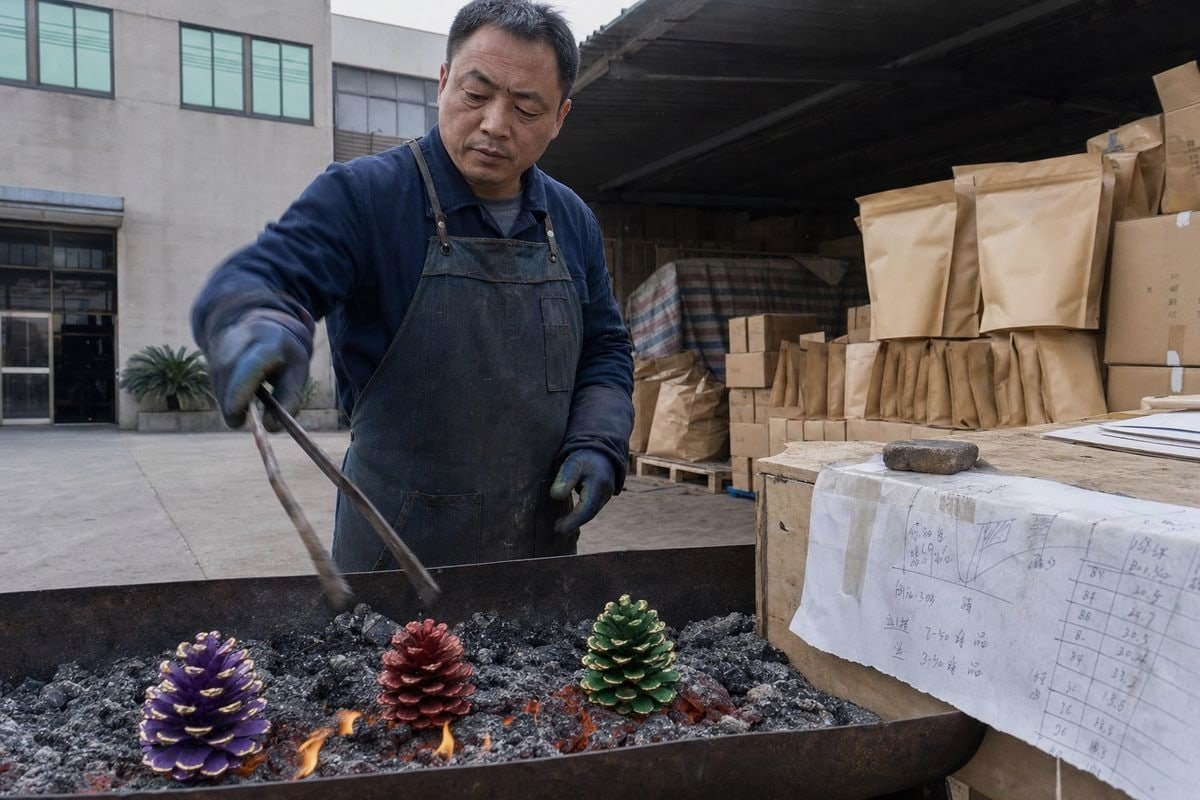
Add colored pine cones after the fire is fully established, ideally when it has burned down to a hot bed of coals with low flames. This stage gives enough heat to vaporize the color salts quickly, while low flame height keeps the colored effect clearly visible.
Timing sounds simple, but it decides whether the colors look magical or muddy potassium chloride 2. Below, I break down the exact burn stage, quantity, fire type, and safety rules that matter.
What's the Best Time in a Fire's Burn Cycle to Add Colored Pine Cones?
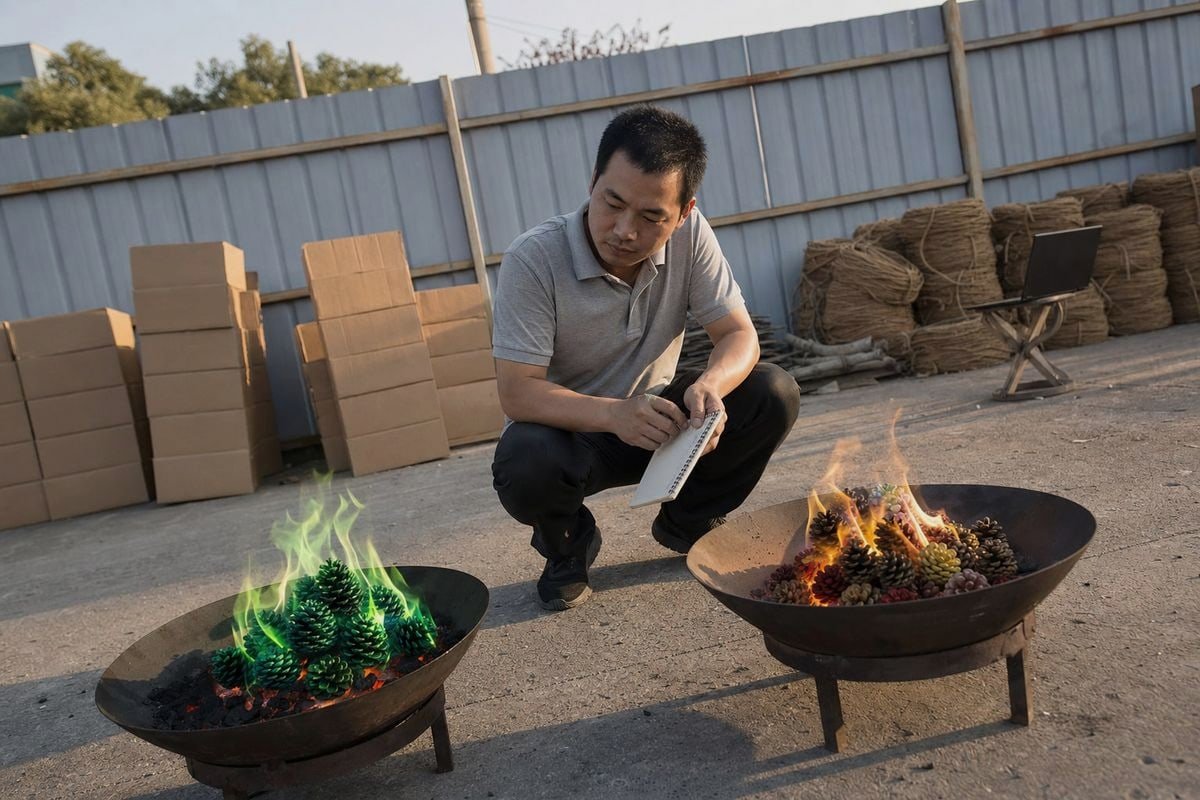
During burn tests at our Ningbo facility, we film every batch of color-flame pinecones at three fire stages strontium chloride 3. The difference between stages is dramatic, and it shapes everything we tell buyers.
The best time is the coal stage, roughly 30–45 minutes into a wood fire, when tall flames have settled into glowing embers with low, steady flame. Heat is at its peak, smoke is minimal, and the colored flames stand out instead of being swallowed by orange fire.

A wood fire moves through predictable stages, and each stage treats a treated pine cone differently. Our QC team learned this the hard way years ago, when an early sample video shot over a fresh, roaring fire made a perfectly good batch look weak. The product was fine. The timing was wrong.
The Three Burn Stages Compared
| Burn Stage | What's Happening | Color Result |
|---|---|---|
| Ignition (0–15 min) | Kindling burning, heavy smoke, unstable heat | Poor — smoke mutes colors, cone may smolder |
| Active flame (15–30 min) | Tall yellow flames, high flame height | Weak — natural orange fire overpowers the color |
| Coal stage (30+ min) | Hot ember bed, low flames, clean burn | Excellent — colors are vivid and clearly visible |
Two things make the coal stage the winner. First, heat. The metal salts inside a treated cone — compounds like copper sulfate 4 for blue-green or strontium chloride for red — need strong, immediate heat to vaporize and emit their colors. A cold or half-started fire lets the cone smolder instead of igniting cleanly. Second, contrast. Colored flames are not brighter than regular flames. They compete with them. Tall orange flames visually bury a blue or green flicker. Low flames over hot coals give the colors an open stage.
There is also a smoke factor. Soot particles in a smoky young fire act like a filter that dulls the spectral colors. Waiting for the clean-burn phase, when smoke is minimal, sharpens the effect noticeably. Never use these cones as fire starters. That is what wax-dipped wood rolls and other homemade fire starters are for — a completely different product with a different job.
How Many Colored Pine Cones Should I Use for the Best Flame Effect?
One question comes up in nearly every buyer call we take, from German fireplace distributors to US camping brands: how many cones per pouch, and how many per fire? The answers are connected.
Use one to three colored pine cones at a time for a standard fireplace or fire pit. Adding them in small groups, spaced apart on the coals, produces cleaner and longer-lasting color than dumping a handful in at once.
More cones do not automatically mean more color. In fact, quantity is the second most common mistake after timing. When you pile five or six cones together, their chemical signatures blend in the same flame zone. Sodium-based residues tend to dominate, and the result is often a dull, indistinct yellow instead of distinct reds, greens, and blues. We saw this repeatedly during product development, which is why our usage instructions specify small quantities and spacing.
A Simple Dosing Guide
| Fire Size | Cones at Once | Placement Tip |
|---|---|---|
| Indoor fireplace | 1–2 | Space cones apart on the coal bed |
| Backyard fire pit | 2–3 | Place near, not on top of, each other |
| Large campfire | 3–4 | Position at the cooler outer edges of the coals |
One Color or Many?
If your cones are single-color treated — for example, boric acid 5 for green or potassium chloride for violet-pink — burn one color at a time or separate them in the grate. Mixing colorants in one spot rarely creates a rainbow. It creates mud. Our Magic Fire packets solve this differently, with a balanced formula designed to shift colors, but standalone cones perform best when kept apart.
Making the Effect Last Longer
Placement extends duration. Cones placed at the cooler edges of the ember bed burn slower and hold their color longer than cones dropped into the hottest center. If you want an extended show, add one cone every ten minutes rather than several at once. Wax dipped pine cones burn longer by design, so they suit users who want a sustained display, though they take slightly longer to reach full color.
Can I Add Colored Pine Cones to Any Type of Fire Pit or Fireplace?
A UK importer once asked us to write "suitable for all fireplaces" on private-label packaging. We refused, and I will explain why — the fire type genuinely matters for both effect and equipment safety.
Colored pine cones are safe for wood-burning fireplaces, wood fire pits, campfires, and wood stoves. Never use them in gas fireplaces or gas log sets, because chemical residues can clog burner ports and permanently damage ceramic log finishes.
The rule is simple: wood fires yes, gas fires no. But within wood fires, some setups showcase the colors better than others, and a few deserve caution.
Compatibility at a Glance
| Fire Type | Compatible? | Notes |
|---|---|---|
| Open wood fireplace | Yes | Best indoor option; ensure the flue is open |
| Wood-burning stove | Yes | Colors visible through glass doors |
| Backyard fire pit | Yes | Great visibility in evening light |
| Campfire | Yes | The classic use case for our export buyers |
| Gas fireplace / gas logs | No | Residue clogs burners and stains ceramic logs |
| Cooking or BBQ fire | Not while cooking | Add cones only after all food is done |
The gas fireplace ban is absolute. Metal salt residues settle into burner ports and valve areas, and repairs are expensive. On the cooking point: the fumes released by color salts are not food-safe. If you are roasting marshmallows or grilling over the fire, finish first, then add the cones. We print this warning on every retail pouch we produce, in the destination market's language.
Fuel choice also affects the show. High-density hardwoods like oak or ash burn with lower natural flames than softwoods, so they make an ideal base fire that will not overpower the chemical colors. For indoor use, keep general fireplace safety habits: open the damper fully, use a fire screen, and treat colored cones as an occasional accent rather than an every-night fuel. Frequent heavy use of any colorant product can contribute to residue in the flue, so regular chimney maintenance still applies.
What Safety Precautions Should I Follow When Adding Colored Pine Cones to a Fire?
Compliance is not optional in our world. Every batch we export passes SGS or Intertek testing, and our factory holds ISO 9001, BSCI, and CE certification — because our US and EU buyers treat safety documentation as a hard requirement, not a bonus.
Toss colored pine cones into the fire using tongs or a quick underhand throw; never hold them in the flames. Do not burn them during cooking, never use them in gas fireplaces, ensure good ventilation, and use them occasionally rather than as regular fuel.
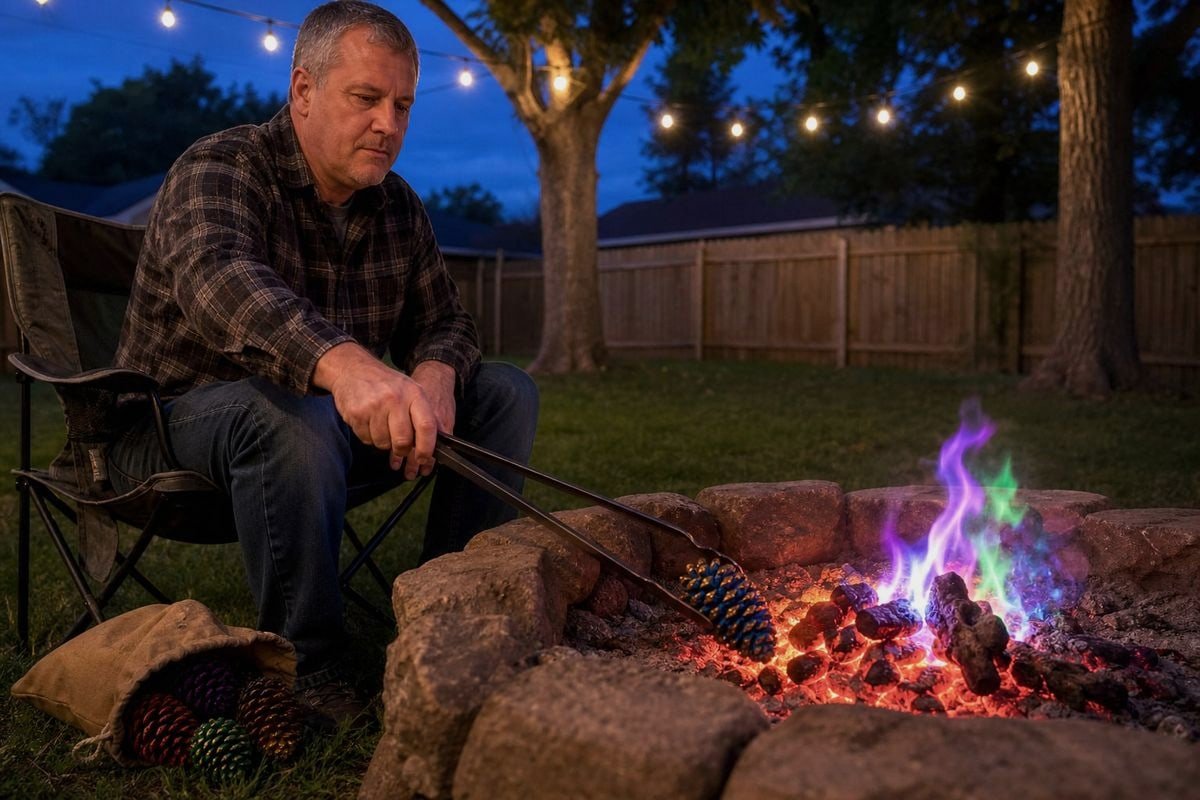
Most safety issues with colored fire products come from misuse, not the products themselves. Here is a practical checklist drawn from the warning labels we develop for private-label clients across 30+ countries.
Handling and Burning
- Add cones to an established fire from a safe distance. Toss them in or use long tongs.
- Do not poke or break apart burning cones. Let them burn out fully.
- Keep children and pets back. The colors attract attention, especially from kids.
- Never leave the fire unattended while treated cones are burning.
- Do not cook or roast food over the fire until the colored cones are completely consumed.
Ventilation and Indoor Use
Indoors, an open flue and a working fire screen are non-negotiable. Colored flame products release combustion byproducts like any burning material, so airflow matters. Use the cones occasionally — a few per fire, a few fires per week at most. Very frequent use over years can add residue that accelerates creosote buildup 6 in the chimney, and heavy creosote is a fire hazard regardless of what you burn. Schedule normal annual chimney inspection 7 either way.
Storage
The color salts are hygroscopic, meaning they absorb moisture from the air. Damp cones sputter and produce weak color. Store them in an airtight container, ideally with a desiccant pack, away from humidity. This is exactly why we package our retail cones in resealable stand-up pouches — a detail our distributor clients specifically requested after field feedback. Choosing a certified supplier matters here too. Products made with eco-friendly formulations and verified test reports remove the guesswork for retailers and end users alike.
Conclusion
Timing beats quantity. Add colored pine cones to hot coals with low flames, use them sparingly in wood fires only, and follow basic safety rules for reliably vivid rainbow fire.
Footnotes
1. Authoritative chemical database entry for the salt used to create red flames in fire displays. ↩︎
2



 English
  Spanish
  German
  French
  Arabic
  Portuguese
Join the Conversation