







Buyers ask me about the ideal wax-to-accelerant ratio in wood fire starters almost weekly. Get it wrong, and your product either won't light or won't last. Returns pile up, reviews turn sour, and your retail buyer quietly drops the SKU. After 17+ years running fire-starter production lines in China, I can tell you the answer is simpler than most suppliers make it sound — but stricter than most DIY guides admit.
The ideal wax-to-accelerant ratio in wood fire starters is approximately 1:1 by weight — typically 50% paraffin wax and 50% wood fiber. This balance ensures full sawdust saturation without wax pooling, delivering reliable single-match ignition and a consistent 8–15 minute burn time duration.
That said, "ideal" depends on your filler material, your market, and your compliance requirements. Below, I break down how to verify, standardize, customize, and audit this ratio when sourcing at scale.
How do I verify the wax-to-accelerant ratio meets international safety and compliance standards?
A German distributor once sent back our first sample batch for third-party testing before signing anything. Smart move. In our export experience, ratio verification is where compliance either passes or fails.
Verify the ratio through independent lab testing (SGS or Intertek), which confirms wax content by weight, flash point safety data, and combustion behavior. Request the manufacturer's test reports, material safety data sheets, and certifications like CE, ISO 9001, and BSCI before placing bulk orders.

Compliance is not paperwork theater. It directly connects to the formula. A fire starter with too much accelerant can have a dangerously low flash point 1. One with unstable wax content can behave unpredictably in transit, especially through hot shipping lanes to the Middle East or Australia. Our own products are tested by SGS and Intertek 2 precisely because buyers in the US and EU treat these reports as hard requirements, not nice-to-haves.
What the lab actually checks
Third-party labs verify several ratio-linked properties. They measure wax content by weight through extraction methods. They confirm the paraffin wax melting point 3, which affects storage stability. They test ignition behavior and check for harmful chemical additives. If a supplier uses cheap chemical accelerants to fake fast ignition, the lab will catch it.
Documents you should demand
| Document | What it proves about the ratio |
|---|---|
| SGS / Intertek test report | Actual wax percentage and combustion efficiency 4 |
| MSDS / SDS | Flash point safety and material composition |
| CE documentation | Compliance for EU fire-lighting products |
| ISO 9001 5 certificate | Process control keeps the ratio consistent |
| BSCI 6 audit report | Factory operates under audited conditions |
One more point I stress with every new buyer: the label must match the lab. If the box says "50% wood fiber, 50% paraffin" — as ours does — the test report should confirm it within a tight tolerance. In the EU especially, mislabeled composition can get a product pulled from shelves. We print composition, warning labels, and usage instructions on packaging because customs officers and retail auditors actually read them.
What ratio should I request to ensure consistent burn time across every production batch?
During a QC review last winter, we caught a batch of wood wool rolls running 2% light on wax. Small number, big deal — that batch would have burned about a minute short.
Request a 1:1 wax-to-wood-fiber ratio by weight with a documented tolerance of ±2–3%. Specify wax type, fiber density, and unit weight in your purchase contract. This locks burn time duration to a predictable window, typically 8–15 minutes per standard-sized starter.
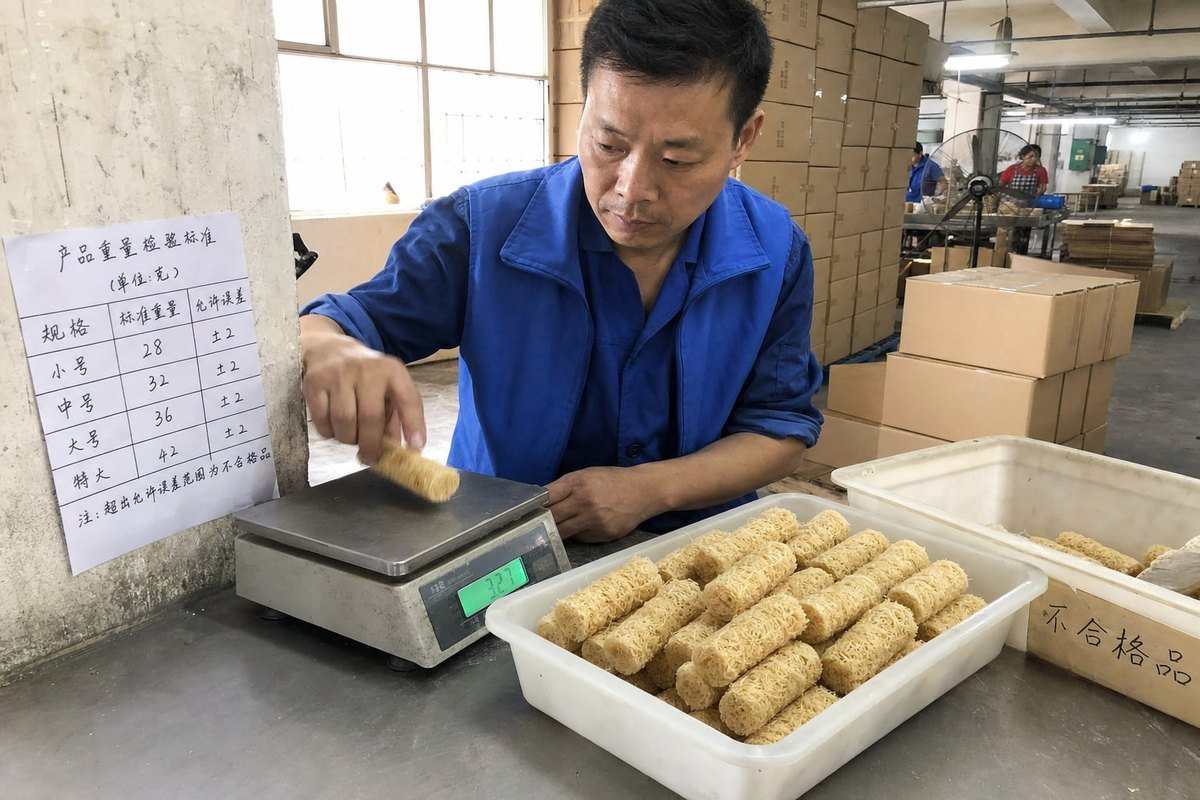
Burn time is not controlled by ratio alone. It is controlled by ratio plus unit weight plus fiber density. Miss any one of the three, and your "10-minute fire starter" becomes a 6-minute disappointment. That is why we weigh finished units on the line, not just the raw inputs. A wood wool roll that leaves our Ningbo facility must fall inside a defined gram range, or it gets rejected.
Why weight beats volume for specifications
DIY guides often talk about "equal volumes" of wax and sawdust. That works in a kitchen. It fails in a factory. Sawdust and wood shavings vary widely in density between timber sources and even between seasons. Weight-based ratios remove that variable. When you write your spec sheet, always define grams of wax per gram of fiber — never scoops or volumes.
How ratio shifts change performance
| Ratio (wax : fiber) | Ignition ease | Burn time | Common issues |
|---|---|---|---|
| 40 : 60 | Very easy | Shorter | Dry pockets, crumbling, weak flame |
| 50 : 50 | Easy | Balanced 8–15 min | None — the standard target |
| 60 : 40 | Harder | Longer | Smoky start, extra soot and residue |
| 70 : 30 | Difficult | Longest | Wax pooling can smother the flame |
The sawdust saturation level is your visual checkpoint. Every fiber should be coated, but no wax should pool at the base of the unit. Excess wax restricts oxygen flow through the natural kindling materials, which chokes early combustion. Too little wax leaves dry pockets that flare and die. Our line supervisors check saturation on every dipping cycle, because that check is what makes batch one and batch fifty burn identically.
Can I customize the wax-to-accelerant formula for my brand's specific market requirements?
A Canadian outdoor brand once asked us for starters that would light reliably at -20°C. Standard paraffin gets brittle in that cold. We adjusted the formula, and the product held together on frozen shelves.
Yes. Reputable OEM manufacturers can adjust wax type, wax percentage, unit size, and additives to match your market. Cold climates need flexible wax blends, survival markets need waterproof fire starters with sealed coatings, and eco-focused retailers may prefer beeswax or plant-based formulas.

Customization is where a real factory separates itself from a trading company. A trader resells one fixed formula. A factory adjusts the recipe on the line. In our ODM work for camping brands, BBQ distributors, and fireplace retailers across 30+ countries, we have learned that the "right" formula changes with geography, retail channel, and brand positioning.
Formula levers you can adjust
There are four practical levers. First, the wax type. The beeswax vs paraffin debate matters for premium eco brands — beeswax costs more but supports a "natural" story, while paraffin delivers the most predictable combustion efficiency at a mainstream price point. Second, the ratio itself. Nordic and Canadian buyers often prefer slightly more wax for longer burns in cold, damp conditions. Third, additives. A small amount of stearic acid additive 7 hardens the wax and raises the melting point for hot-climate shipping. Fourth, coating. A final dip in high-melt-point wax creates waterproof fire starters suited to survival and marine markets.
Matching formulas to markets
| Market need | Recommended adjustment | Why it works |
|---|---|---|
| Cold-climate retail (Canada, Nordics) | Flexible wax blend, slightly wax-rich | Prevents cracking and crumbling in sub-zero storage |
| Survival / marine kits | Extra waterproof outer wax dip | Seals fiber core against moisture |
| Eco / premium brands | Beeswax or plant-wax option | Supports natural positioning, cleaner scent |
| Hot-climate distribution | Stearic acid additive, higher melt point | Units stay firm in warehouses and transit |
| Fast-ignition promise | Looser wood wool, standard 1:1 ratio | More exposed fiber surface catches a single match |
Beyond the formula, we customize everything around it: unit size for target burn time, fire starter pods versus rolls, private-label boxes, display packaging, warning labels, and barcodes. The formula and the packaging must be developed together, because the burn-time claim printed on your box has to match what the lab measures inside it.
How do I evaluate a manufacturer's ability to maintain the right ratio at scale?
The hardest lesson in this business took me years to fully appreciate: any factory can make a perfect sample. Very few can make container number twelve identical to container number one.
Evaluate a manufacturer by auditing four things: weight-based QC records for every batch, wax temperature control on dipping lines, third-party certifications like ISO 9001 and BSCI, and whether mass-production units match the approved sample's weight, saturation, and burn time.
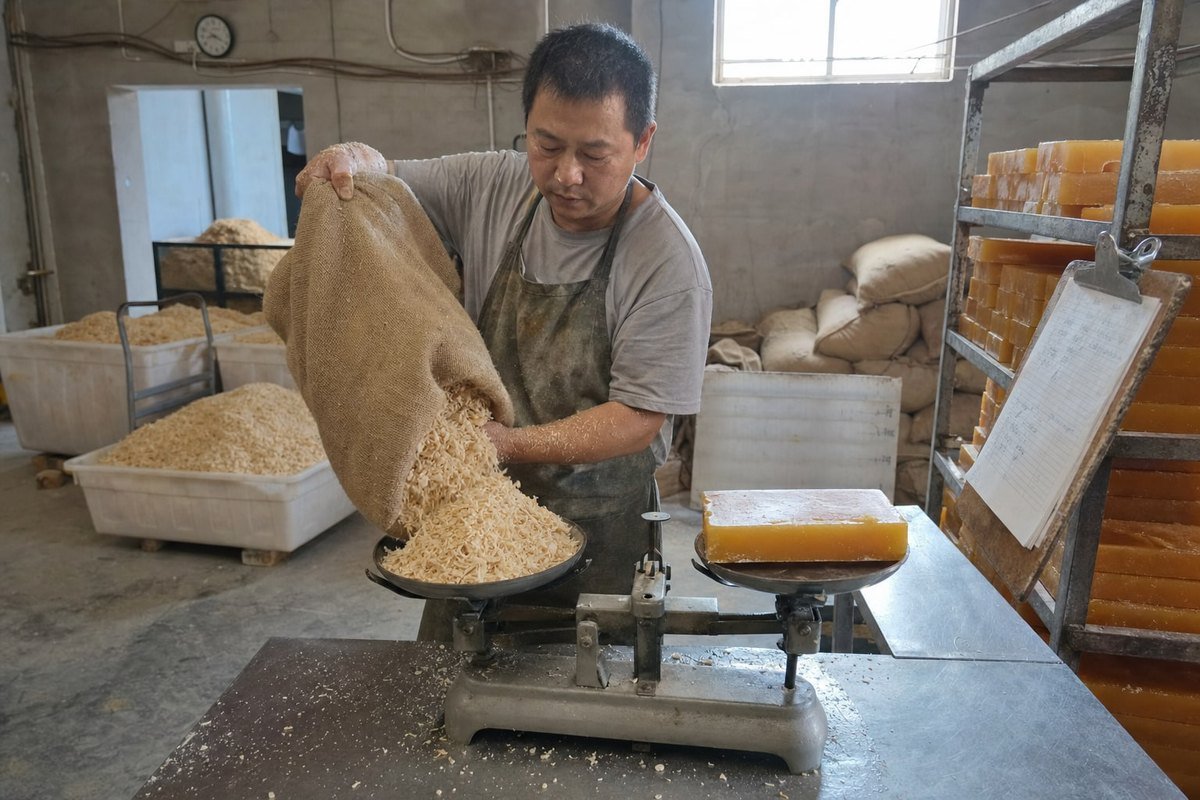
Maintaining a 1:1 ratio across a million units is a process-control problem, not a recipe problem. When wax temperature drifts too high, the wood fiber absorbs more than spec. When it drifts too low, coating turns thin and uneven. When fiber moisture rises after a humid week, the same dip yields a different saturation level. A capable factory monitors all of these, every shift.
A practical audit checklist
Here is the sequence I recommend to purchasing managers evaluating any fire-starter supplier, including us:
- Request batch QC records. Ask for unit-weight logs from three separate past production runs. Consistent gram ranges across months prove real process control.
- Ask how wax temperature is controlled. The dipping bath should hold a defined temperature window relative to the paraffin wax melting point. Vague answers are a red flag.
- Check fiber sourcing. Consistent wood wool suppliers mean consistent density. Frequent fiber switching means ratio drift.
- Compare sample to bulk. Weigh units from your golden sample and from the shipped goods. They should match within the agreed tolerance.
- Run your own burn tests. Light five units from different cartons. Ignition ease, flame height, and burn time should be nearly identical.
- Verify certifications directly. ISO 9001 confirms documented process discipline. BSCI confirms the factory itself is audited and real.
At our Ningbo production site, the first sample must reflect mass-production quality — that is a promise we can only keep because in-line weighing, saturation checks, and burn-testing happen on every batch, not just on samples. A supplier who cannot describe these controls in concrete detail probably does not have them.
Conclusion
An inconsistent ratio quietly kills fire-starter brands through returns and bad reviews. The fix is simple: specify 1:1 by weight, demand test reports, and audit batch-level QC before you commit.
Footnotes
1. NFPA is an authoritative fire safety body relevant to flash point and ignition safety concerns. ↩︎
2. SGS is a leading third-party testing body referenced for compliance verification. ↩︎
3. Explains paraffin wax properties relevant to melting point and storage stability discussion. ↩︎
4. Background on combustion supports the discussion of paraffin's predictable burning behavior. ↩︎
5. Official ISO page explains the quality management standard cited for process discipline. ↩︎
6. Official amfori BSCI page defines the social compliance audit referenced in the article. ↩︎
7. Explains the chemical additive used to raise wax melting point for hot climates. ↩︎



 English
  Spanish
  German
  French
  Arabic
  Portuguese
Join the Conversation