







CCPSA 1 manufacturer duties for private label fireplace pine cones catch many brands off guard. On our production line, we've watched buyers assume "private label" means "private liability" — it doesn't.
Under Canada's CCPSA, a private label brand is treated as the manufacturer of its fireplace pine cones. Duties include ensuring the product poses no danger, keeping six-year traceability records, reporting incidents to Health Canada within two days, avoiding misleading safety claims, and holding valid test documentation.
That single paragraph carries a lot of weight. Let me break down each duty, document, and deadline so you can source color-flame pine cones for the Canadian market with confidence.
What Compliance Documents Should I Request from My CCPSA Manufacturer?
A Canadian distributor once asked us for our full document pack before even discussing price ASTM F400-series 2. That order of priorities was exactly right, and after 17 years exporting fire products, we respect buyers who lead with compliance.
Request the SGS or Intertek test reports, a chemical composition disclosure (SDS), ISO 9001 and BSCI certificates, batch traceability records, a signed declaration of compliance, label artwork proofs, and written confirmation of incident-reporting cooperation. These documents form your due-diligence file under the CCPSA.

The CCPSA does not hand you a fixed checklist of required certificates Competition Act 3. Instead, it prohibits selling a consumer product that is a danger to human health or safety, and it requires you to keep records proving where your product came from. So your document pack is really your defense file. Health Canada can demand proof of due diligence at any time — even without a prior incident.
The Core Document Pack
Here is what we prepare for our own private-label pine cone buyers, and what you should request from any supplier:
| Document | What It Proves | Why the CCPSA Cares |
|---|---|---|
| Third-party test report (SGS/Intertek) | Flammability behavior and chemical safety | Supports the "no danger" duty |
| Safety Data Sheet (SDS) | Full colorant composition | Combustion byproduct evaluation |
| ISO 9001 certificate | Consistent production quality | Batch-to-batch reliability |
| BSCI audit report | Ethical, audited factory | Supply chain credibility |
| Declaration of compliance | Supplier accountability in writing | Traceability and recall readiness |
| Batch/lot records | Which cones came from which run | Six-year recordkeeping duty |
| Label artwork proof | Warnings and claims as printed | Misleading-label prohibition |
One point I stress with every buyer: ask for reports tied to the actual formulation you are buying. A generic report for a different colorant blend protects nobody. When we run a custom color mix for a client, we test that mix, not a lookalike. If your supplier hesitates to link test reports to specific batches, treat that as a warning sign. Under the CCPSA, you — the brand on the bag — will be the one answering Health Canada's questions, not the overseas factory.
How Do I Verify a Fireplace Pine Cone Supplier Meets Canadian Safety Standards?
Early in our export history, we lost a deal because a buyer could not verify us fast enough against a cheaper trading company. That taught us to make verification easy — and taught me what real verification looks like from the buyer's side.
Verify a supplier by confirming they are a real factory, validating certificates directly with the issuing bodies, ordering independent testing on production samples, auditing their batch QC process, and checking they can supply lot-level traceability. Never rely on self-declared claims or PDF certificates alone.
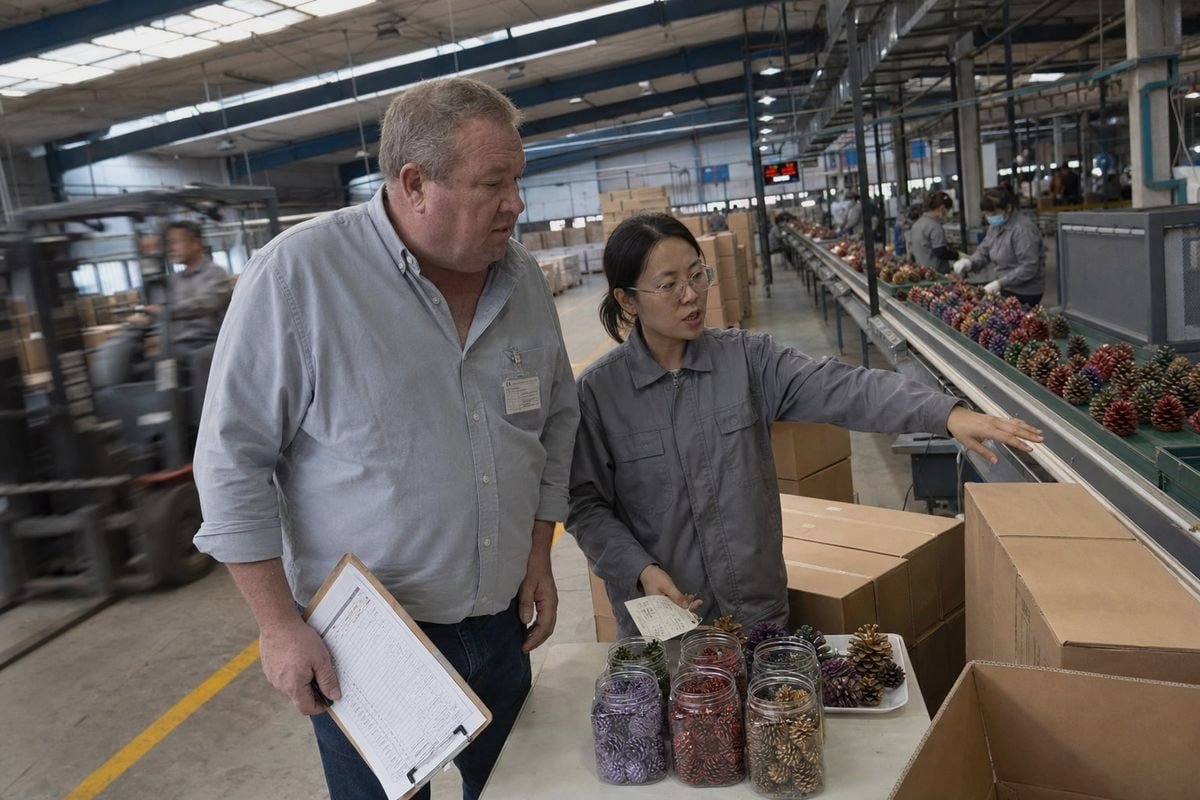
Verification is where private-label brands either build a defensible compliance position or quietly inherit someone else's risk. Because the CCPSA treats the private labeler as the manufacturer of record, your supplier's weaknesses become your legal exposure in Canada. Selling through Amazon.ca changes nothing here — marketplace terms of service offer no shield from Health Canada enforcement.
A Five-Step Verification Process
- Confirm the factory is real. Ask for a video walkthrough of the production line, business licenses, and export records. Trading companies often cannot show the line where colorant is applied to the cones.
- Validate certificates at the source. SGS and Intertek 4 reports carry reference numbers you can check directly with the lab. We encourage buyers to do this with ours — it takes minutes.
- Test production samples independently. Do not test only the golden sample. Pull units from an actual production run. In our experience, the gap between sample and mass production is where weak suppliers fail, which is why we run strict batch-to-batch QC so the first sample reflects what ships.
- Audit the QC and traceability system. Ask how the supplier links raw colorant lots to finished pine cone batches. If they cannot answer, you cannot meet your own six-year recordkeeping duty.
- Test communication under pressure. Send a technical question about combustion byproducts. A capable factory answers with data. A reseller stalls.
One clarification worth raising: some buyers assume natural pine cones sit outside consumer-product regulation because they are "just nature." The CCPSA applies based on how a product is packaged and marketed for consumer use — a colorant-treated cone sold for fireplace use is squarely in scope.
What Labeling and Warning Requirements Apply to My Private Label Pine Cones?
Designing custom warning labels is part of nearly every private-label project we take on, and Canadian orders always add one requirement that surprises first-time buyers: everything must read cleanly in two languages.
Canadian private label pine cones require bilingual English/French labels with open-flame warnings, ventilation instructions, a prohibition on unvented or airtight stoves, child and pet safety cautions, and no wording that implies the product is not dangerous. The CCPSA prohibits labels creating a false impression of safety.

Labeling is where fire products face the sharpest scrutiny, because packaging language directly shapes how consumers behave around flame. The CCPSA explicitly prohibits packaging or labeling that could reasonably create the erroneous impression that a product is not dangerous. For a product designed to be placed in a fire, that prohibition has teeth.
What Must Appear on the Package
| Label Element | Requirement | Common Mistake |
|---|---|---|
| Language | Full bilingual English/French text | French added only on a sticker, or missing from warnings |
| Flame warnings | Open-flame caution, keep away from children | Warnings buried in tiny print |
| Use restrictions | Not for unvented or airtight enclosed stoves | Omitting stove-type guidance entirely |
| Ventilation | Instruction to use in ventilated fireplaces/fire pits | Assuming outdoor use only |
| Safety claims | No "safe", "harmless", or "non-toxic" without evidence | Copying marketing language from another market |
| Eco claims | Substantiated, specific environmental statements | Vague "eco-friendly" wording inviting greenwashing scrutiny |
That last row deserves emphasis. Sustainability claims fall under separate Competition Bureau 5 greenwashing rules via the Competition Act — a compliance layer beyond the CCPSA that many brands never anticipate. Our own products are made from eco-friendly materials with no harmful chemicals, yet we still advise buyers to phrase claims specifically and keep substantiation on file, rather than printing a broad green promise.
Because we handle warning labels, barcodes, and custom display packaging in-house for OEM clients, we review artwork against the destination market before printing. Kraft pouches with clear windows — like the campfire-format packaging many of our clients choose — leave limited panel space, so bilingual warnings must be planned into the design from day one, not squeezed in at the proof stage.
Which Testing Reports Do I Need Before Importing Color-Flame Pine Cones into Canada?
The trade-off we weigh most often with new Canadian buyers is testing scope versus testing cost. Skipping combustion byproduct analysis saves money upfront — and creates exactly the gap Health Canada is most likely to probe.
You need third-party flammability and burn-behavior reports, chemical composition analysis of the flame colorants, combustion byproduct and indoor air quality evaluation, and heavy-metal screening. Reports should come from accredited labs like SGS or Intertek and match the exact formulation and batch you import.

Standard flammability testing alone is not enough for this product category. Color-flame pine cones use metal salt colorants — copper compounds for blue and green flames, for example — and the real safety question is what happens when those compounds burn indoors. Combustion byproduct toxicity and indoor air quality 6 impact are the risk areas most frequently overlooked in routine compliance checks, and they are precisely where a "danger to human health or safety" finding could arise under the CCPSA.
Building the Right Test Package
| Test Type | What It Covers | Indoor Fireplace Use | Campfire Use |
|---|---|---|---|
| Flammability / burn behavior | Ignition, flame spread, burn time | Required | Required |
| Chemical composition (SDS-linked) | Exact colorant identity and concentration | Required | Required |
| Combustion byproduct analysis | Emissions when colorants burn | Critical | Recommended |
| Heavy-metal screening | Restricted metals in the formulation | Required | Required |
| Packaging safety | Pouch materials, child access considerations | Recommended | Recommended |
One Test Program, Two Markets
If you sell the same pine cones in both Canada and the United States, do not run two separate compliance projects. Align your CCPSA documentation with CPSC expectations and ASTM F400-series flammability protocols 7 in a single testing round. We routinely coordinate this for clients selling into both markets — one accredited lab engagement, one formulation lock, two market files. It cuts cost and, more importantly, prevents the version drift that happens when two labs test two slightly different samples.
Finally, connect testing to the CCPSA's clock. If a reportable incident occurs, you owe Health Canada an initial report within two days of awareness and a detailed written report within ten days as manufacturer of record. Having current test reports and lot records on hand is what makes those deadlines survivable. Your records must be retained for six years after the end of the relevant year — plan your document storage accordingly.
Conclusion
Private label pine cones look simple. Under the CCPSA, they are not. Assign roles, verify your factory, test the real formulation, label bilingually, and keep six-year records. Partner with a compliance-ready manufacturer, and Canada becomes a straightforward market.
Footnotes
1. Links to the official Canada Consumer Product Safety Act text referenced throughout the article. ↩︎
2. ASTM International publishes the flammability testing standards named in the article. ↩︎
3. Official Canadian regulator governing greenwashing and sustainability claims mentioned in article. ↩︎
4. Accredited third-party testing labs named as sources for verifiable compliance reports. ↩︎
5. Official regulator source for Canada's greenwashing and environmental claim rules. ↩︎
6. EPA authority on indoor air quality impacts relevant to combustion byproduct evaluation. ↩︎
7. Official standards body reference for the flammability testing protocols cited. ↩︎
 English
  Spanish
  German
  French
  Arabic
  Portuguese
Join the Conversation