






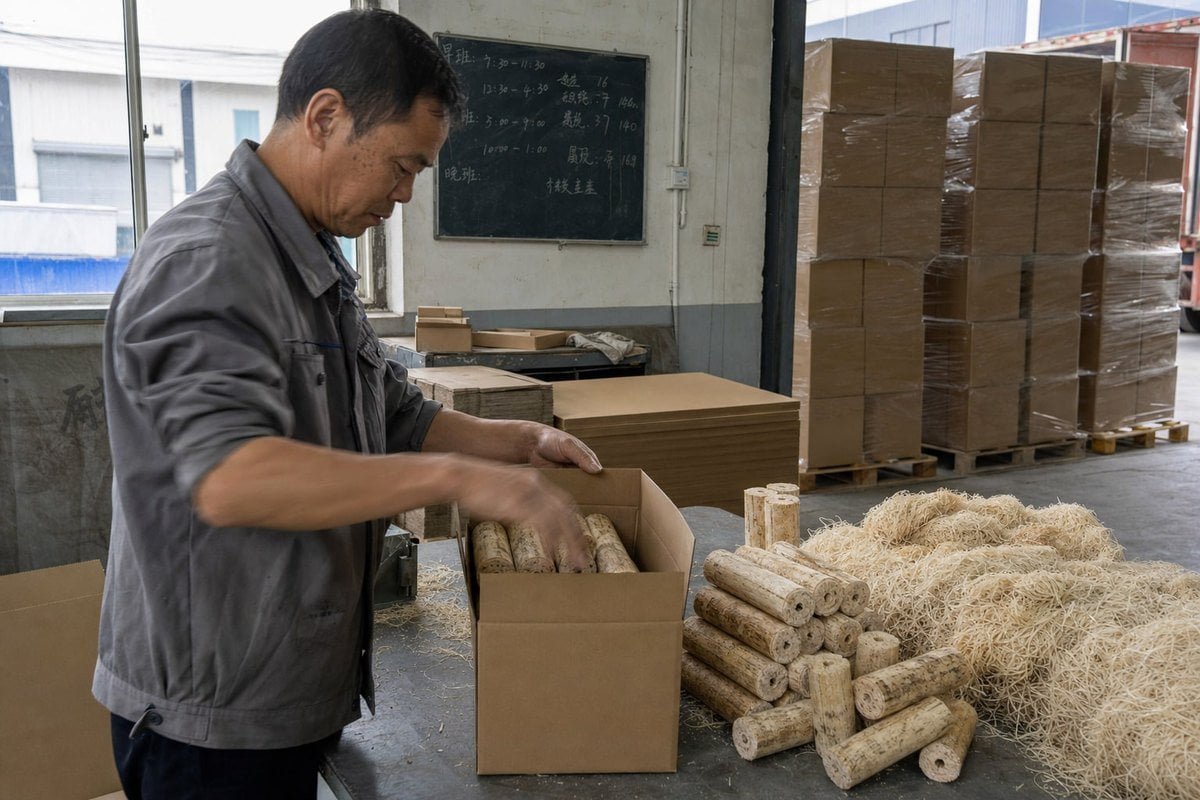
Phased orders for private label wood fire starters solve a problem I see on our production line constantly: buyers who overcommit early, tie up cash in slow inventory, and stall their launch.
Phased orders cut trial costs for private label wood fire starters by splitting your purchase into stages: samples first, then a small validation run of 200–500 units, then a full-scale reorder. You spend money only after the product, packaging, and unit economics prove themselves.
Let me walk you through how this works in practice. I will cover the structure, the right trial size, the compliance checkpoints, and how to lock in terms across every phase.
What is a phased order structure and how can it lower my trial costs on private label wood fire starters?
A buyer from Germany once asked our factory to ship 40,000 wax-dipped wood rolls on his first order. We talked him down to a phased plan instead — and it saved his launch.
A phased order structure splits one large purchase into sequential stages — samples, a small trial run, then scaled production — with pricing and packaging terms agreed upfront. It lowers trial costs by deferring the bulk of your spend until real sales data justifies it.
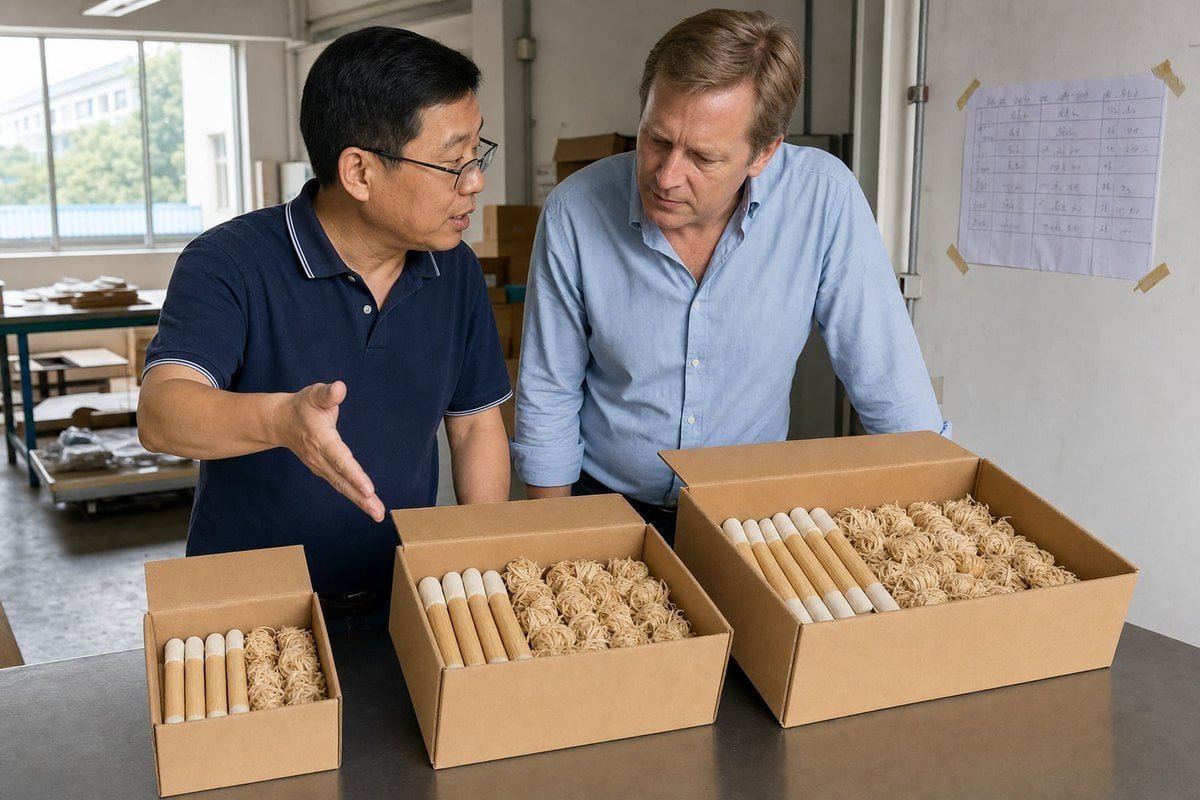
The core idea is simple. Your first order is not a profit center. It is a market validation trial. You are buying information at the lowest possible cost: does the product sell, does the packaging survive transit, and does the landed cost protect your margin?
The three phases in practice
In our 17+ years of contract manufacturing for fire products, the plans that work best follow this shape:
| Phase | Purpose | Typical Spend | What You Learn |
|---|---|---|---|
| Phase 0: Samples | Compare burn time, odor, consistency | $50–$300 plus courier | Which supplier and formulation win |
| Phase 1: Trial order | Validate demand and packaging | $2,000–$10,000 for 200–500 units | Sell-through, returns, real landed cost |
| Phase 2: Scale order | Capture volume pricing | Based on proven demand | Margin at full volume |
Why one-shot ordering is the expensive path
A single large order looks efficient on paper. The per-unit price drops, and the freight cost spreads across more units. But the hidden costs stack up fast. Slow-moving inventory drives up inventory carrying costs 1. A packaging mistake gets multiplied across thousands of boxes instead of hundreds. And for a seasonal product like wood wool firelighters, missing the autumn selling window can strand your stock until next year.
Phased ordering flips that risk. You spread spend across stages. Each stage earns the right to fund the next one. That is working capital optimization in its most practical form — your cash stays free until the data says commit.
One more benefit buyers overlook: a phased plan gives your supplier a reason to invest in the relationship. When we know a trial order leads to a scale order, we treat the 300-unit run with the same batch-to-batch quality control as a container load.
How small should my first trial order be before scaling up to full production volume?
The trade-off I weigh with every new buyer is this: order too small and you learn nothing meaningful; order too big and you carry the risk we are trying to avoid.
Your first trial order should be 200–500 units, or 1,000–5,000 pieces for bulk-format fire starters, with a total budget of roughly $2,000–$10,000. Size it to generate 4–8 weeks of sales data without risking a stockout of capital.

The right number depends on your channel, your packaging complexity, and how confident your demand forecast is. Industry guidance clusters around a few useful ranges, and they line up well with what we see from our own trial buyers.
Sizing benchmarks buyers actually use
| Buyer Situation | Suggested Trial Size | Budget Range | Rationale |
|---|---|---|---|
| First-time private label seller | 200–300 units | $2,000–$5,000 | Enough for photos, listings, and early ads |
| Established distributor testing a new SKU | 300–500 units | $5,000–$10,000 | Enough depth to test two retail channels |
| Bulk or case-pack fire starter buyer | 1,000–5,000 pieces | Varies by format | Matches typical low minimum order quantity tiers |
What your trial budget really covers
Do not confuse the factory quote with your trial cost. The full number includes samples from 3–5 suppliers, inbound freight, customs and duties, packaging setup, product photography, listing creation, and a modest ad budget. Quality wood wool fire starters with natural wax often quote at $0.10–$0.20 per unit, with premium eco-friendly formulations 2 above $0.25. At those prices, freight and packaging usually cost more than the product itself. Compare quotes on landed cost, never factory price alone.
Keep the trial simple
Start with a single hero SKU — a standard wood wool bundle or a compressed fire starter puck. Skip proprietary wax or scent blends at this stage and use stock eco-friendly formulations to avoid R&D fees. Use digital-print labels or stickers instead of flexographic plates. Every simplification lowers your trial cost without weakening the test. SKU rationalization can come later, once you know which format your market actually buys.
What compliance and quality checks should I confirm at each phase before increasing order size?
A lesson we learned early in exporting to 30+ countries: a trial order that skips compliance checks is not a trial — it is a delayed problem.
Confirm supplier certifications (ISO 9001, BSCI) and product test reports (SGS or Intertek, CE where applicable) at the sample phase. Verify burn performance and packaging integrity in the trial phase. Audit batch consistency against retained samples before any scale order.
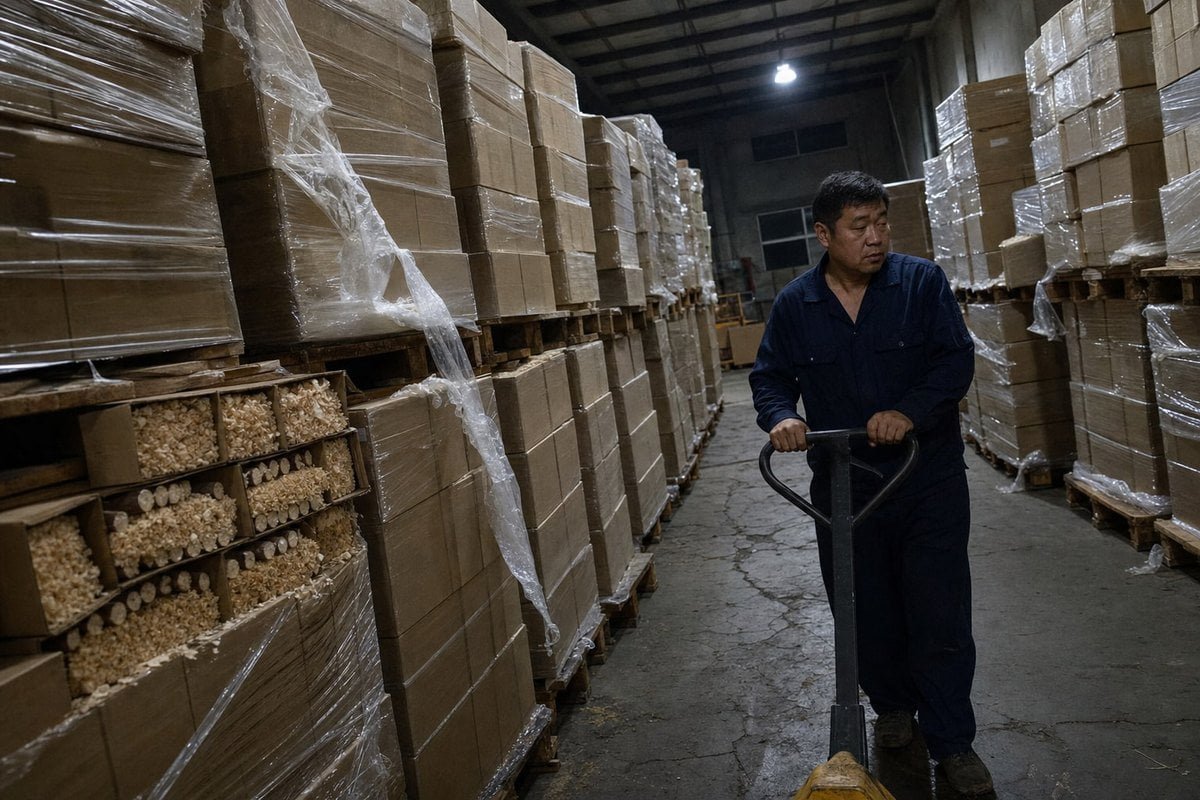
Fire starters are combustible consumer goods. consumer product safety 3 Retailers in the US and Europe will ask for documentation, and customs can too. The good news is that a phased structure gives you natural checkpoints to verify everything before your exposure grows.
Phase-by-phase compliance checklist
| Phase | Compliance Checks | Quality Checks |
|---|---|---|
| Sample phase | Request ISO 9001 4, BSCI certificates; SGS/Intertek test reports; confirm material composition | Test ignition speed, burn duration, odor, ash residue |
| Trial order | Verify warning labels, barcodes, and language requirements for your market | Inspect packaging integrity after real transit; spot-check unit weight and consistency |
| Scale order | Reconfirm current test reports; check any regulation updates in your market | Compare production batch against retained trial samples; agree AQL inspection terms |
Why sample-to-production consistency matters most
Here is the question that separates real factories from trading companies: will the mass-production batch match the sample? SGS/Intertek test reports 5 At our facility, we retain reference samples from every trial run, and every scale batch gets checked against them for wax coverage, fiber density, and burn time. Ask your supplier to do the same. If they cannot explain their batch-to-batch quality control process in plain terms, that is a warning sign.
Also check the claims on the box. If the packaging says "eco-friendly" or "no harmful chemicals," ask for the test report that backs it. European buyers in particular face scrutiny on environmental claims, and a trial order is the cheapest moment to get the documentation right.
How do I lock in private label packaging and pricing terms across multiple phased orders?
When a UK fireplace distributor asked us to hold trial pricing through three reorders, we put it in writing — and that agreement is why they are still ordering four years later.
Lock in terms with a blanket purchase order or framework agreement that fixes unit pricing across volume tiers, holds packaging artwork and tooling, and schedules releases. Agree these terms before the trial order, so scaling never requires renegotiation.

The biggest mistake buyers make is treating each phase as a separate negotiation. That gives away your leverage. Your negotiating power is highest before the first order, when the supplier wants to win the relationship. Use that moment to set the terms for the whole journey.
What to fix in the framework agreement
- Tiered pricing schedule. Agree unit prices for the trial quantity, a mid-tier reorder, and a full-scale volume — all upfront. A blanket purchase order with scheduled releases secures volume pricing while deferring the cash outlay.
- Packaging ownership and file retention. Confirm in writing that your artwork, dielines, and any printing plates belong to you, and that the supplier retains them between phases.
- Sample credits. Ask for sample and trial-setup costs to be credited against the scale order.
- Lead time and release terms. Fix production lead times per tier, and explore just-in-time delivery 6 releases so you hold less stock during the season.
- Off-season production windows. Fire starters are seasonal; booking trial production in the factory's quiet months often earns better rates and attention.
Design packaging for phased upgrades
Smart packaging design keeps your trial cheap and your upgrade path open. Use a modular approach: a generic inner box across all phases, with only the outer sleeve or sticker changing as your branding evolves. Print the trial run digitally, then move to flexographic printing 7 at scale when the minimum order quantity makes sense. Request mixed-pallet shipping to test 10-count versus 50-count formats within one freight cost. And build subscription-ready dimensions into the first design, so the product fits standard postal mailers if you later add a direct-to-consumer channel.
Our OEM team handles this progression routinely — custom boxes, display packaging, warning labels, and barcodes are all mapped to your phase plan from day one, so nothing gets redesigned twice.
Conclusion
Overcommitting on a first order is the fastest way to strand cash in slow inventory. Phased orders fix that: sample, validate small, verify compliance, then scale on locked-in terms.
Footnotes
1. Background concept explaining why slow-moving stock increases financial risk for buyers. ↩︎
2. EPA program verifying environmental and safety claims relevant to eco-friendly product formulations. ↩︎
3. Official government portal for the CPSC, the agency regulating combustible consumer product safety. ↩︎
4. Official NIST page explaining ISO 9001 quality management standards for manufacturing businesses. ↩︎
5. Independent testing bodies that verify product safety and material composition claims for buyers. ↩︎
6. Background on the inventory strategy referenced for reducing stock during seasonal demand. ↩︎
7. Explains the printing technology referenced for scaling packaging production beyond digital labels. ↩︎



 English
  Spanish
  German
  French
  Arabic
  Portuguese
Join the Conversation