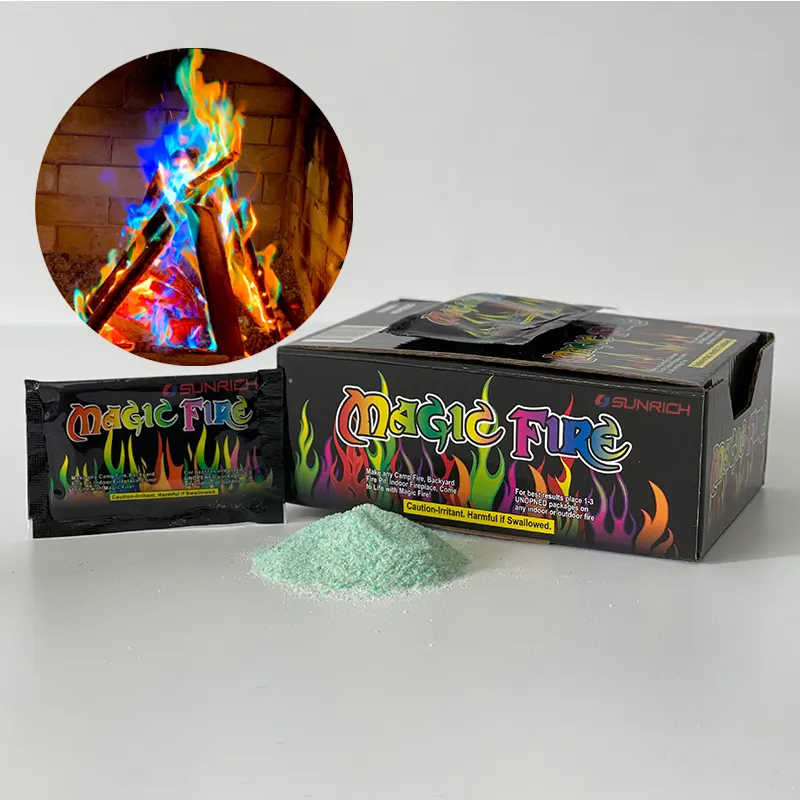
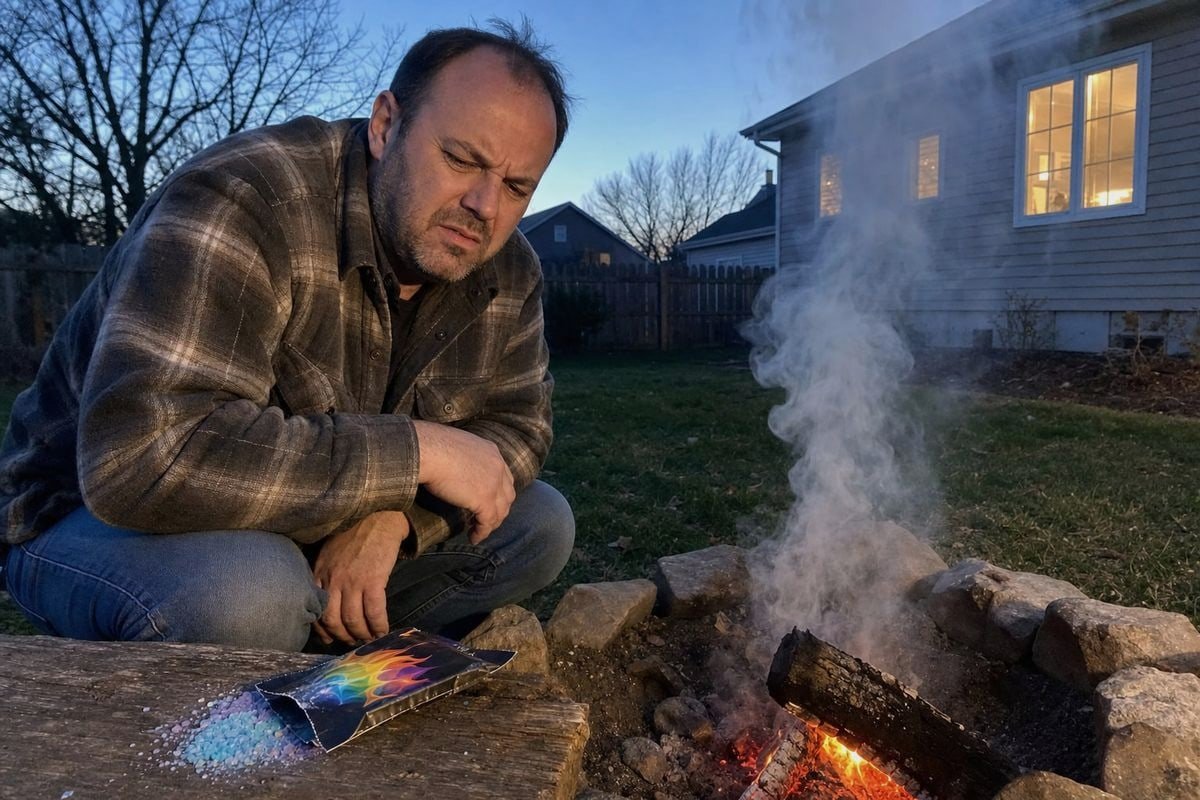
Magic Fire powder that smokes without changing color frustrates buyers and end users alike. I have seen this exact complaint land in our factory inbox more times than I can count.
Magic Fire powder smokes without changing color when the flame temperature is too low, the packet has absorbed moisture, the sachet sits in cool ash instead of active flame, or the metal salts formula is degraded or incorrectly blended. Fix heat, placement, and moisture first.
Let me walk you through each failure point. I will cover the chemistry, the compliance side, the sample-versus-bulk problem, and the questions you should ask before ordering.
What causes my Magic Fire powder to smoke heavily but never produce color?
Last winter, a Dutch distributor sent us a rival's failed sachet for analysis. Our lab team opened it and found clumped, damp granules. The diagnosis took ten minutes.
Heavy smoke without color usually means incomplete combustion. The fire is too cool to excite the metal salts, the powder is damp and smoldering, or the sachet is buried in ash away from the active flame. Color needs high heat plus direct flame contact.
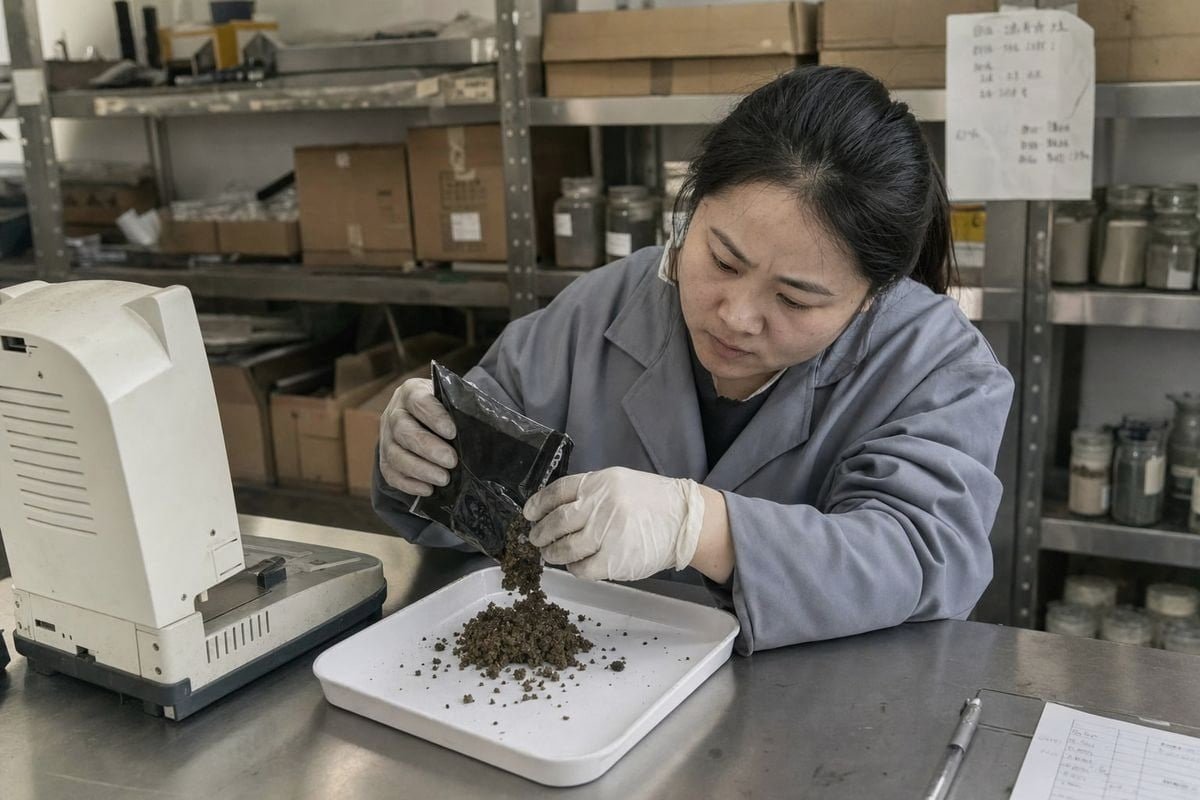
The science here is simple. Colored flames come from metal-ion emission. Heat excites the ions in metal salts 1. When those ions relax back down, they release light at specific wavelengths. Copper sulfate gives green and blue tones. Strontium chloride gives red. But this pyrotechnic effect only happens above a certain flame temperature 2. Below that threshold, the powder just decomposes, chars, and smokes.
The ionization threshold problem
Think of it as a two-step process. Step one is chemical decomposition. Step two is electronic excitation. A smoldering fire can complete step one but fail at step two. That is why you see smoke but no color. The heat is enough to break the packet down, but not enough to make the metal salts glow.
Common physical causes at a glance
| Symptom | Likely Cause | Quick Fix |
|---|---|---|
| Thick white smoke, no color | Damp powder, high moisture content | Store dry; replace the packet |
| Brief flare, then nothing | Packet landed in ash bed | Toss into the hottest flame zone |
| Faint color, mostly orange | Fire too small or too cool | Build an established wood fire first |
| Color drowned in yellow | Sodium contamination from ash or salt | Use a cleaner fuel base |
| Slow smolder, clumping | Hygroscopic clumping from bad storage | Check seal integrity before use |
Moisture is the silent killer here. Many colorant salts are hygroscopic. They pull water from humid air through any pinhole in the foil 3. Once clumped, the granules smolder slowly instead of vaporizing into the flame. Our own sachets use heat-sealed foil 4 with crimped edges for exactly this reason. Wind matters too. Strong drafts can disperse the color-producing vapors before they accumulate and glow. And if the packet is trapped under logs in the reducing zone of the fire, oxygen starvation blocks the oxidation-excitation cycle entirely.
How do I check if my supplier's formula meets compliance standards for consistent color performance?
A German buyer once asked me for our SGS reports before he even asked about price. That ordering of priorities told me he had been burned before.
Request third-party test reports from SGS or Intertek, verify ISO 9001 and BSCI certification, ask for the formula's declared metal salts composition, and confirm CE marking where applicable. A compliant formula lists stable colorants and excludes banned heavy metals entirely.

Compliance and color performance are more connected than most buyers realize. A supplier who cuts corners on chemistry to save cost will often substitute cheaper, less stable salts. Those substitutes may pass a quick visual demo but fail after three months in a shipping container. In our seventeen-plus years exporting to the US, Germany, the UK, and thirty other markets, we have learned that documented chemistry is the only chemistry you can trust.
What the documents should actually show
Do not accept a generic certificate photo. Ask for these specific items:
- A recent SGS or Intertek test report tied to the exact product SKU, not the company in general.
- Heavy metal screening results, especially for lead, arsenic, and mercury.
- A safety data sheet listing the active campfire colorant compounds.
- ISO 9001 documentation proving a real quality management system exists on the production line.
- BSCI audit results if your retail channel requires social compliance.
Why formula stability equals color consistency
Chemical flame colors depend on purity. If a batch of copper sulfate carries sodium contamination, the yellow sodium emission overpowers the intended blues and greens. A compliant supplier controls raw material sourcing 5 and tests incoming salts. At our Ningbo facility, we screen every raw material lot before it enters blending. That step alone prevents most of the "sample worked, bulk failed" complaints you hear in this category. Also confirm the moisture content specification 6 in the QC documents. A formula spec that includes a maximum moisture limit tells you the factory understands why sachets fail in the field. Finally, check that warning labels meet your market's rules, including wood stove safety language and the standard instruction not to cook food over treated flames.
Why does my color-flame product work in samples but fail in mass production batches?
The trade-off I weigh most often in production planning is speed versus blend uniformity. Rushing the mixing stage saves hours but ruins batch consistency. We refuse that shortcut.
Samples often come from small, carefully hand-blended lots, while mass production exposes weaknesses: uneven mixing of metal salts, moisture absorbed during longer packing runs, cheaper substitute chemicals, and skipped batch testing. Only strict batch-to-batch quality control keeps bulk output matching the sample.
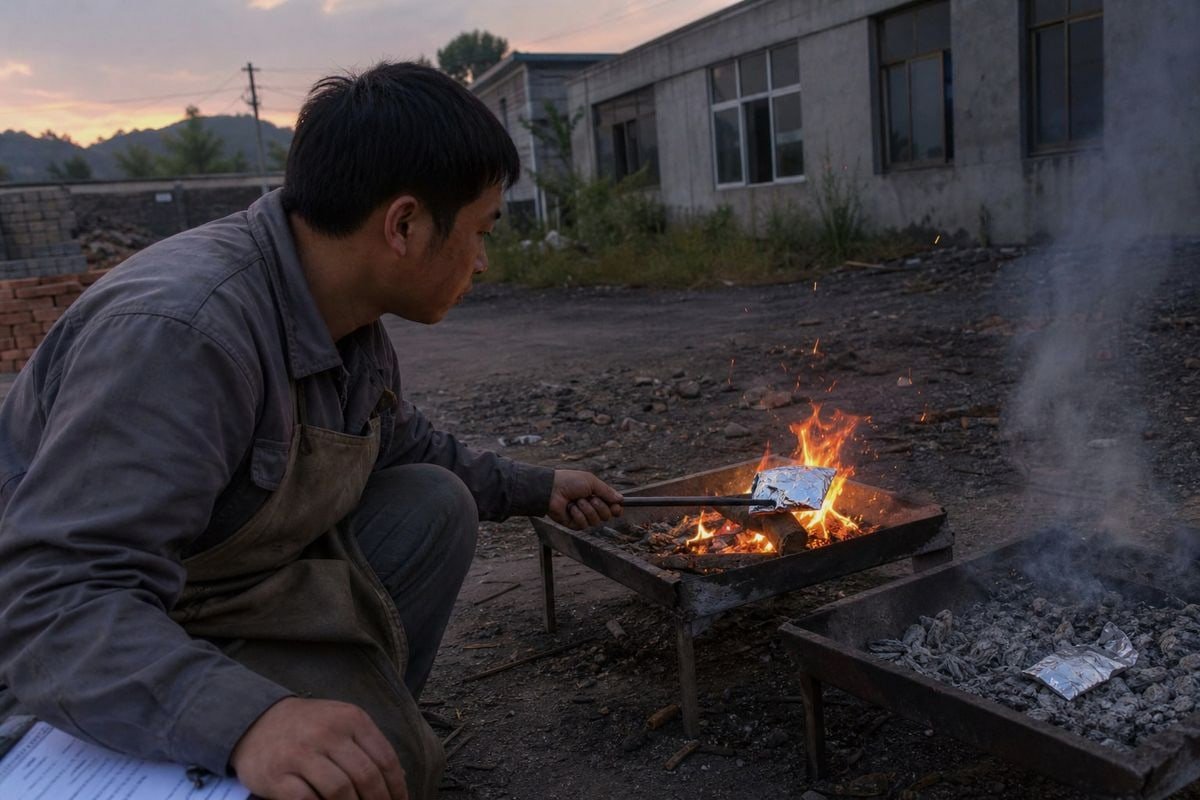
This is the most expensive lesson in the color-flame business. A trading company can buy one excellent sample lot from anywhere. What it cannot do is control what happens across ten thousand sachets on a real production line. That gap is where your brand reputation dies.
Where bulk batches go wrong
| Failure Point | Sample Stage | Mass Production Reality |
|---|---|---|
| Blending | Hand-mixed, small volume, uniform | Large mixers can leave salt concentration gradients |
| Raw materials | Premium strontium chloride and copper compounds | Substituted with cheaper, less pure grades |
| Sealing | Individually checked sachets | High-speed sealing may leave micro-leaks |
| Moisture | Packed same day in dry conditions | Powder sits exposed during long runs, absorbing humidity |
| Testing | Every sample burn-tested | Testing skipped or reduced to save time |
How a real factory closes the gap
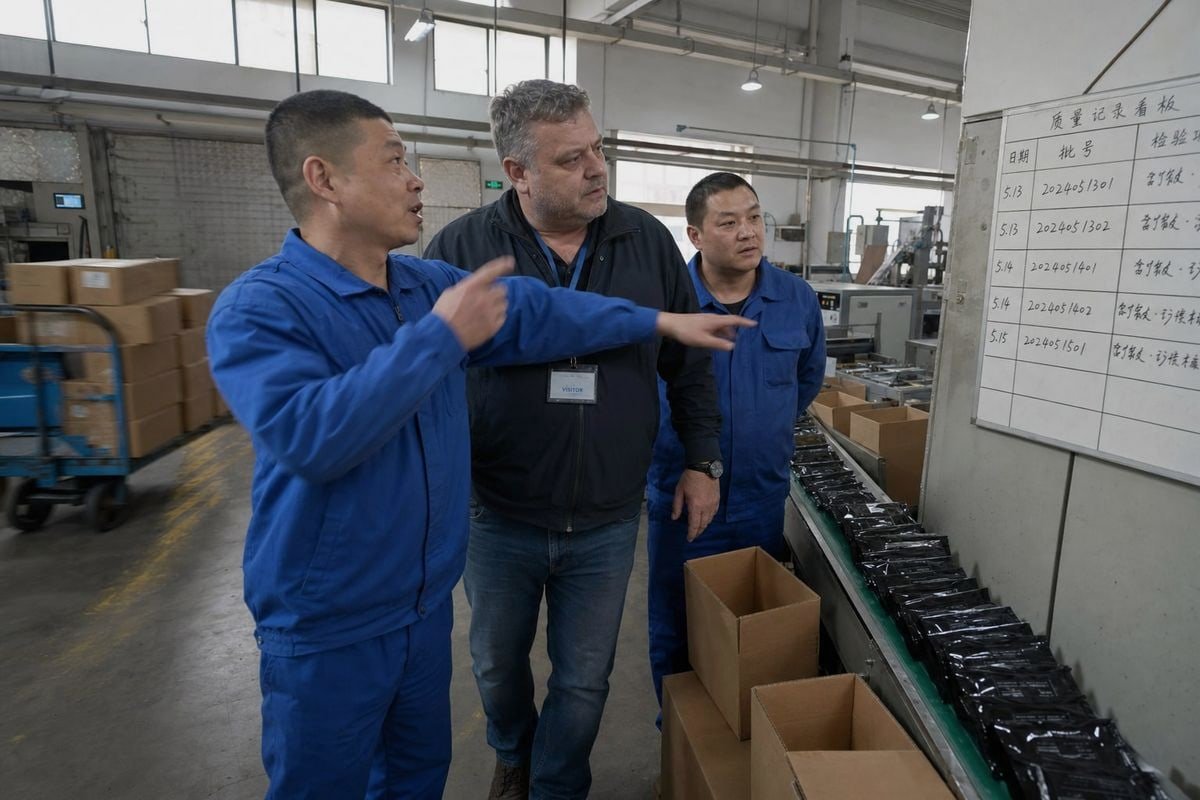
Our approach is boring on purpose. We lock the raw material specification after sample approval, so the bulk order uses identical salt grades. We burn-test sachets pulled from the start, middle, and end of every production run. We control humidity in the packing area because a few hours of exposure can raise moisture content enough to weaken the flame effect months later. And we keep retained samples from every batch, so if a complaint arrives, we can trace it to a specific run within a day.
When you evaluate a supplier, ask one blunt question: how do you guarantee batch ten looks like batch one? A trading company will talk about inspections. A genuine factory will describe its blending controls, sealing checks, and burn-test frequency. The difference in answers tells you everything.
What questions should I ask a manufacturer to ensure reliable color-flame quality before placing a bulk order?
Early in my export career, a Canadian buyer taught me something. He asked fourteen questions before ordering, and his repeat rate with us is now the highest we have.
Ask about SKU-specific test reports, the exact metal salts used, moisture control during packing, burn-test frequency per batch, sample-to-bulk consistency guarantees, private-label and warning-label capability, MOQ flexibility for trial orders, and lead-time commitments. Strong answers reveal a true factory.
Good sourcing is really structured interrogation. The questions below separate factories with real depth from resellers with a good sample.
The essential question list
| Question | What a Strong Answer Sounds Like | Red Flag Answer |
|---|---|---|
| Can you share SGS or Intertek reports for this SKU? | Sends dated, SKU-matched reports promptly | Sends a blurry company-level certificate |
| Which colorant salts do you use? | Names compounds and purity grades openly | Calls the formula "secret" with no data sheet |
| How do you control moisture during packing? | Describes humidity control and seal testing | Says packets "rarely" have problems |
| How often do you burn-test in production? | Start, middle, and end of every run | Only tests when a customer complains |
| Can you match my sample in bulk? | Explains locked specs and retained samples | Promises verbally with no process detail |
| Do you support private label? | Offers custom pouches, boxes, barcodes, warning labels | Only offers stock packaging |
| What is your trial-order MOQ? | Flexible MOQ for first orders | Demands full container commitment |
Questions about use-case fit
Also confirm the product matches your market's fire types. A sachet designed for wood-burning fire pits behaves differently in an alcohol-fueled performance setup, which typically needs denatured alcohol 7 rather than camp fuel. Ask whether the formula is tuned for campfires, fireplaces, or both. Ask what happens at low flame temperature, since end users in cold, damp climates will build weaker fires. And ask about eco-credentials. Our own line uses eco-friendly materials with no harmful chemicals, because European retail channels increasingly demand it. A supplier who answers all of this in clear English, within a business day, is telling you something important about how they will handle a problem after your money has changed hands.
Conclusion
Smoke without color points to heat, moisture, placement, or formula failure. Verify compliance documents, demand batch-level QC, and question suppliers hard. Partner with a certified factory, and the colors stay consistent.
Footnotes
1. Authoritative Wikipedia entry explaining how metal salts produce characteristic colors when heated in a flame. ↩︎
2. Scientific explanation of the maximum theoretical temperature achievable during combustion. ↩︎
3. Describes how moisture enters packaging through microscopic defects in protective materials. ↩︎
4. Explains the technology used to protect moisture-sensitive products from environmental humidity. ↩︎
5. Comprehensive overview of the procurement process for acquiring manufacturing materials. ↩︎
6. Defines the importance of controlling water levels in chemical manufacturing and quality control. ↩︎
7. Detailed reference for the chemical composition and industrial applications of denatured ethanol. ↩︎



 English
 Spanish
 German
 French
 Arabic
 Portuguese
Join the Conversation