






Adding Magic Fire powder the wrong way wastes packets and disappoints customers. On our production line, we see returns caused by misuse, not product failure. Here is the fix.
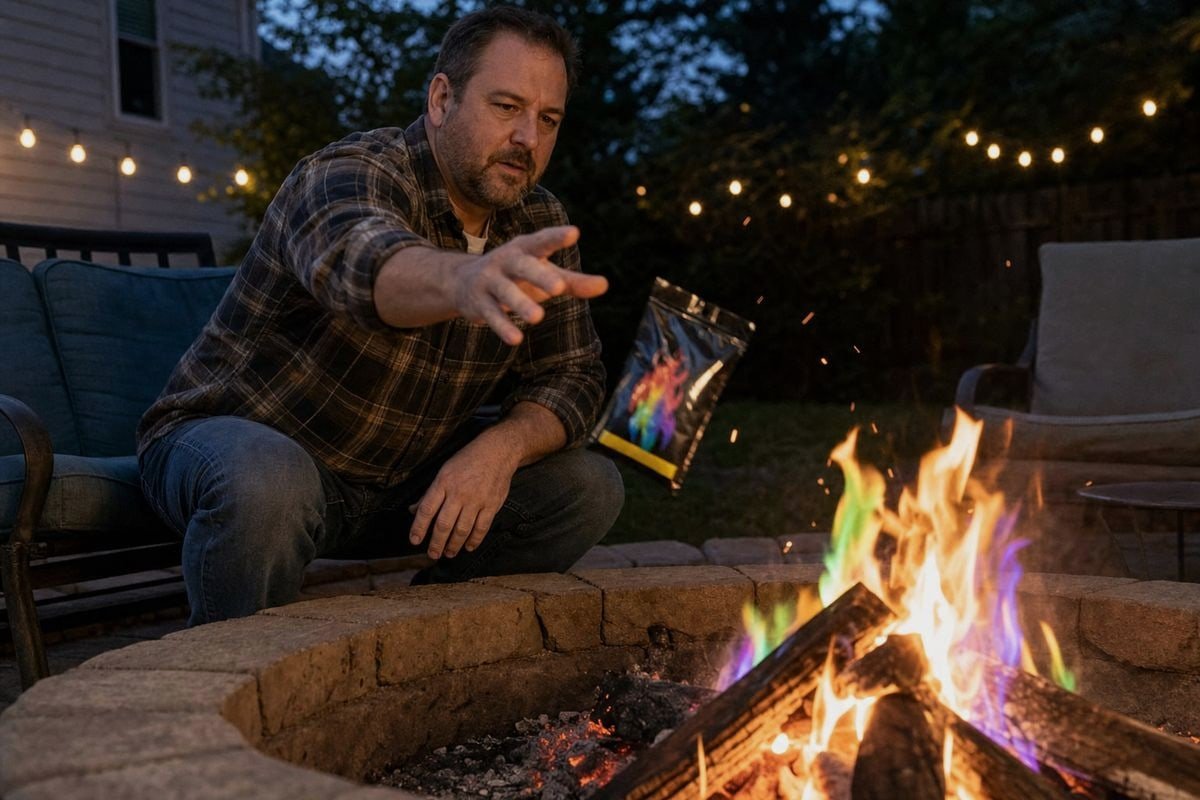
To add Magic Fire powder for the best color effect, toss the unopened packet into an established, hot wood-burning fire. Use one packet for small fires and two to three for large fire pits. Never open the sachet, cook over colored flames, or use it in gas fire features.
That is the short answer. But dosage, timing, fuel type, and fire source all change the result. Let me walk you through each factor in detail.
How much Magic Fire powder should I use per fire size for vivid colors?
During burn tests at our Ningbo facility, we learned that dosage matters more than most buyers expect. One packet in a huge bonfire simply disappears against the flame volume.
Use one Magic Fire packet for a small fireplace or tabletop fire, two packets for a standard backyard fire pit, and three or more for large bonfires. Each packet typically delivers 20 to 60 minutes of color, depending on fire heat and airflow.

The rule is simple: color intensity must compete with flame volume. A big fire produces a lot of natural orange light. If the flame colorant 1 is too diluted, the blues and greens get washed out. That is why scaling the dose to fire size is the single biggest lever for vivid results.
Recommended dosage by fire type
| Fire Source | Fire Size | Packets | Expected Color Duration |
|---|---|---|---|
| Indoor wood-burning fireplace | Small | 1 | 30–60 minutes |
| Chiminea or small fire bowl | Small–Medium | 1–2 | 30–45 minutes |
| Backyard fire pit | Medium | 2 | 25–45 minutes |
| Campfire | Medium–Large | 2–3 | 20–40 minutes |
| Bonfire | Large | 3+ | 20–30 minutes |
These figures come from our own batch QC burns and from seller claims across the market. Treat the flame duration as a range, not a guarantee. A windy night shortens it. A calm, hot coal bed 2 extends it.
Scaling tips for stronger displays
Start with one packet and watch the result for five minutes. Then add more if needed. Staggering packets also works well. Adding a second packet fifteen minutes after the first keeps the rainbow effect running longer than dumping everything in at once. For our B2B buyers who bundle packets into retail multipacks, we recommend printing this staggered-use tip on the packaging, because it improves the end-user experience without changing the product.
Can I add Magic Fire powder directly to flames, or should I pre-treat the fuel?
A German distributor once asked us why his sample packets "smoked instead of glowed." He had cut them open and sprinkled the granules on cold logs. That mistake taught us to make instructions painfully clear.
Always throw the sealed packet directly into active flames. Do not open it, sprinkle the powder, or pre-soak your fuel. The sachet is engineered to melt in the fire and release the metal salts gradually, which produces the longest and safest color effect.
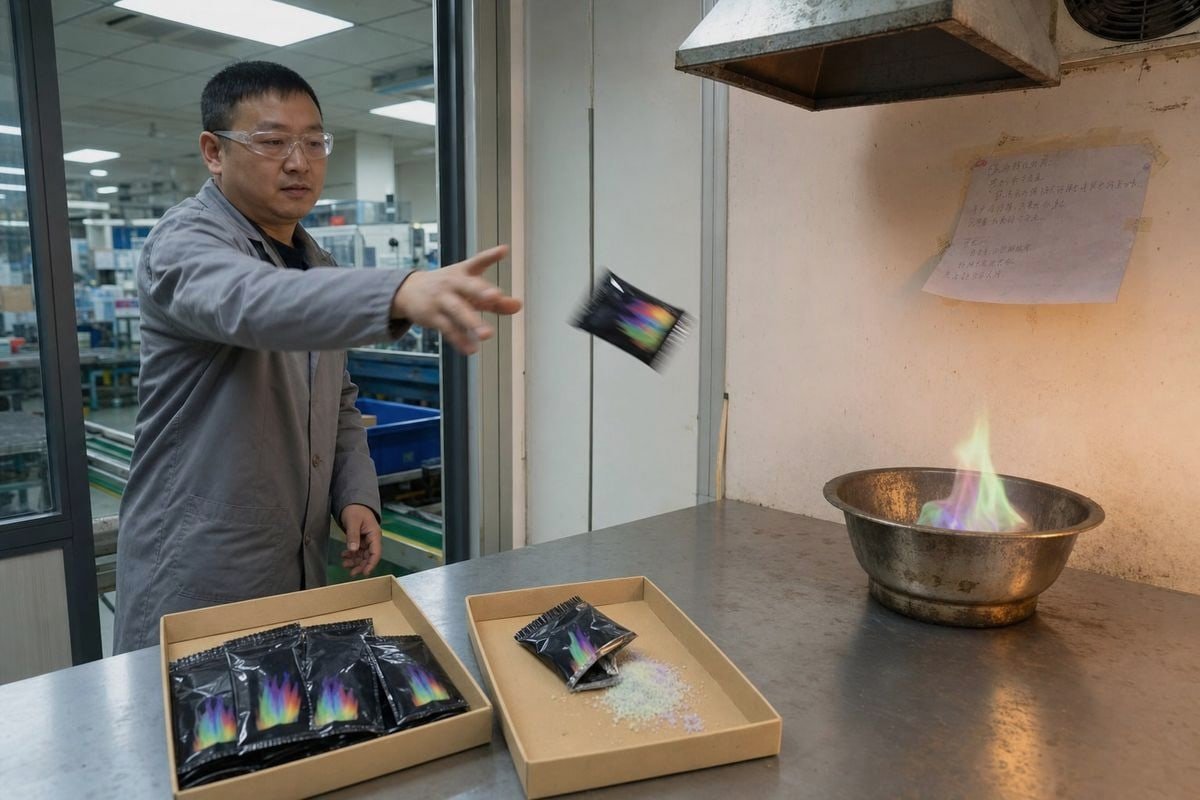
The packet itself is part of the delivery system. When the outer film burns away, the granules inside meet the flame at high temperature and release their chemical flame colors in a controlled way. Opening the packet defeats this design in three ways. First, fine dust 3 can become airborne, and you do not want to inhale it. Second, loose powder burns off in seconds instead of minutes. Third, sprinkled granules often land on ash or cold wood, where they never reach the temperature needed to emit color.
Direct toss vs. fuel pre-treatment
Some DIY guides suggest soaking pinecones or logs in copper sulfate 4 solutions or making wax patties with metal salts 5. Those methods exist, and we actually manufacture color-flame pinecones as a separate product line. But for powder packets, pre-treating fuel is the wrong approach. The comparison looks like this:
| Method | Ease of Use | Color Consistency | Safety Level |
|---|---|---|---|
| Unopened packet in flames | Very easy | High and predictable | High (sealed, no dust) |
| Opened powder sprinkled | Easy | Poor, burns off fast | Low (airborne dust risk) |
| DIY salt-soaked fuel | Difficult | Variable | Depends on handling |
| Pre-made color pinecones | Very easy | High | High |
Where to place the packet
Aim for the center of the fire where flames are most active. Avoid burying the packet under ash or dropping it at the cool outer edge. The updraft in the middle of a fire pit lifts the colored plume higher, which makes the pyrotechnic effects far more visible to people sitting around the fire.
Why isn't my Magic Fire powder producing bright or long-lasting colors?
Weak color complaints land on my desk a few times a year, and in seventeen years of exporting these campfire accessories, almost every case traced back to fire conditions rather than the packet itself.
Weak or short-lived colors usually mean the fire is too small, too smoky, or not hot enough. Add the packet only after the fire has a steady flame and a hot coal bed, use dry seasoned wood, and view the flames in darkness for full effect.
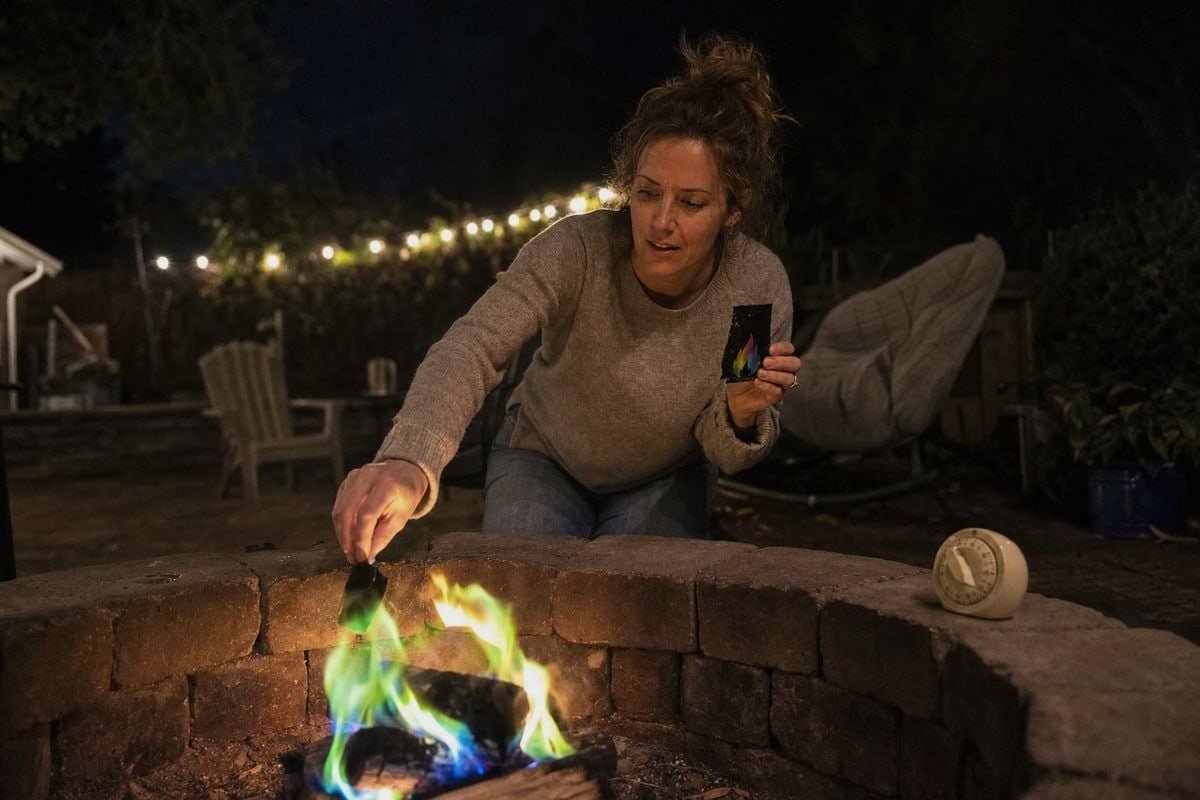
Flame coloration is basic chemistry. Metal salts only emit their signature colors when they get hot enough to excite their electrons. Copper compounds give blue and green. Strontium and lithium give red and pink. Potassium gives purple. Sodium gives yellow and orange. Magnesium adds white flashes. If the fire cannot reach and hold that excitation temperature, the colors stay dim no matter how good the flame colorant blend is.
The most common causes of dull color
- The fire is too young. A flickering, newly lit fire lacks the coal bed needed to sustain color. Wait until the fire reaches a steady state.
- The wood is wet or green. Damp fuel creates smoke and steam, which mask the colored plume and steal heat from the flame.
- Too much ambient light. Blue and violet wavelengths are lower intensity. LED lanterns, string lights, and phone flashlights wash them out. Watch in near-darkness for the best show.
- The packet landed in ash. Granules buried in cold ash never ignite properly. Reposition the fire or add a fresh packet to the active flame zone.
- Wind is scattering the plume. Strong gusts break up the colored gas before your eyes can register the hues.
What realistic results look like
Manage expectations here. Rainbow fire packets create a shifting, multicolor display, not one solid uniform hue. Blues, greens, and purples appear in waves as different metal salts vaporize at different rates. In our QC burn room, we deliberately test in dim lighting because that is how the end customer will actually see the product. If your test fire looks mediocre at noon, try again after sunset before blaming the packet.
Which fire sources work best with Magic Fire powder for consistent results?
When we develop private-label versions of these packets for outdoor brands in the US and Europe, the warning label always gets one line in bold: wood fires only. There is a good reason.
Wood-burning fires deliver the best and safest results: campfires, wood fire pits, wood-burning fireplaces, and chimineas. Never use Magic Fire powder in gas or propane fire features, since chemical residue can clog burners, damage ignition systems, and void warranties.

A wood fire gives the packet three things it needs: sustained high heat, a coal bed to rest on, and an open flame plume where the colors can display. Gas and propane systems fail on all three counts. The packet residue melts onto burner ports and pilot assemblies, and the metal salts can corrode components that were never designed for solid additives. On top of the mechanical risk, most gas fire pit manufacturers explicitly exclude additive damage from warranty coverage.
Fire source compatibility guide
| Fire Source | Compatible? | Notes |
|---|---|---|
| Outdoor campfire | Yes, ideal | Best updraft and visibility at night |
| Wood fire pit | Yes, ideal | Good containment; center placement works well |
| Wood-burning fireplace | Yes | Beautiful indoor effect; ensure proper chimney draft |
| Chiminea | Yes | Use one packet; smaller flame volume |
| Gas or propane fire pit | No | Residue clogs burners and damages ignition |
| Charcoal BBQ grill | No | Never combine with cooking surfaces |
| Cooking fire of any kind | No | Do not cook over colored flames |
Fire pit safety essentials
Standard fire pit safety rules 6 still apply, plus a few product-specific ones. Keep a safe viewing distance and stay upwind of the smoke. Never roast marshmallows or grill food over treated flames, because the residues are not food-safe even in eco-friendly formulations. Supervise children and pets. And let the fire burn out fully; the ash from a colored fire should not go into a compost pile 7 or vegetable garden. For a wood-burning fireplace indoors, confirm your damper is fully open before adding a packet, so the plume vents up the chimney rather than into the room.
Conclusion
Dull colors frustrate customers and hurt repeat sales. The fix is simple: sealed packets, hot wood fires, right dosage, darkness. Follow those rules and the rainbow delivers every time.
After 17+ years making Magic Fire packets, color-flame pinecones, and wax firestarters in our Liuyang and Ningbo facilities, we have learned that great color effects come from correct use, not stronger chemistry. Toss the unopened packet into an established wood fire. Scale from one to three packets by fire size. Skip gas pits and cooking fires entirely. If you are a distributor or brand looking for certified, private-label color-flame products with consistent batch quality and full ISO, BSCI, CE, and SGS/Intertek documentation, we would be glad to send samples that burn exactly like the mass production will.
Footnotes
1. Replaced 404 with the correct Wikipedia article for chemicals used to color flames. ↩︎
2. EPA guidance on safe, efficient wood-burning fire practices relevant to fire heat. ↩︎
3. EPA data on health risks of inhaling fine airborne particulate matter. ↩︎
4. Reference for the compound mentioned as a DIY flame colorant option. ↩︎
5. Background on how metal salts produce characteristic flame colors when heated. ↩︎
6. National Fire Protection Association provides authoritative outdoor fire safety guidance. ↩︎
7. EPA guidelines on safe home composting practices related to disposing of ash. ↩︎



 English
  Spanish
  German
  French
  Arabic
  Portuguese
Join the Conversation