






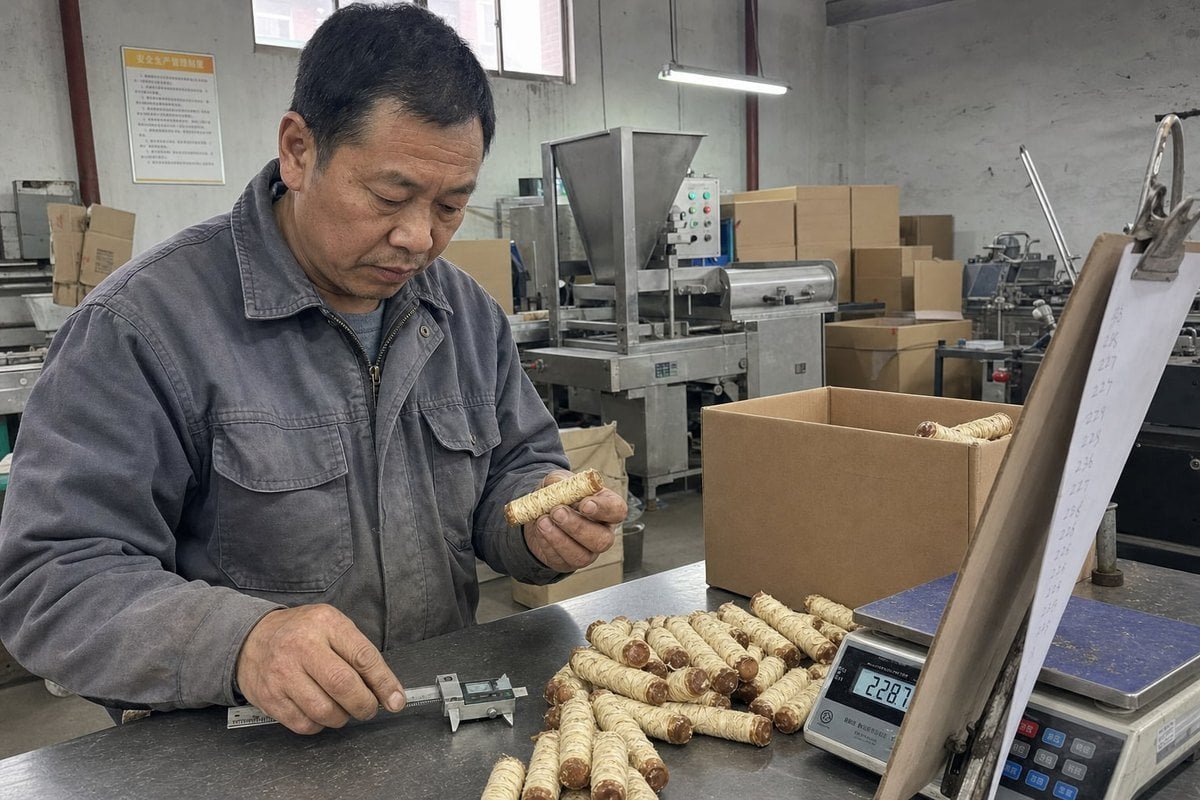
Vague size and weight requirements for wood fire starters cause real damage. I have seen buyers receive product that would not fit their retail boxes, and our production line now insists on [written specs before quoting](https://sunrichfire.com/how-describe-requirements-suppliers-accurate-wood-fire-starter-quotes/).
Specify wood fire starter size and weight at four levels: individual unit dimensions and net weight, inner pack count and weight, master carton gross weight and dimensions, and pallet configuration. Add tolerance bands, moisture content limits, and burn time targets, then require confirmation on samples and inspection reports.
That sounds like a lot. It is actually simple once you break it into four questions. I will walk through each one below, using real numbers from our export orders.
What Size and Weight Specifications Should I Include in My Wood Fire Starter Purchase Order?
A German distributor once sent us a PO that said only "standard size fire starters, 24 per box." Our sales team sent back a two-page spec sheet instead. He thanked us later.
Your purchase order should state the product form, nominal unit dimensions with tolerances, net unit weight, quantity per inner pack, net pack weight, master carton dimensions and gross weight, and pallet layout. Also include moisture content limits, minimum burn time, and measurement units used.

The biggest mistake I see is buyers specifying only one level of the packaging chain. If you only give total package weight, you can still receive units that fail to fit your shelf box or your customer's stove. Fire starters come in very different forms — wood wool fire starters, wax-dipped wood rolls, fatwood sticks, compressed fiber pucks, and kindling bundles. Each form needs its own geometry language. A puck needs diameter and height. A stick needs length and diameter. A roll needs length, diameter, and wrap density.
Name the Product Form First
Before any numbers, state the form explicitly. "Wax-dipped wood roll, 50% wood fiber, 50% paraffin" tells the supplier far more than "small fire starter." Composition affects density, and density affects weight at the same size.
Specify Weight at Three Levels
These three values are not interchangeable, and each one drives a different decision:
| Weight Level | What It Controls | Example Spec |
|---|---|---|
| Net unit weight | Burn time duration, dosing per fire | 18 g ± 2 g per roll |
| Net pack weight | Retail price point, label accuracy | 100 pcs, approx. 1.8 kg net |
| Gross carton weight | Freight cost, worker handling limits | Max 17 kg per master carton |
Keep Units Consistent
Use inches and pounds for US programs, millimeters and grams for Europe, but never mix systems inside one PO. On our lines in Ningbo, we work in metric and convert on the buyer's spec sheet, so both versions appear on the final inspection report. State which system governs in case of dispute.
Finally, tie the spec to quantity. A 24-count retail pack and a 200-count bulk box need different unit tolerances, because pick-and-pack automation punishes oversize pieces.
How Do I Confirm a Supplier Can Consistently Meet My Size and Weight Tolerances Across Production Batches?
Batch consistency is where trading companies and real factories separate. In 17 years of exporting fire starters to 30+ countries, our hardest lesson was that a perfect sample means nothing without process control behind it.
Confirm consistency by requiring a pre-production sample with recorded measurements, an in-process sampling plan such as AQL inspection, batch-level moisture and weight logs, and a golden sample signed by both parties. Then audit or third-party inspect the first two or three production runs.
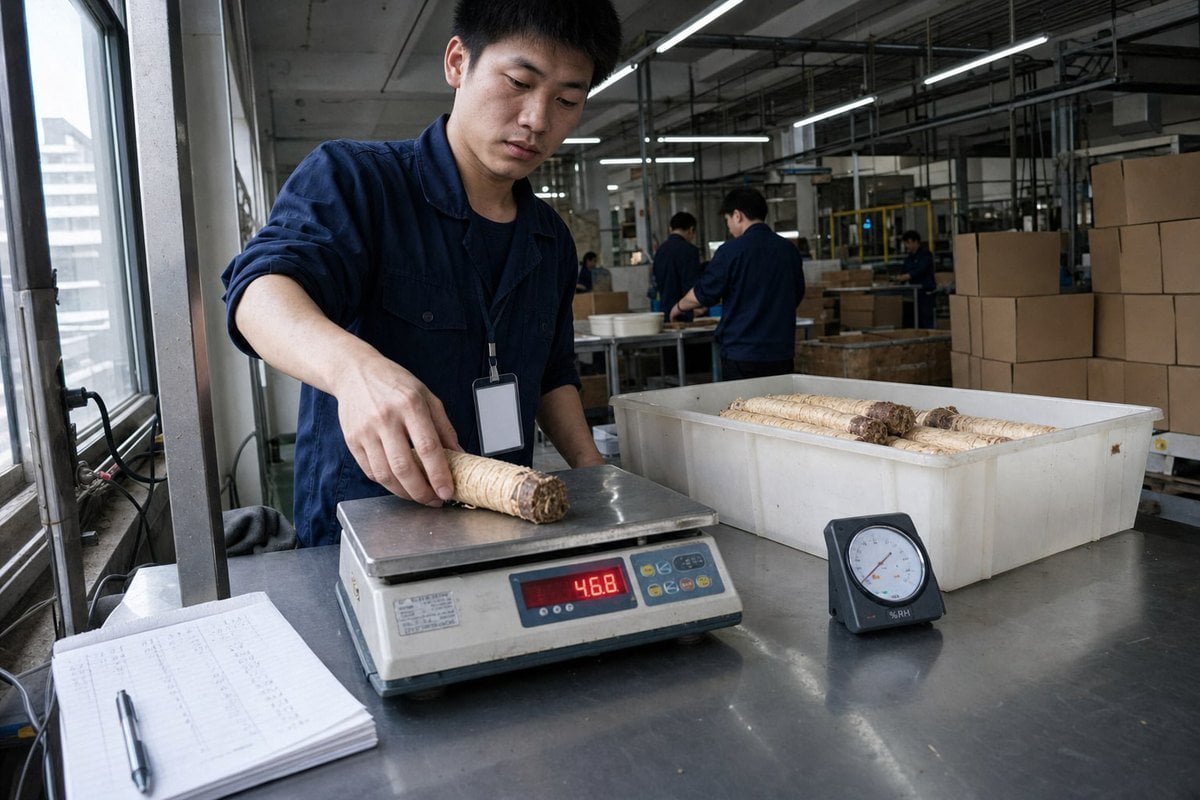
Natural wood products vary. Kiln-dried wood shrinks slightly as moisture content percentage drops, and wax pickup changes with dipping temperature. So the honest question is not "can you hit 18 grams?" It is "how do you keep hitting 18 grams in July humidity and January cold?" A supplier with genuine quality control standards will answer with a process, not a promise.
Set Realistic Tolerance Bands
Demand precision where it matters and allow flexibility where nature demands it. Here is the tolerance logic we recommend to buyers:
| Attribute | Suggested Tolerance | Why |
|---|---|---|
| Length / diameter | ± 5% or ± 0.5 in on sticks | Automated fulfillment and box fit |
| Net unit weight | ± 10% | Wax and wood density vary naturally |
| Moisture content | Max 10–12%, no minimum tolerance | Below threshold ignition stays rapid |
| Burn time duration | Minimum only, e.g. ≥ 15 min | Longer burn is acceptable, shorter is not |
Verify the Process, Not Just the Sample
Ask these four questions before you commit to bulk wholesale sourcing:
- Do you weigh units in-line or only at final packing?
- What is your sampling frequency per batch 1?
- How do you control wax bath temperature and dip time?
- Can you share weight logs from a previous production run?
At our factory, every batch gets a weight-and-dimension log tied to the order number. That is why our first sample reliably matches mass production — the sample comes off the same calibrated line, not from a hand-made prototype bench. If a supplier cannot show batch records, treat their tolerance promises as guesses.
What Certifications or Test Reports Should I Request to Verify Wood Fire Starter Specifications?
Compliance documents are the first thing our European buyers ask about — often before price. We built our factory certification stack around that reality, because a shipment stopped at customs costs far more than any test report.
Request ISO 9001 factory certification, SGS or Intertek test reports covering dimensions, weight, moisture, and burn time, safety data covering flash point and composition, BSCI social audit results, and eco-friendly certifications such as FSC for wood fiber where your market requires them.

Certifications do two different jobs, and buyers should separate them clearly. Factory-level certificates prove the supplier's system can produce consistently. Product-level test reports prove a specific batch met your specific size and weight requirements. You need both.
Factory-Level Documents
ISO 9001 2 confirms a documented quality management system exists — this is what makes tolerance control repeatable. BSCI covers social compliance 3, which large retail sourcing channels increasingly demand. CE marking 4 applies where your market classifies the product accordingly. In our experience exporting to the US, Germany, and the UK, buyers who skip the factory audit stage often discover too late that they were buying from a trading company with no production control at all.
Product-Level Test Reports
Ask the lab report to record, at minimum:
- Measured unit dimensions against your nominal spec and tolerance
- Net unit weight and pack weight
- Moisture content percentage of the wood fiber or wood wool
- Burn time duration per unit under a defined test condition
- Flash point and composition 5 (e.g., wood fiber to paraffin ratio)
- Absence of harmful chemicals or restricted substances
For fatwood products, also request fatwood resin content 6 data, since resin saturation drives both weight and BTU consistency. For reclaimed or certified fiber, ask for FSC or equivalent chain-of-custody documents 7. One practical tip: require that the third-party inspection report references your PO's spec sheet by number. That links the legal document, the physical product, and the lab data into one traceable chain.
Can I Request Custom Sizes and Weights for Private-Label Wood Fire Starter Orders?
Custom work is most of what we do now. A Canadian outdoor brand recently asked us for a shorter, lighter wood roll to fit a slim gift-box format — we adjusted the roll length, wax dip, and inner tray in one development cycle.
Yes. Most established factories offer custom sizes, weights, and burn times for private-label orders, typically above a minimum order quantity. You can adjust unit dimensions, wax content, pack counts, and packaging format, provided you confirm feasibility, tooling needs, and MOQ before finalizing artwork.

Customization is not just cosmetic. When you change a fire starter's size or weight, you change its burn behavior, its carton math, and its freight cost. So a good OEM/ODM conversation covers all three at once. On our side, we routinely tune roll diameter and wax ratio to hit a target burn time, then reverse-engineer the carton and pallet so the buyer's landed cost stays predictable.
What Can Typically Be Customized
| Element | Typical Customization Range | Watch Out For |
|---|---|---|
| Unit size | Length, diameter, puck vs. roll vs. stick | Very small units may raise per-piece labor cost |
| Unit weight / wax ratio | Adjusted to target burn time | More wax means longer burn but heavier freight |
| Pack count | 12, 24, 32, 100, 200 pcs formats | Odd counts complicate display trays |
| Packaging | Private label packaging, boxes, kraft bags, jars | Barcode and warning label requirements per market |
| Logistics | Carton size tuned to pallet and container | Palletization and shipping specs affect 40ft HQ cube use |
How to Run a Custom Development Smoothly
- Send your target appliance or use case first — tabletop fire pit, BBQ, fireplace, or wood stove — so the factory proposes dimensions that fit.
- Agree on nominal size, weight, and burn time before designing packaging artwork.
- Approve a physical golden sample, with all measurements recorded.
- Lock the spec sheet into the PO, including tolerances and inspection method.
- Start with a trial MOQ, then scale once the first batch passes inspection.
The one thing I always tell private-label buyers: never finalize your printed box before the unit spec is frozen. Reprinting packaging costs far more than one extra sampling round.
Conclusion
Loose specs invite defects, freight surprises, and returns. Define unit, pack, carton, and pallet levels with tolerances, verify them through test reports, and lock everything into your PO before mass production.
Footnotes
1. Background on AQL-based sampling plans used to verify batch consistency in manufacturing. ↩︎
2. Official ISO page explains the quality management standard referenced for factory certification. ↩︎
3. Official BSCI program page explains the social audit standard mentioned for supplier compliance. ↩︎
4. EU official page describes CE marking requirements relevant to product classification in European markets. ↩︎
5. Wikipedia explains flash point testing relevant to fire starter safety data requirements. ↩︎
6. Wikipedia background on fatwood composition supports the discussion of resin content and BTU consistency. ↩︎
7. FSC official site clarifies chain-of-custody certification for wood fiber sourcing claims. ↩︎



 English
  Spanish
  German
  French
  Arabic
  Portuguese
Join the Conversation