







Securing exclusive use of illustrations and packaging design when ordering colored pine cones is a question I hear constantly on our OEM production line. One vague clause can cost a brand its entire visual identity.
To specify exclusive use of illustrations and packaging design for colored pine cones, put exclusivity in writing: define what is exclusive (artwork, dieline, colorway), add a copyright transfer or work-for-hire clause, set territory and duration, and prohibit the supplier from reusing your designs for other clients.
That is the short answer. Below, I break down each contract term, the verification steps, the documentation, and how MOQ fits into the picture.
What contract terms should I include to legally protect my exclusive artwork and packaging rights?
A German distributor once sent us artwork he had "bought" online for his pine cone pouch. It turned out he only held a limited stock license. We had to redesign everything before printing.
Include a copyright transfer clause or work-for-hire contract, an exclusivity clause naming scope (illustration, packaging dieline, colorway), territory and duration terms, a non-reuse commitment from the supplier, an NDA, and a prohibition on factory overruns of your branded packaging.
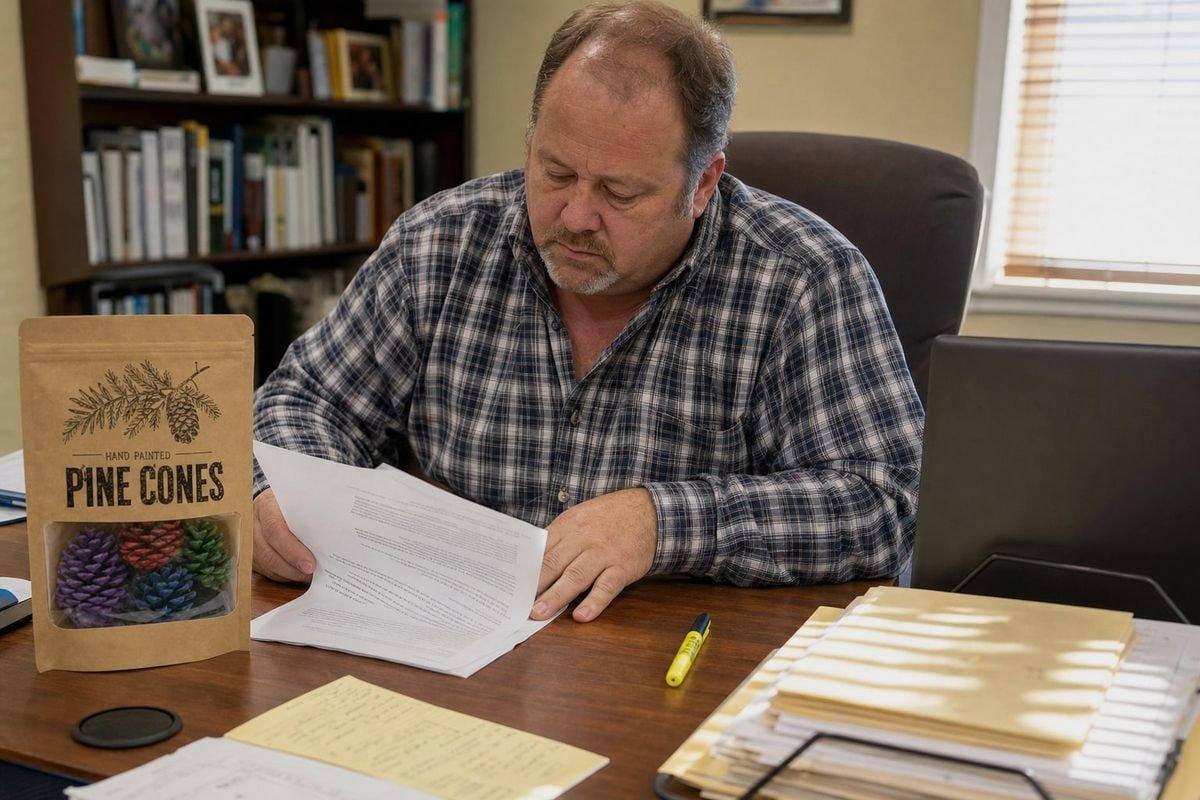
The biggest mistake buyers make is assuming "commercial use 1" equals "exclusive use." They are not the same thing. Commercial use means you can sell products carrying the artwork. Exclusive use means nobody else can. In our 17+ years running private label manufacturing 2 projects for fire-themed products, we have seen both terms confused in purchase orders many times. The fix is precision.
Separate the illustration rights from the packaging rights
Your pine cone illustration and your packaging layout 3 are two different legal assets. A supplier may transfer the illustration but keep the right to reuse the box structure, typography, and arrangement. Specify both. State in the wholesale supplier agreement that the illustration, the packaging dieline, the color scheme, and the combined layout are all covered by the exclusivity clause.
The core clauses, side by side
| Clause | What it does | What happens without it |
|---|---|---|
| Work-for-hire / assignment of rights | Transfers intellectual property ownership to you on payment | The creator keeps copyright and can license the art elsewhere |
| Exclusivity scope clause | Names exactly what is exclusive: art, dieline, colorway, or the combination | Only the exact file is protected; variants can be resold |
| Territory and duration | Defines global vs. regional, perpetual vs. time-limited rights | Ambiguity lets the supplier serve competitors in other markets |
| Non-reuse commitment | Bars the factory from using your designs for other clients | Your look can appear on a competitor's shelf legally |
| NDA before file sharing | Protects concepts and color prototypes during development | Leaked designs before launch have no clear remedy |
| No-overrun clause | Forbids selling ghost inventory of your branded packaging | Excess printed pouches may reach gray-market channels |
Also consider IP layering. Register your brand logo 4 as a trademark and your unique botanical illustrations as copyrights. Two legal barriers are always stronger than one. And confirm whether any third-party fonts, textures, or stock elements are embedded in the files, because those carry separate usage rights limitations that a copyright transfer 5 clause cannot override.
How can I verify my manufacturer won't reuse my design for other clients?
Trust is earned through structure, not promises. When we sign exclusivity terms with our US and EU buyers, we expect them to audit us — and the serious ones always do.
Verify non-reuse by signing an exclusive manufacturing agreement with penalty clauses, requesting the factory's certification records (ISO 9001, BSCI), conducting periodic design audits, monitoring marketplaces for lookalike packaging, and requiring written confirmation that your dielines are stored and access-restricted.

Contracts define obligations, but verification proves compliance. A factory that resists any of the steps below is telling you something important. In my experience exporting color-flame pinecones to 30+ countries, buyers who verify early avoid disputes later.
A practical five-step verification process
- Check the factory's audit trail. A supplier certified under ISO 9001 6 and BSCI operates documented processes. Document control includes artwork files. Ask how customer files are stored, who can access them, and how versions are tracked.
- Put teeth in the agreement. Add a liquidated-damages clause for unauthorized reuse. A supplier confident in its own discipline will accept reasonable penalties. One who refuses may be planning to keep your motif in the "house design" folder.
- Ask for a design registry statement. Request a signed letter listing your exclusive assets — illustration files, packaging dieline numbers, Pantone codes — and confirming they are flagged as restricted in the factory's system.
- Monitor the market. Set up image alerts and scan trade-show catalogs and B2B marketplaces each season. Colored pine cones are a seasonal category, so lookalikes usually surface before Q4.
- Visit or audit remotely. During a factory tour or a video audit, ask to see how printing plates and packaging films for your SKU are labeled and stored. Dedicated plates marked with your brand name are a strong practical safeguard.
One more layer worth considering: secure exclusive rights to your proprietary color recipe. If your emerald-and-gold pinecone finish or your specific flame-color blend is defined by custom-matched formulas, write that into the product specification sheet as exclusive too. The recipe becomes a brand identifier that is much harder to copy than a printed graphic.
What documentation should I request to prove exclusivity throughout production?
Paper trails settle arguments before they start. Our factory issues signed artwork approval sheets for every private-label run, and that habit has resolved more than one heated email thread.
Request a signed copyright assignment or work-for-hire contract, an exclusivity confirmation letter, editable source files with a file-transfer record, an approved product specification sheet, sealed pre-production samples, batch production records, and a destruction certificate for excess printed packaging.

Documentation does two jobs. First, it proves you own what you paid for. Second, it creates evidence you can use if a dispute ever reaches a lawyer's desk. Here is the paper trail I recommend collecting at each stage of a colored pine cone order.
Documentation by production stage
| Stage | Document to request | Why it matters |
|---|---|---|
| Design | Signed copyright transfer clause or assignment agreement | Establishes intellectual property ownership from day one |
| Design | Editable source files (AI, PSD, vector dielines) | Ownership without source files is ownership in name only |
| Pre-production | Approved product specification sheet with Pantone codes and dieline references | Locks the exact exclusive version being manufactured |
| Pre-production | Sealed golden sample, signed by both parties | The physical benchmark for every future batch |
| Production | Batch records tied to your PO number | Links each production run to your exclusive rights |
| Post-production | Overrun disposition or destruction certificate | Prevents ghost inventory of your branded pouches |
| Ongoing | Annual exclusivity reconfirmation letter | Keeps the commitment alive across reorders and staff changes |
Do not forget provenance and authorship records
Two extra documents are becoming more valuable. First, a human-authored certification for the illustrations. Buyers increasingly want proof their botanical artwork 7 is original human work, not generic AI output, and it strengthens your copyright position. Second, provenance documentation. Some of our clients add serialized QR codes to their pouches linking to sourcing details; if you do this, the QR design and its data structure should be listed as exclusive assets in your commercial licensing agreement as well.
Store everything in one folder, dated and signed. When a reorder comes eighteen months later with new staff on both sides, that folder is what keeps exclusivity intact.
How do I balance MOQ requirements with exclusive design commitments from my supplier?
There is a real trade-off we weigh on every quote: exclusive designs need dedicated printing plates and materials, and those costs only make sense above a certain volume.
Balance MOQ and exclusivity by starting with a category- or territory-limited exclusivity at a trial MOQ, then upgrading to full exclusivity at committed annual volumes. Negotiate tiered terms in the wholesale supplier agreement so rights expand as your order quantities grow.
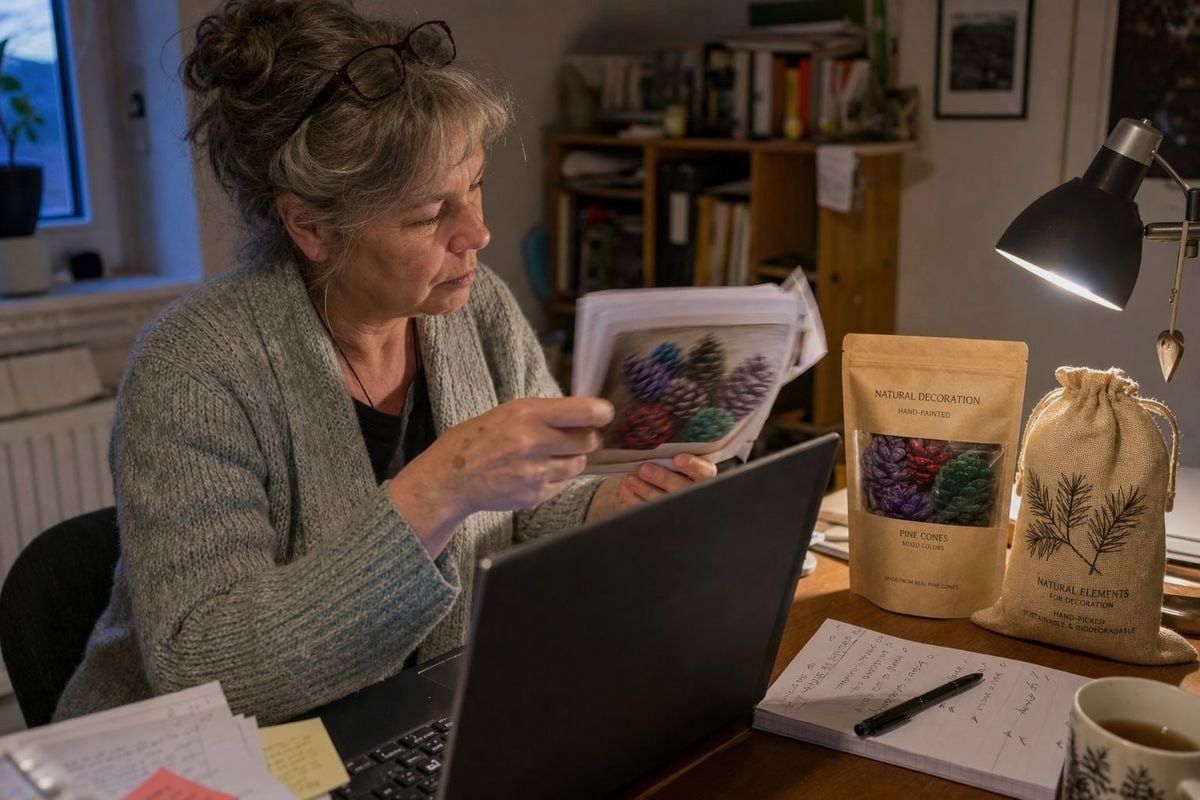
Some buyers push back here: "Why not just use non-exclusive stock art and skip the MOQ pressure entirely?" For a fast, low-cost test, that can work. But stock pine cone illustrations are sold to thousands of buyers, some carry attribution requirements incompatible with clean branded packaging, and small-business licenses often cap production at a few hundred copies. If your line scales, those caps and shared visuals become a liability exactly when your brand starts winning. Exclusivity is an investment in that scaling moment.
Tiered exclusivity keeps trial orders realistic
The practical answer is to match the breadth of exclusivity to the size of the commitment. On our lines in Ningbo, we support flexible MOQs for trial orders of color-flame pinecones precisely so buyers can test packaging before locking in broad rights.
| Commitment level | Realistic exclusivity scope | Typical structure |
|---|---|---|
| Trial order (low MOQ) | Exclusive artwork only, one product category, one country | Short-term exclusivity, renewable |
| Repeat seasonal orders | Artwork plus packaging dieline, key markets | Annual exclusivity tied to reorder |
| Committed annual volume | Full combination: art, dieline, colorway, recipe | Multi-year or perpetual assignment |
Two more levers worth negotiating
First, consider seasonal batch rights. Tying an illustration set to one holiday season — then retiring it — keeps the limited-edition appeal high and lowers the volume the supplier needs to justify dedicated tooling. Second, align exclusivity with your visual identity guidelines rather than a single file. If exclusivity covers the design system (motif, palette, layout logic), minor artwork updates for next season stay protected without renegotiating from zero. A good supplier will price these options transparently; a great one will suggest them before you ask.
Conclusion
Exclusive use of illustrations and packaging design for colored pine cones is won in writing: clear scope, copyright transfer, verified non-reuse, full documentation, and MOQ-matched terms. Specify it — never assume it.
Footnotes
1. Wikipedia entry defining the legal concept of commercial use in licensing. ↩︎
2. Authoritative Wikipedia entry explaining private labeling and its role in third-party manufacturing. ↩︎
3. Wikipedia overview of the technology and design principles of product packaging. ↩︎
4. Official USPTO guide defining trademarks and their role in brand protection. ↩︎
5. Official US government source explaining the legal transfer of copyright ownership. ↩︎
6. Authoritative Wikipedia page covering the ISO 9001 quality management system standards. ↩︎
7. Wikipedia entry explaining the history and standards of scientific botanical illustration. ↩︎



 English
  Spanish
  German
  French
  Arabic
  Portuguese
Join the Conversation