







Buyers ask me for magic fire powder usage instructions almost weekly. Many placed orders elsewhere first, received zero documentation, and then faced returns, complaints, and compliance headaches. Our factory built a full documentation process precisely to solve that problem.
To request usage instructions for magic fire powder, contact the manufacturer's sales or compliance team directly and ask for the official usage guide, Safety Data Sheet, test reports, and fire-type compatibility statement covering campfires, wood-burning fire pits, and grills before placing your order.
That is the short answer. But the details matter. Below, I walk through exactly which documents to request, how to get private-label versions, and who to contact at the factory.
What documents should I request to confirm Magic Fire Powder is safe for campfires, fire pits, and grills?
During a QC audit last spring, a German distributor asked our team for every safety document we had on file. That single request shaped how we now package documentation for all new buyers.
Request the Safety Data Sheet, third-party test reports such as SGS or Intertek, an official usage instruction sheet, a fire-type compatibility statement, and the full ingredient disclosure. Together, these confirm whether the powder suits campfires, wood-burning fire pits, and grills.

Never rely on the product name or the pretty flames on the box. "Magic fire," "mystical fire," and "rainbow flames" are marketing labels, not safety claims. The documents behind the product tell the real story. In our experience exporting to 30+ countries, the buyers who ask for paperwork upfront avoid nearly all post-sale disputes.
The five core documents
Here is the checklist I give every new B2B buyer:
| Document | What it tells you | Why it matters |
|---|---|---|
| Safety Data Sheet (SDS/MSDS) | Chemical hazards, first aid, handling, storage | Legally expected in the US and EU; customs and retailers often require it |
| Third-party test reports (SGS, Intertek) | Independent verification of composition and safety | Confirms the factory's claims are not self-declared |
| Official usage instruction sheet | Packet count, placement, duration, fire types | Prevents misuse by end customers |
| Fire-type compatibility statement | Wood fires vs. propane vs. cooking fires | The single most misunderstood point in this category |
| Ingredient disclosure | What creates the colors | Lets you screen for restricted substances in your market |
Why the ingredient list deserves extra attention
Many color-flame products on the market rely on metal salts 1. Some cheaper formulations use copper sulfate crystals 2 or similar compounds that raise questions about residue and disposal. Our Magic Fire packets are made from eco-friendly materials with no harmful chemicals, and we back that with SGS and Intertek 3 test reports rather than a slogan on the pouch. When you evaluate any supplier, ask them to match their marketing language with a Material Safety Data Sheet 4. If a seller cannot produce one within a few business days, treat that as a red flag. Flame colorant safety starts with disclosure, not with a rainbow graphic on a black foil pouch.
Also ask about disposal guidance. Some formulations leave residues in ash 5 that need specific handling. A serious factory will state this clearly in writing.
How do I get private-label usage instructions that match my own packaging and branding?
One of our UK camping-brand clients once sent us their entire brand style guide — fonts, tone of voice, warning icon styles — and asked us to rebuild the usage instructions around it. We now offer that as a standard OEM service.
Send your supplier your brand assets, target market, and packaging format, then request customized instruction text, warning labels, and layout files. A capable OEM factory will adapt packet counts, fire-type warnings, and compliance language to your private-label pouch, jar, or display box.
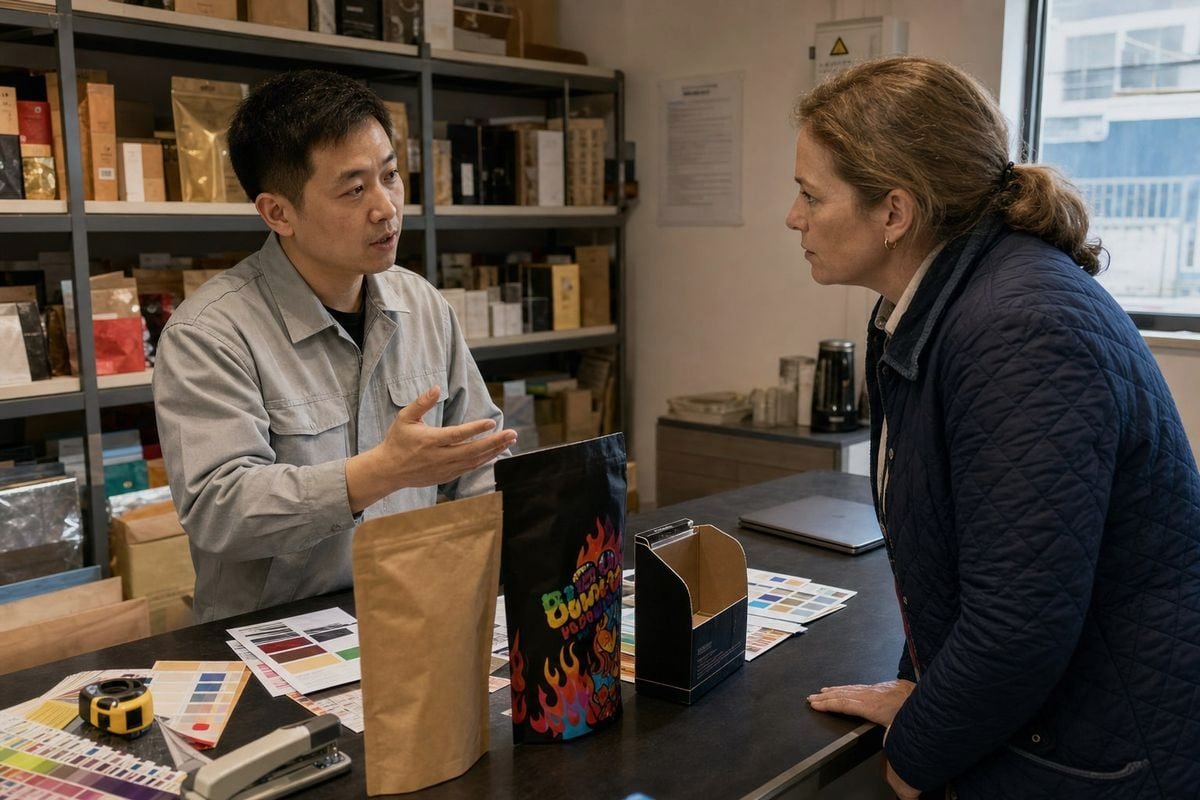
Private-label instructions are not just a logo swap. The instruction text must match your actual packaging format, your market's regulations, and your customer's reading level. A campfire packet sold in a US big-box store needs different warning language than one sold through a French outdoor retailer. Our one-stop OEM/ODM service handles this in a defined sequence, and I recommend you push any supplier through the same steps.
The private-label instruction workflow
- Share your brand kit. Logo files, colors, fonts, and any legal disclaimers your market requires.
- Confirm the packaging format. Instructions read differently on a foil sachet, a kraft stand-up pouch, a plastic jar, or a flip-top display box. Text space varies a lot.
- Lock the usage parameters. Packet count per fire size, burn duration, and placement method must reflect the actual formulation in your order — not generic copy.
- Review the warning block. This covers fire-type restrictions, the no-cooking rule, child and pet warnings, and outdoor ventilation requirements for any indoor fireplace use.
- Add compliance elements. Barcodes, batch codes, CE marks where applicable, and country-specific hazard phrasing.
- Approve a pre-production sample. We always send a printed sample so the buyer sees the final instruction panel before mass production.
A practical tip from our production line: consider adding a QR code that links to a usage video. Physical labels have limited space, and a short video showing an unopened packet going into an established wood fire prevents more misuse than any paragraph of small print. Several of our retail-channel buyers now treat the QR code as mandatory, and updated videos are far easier to revise than printed packaging.
Can I request separate usage guidelines for different applications like backyard fire pits versus commercial grills?
The trade-off we weigh most often in product development is simple: one universal instruction sheet is cheaper to print, but application-specific guidelines prevent far more misuse. We learned to favor the second option.
Yes, and you should. Ask your manufacturer for application-specific guidelines covering wood campfires, backyard fire pits, and indoor fireplaces, plus an explicit statement that colored flames are not for cooking. Grills and propane fire pits generally require a written exclusion, not adapted instructions.
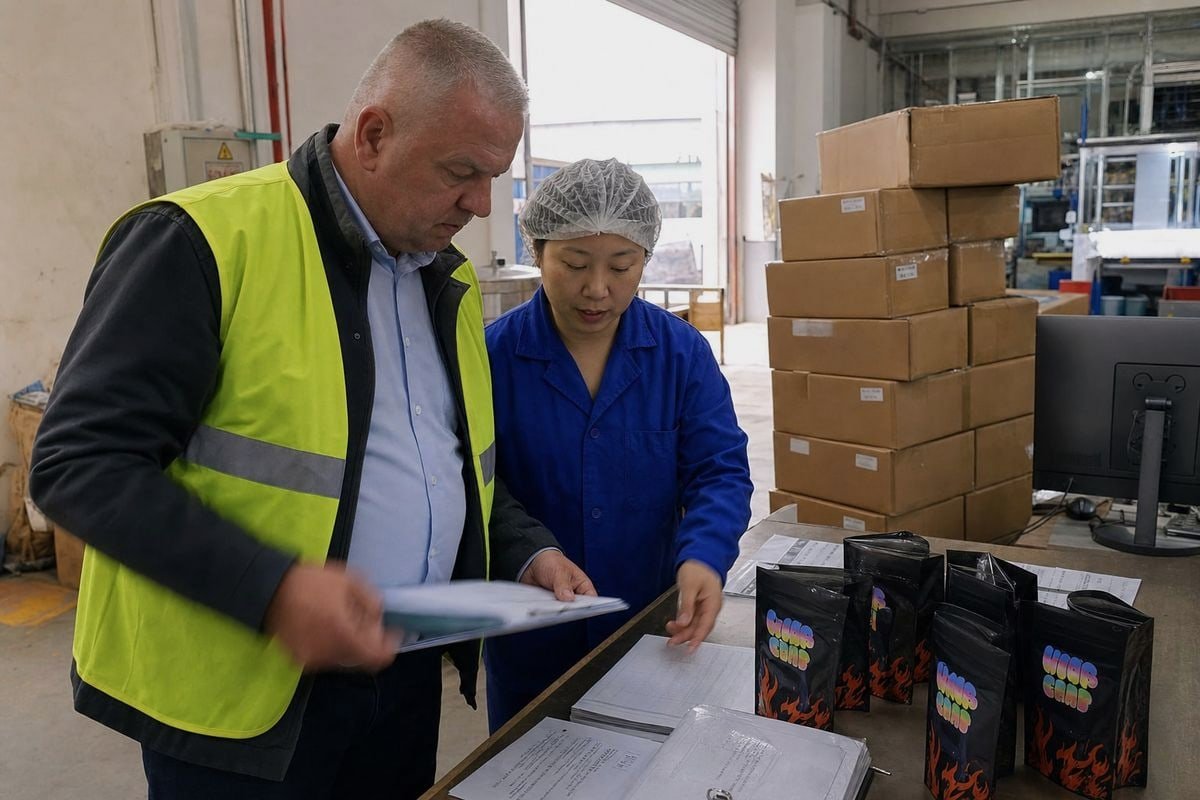
Here is the uncomfortable truth many sellers gloss over: magic fire powder is designed for wood fires you are not cooking on. Rainbow fire packets go into an established wood flame, unopened, and the show lasts a limited time. That works beautifully for a campfire or a backyard fire pit. It does not work for a barbecue session.
Compatibility by fire type
| Fire type | Compatible? | Key guideline to request in writing |
|---|---|---|
| Wood campfire | Yes | Packet count by fire size; toss unopened into established flames |
| Wood-burning fire pit | Yes | Same as campfire; ask about metal compatibility for stainless pits |
| Indoor wood fireplace | Manufacturer-specific | Requires proper ventilation; never assume — get written confirmation |
| Propane or gas fire pit | Generally no | Request an explicit exclusion statement; propane fire pit compatibility is rare |
| Charcoal or gas grill (cooking) | No | Cooking over colored flames must be prohibited in the instructions |
Why the grill question needs a firm written answer
Retail listings across the market consistently warn against cooking over colored flames. Chemical flame enhancers are formulated for visual effect, not food contact, and residues can settle on grates and cooking surfaces. Even with our eco-friendly formulation, we instruct buyers to state clearly: enjoy the colors first or on a separate fire, and cook only after the effect has fully ended, or better, keep the two activities apart entirely. If a supplier tells you their powder is "fine for grills" without documentation, ask them to put it in the SDS. Most will suddenly become less confident.
The nuance on duration is worth requesting too. Listings across the industry quote anywhere from 20–30 minutes to 30–60 minutes per session. Performance genuinely varies with fire size, temperature, airflow, and packet weight. Ask your factory for duration figures tied to a defined test condition, so your own label claims are defensible.
Who do I contact at the factory to receive official usage instructions and safety data before placing my order?
A Canadian importer once told me he spent three weeks emailing a trading company's generic inbox and never received an SDS. When he reached our export sales team, the full document pack arrived in two days. The difference was not luck — it was structure.
Contact the factory's export sales manager or dedicated compliance officer, not a general inbox. Request the SDS, usage instruction sheet, test reports, and compatibility statement in one email, confirm you are dealing with an actual factory, and ask for documents before samples ship.

The person you contact matters as much as the questions you ask. Trading companies often resell products they have never tested, so their answers are secondhand at best. A real factory — ours is headquartered in Liuyang, Hunan, with production in Ningbo, Zhejiang — has the formulation records, batch QC data, and certification files in-house.
Who handles what at a proper factory
| Role | What to request from them | Typical response time |
|---|---|---|
| Export sales manager | Quotes, MOQs, samples, lead times, initial document pack | 1–2 business days |
| Compliance/QC officer | SDS, SGS/Intertek reports, ISO 9001 6 and BSCI certificates, batch records | 2–5 business days |
| OEM/ODM project lead | Custom instruction text, label layouts, warning language, barcodes | During sampling stage |
How to verify you are talking to a real factory
Pyrotechnic fire additives 7 and color-flame products sit in a category where sourcing shortcuts get expensive. Before you commit, do three things. First, ask for certificates with verifiable numbers — ISO 9001, BSCI, CE — and check them against the issuing body. Second, request a video call or video tour of the production line; a factory can show you the filling, sealing, and packing stations on demand. Third, ask how the sample relates to mass production. Our standard answer is that batch-to-batch QC means the first sample reflects what ships in the container, and we put that commitment in writing.
One more practical point: send your document request as a single structured email listing every item you need. Scattered questions across ten emails get scattered answers. A single checklist email gets a single, complete document pack — and it also tests how organized your future supplier really is. Responsive English communication during this stage is usually a reliable preview of how the partnership will run after your first purchase order.
Conclusion
Ordering magic fire powder without documentation invites returns, liability, and lost shelf space. Request the SDS, test reports, usage instructions, and compatibility statements upfront — then partner with a factory that delivers them fast.
Footnotes
1. Explains how metal salts produce colored flames, relevant to color-flame chemistry. ↩︎
2. Background on this metal-salt compound used in some cheaper flame-colorant formulations. ↩︎
3. Links to a major independent testing body cited for third-party verification reports. ↩︎
4. OSHA defines SDS requirements referenced when buyers request chemical safety documentation. ↩︎
5. EPA hazardous waste guidance relevant to handling combustion residues from additives. ↩︎
6. Official ISO page explaining the certification buyers should verify with suppliers. ↩︎
7. Background on the pyrotechnic product category these color-flame powders belong to. ↩︎



 English
  Spanish
  German
  French
  Arabic
  Portuguese
Join the Conversation