






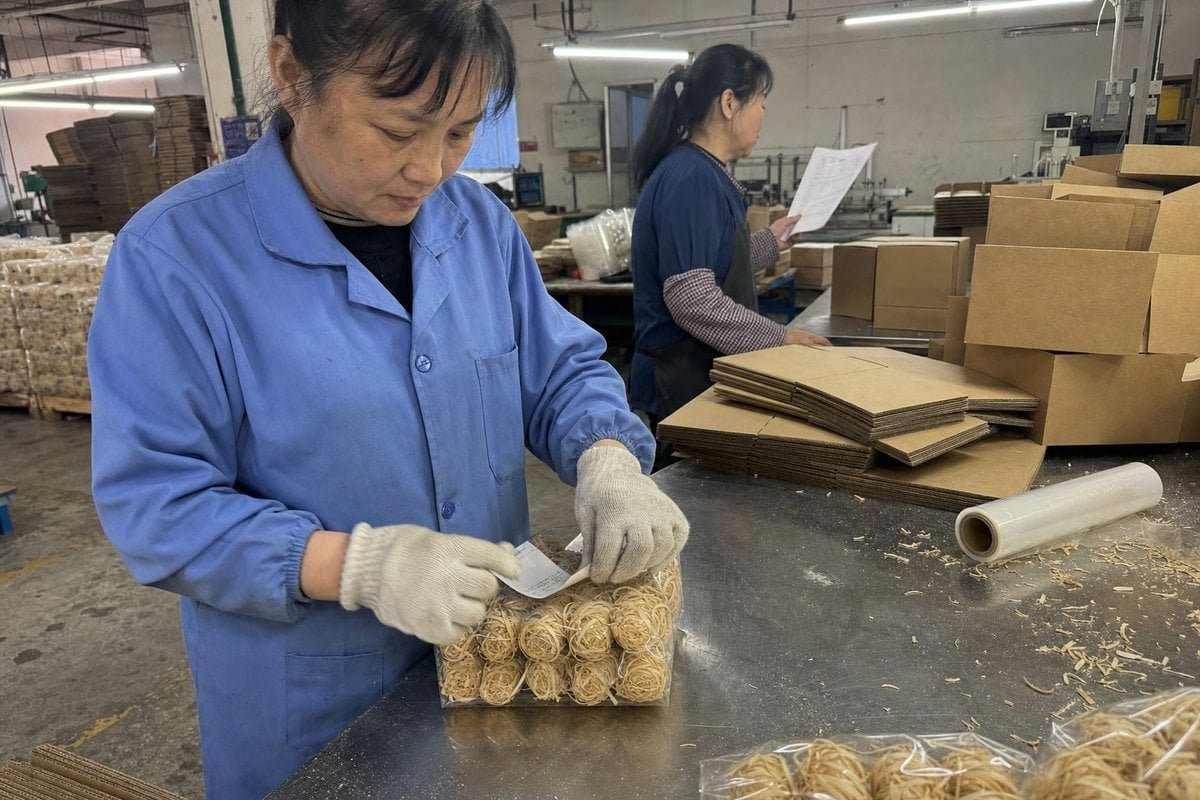
Getting suppliers to prep and label wood fire starters for Amazon FBA correctly is now urgent. On our production line, we see prep mistakes destroy inbound shipments before they ever reach a warehouse. One missing FNSKU label, one visible old barcode, and Amazon flags the whole lot. With Amazon ending its US prep and labeling services on January 1, 2026, and its European services on July 1, 2026, that risk lands squarely on you. The fix is simple but not obvious: turn Amazon's rules into a supplier-ready SOP your factory can actually execute.
To prep wood fire starters for Amazon FBA, instruct your supplier to apply one scannable FNSKU label per unit, cover all old UPC/EAN barcodes, poly-bag units with suffocation warnings where required, follow SKU-level prep guidance, and confirm compliance with photos before shipping.
That answer sounds short. In practice, it needs a full workflow behind it. Below, I break down exactly what to send your supplier, section by section.
What FBA Labeling and Packaging Requirements Should I Give My Wood Fire Starter Supplier?
Last year, a US buyer sent us a one-line PO note: "prep for Amazon." Our team pushed back and requested SKU-level detail, because vague instructions cause rejected shipments.
Give your supplier the exact FNSKU labeling requirements: one white, removable-adhesive label per unit, 1" x 2" to 2" x 3" in size, placed on a flat surface, fully covering any existing barcode, plus the prep category, unit packaging dimensions, and carton marking specifications for that SKU.

Never assume a factory knows Amazon's rules. Even experienced export factories like ours ask buyers to send written specs, because Amazon updates requirements often and prep rules vary by category. Your instructions should cover three layers: the unit label, the unit packaging, and the master carton.
The Unit Label
The FNSKU is Amazon's internal barcode. It is not your UPC. Your supplier must print it clearly, keep it scannable, and show the human-readable identifier. We always tell buyers to send us the FNSKU as a PDF file straight from Seller Central. Do not let the factory retype the code. Retyping causes errors.
The Unit Packaging
Wood fire starters are wax-coated and fibrous. They shed. Amazon requires each sellable unit to be fully contained. For our wax-dipped wood rolls, that usually means a sealed retail box or a poly bag. Any poly bag with an opening of 5 inches or more needs a printed poly bag suffocation warning 1.
The Master Carton
Cartons need their own specs. Here is the baseline table we share with FBA buyers:
| Requirement | Specification | Why It Matters |
|---|---|---|
| FNSKU label size | 1" x 2" to 2" x 3" | Smaller labels fail scanner reads |
| Label material | White, removable adhesive | Amazon standard; avoids residue disputes |
| Label placement | Flat, unobstructed surface | Curved or seamed placement fails scans |
| Old barcodes | Covered or removed | Amazon scans the wrong code otherwise |
| Carton weight | Under 50 lbs | Avoids overweight handling fees |
| Carton side length | Under 25 inches | Avoids manual processing charges |
| Carton markings | Shipment ID labels, no unit barcodes visible | Prevents receiving confusion |
Send this table with every purchase order. It removes guesswork on both sides.
Can My Supplier Handle Poly-Bagging and Barcode Placement for FBA Compliance?
There is a trade-off we weigh on every FBA order: factory-side prep costs less and ships faster, but only if the factory truly understands the rules. Many claim they do. Fewer actually do.
Yes, most capable factories can handle poly-bagging and FNSKU barcode placement, but you must verify capability first. Ask for photos of past FBA-prepped goods, send them your label files and placement diagram, and approve a labeled pre-production sample before authorizing bulk production.
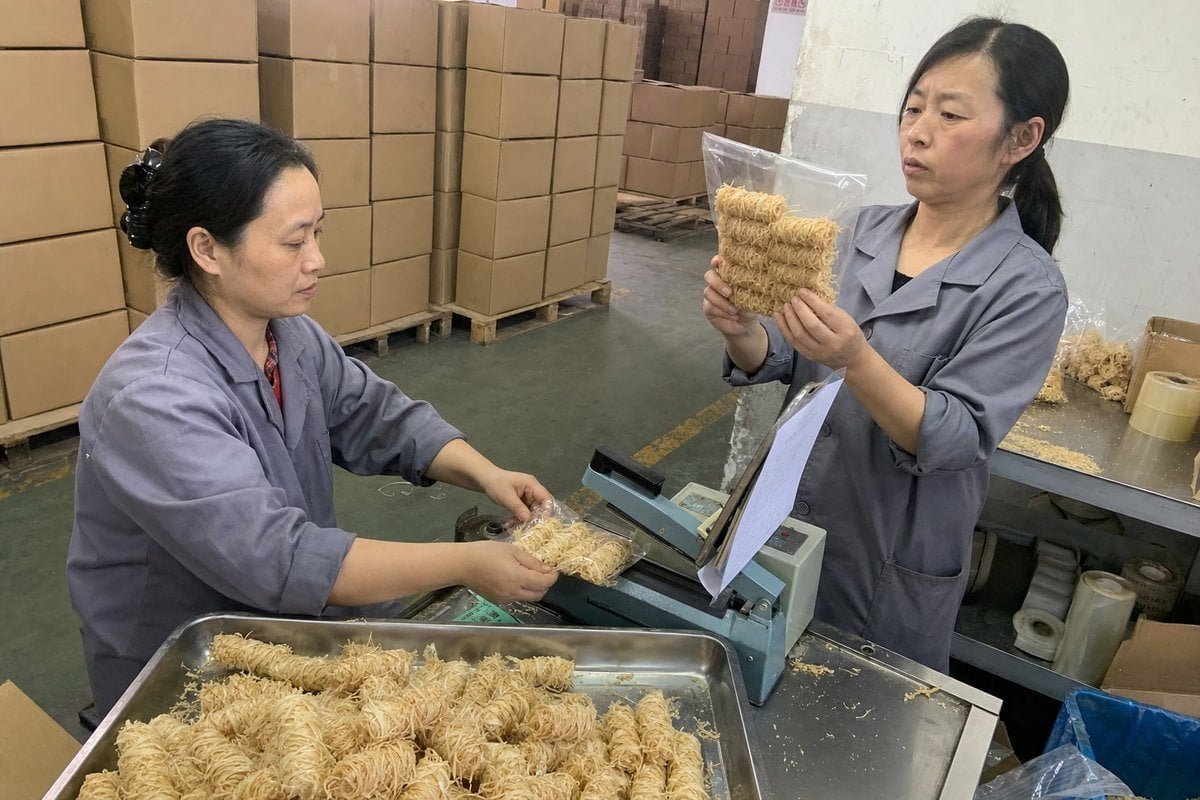
At our Ningbo facility, we prep FBA shipments 2 for outdoor and BBQ brands across the US and Europe, so I can tell you what separates a factory that can do this from one that just says it can. The difference shows up in three tests.
Test One: Do They Ask the Right Questions?
A capable supplier asks for your FNSKU PDF, your prep category, and your unit packaging dimensions before quoting. A weak one quotes instantly and says "no problem, we do Amazon all the time." That phrase should worry you. When buyers approach us, we ask which marketplace, which SKU, boxed or bagged, and whether sets need "Sold as Set" stickers. If your supplier never asks, you will be doing their thinking for them.
Test Two: Can They Execute Poly-Bagging Correctly?
For fire starters, poly-bagging is more than dropping units in a bag. The bag must be sealed, thick enough to survive transit, and printed with the suffocation warning 3 in the correct minimum font size for the bag dimensions. Wax products add a wrinkle: heat during ocean transit can cause wax-bleeding. We use grease-resistant interior barriers and higher-melt-point wax formulations so the retail packaging arrives clean. Ask your supplier how they prevent oil staining. If they have no answer, expect stained boxes in August containers.
Test Three: Can They Prove Placement Quality?
Barcode placement fails when labels sit on seams, curves, or kraft textures that reduce contrast. Require the label on the flattest panel of the retail box. Then require scan-test photos: the label photographed straight-on, plus a phone-scanner screenshot confirming the code reads. We do this by default on private label packaging design projects, and it has caught misprinted batches before they ever left the floor.
If a supplier fails two of these three tests, use a third-party prep center instead. FBA prep service fees at a US or EU prep center run higher per unit than factory prep, but they are far cheaper than a rejected inbound shipment.
How Do I Make Sure My Fire Starters Pass Amazon's Prep Requirements Before Shipping?
A German distributor once asked us why their previous fire starter shipment sat in Amazon's HAZMAT review for six weeks. The answer was simple: nobody had submitted a Safety Data Sheet upfront.
Verify compliance before shipping by securing a GHS-compliant SDS for the Amazon HAZMAT review process, confirming Limited Quantity carton markings, approving a labeled golden sample, running a pre-shipment inspection with scan tests, and photographing finished units, inner packaging, and cartons.
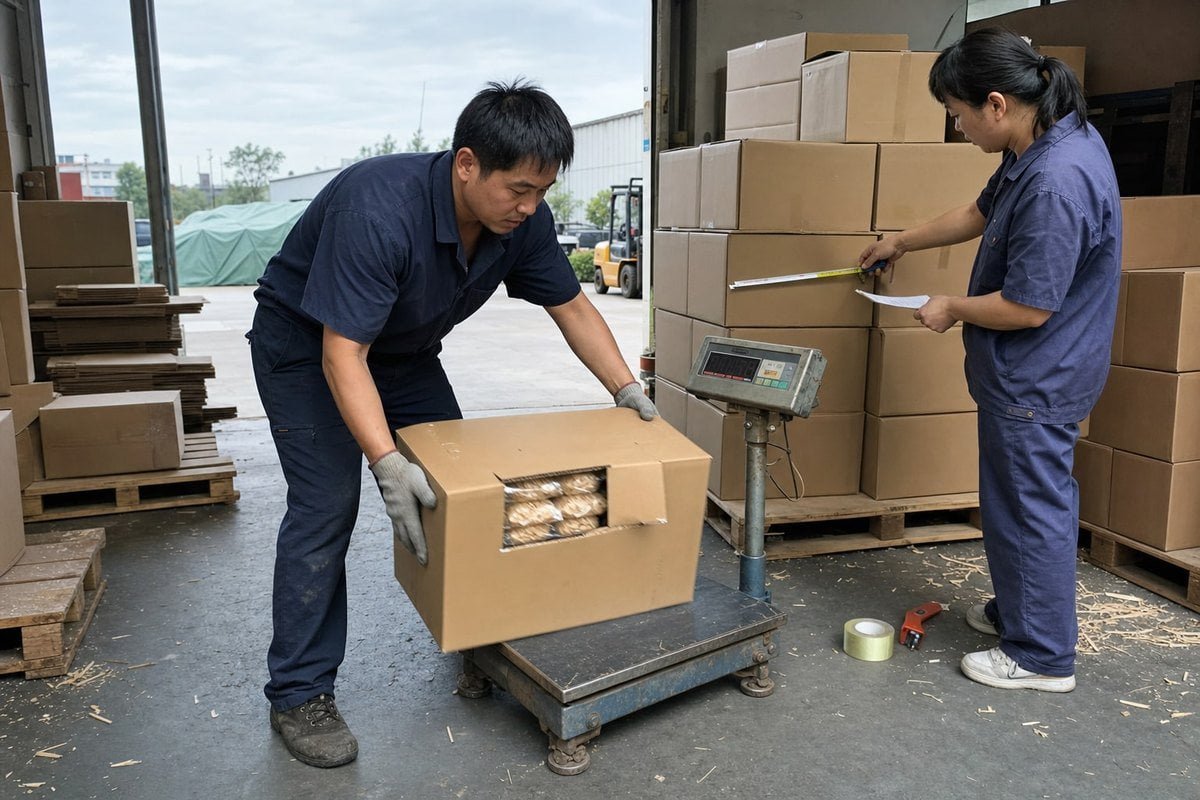
Fire starters are not ordinary FBA goods. Wax-and-wood fire starters are typically classified as Class 4.1 flammable solids 4, which pulls them into flammable solids shipping regulations and Amazon's dangerous goods program. You cannot label your way around this. You have to document your way through it.
Get the Compliance Documents First
Before any prep discussion, collect these from your supplier:
| Document | Purpose | When You Need It |
|---|---|---|
| GHS-compliant SDS | Amazon HAZMAT review process | Before listing goes live |
| SGS or Intertek test report | Proves composition and safety claims | Before first PO |
| Kiln-dried wood certification | Confirms low moisture, supports import compliance | Before shipping |
| TSCA Title VI statement | Required if composite wood or resin binders are used | On retail label, US market |
| LTD QTY carton marking proof | DOT ground transport compliance | Photo before container loading |
Our factory maintains ISO 9001, BSCI, CE, and SGS/Intertek documentation 5 precisely because FBA sellers cannot list hazmat-adjacent products without this paper trail. If your supplier cannot produce an SDS, walk away. Amazon will suspend the ASIN, and you will have inventory stranded in review.
Control Moisture and Wax Behavior
Wood fire starters sit in non-climate-controlled warehouses for months. We specify a maximum wood moisture content 6 of around 12% at production, because higher moisture invites mold during humid storage. We also check batch-to-batch wax coating consistency, since uneven coating changes burn time and increases bleed risk. Put both points in your spec sheet.
Inspect Before the Container Closes
Book a third-party inspection service or require a structured self-inspection with photo evidence. The inspection should scan sample FNSKU labels, check the poly bag suffocation warning print, confirm carton weights, verify Limited Quantity diamonds on every master carton, and open random units to check for wax bleed and loose fibers. Ten minutes of scanning at the factory saves weeks of receiving disputes.
What Should I Include in My Supplier Instructions to Avoid FBA Rejections or Delays?
The hardest lesson from 17 years of exporting fire products: instructions that live in email threads get lost. Instructions that live in the purchase order get followed.
Include SKU-level prep instructions in every PO: the FNSKU file, label size and placement diagram, packaging type, suffocation warning specs, set or bundle markings, carton limits, hazmat markings, required documents, and a photo-approval step before shipment release.

Treat this as supplier onboarding, not a one-time request. When we run OEM projects for camping and fireplace brands, the buyers who never have inbound problems all do the same thing: they attach a one-page prep SOP to every purchase order and require written confirmation before production starts.
Build a One-Page SOP Per SKU
Here is the structure we recommend, based on what works across our US and EU buyers:
| SOP Section | What to Specify |
|---|---|
| Product ID | SKU, ASIN, FNSKU (attach PDF label file) |
| Unit packaging | Box or poly bag, unit packaging dimensions, closure method |
| Labeling | Label size, material, exact placement panel, old barcodes covered |
| Warnings | Suffocation warning text and font size, TSCA statement if applicable |
| Sets/bundles | "Sold as Set" or "Do Not Separate" stickers where relevant |
| Cartons | Max 50 lbs, max 25" per side, LTD QTY marking, shipment labels |
| Documents | SDS, test reports, kiln-dried certification, packing list |
| QC gate | Photos of labeled units and cartons, scan test, buyer sign-off |
Add Copy-Paste Wording to Your PO
Use language your supplier cannot misread. This is the wording we suggest to buyers:
"Please prep each unit for Amazon FBA by applying one scannable FNSKU label to the outside of each sellable unit, covering any existing UPC/EAN barcodes, and packaging each unit per the attached SKU prep sheet. Send photos of finished units, inner packs, and marked cartons for approval before shipment release."
Close the Loop With a Hold Point
The single most effective clause is a hold point: no container loads until you approve the photo set. It costs one day. It prevents the classic disaster where mislabeled goods cross the ocean and get refused at the fulfillment center door. If your supplier resists a hold point, that tells you something about their confidence in their own prep.
For sellers pursuing sustainability badges, add one more line: request documentation for any FSC-certified claims 7 printed on the packaging, since Amazon requires certification proof during listing.
Conclusion
Amazon is stepping out of prep and labeling. Sellers who convert FBA rules into supplier SOPs, hazmat documents, and photo-verified QC gates will ship smoothly. Everyone else will pay for it in delays.
Footnotes
1. Suffocation warning labeling on bags is a US consumer safety regulation overseen by this agency. ↩︎
2. Background explanation of Amazon's Fulfillment by Amazon program referenced throughout the article. ↩︎
3. CPSC provides authoritative guidance on required plastic bag suffocation warning labeling rules. ↩︎
4. Clarifies hazardous material classification referenced for wax fire starter shipping compliance. ↩︎
5. Intertek's official site verifies the testing and certification services mentioned as compliance proof. ↩︎
6. Background on wood drying explains why moisture percentage affects mold risk in storage. ↩︎
7. FSC is the official certifying body for sustainable wood sourcing claims mentioned for packaging. ↩︎



 English
  Spanish
  German
  French
  Arabic
  Portuguese
Join the Conversation