







Optimizing wood fire starter packaging with suppliers is a real margin lever. On our production line, I have watched oversized boxes quietly eat sellers' profits, order after order.
To optimize wood fire starter packaging and lower Amazon FBA fees, ask your supplier to right-size box dimensions below size-tier thresholds, reduce material weight, secure compliance certifications, and deliver retail-ready packaging with FNSKU labels and protective wrapping applied at the factory.
Below, I break this down into four practical questions. Each one maps to a conversation you should have with your supplier before your next production run.
What Packaging Dimensions Should I Request to Avoid Amazon Oversize Fees?
A buyer from Texas once sent me his FBA fee report. His 100-piece fire starter box was half an inch too tall. That half inch pushed him into a costlier tier on every single unit.
Request packaged dimensions that keep your longest side under 15 inches, the median side under 12 inches, the shortest side under 0.75–6 inches depending on weight, and total packaged weight under 1 pound where possible, so the unit stays in Amazon's small or large standard-size tier.

Amazon calculates fulfillment fees using the packaged product, not the bare product. That means your box design decides your fee tier. FBA size tiers are unforgiving. Crossing a threshold by a fraction of an inch can add a dollar or more per unit. Multiply that across ten thousand units, and the number gets painful fast.
Know the Thresholds Before You Design
Before we quote any custom box at our factory, we ask buyers for their target size tier. Then we design backward from it. Here is a simplified view of the standard-size vs oversize logic that matters most for wood fire starters:
| Size Tier | Max Dimensions (approx.) | Max Packaged Weight | Typical Fee Impact |
|---|---|---|---|
| Small standard | 15" x 12" x 0.75" | 16 oz | Lowest fees |
| Large standard | 18" x 14" x 8" | 20 lb | Moderate fees |
| Large bulky (oversize) | Over 18" on longest side | Over 20 lb | Significantly higher fees |
Most wood fire starter multi-packs should land comfortably in large standard. If yours does not, the packaging is usually the problem, not the product.
Watch Dimensional Weight, Not Just Actual Weight
Amazon may charge based on dimensional weight 1 when it exceeds actual weight. Volumetric weight punishes air. A box with empty headspace above the fire starters is literally billing you for nothing. Ask your supplier to measure the natural stack height of the wax-dipped rolls, then design the box within a few millimeters of that. On our lines, we also test nested arrangements. Cylindrical fire starters pack tighter in offset rows than in straight columns, which can shave a full inch off box height.
Ask for Dimension Guarantees in Writing
Cartons bulge. Corrugated board 2 swells in humid transit. We spec our export cartons with a tolerance buffer, so the measured dimensions at the Amazon fulfillment center still fall below the tier line. Request the same from any supplier, and confirm it with a pre-shipment measurement report.
How Can My Supplier Help Me Reduce Box Weight Without Compromising Product Safety?
There is a trade-off we weigh on almost every OEM project: every gram of packaging we remove saves freight and FBA cost, but wax-dipped wood rolls still need real protection against crushing and heat.
A capable supplier reduces box weight by switching to thinner high-strength corrugated board, removing unnecessary inserts, replacing rigid dividers with molded pulp or tight nesting, and vacuum- or shrink-sealing units, all while running drop and compression tests to confirm product safety.
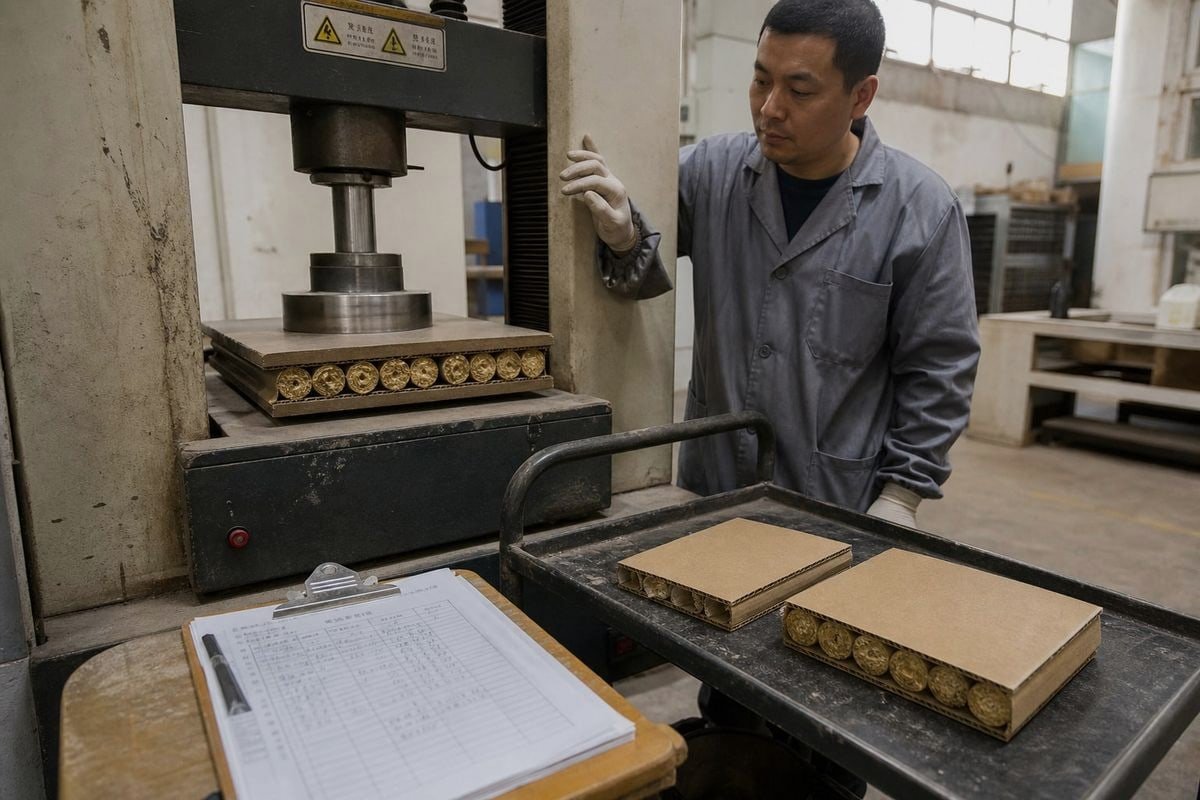
Weight reduction is where genuine manufacturing depth matters. A trading company can only pass your request along. A real factory can test alternatives on the line the same week. Over 17 years of exporting fire-starting goods to the US and Europe, we have learned that the safest weight savings come from smarter structure, not thinner everything.
Material Swaps That Actually Work
Here are the levers we test most often, ranked by typical impact:
| Change | Weight Saved | Risk Level | Notes |
|---|---|---|---|
| E-flute instead of B-flute corrugated | High | Low | Keeps stacking strength for light products |
| Remove interior insert tray | Medium | Medium | Only if units nest tightly without it |
| Shrink film over individual bundles | Medium | Low | Also satisfies Amazon unit-level prep |
| Kraft sleeve instead of full box | High | Medium | Best for smaller pack counts |
| Recycled kraft liners | Low | Low | Supports eco-friendly packaging materials positioning |
Wood fire starters are light and rigid. They do not need the heavy board that fragile goods require. What they do need is containment. Loose wood wool sheds fibers, and Amazon fulfillment center requirements do not tolerate loose or leaking product. So the goal is a snug, sealed, lightweight enclosure.
Protect Against Moisture, Not Just Impact
One issue buyers rarely anticipate: wood fiber absorbs humidity. A carton that ships at 19.5 pounds can arrive heavier after weeks in a damp container. We seal our wood rolls in film partly for this reason. A moisture barrier keeps the wax coating stable and keeps packaged weight predictable, which protects your fee tier and your landed cost calculations.
Validate Before You Scale
Ask your supplier for drop-test videos and compression results on the new spec. Then run one trial shipment. Compare damage rates and actual measured weight at check-in before committing a full production run. We always encourage buyers to start with a flexible trial MOQ for exactly this reason.
What Certifications Should Compliant Wood Fire Starter Packaging Include for Amazon FBA?
Compliance questions come up in nearly every first call with a new European or American buyer. It is usually their opening topic, before price, before lead time. That tells you how much rejection risk worries experienced importers.
Compliant wood fire starter packaging should carry required safety warning labels, composition disclosure, a scannable FNSKU or GS1 barcode, and be backed by supplier documentation such as SGS or Intertek test reports, an SDS, plus factory credentials like ISO 9001, BSCI, and CE where applicable.
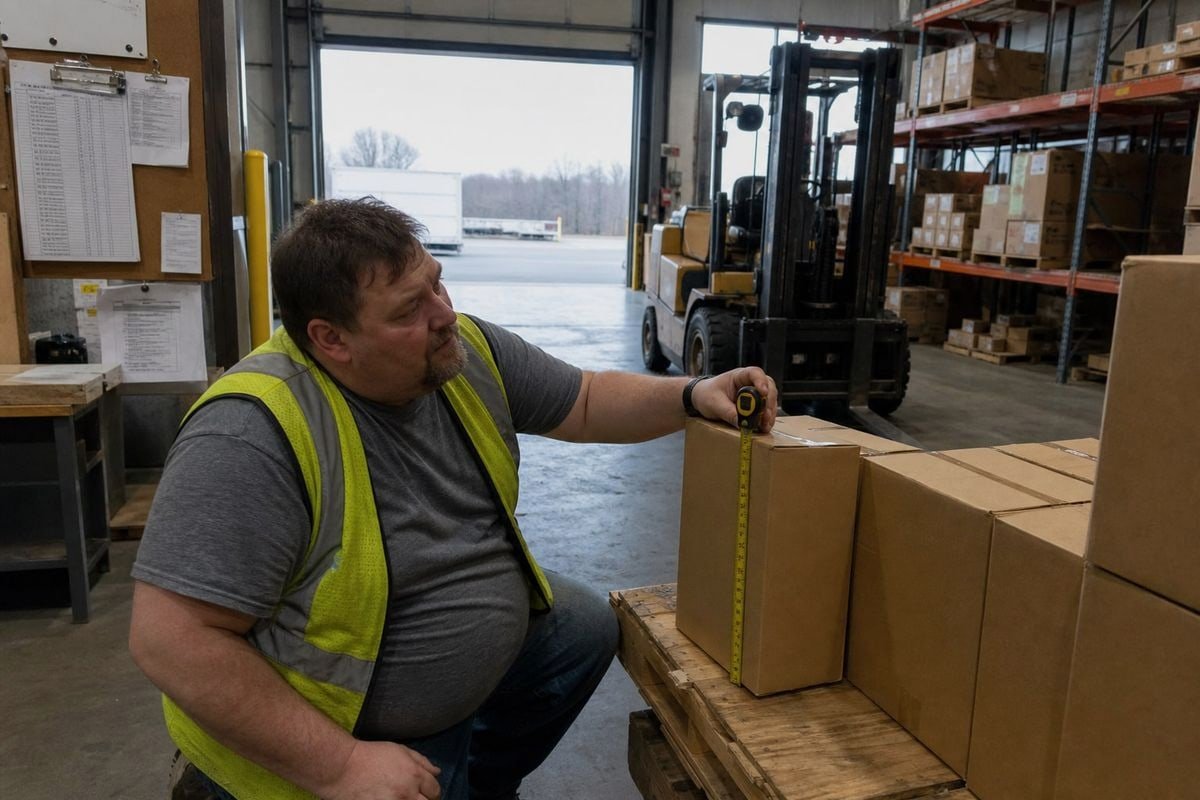
Amazon can require documentation for anything flammable. Wax-and-wood fire starters usually avoid full hazmat classification, but you must be able to prove it. That proof comes from your supplier, and it comes before your first shipment, not after Amazon flags the listing.
The Documentation Stack You Should Request
Treat this as a checklist during private label sourcing negotiations:
- Safety Data Sheet 3 (SDS) for the finished product, current and in English.
- Third-party test reports from a recognized lab such as SGS or Intertek.
- Composition statement printed on the packaging, for example 50% wood fiber, 50% paraffin.
- Warning labels covering flammability, keep-away-from-children language, and usage instructions.
- Barcode compliance, meaning a clean FNSKU or GS1 barcode 4 on each sellable unit.
- Factory-level certifications such as ISO 9001 5 for quality systems and BSCI for social compliance.
Our factory maintains ISO 9001, BSCI 6, and CE certification 7 with SGS and Intertek test reports on file, because our buyers in the US, Germany, and the UK treat these as a hard requirement. If a supplier hesitates when you ask for reports, that hesitation is your answer.
Why Compliance and Fee Optimization Are Linked
Here is the connection sellers miss. If Amazon reviews your product under dangerous goods rules and you lack documentation, the SKU can be blocked or routed into a restricted handling path. That path carries higher costs and slower processing. Clean paperwork keeps your fire starters in the standard, cheaper fulfillment flow. In other words, certification is not just legal protection. It is fee protection. It also protects your redesigned lightweight packaging, because a compliant label set means Amazon has no reason to reject the new box at check-in.
Can My Supplier Provide Custom Retail-Ready Packaging That Meets Amazon's Prep Requirements?
A German distributor once asked us to redesign his fire starter packaging three times in one project: once for shelf appeal, once for FBA prep rules, and once for freight efficiency. The lesson stuck with me. Good retail-ready packaging must satisfy all three at once.
Yes, an experienced OEM supplier can deliver retail-ready packaging that ships FBA-compliant from the factory, including sealed unit-level wrapping, pre-applied FNSKU labels and barcodes, warning text, suffocation labels where needed, and standardized case packs that meet Amazon's carton limits.

Factory-side prep is one of the biggest hidden savings in this whole process. Amazon charges meaningful surcharges for labeling and prep done in its warehouses. A prep center in the US charges per touch, too. When your supplier applies labels and wrapping during production, the marginal cost is close to zero.
What Factory Prep Should Cover
Our one-stop OEM/ODM service handles all of the following, and you should expect the same from any serious partner:
| Prep Task | Done at Factory | Why It Matters for FBA |
|---|---|---|
| Unit shrink-wrap or sealed box | Yes | Meets Amazon's protection rules for loose products |
| FNSKU label application | Yes | Avoids Amazon's per-unit labeling fee |
| Warning and suffocation labels | Yes | Prevents check-in rejections |
| Custom retail box or display packaging | Yes | Sells on shelf and on Amazon with one design |
| Standardized case packs | Yes | Enables unit per carton optimization and cleaner inbound placement |
Case Packs and Bundles: The Overlooked Levers
Retail-ready does not stop at the unit. Case-pack configuration affects your inbound placement fees and shipment splits. Uniform cartons with consistent counts move through Amazon's inbound system with fewer surcharges. We help buyers calibrate carton quantities so each master carton stays under Amazon's weight limits while maximizing units per cube.
Product bundling strategies deserve a look here too. Bundling fire starters into a larger single SKU, such as a 100-piece box instead of four 25-piece boxes, spreads one fulfillment fee across more units. The bold retail box in our own product line follows this logic: one compact, branded, 100-piece carton that works as both a shelf unit and an FBA-efficient package. Ask your supplier to prototype two or three bundle sizes, then compare the fee-per-unit math before choosing.
Conclusion
Oversized, overweight, or non-compliant packaging silently drains FBA margins. The fix is supplier collaboration: right-sized dimensions, lighter materials, certified compliance, and factory-ready prep, validated through trial shipments.
Footnotes
1. Explains volumetric/dimensional weight concept referenced for FBA fee calculation. ↩︎
2. Background reference on corrugated fiberboard material used for packaging weight reduction. ↩︎
3. Government reference explaining SDS documentation requirements mentioned for compliance. ↩︎
4. Background on the GS1 barcode standard referenced for compliant packaging labeling. ↩︎
5. Official ISO page defining the quality management standard cited as a factory credential. ↩︎
6. Official amfori page describing BSCI social compliance auditing referenced in the checklist. ↩︎
7. Official EU source explaining CE marking mentioned as a required factory credential. ↩︎



 English
  Spanish
  German
  French
  Arabic
  Portuguese
Join the Conversation