






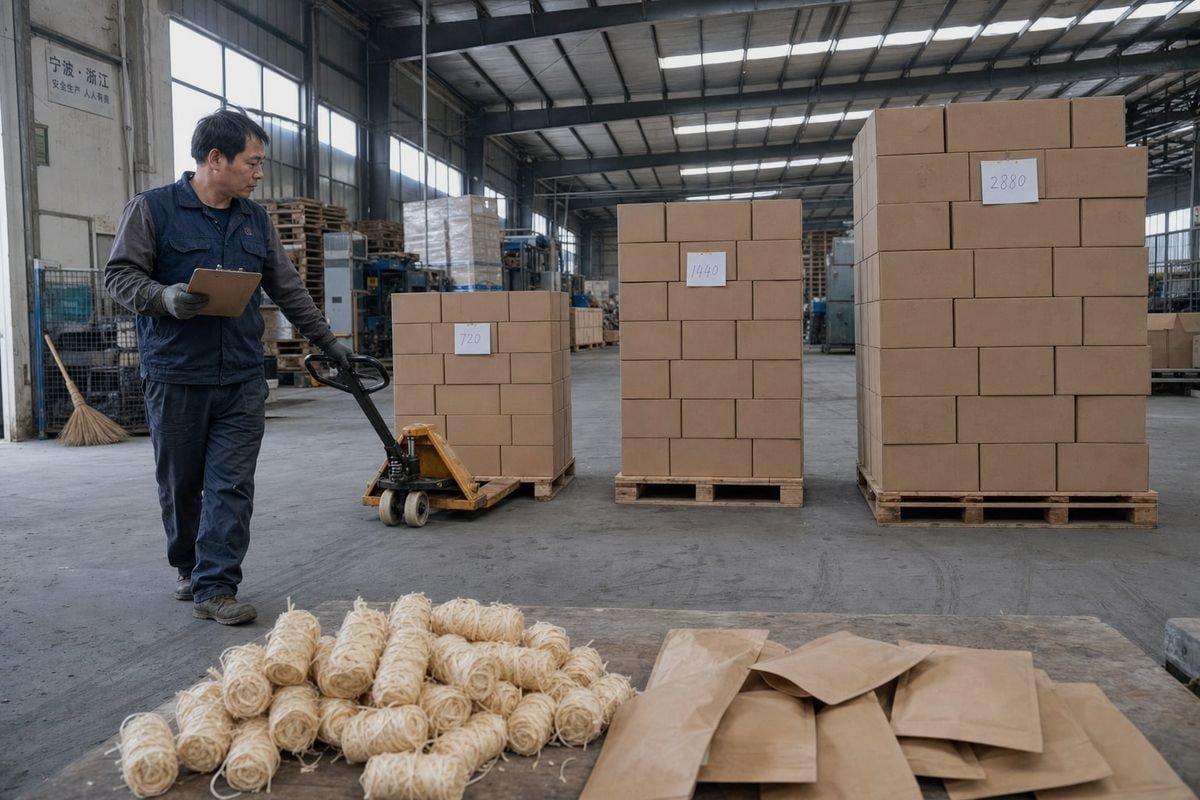
Finding wood fire starter suppliers with tiered MOQ is harder than it looks. On our production line, we see FBA sellers overcommit inventory, then watch Amazon reject the shipment over missing paperwork. That stings twice — cash locked in stock, and a listing that never goes live. The fix is a supplier who offers staged order sizes and handles compliance from day one.
To find wood fire starter suppliers offering tiered MOQ for FBA testing, search marketplace directories filtered by MOQ bands (100, 500, 1,000 pieces), confirm each supplier provides an SDS and FBA-compliant packaging, request samples, and negotiate a staged structure: trial order, test shipment, then scaled reorders with better pricing.
That is the short answer. The longer answer covers certifications, quality consistency, MOQ tiers, and private-label packaging. Let me walk you through each piece, based on what I see buyers get right — and wrong.
What Certifications Should I Require From a Wood Fire Starter Supplier Before My FBA Launch?
A German distributor once asked us for our full audit file before discussing price. That order took three weeks to close — and it has reordered for six years straight.
Before an FBA launch, require a manufacturer-issued SDS matching your exact ASIN, ISO 9001 quality management certification, a social audit such as BSCI, and third-party test reports from labs like SGS or Intertek. For eco-positioned products, ask about FSC certification on wood inputs.
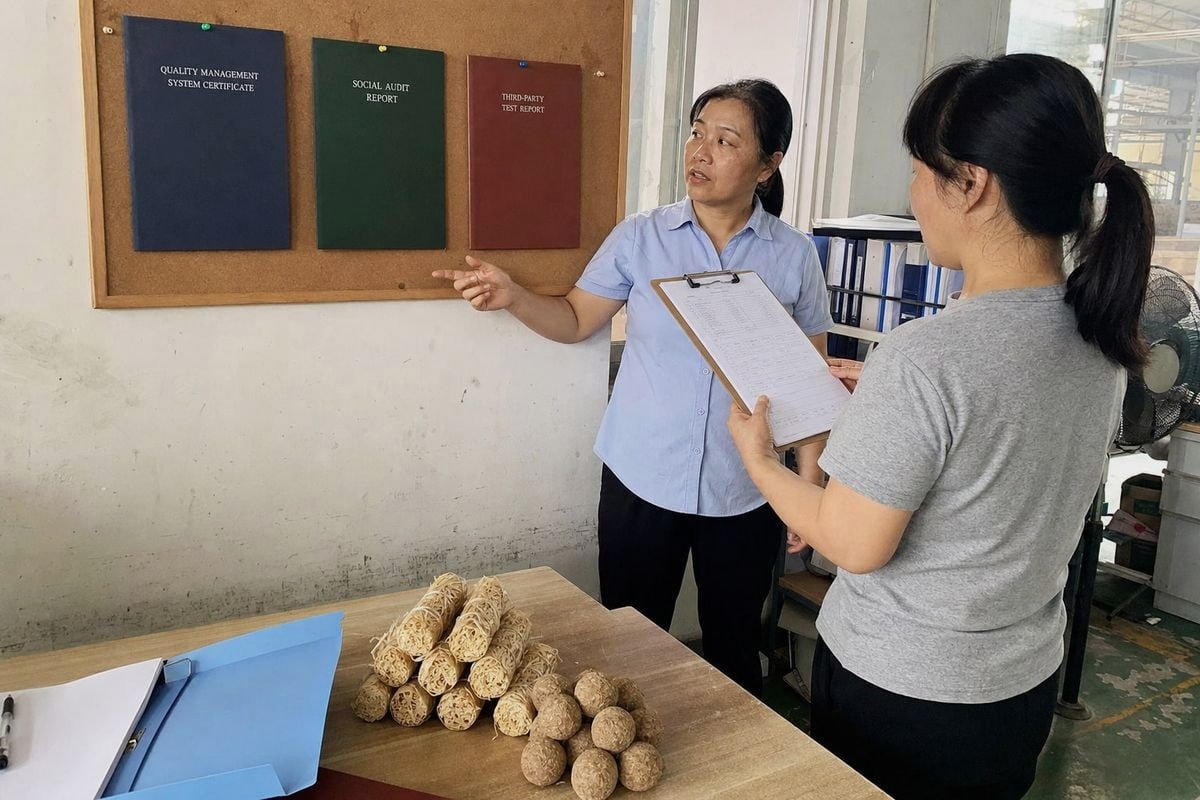
Fire starters are not a generic home-goods SKU. Amazon treats them as a potential dangerous good. That means Amazon FBA compliance starts before you ever send inventory. If your supplier cannot produce the paperwork, your test batch may sit in limbo during hazmat review — or get refused entirely.
The Documents That Matter Most
The single most important document is the Safety Data Sheet 1. It must come from the actual manufacturer, and it must match the exact formulation of the product you list. I have seen sellers submit a generic SDS pulled from another listing. Amazon flags the mismatch, and the ASIN stalls. At our Ningbo facility, we issue SDS documents tied to the specific wax-and-wood-wool formulation in each order, because our US and EU buyers treat this as a hard requirement, not a nice-to-have.
Beyond the SDS, layer your checks like this:
| Document | What It Proves | Why FBA Sellers Need It |
|---|---|---|
| SDS (manufacturer-issued) | Chemical composition and hazard class | Required for Amazon's dangerous goods review |
| ISO 9001 | Quality management system | Signals batch-to-batch process control |
| BSCI social audit | Ethical factory conditions | Required by many EU/US retail channels |
| SGS/Intertek test reports | Independent product verification | Backs up burn-time and safety claims |
| FSC certification (wood inputs) | Responsibly sourced wood wool 2 | Supports eco-friendly kindling positioning |
Why Formulation Affects Everything
A wood wool and natural wax blend often positions better than paraffin-heavy or accelerant-based products. Non-regulated wood-and-vegetable-wax formulations can avoid Class 4.1 Flammable Solid 3 classification, which cuts shipping cost and simplifies FBA intake. Ask your supplier which formulation they run, and get it in writing on the SDS before you pay a deposit.
How Can I Confirm Consistent Quality Between My Trial Order and Future Mass Production?
Here is a trade-off I weigh every week on our line: a slightly looser wax dip saves cost, but it changes burn time. Buyers only notice at reorder — unless the factory locks specs early.
Confirm consistency by requesting a written specification sheet with the sample, verifying batch-level QC records, ordering retained samples from your trial run, and asking whether the trial and mass production use the same line, formulation, and materials. A real factory documents all of this; a trading company usually cannot.
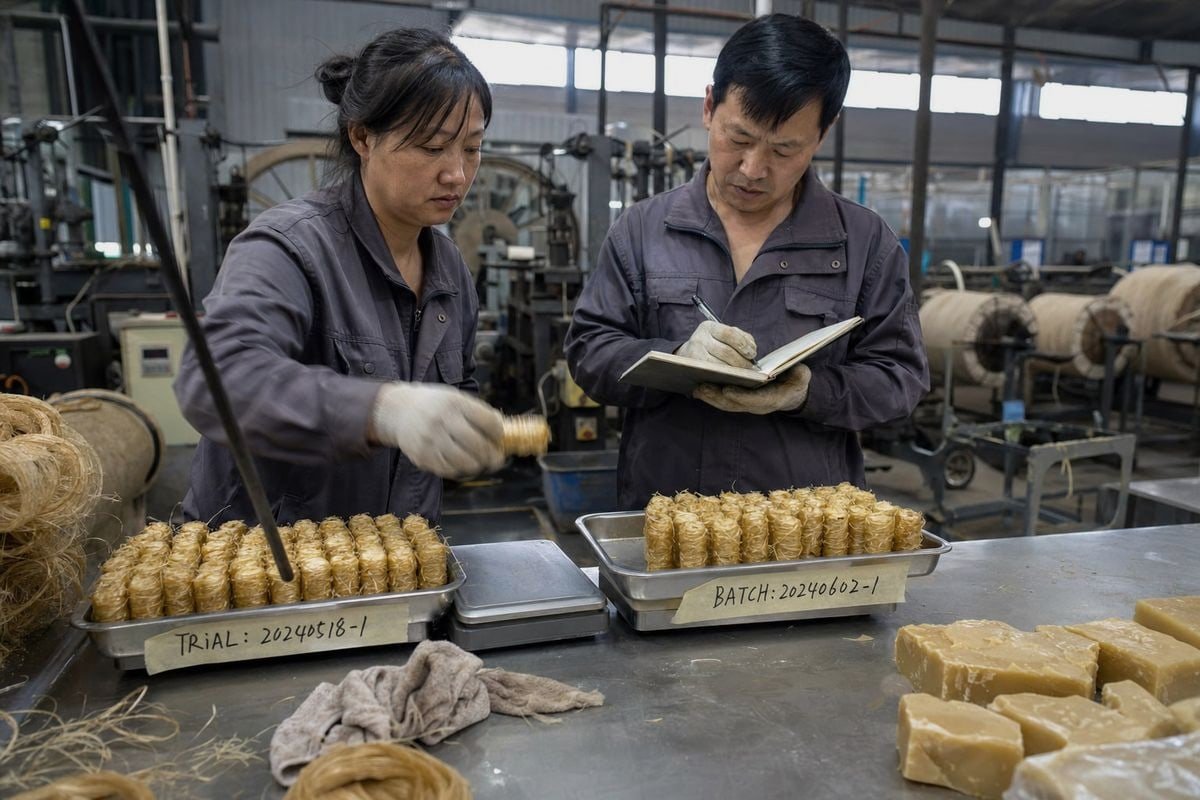
The gap between a beautiful sample and a mediocre bulk order is the most common complaint I hear from importers switching suppliers. Product sample procurement is only useful if the sample actually represents the production process. Over 17 years of exporting to 30+ countries, we have learned that consistency comes from three things: fixed material inputs, documented process parameters, and batch testing.
Lock the Spec Before You Pay
Ask the supplier to attach a spec sheet to your sample. It should state: wood wool grade, wax type and ratio, unit weight tolerance 4, unit dimensions, and target burn time. When your bulk order arrives, you measure against that sheet — not against memory. On our lines, wax-dipped wood rolls are weighed per batch, and we keep retained samples from every production run so a reorder can be compared physically against the first shipment.
Questions That Separate Factories From Traders
- Can I see photos or video of the actual production line making my SKU?
- Do you keep retained samples from each batch, and for how long?
- What is your unit weight tolerance, and how do you test burn time?
- Will my trial order and my mass production come from the same facility?
- Who issues the SDS and test reports — you, or a third party you resell from?
A trading company relabeling stock from multiple workshops will struggle with question five. That is your signal. Low MOQ wholesalers who cannot answer these questions may be fine for a throwaway test, but they are risky partners for a brand you intend to scale.
A Simple Verification Routine
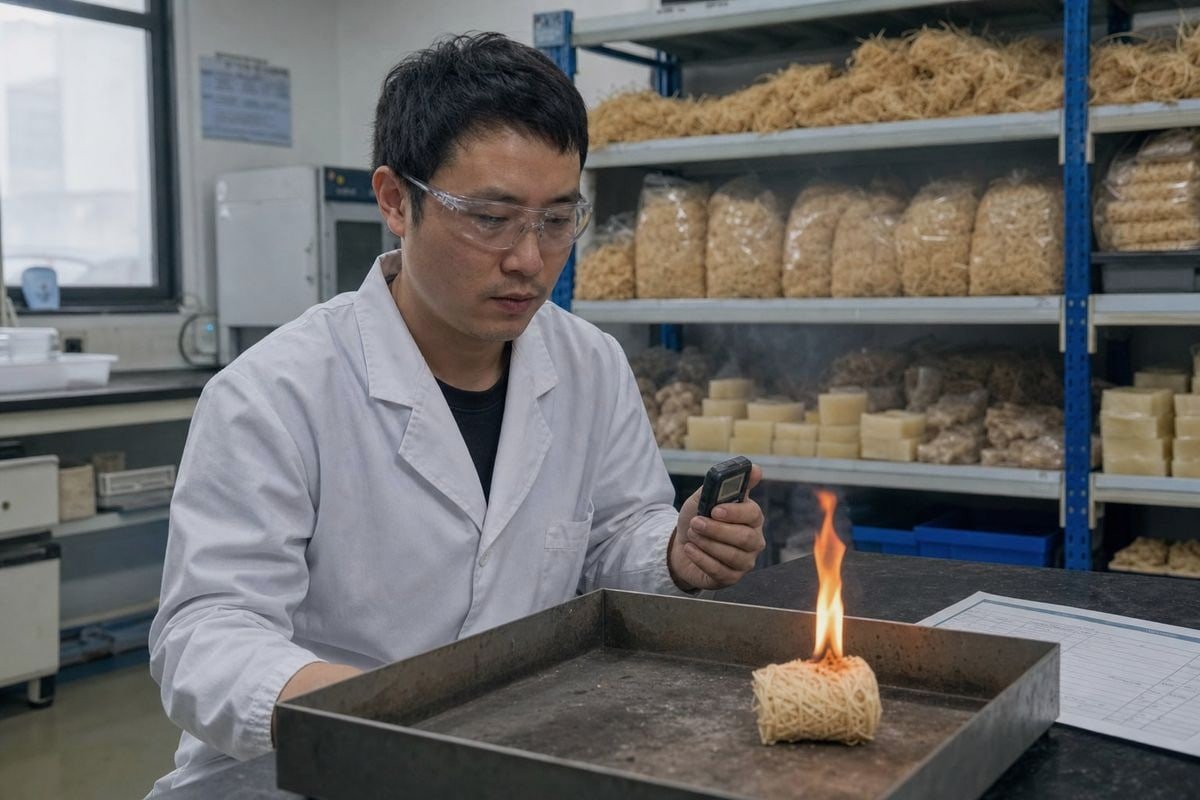
Burn-test at least 5–10 units from the trial order yourself. Record ignition speed, flame stability, and total burn time. Repeat the same test on the first bulk shipment. If results drift more than a small margin, raise it before the next reorder — a serious factory will investigate the batch record rather than argue.
What Tiered MOQ Options Should I Look for When Testing a New Wood Fire Starter Product?
A US camping brand recently opened with a 100-piece stock order from us, then moved to full private-label cartons 5 at the third reorder. That staged path was planned from the first email.
Look for a four-tier structure: a paid sample order of 10–50 units, a stock-product test batch of 100–500 units for FBA, a reorder tier of 1,000+ units with lower pricing, and a custom private-label tier once demand is proven. MOQ should drop in cost as customization rises in volume.
Tiered MOQ simply means the minimum order changes by stage, pack type, or customization level. In the fire starter niche, listed MOQs range wildly — 1 box, 100 pieces, 500 pieces, 1,000 pieces, even 5,000+. That spread is not random. It maps directly to how much setup work the supplier does for you.
How MOQ Maps to Customization
| Tier | Typical Quantity | What You Get | Typical Trade-Off |
|---|---|---|---|
| Tier 1: Sample | 10–50 units | Product sample procurement, burn testing | Highest unit cost, often courier-shipped |
| Tier 2: FBA test | 100–500 units | Stock product, standard packaging, SDS | Limited or no branding |
| Tier 3: Reorder | 1,000–3,000 units | Volume pricing, sea freight economics | Longer lead time |
| Tier 4: Private label | 3,000–5,000+ units | Custom boxes, branding, display packaging | Packaging setup costs, plate fees |
A useful mental model: you pay for supply chain flexibility with either unit cost or customization. A 100-piece order of a standard wood wool product is realistic. A 100-piece order with custom retail boxes usually is not, because printing plates and packaging setup carry fixed costs the supplier must recover.
Negotiation Angles That Work
Frame your first order as a paid sample phase with a written roadmap to Tier 3 and Tier 4 volumes. Suppliers say yes to small orders far more often when they see the scale plan. Two other tactics help. First, ask about piggyback runs — adding your small test batch to the end of a larger existing production run, which bypasses standard MOQ floors. Second, request DDP shipping terms 6 for the test batch so the supplier handles duties and delivery straight into Amazon's network, simplifying your inventory trial run. We offer piggyback slots on standard wax-dipped wood rolls precisely because trial buyers who test well become long-term reorder accounts.
Where to Search
Filter B2B marketplace listings 7 by MOQ band, then shortlist suppliers who explicitly advertise FBA-ready or OEM/ODM programs. Some list MOQs as low as 50 units for validation runs. Also consider hybrid sourcing: overseas bulk firelighting supplies paired with domestically printed packaging can trim freight cost during the testing phase.
How Do I Find a Supplier Who Supports Private-Label Packaging for My Small FBA Test Batch?
One lesson from years of OEM work: buyers who design packaging after choosing a supplier lose weeks. The smart ones send us their dieline requirements in the first inquiry.
Find private-label-capable suppliers by asking three questions upfront: what is the packaging MOQ separate from product MOQ, can they apply your labels or poly bags to a stock product for the test batch, and do they offer full custom boxes with barcodes and warning labels at reorder volume.
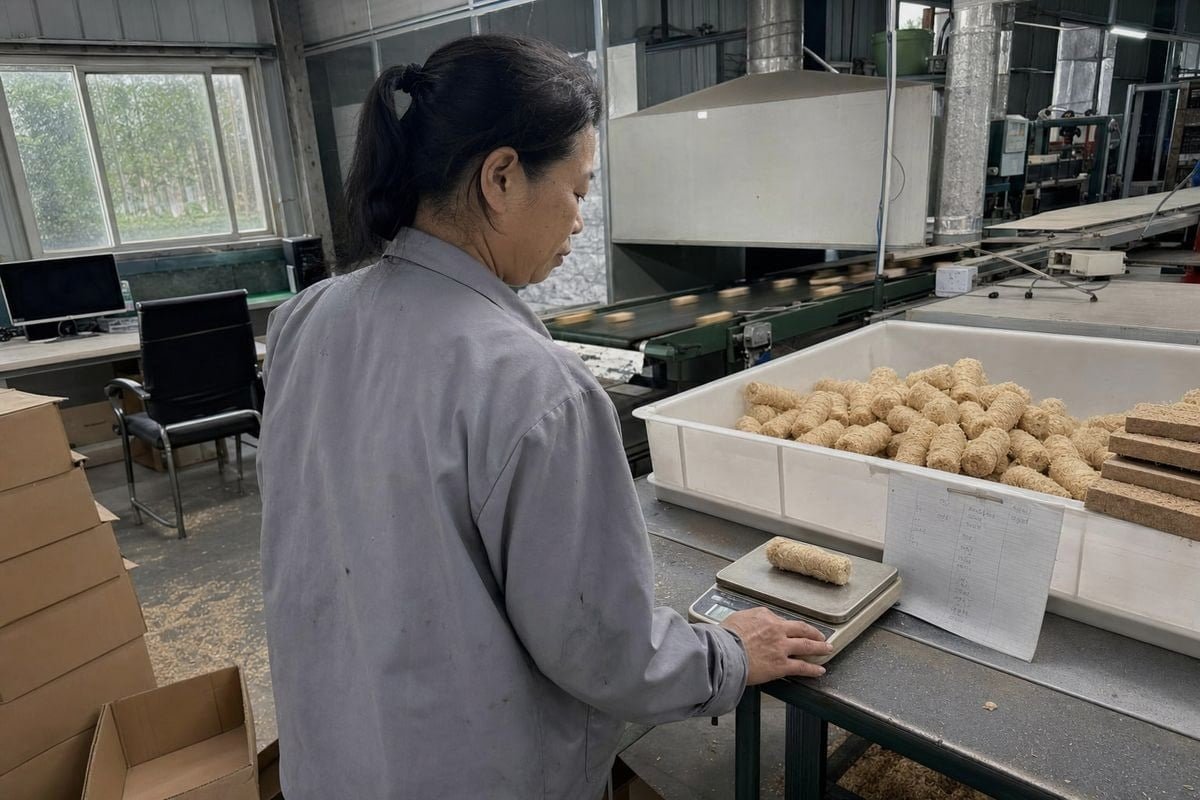
Private label sourcing for a small test batch works best as a two-step move. Step one: run your FBA test with stock product plus minimal branding — a printed label, sticker, or kraft sleeve applied to the supplier's standard unit. Step two: once sales prove out, invest in full custom packaging. Trying to launch full custom boxes at 200 units almost never pencils out, because plate fees and carton setup get spread across too few units.
FBA Prep Is Part of Packaging
Remember that Amazon has its own unit prep rules for this category. Fire starters may need to be individually sealed — a poly bag of at least 1.5 mil thickness, shrink film, or a sealed clamshell — before fulfillment centers accept them. Ask whether your supplier can do this prep in-house. If they can, your test units arrive FBA-ready. If they cannot, you pay a prep center in the destination country and add days to your timeline. At our factory, we build FBA prep into the packaging step: sealed units, carton labels, barcodes, and warning labels applied on the line, because our export buyers across the US and Europe need shelf-ready and warehouse-ready goods in one pass.
Packaging Decisions and Their MOQ Impact
| Packaging Option | Realistic MOQ Impact | Best For |
|---|---|---|
| Stock product, no branding | Lowest (100–500 units) | Pure market validation |
| Stock product + your label/sleeve | Low (300–1,000 units) | Branded FBA test |
| Custom printed box | Medium (2,000–5,000 units) | Proven SKU scaling |
| Retail display carton / multi-pack (12, 24, 36, 48) | High (5,000+ units) | Retail and big-box expansion |
Signals of a True OEM/ODM Partner
Look for suppliers who volunteer packaging details — dielines, label placement, barcode formats — without prompting. Ask for photos of past private-label projects with logos blurred. A factory that regularly runs eco-friendly kindling programs for outdoor and BBQ brands will have this ready. One more tip: confirm the supplier can print compliant warning text 8 in your market's language. EU and US labeling requirements differ, and reprinting boxes after arrival erases your test-batch economics.
Conclusion
Overbuying inventory that Amazon rejects is the costliest FBA mistake. Screen suppliers for tiered MOQ, verified compliance documents, batch-level consistency, and staged private-label options — then scale with confidence.
Footnotes
1. OSHA explains Safety Data Sheet requirements referenced for hazard communication compliance. ↩︎
2. Authoritative Wikipedia entry for wood wool, providing a stable alternative to the broken excelsior link. ↩︎
3. Background on

 English
  Spanish
  German
  French
  Arabic
  Portuguese
Join the Conversation