







Delivery guarantees for mid-season fireplace pine cone replenishment orders can make or break a season Intertek test reports 1. I have watched buyers lose peak weekends because our industry treats delivery as an estimate, not a promise.
Negotiate delivery guarantees for mid-season fireplace pine cone replenishment orders by securing a written arrival date, safety stock reservations, late delivery penalties, replacement or refund rights, and expedited freight upgrades at supplier cost — all confirmed in writing before payment, not buried in vague policy pages.
Below, I break down realistic lead times, guarantee language, contract terms, and capacity checks. Each section gives you specific questions and clauses you can use this week.
What lead times can I realistically expect for mid-season fireplace pine cone reorders?
Last December, a Dutch distributor emailed our Ningbo plant in a panic. Their color-flame pinecones 2 sold out three weeks early, and their original supplier quoted "maybe January." That call taught them everything about inventory lead times.
Mid-season reorders of fireplace pine cones typically require 15–30 days for domestic stock shipments, 30–45 days for fresh production runs, and 45–75 days including ocean freight from Asia. Air freight can compress transit to 5–10 days but adds significant cost per kilogram.

The honest answer depends on what "pine cones" means in your order. In our production lines, we handle three distinct categories: decorative hand-painted cones, color-flame pinecones treated with mineral compounds 3, and wax-based pine cone fire starters. Each has a different production cycle. Decorative cones need painting, drying, and gold-tip detailing. Color-flame cones need treatment, curing, and moisture-controlled packing. Bulk fire starters need wax dipping and cooling. So when a supplier quotes you one blanket lead time, ask which process they mean.
Break the lead time into its real parts
A quoted "30 days" hides four separate clocks. You should ask about each one:
| Lead Time Component | Typical Range (Mid-Season) | What Inflates It |
|---|---|---|
| Order confirmation 4 and payment | 1–3 days | Slow deposits, unclear specs |
| Production or stock allocation | 7–25 days | Raw material shortage, order backlog |
| Export handling and booking | 3–7 days | Peak season logistics congestion |
| Transit (ocean / air / domestic) | 5–35 days | Port delays, customs, weather |
In our experience exporting to 30+ countries, mid-season is when every clock runs slow at once. Freight forwarders batch containers. Carriers prioritize contract customers. Some sellers openly run first-order-first-delivery systems and only guarantee timing for members or subscription clients. That is exactly why a one-off buyer quoting "2–5 business days" from a policy page gets surprised.
My practical advice: get the supplier to commit to a ship-by date, not just a delivery estimate. The ship-by date is fully within their control. Transit risk can then be managed with expedited freight options if the ship date slips.
How do I secure a supplier guarantee that protects my peak-season sales window?
One trade-off we weigh constantly at our factory: flexible delivery language protects us against weather and port congestion, but vague promises destroy buyer trust. The solution we landed on is structured guarantees with defined triggers.
Secure a peak-season guarantee by tying delivery to Critical Arrival Dates rather than generic windows, requesting priority reorder status in writing, and adding automatic remedies — reshipment, freight refunds, or per-day discounts — that trigger the moment the supplier misses the committed date.

Here is the tension you must resolve. Suppliers want language like "typically," "as available," and "if we can accommodate." Those words shift all risk onto you. Your counter-move is not to demand the impossible. It is to convert a vague seasonal promise into a written service commitment with clear triggers.
Anchor the guarantee to a Critical Arrival Date
Do not accept a shipping window. Name the date the stock must be on your shelves — before the first cold front, before a holiday weekend, before your biggest retail promotion. We call this a Critical Arrival Date, and when European buyers give us one, our planning team works backward from it. A supplier who refuses to plan backward from your CAD is telling you something important.
Ask for priority handling as a reorder customer
Some firewood and hearth sellers already give members delivery priority while non-members wait in a general queue. Use that model. Ask directly: "Do reorder customers get priority allocation during peak season logistics crunches?" If yes, get it in the order confirmation. If no, negotiate a small premium for it. Reliable buyers deserve better terms than one-off shoppers, and good suppliers know it.
Demand remedies that trigger automatically
A guarantee without a remedy is a slogan. The strongest structures I have seen buyers negotiate include:
- Free reshipment if goods arrive damaged or incomplete.
- Full freight refund if the committed window is missed.
- Automatic upgrade to expedited freight at supplier expense if the ship-by date slips.
- No-penalty cancellation if the supplier cannot confirm stock within 48 hours.
One clever variant worth raising: weather-indexed shipping windows, where a sudden temperature drop in your region triggers an expedited upgrade. Not every supplier will agree, but asking reveals how seriously they take your sales window. Also watch for the quality-versus-timing trap. Many brands market strong satisfaction or replacement guarantees, but read closely — those often cover product condition, not on-time arrival. You need both.
What contract terms should I negotiate to avoid stockouts during replenishment cycles?
A UK fireplace distributor once showed me their old supplier contract during a factory visit in Liuyang. It ran four pages and contained not one enforceable delivery clause. We rewrote the framework together over two meetings.
Negotiate safety stock reservation clauses, liquidated damages for late delivery, partial shipment rights, dynamic lead-time adjustments, and written Service Level Agreements covering fill rate and on-time performance. These five terms together prevent most mid-season stockouts before they start.
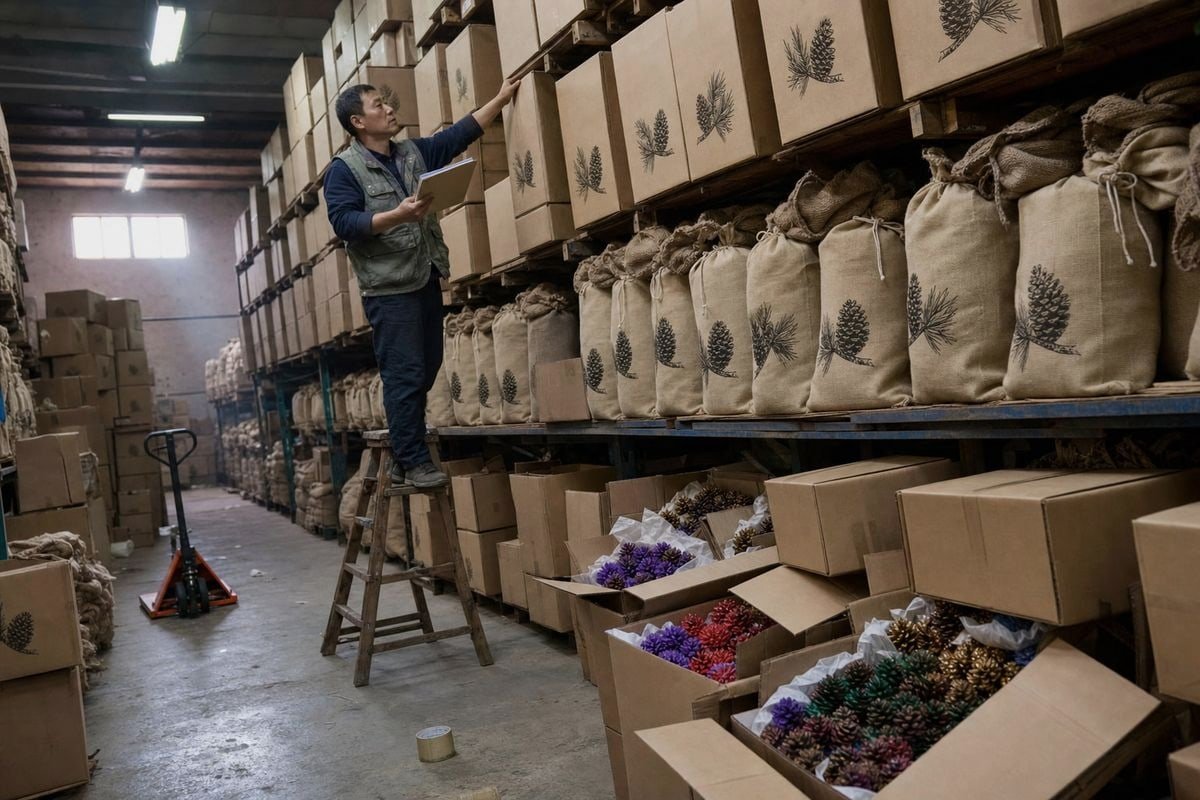
Contracts for wholesale hearth products fail in predictable ways. The buyer assumes stock exists. The supplier assumes flexibility exists. Mid-season, both assumptions collapse at once. These are the clauses that actually hold up.
The five clauses that prevent stockouts
| Clause | What It Does | Negotiation Tip |
|---|---|---|
| Safety Stock Reservation | Supplier holds a dedicated percentage of inventory for your reorders | Offer a rolling forecast in exchange; suppliers reserve stock for predictable buyers |
| Liquidated Damages | Per-unit discount for every 24 hours past the deadline | Keep it modest and automatic; punitive rates get rejected |
| Partial Shipment Rights | Available stock ships now, balance follows | Cap the split at two shipments to control freight cost |
| Dynamic Lead-Time Clause | Lead times adjust with documented logistics conditions | Require evidence, like port congestion data, before any extension applies |
| SLA Metrics | Defines fill rate, on-time rate, and defect rate targets | Review quarterly; tie renewal terms to performance |
A word on late delivery penalties from the factory side of the table: we do not fear them. A reasonable penalty clause tells us the buyer is serious, and it forces internal discipline on our scheduling. What we resist are open-ended penalties with no force majeure carve-out, because peak season logistics genuinely produce supply chain disruptions 5 no factory controls. A fair contract acknowledges both realities.
Do not forget safety stock on your own side
Contract terms reduce risk; they never eliminate it. Calculate your own safety stock levels 6 using last season's peak burning weeks, not annual averages. Fireplace demand spikes with cold fronts, so a two-week buffer at average velocity can vanish in four days of real winter selling. Many of our long-term distributors combine a Just-in-Time replenishment rhythm for normal weeks with a reserved buffer for the coldest month. Some also negotiate first-right-of-refusal on unallocated inventory — stock freed up by other retailers' canceled orders — which costs nothing to ask for and occasionally saves a season.
How can I verify my manufacturer's capacity before committing to a mid-season order?
The most useful buyer question I ever received came from a Canadian importer: "Show me, don't tell me." She asked for a dated photo of our color-flame pinecone curing racks before wiring her deposit. Smart.
Verify capacity by requesting current production schedule slots, dated photos or video of inventory and lines, third-party audit reports such as BSCI or ISO 9001, references from same-season buyers, and a written stock confirmation valid for 48–72 hours before payment.

Trust is not a verification method. During peak season, even honest suppliers overpromise because their own upstream inputs — treated cones, wax, packaging film — are also stretched. Your job is to test the promise before money moves.
A five-step verification process
- Ask for a specific production slot. Not "we can do it," but "your order enters line two on the 14th." Vague scheduling answers are the biggest red flag.
- Request dated visual proof. A short video of current inventory, or the actual production line running your product category, takes a real factory five minutes. Trading companies posing as factories struggle here — this is one reason we always invite buyers to visit our Ningbo production site or join a live video walkthrough.
- Check audit and compliance documents. ISO 9001, BSCI, CE marking 7, and SGS or Intertek test reports do double duty. They confirm the factory exists and operates at scale, and they protect you at customs and on the retail shelf. For our buyers in the US and Germany, these are hard requirements, and any supplier hesitating to share them mid-season is hiding something.
- Talk to a same-season reference. Ask for a buyer who reordered mid-season last year, not a pre-season customer. Vendor performance metrics only matter under pressure.
- Get a stock confirmation with an expiry. A written confirmation that stock is allocated to you, valid for 48–72 hours, prevents the classic mid-season bait: you pay, and the stock was quietly sold to a larger order yesterday.
One more angle worth raising for bulk fire starters and treated cones specifically: ask how the goods are stored and shipped. Pine cones absorb moisture, and a damp shipment ignites poorly no matter how fast it arrived. We pack ours in sealed, moisture-controlled packaging precisely because a late shipment that works beats an on-time shipment that fails on the hearth. If your supplier cannot describe their humidity controls, capacity is not your only problem.
Conclusion
Mid-season replenishment is a logistics negotiation, not a shopping trip. Vague estimates cost you peak weekends; written commitments protect them.
Demand a Critical Arrival Date, automatic remedies, safety stock reservations, and verified capacity before you pay. Suppliers who welcome those terms — as we do after 17 years serving distributors across the US and Europe — are the partners worth keeping. The rest are simply hoping the season goes smoothly. Your shelves deserve better than hope.
Footnotes
1. Official Intertek landing page for global testing, inspection, and certification services. ↩︎
2. Authoritative Wikipedia page explaining the chemical compounds used to create colored flames in products. ↩︎
3. Authoritative database providing chemical and physical properties of substances used in industrial and consumer treatments. ↩︎
4. Federal Trade Commission guidelines regarding merchant obligations for shipping and delivery timing for consumer orders. ↩︎
5. Wikipedia article covering the management and mitigation of supply chain risks and disruptions. ↩︎
6. Technical explanation of inventory management strategies used to mitigate the risk of stockouts during peak demand. ↩︎
7. Official European Commission page detailing the safety and compliance requirements for products sold within the EU. ↩︎



 English
  Spanish
  German
  French
  Arabic
  Portuguese
Join the Conversation