






Moisture content in fireplace pinecones can quietly ruin a good product Intertek 1. I have watched buyers lose repeat customers over damp cones that smoked instead of sparkled — a problem our factory works hard to prevent.
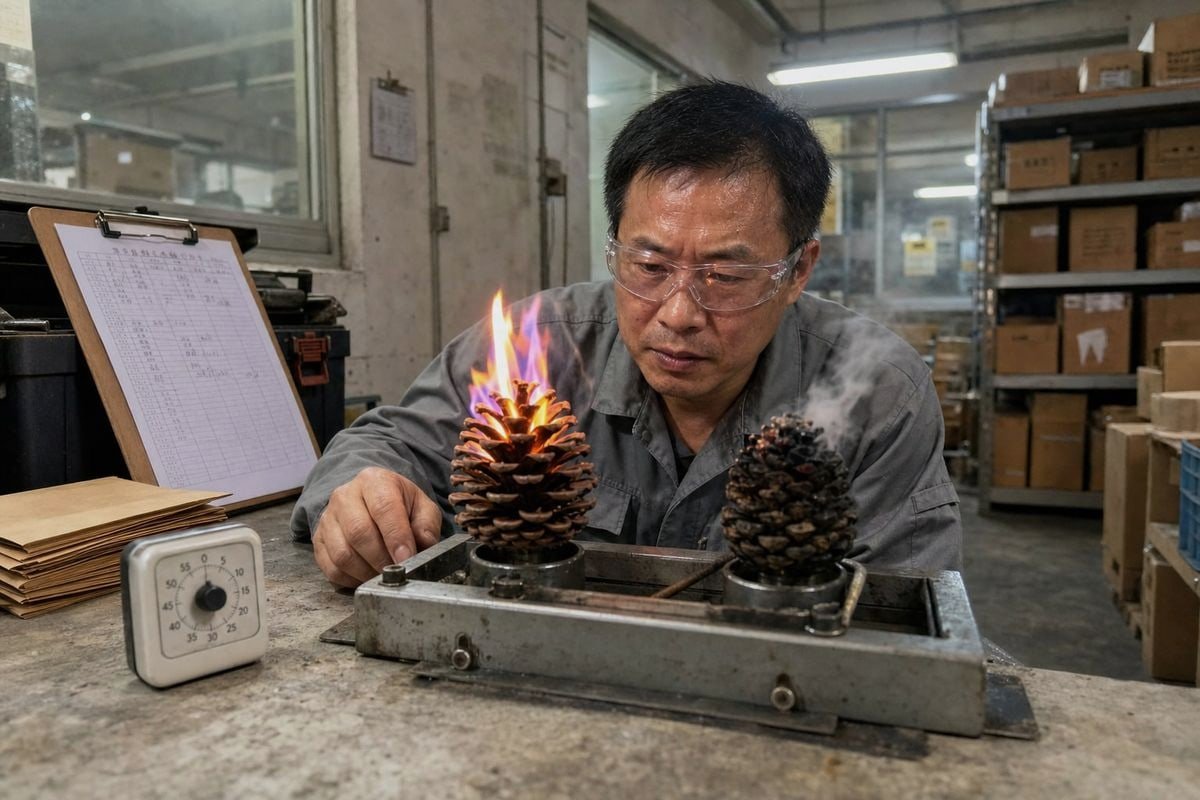
Moisture content directly controls how fireplace pinecones perform. Dry cones below roughly 10–12% moisture ignite fast and burn with bright, vivid flames. Wet cones above 20% moisture ignite slowly, smolder, produce steam and smoke, and mute the color-flame effect that customers expect.
That is the short answer. Now let me walk you through what this means for your sourcing decisions, from supplier specs to verification, flame color, and packaging.
What Moisture Level Should I Require From My Pinecone Supplier for Reliable Ignition?
A few years back, one of our first big buyers in Germany asked me a simple question: what moisture number should go into the purchase contract third-party inspection 2? On our production floor, we had to answer with data, not guesses.
Require a moisture content below 10–12% for color-flame pinecones. At this level, cones ignite quickly from a small flame and burn cleanly. Above 20%, ignition becomes slow and unreliable, so most quality suppliers dry cones well under that threshold before treatment and packing.
Fire science gives a clear reason for this spec. Before a pinecone can burn, all the water inside it must be heated and boiled away. Every gram of water steals heat that should be driving pyrolysis 3 — the process that releases flammable gases. So a wet cone spends its energy making steam instead of making flame. Research on pine fuels shows something even more interesting: ignition probability does not fade gradually as moisture rises. It collapses within a narrow critical band. A cone at 12% may light instantly. A cone at 22% may barely light at all with a normal match or lighter.
Why the Threshold Matters More Than the Average
When we set drying targets in Ningbo, we do not aim for an average. We aim for a ceiling. A batch that averages 11% but contains cones at 19% will still generate customer complaints. Our kilns and QC checks target every cone, because your end customer only lights one cone at a time.
Here is how different moisture levels behave in a real fireplace:
| Moisture Content | Ignition Behavior | What the End Customer Sees |
|---|---|---|
| Below 10% | Ignites in seconds from a match | Fast, bright, satisfying start |
| 10–15% | Ignites reliably, slight delay | Acceptable but slower flame build |
| 15–20% | Slow, needs sustained kindling | Frustration, hissing, extra smoke |
| Above 20% | Often fails to flame; smolders | Steam, white smoke, product returns |
One nuance worth knowing: a strong enough heat source can force even damp biomass to ignite. But your customers are using matches and lighters, not laboratory burners. Low moisture removes that uncertainty. That is why we treat the moisture spec as a hard contractual number in our OEM agreements, not a soft recommendation.
How Can I Verify Moisture Content Before Placing a Bulk Order?
There is a trade-off I discuss with almost every new buyer: trust the supplier's paperwork, or test independently. In our 17+ years exporting fire products, the buyers who do both have the fewest problems.
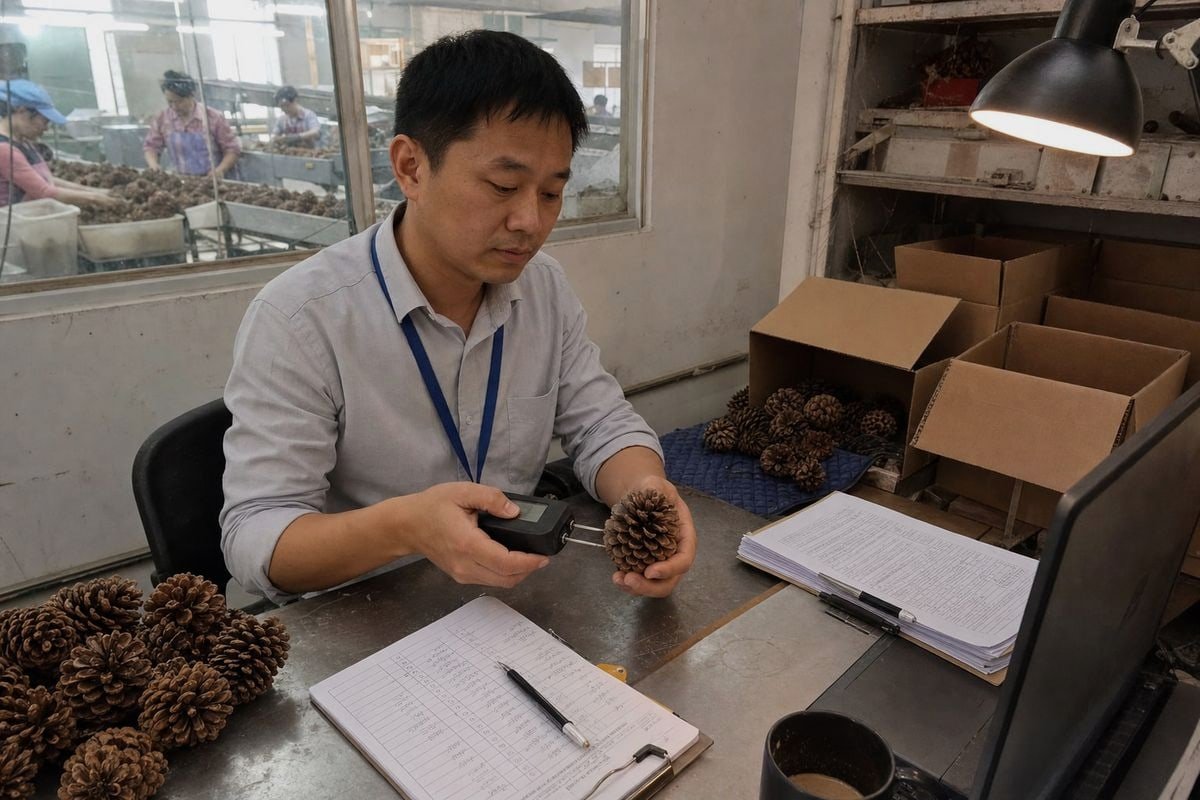
Verify moisture content by requesting a recent batch test report, testing samples yourself with a pin-type moisture meter or oven-dry method, and commissioning third-party inspection such as SGS or Intertek before shipment. Combine at least two of these methods for bulk orders.
You do not need a laboratory to protect yourself. You need a process. Here is the one I recommend to purchasing managers, in order:
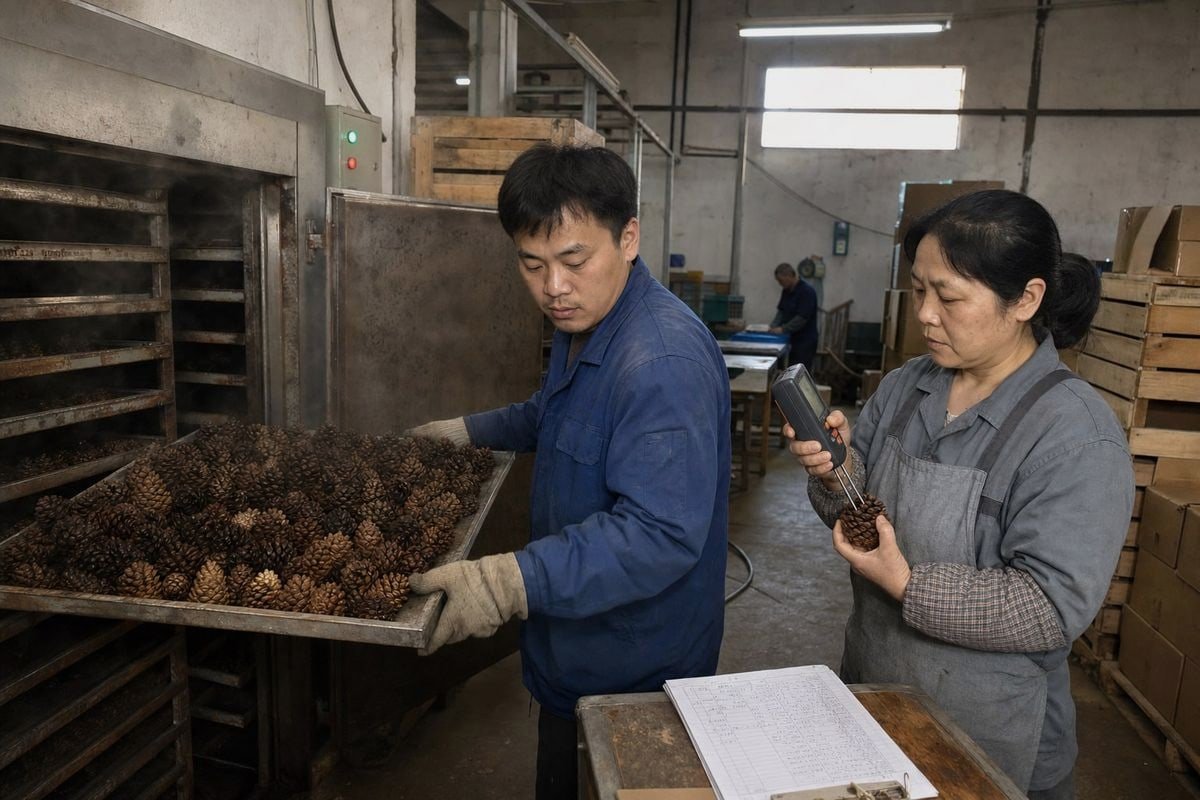
- Ask for the supplier's drying protocol. A real factory can describe kiln temperatures, drying times, and how they check finished batches. A trading company usually cannot. When buyers visit our lines, we show them the drying records batch by batch.
- Test the sample shipment yourself. A pin-type wood moisture meter costs little and gives a fast reading. Push the pins into the cone's core, not just the scales, because the interior dries last.
- Run an oven-dry check on a few cones. Weigh a cone, dry it at low oven heat for several hours, and weigh it again. The weight loss is the water. This is the same principle fire scientists use, measured on an oven-dry basis.
- Do a burn test. Light three to five cones with a single match each. Note the time to sustained flame, and watch for hissing or white steam — both are moisture giveaways.
- Use third-party inspection for the full order. We routinely arrange SGS 4 or Intertek pre-shipment checks for our clients, and moisture can be added to the inspection scope.
Reading the Warning Signs in a Burn Test
A dry cone catches within seconds and the flame spreads scale to scale. A damp cone hisses, sizzles, pops, and pushes out pale smoke before any real flame appears. Uneven internal moisture — a wet core under dry scales — can even cause unexpected crackling and sparking, which is a safety concern worth flagging in your QC checklist.
Does Excess Moisture Compromise the Color-Flame Effect I'm Promising My Customers?
During development of our color-flame pinecone line, our engineers ran side-by-side burns of properly dried cones against deliberately re-humidified ones. The visual difference surprised even our most experienced technicians.
Yes. Excess moisture weakens the color-flame effect significantly. Water vapor dilutes combustible gases and lowers flame temperature, so the mineral colorants produce dull, muted hues instead of vivid blue, green, and purple. Dry cones deliver the sharp, saturated colors your marketing promises.

The chemistry here is straightforward. Color-flame effects come from mineral salts — copper compounds for blues and greens, for example — that emit specific colors when they get hot enough. The key phrase is hot enough. Flame color intensity depends on flame temperature, and moisture attacks temperature from two directions. First, evaporating the water absorbs heat. Second, the resulting water vapor mixes into the flame zone and dilutes the pyrolysis gases, making combustion less complete.
The result is predictable. A dry, treated cone burns hot, and the colorant emits sharp, vivid color. A damp cone burns cool and incomplete, so you get a weak orange flicker, extra smoke, and only faint traces of the intended color. Your customer paid for magic and got a smudge.
The Business Cost of Muted Flames
| Cone Condition | Flame Appearance | Customer Reaction |
|---|---|---|
| Fully dried, properly treated | Bright, saturated blue/green/purple | Repeat purchases, gift orders, reviews |
| Slightly damp | Colors visible but weak and flickering | Disappointment, hesitant reorders |
| Wet or unevenly dried | Mostly smoke and steam, little color | Returns, negative reviews, brand damage |
There is one more angle buyers should not ignore: smoke and residue. Wetter cones smolder rather than flame, and smoldering releases more creosote 5-forming smoke into chimneys. A color-flame product that also dirties the customer's flue is a liability. This is exactly why we control moisture before applying our eco-friendly colorant treatments — the treatment can only perform as well as the fuel underneath it. In our export markets from the US to Germany, the brands that win are the ones whose fifth bag burns exactly like the first, and consistent dryness is the foundation of that consistency.
What Packaging and Storage Standards Keep Moisture Out During Shipping and Warehousing?
A hard lesson shaped our packaging standards: an early sea shipment to a humid coastal market taught us that cones dried perfectly at the factory can reabsorb moisture in transit if the packaging is treated as an afterthought.
Use sealed, moisture-barrier packaging — resealable stand-up pouches, lined kraft bags, or jars — with desiccant packets for humid routes. Store cartons off the floor in ventilated, low-humidity warehouses, and specify moisture-barrier liners for sea freight through tropical climates.
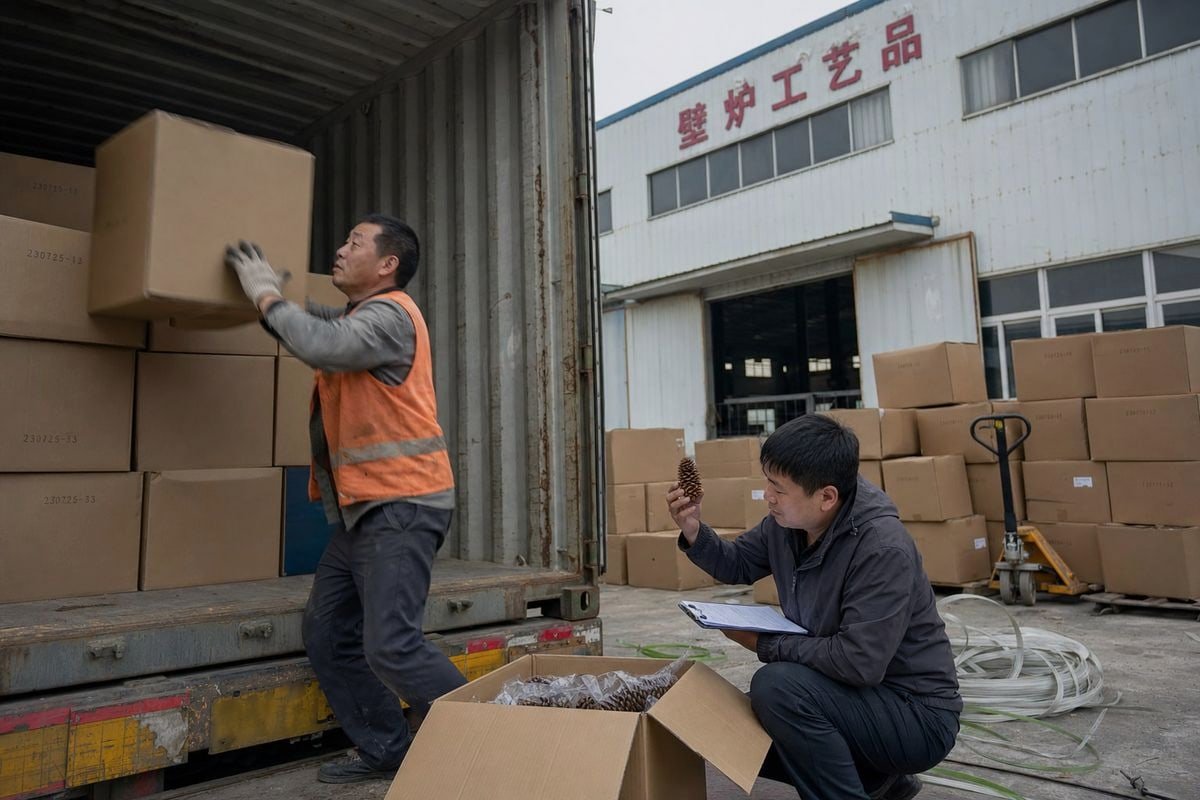
Pinecones are hygroscopic 6. Like all porous biomass, they pull moisture from the surrounding air until they reach equilibrium with it. That means a cone dried to 8% at our facility in Ningbo can climb back toward risky levels inside a shipping container crossing the equator — unless the packaging blocks that exchange. Packaging is not just branding. It is moisture control.
Matching Packaging Format to the Sales Channel
We produce several formats for our OEM clients, and each has a different moisture profile:
| Packaging Format | Moisture Protection | Best Use Case |
|---|---|---|
| Resealable stand-up pouch with barrier liner | High; reseals after each use | Retail shelves, camping brands |
| Plastic jar with sealed lid | High; rigid and reusable | Premium fireplace gift sets |
| Kraft bag with inner liner | Medium-high; eco look with protection | Rustic and holiday retail |
| Plain burlap sack, unlined | Low; decorative only | Display use over an inner sealed bag |
Notice the burlap point. Buyers love the rustic burlap look, and so do we — but woven jute breathes freely. When clients want that aesthetic, we recommend a sealed inner bag with the burlap as the outer presentation layer. Style outside, barrier inside.
Storage Rules That Actually Get Followed
Keep it simple for your warehouse team. Store cartons on pallets, never directly on concrete floors, which wick moisture upward. Keep goods away from exterior walls in humid seasons. For long warehousing in damp climates, silica gel 7 packets inside sealed master cartons hold dryness far better than open-air storage. And rotate stock first-in, first-out, so no pallet sits through two humid summers. On our side, we add desiccants and container liners for tropical routes as part of the logistics planning we do with each client — moisture control has to run unbroken from kiln to hearth.
Conclusion
Moisture content decides whether your fireplace pinecones ignite fast and burn in vivid color — or hiss, smoke, and disappoint. Specify it, verify it, and protect it from kiln to shelf.
Footnotes
1. Official site for the inspection company referenced for bulk order verification. ↩︎
2. SGS provides independent pre-shipment inspection services referenced for verifying moisture compliance. ↩︎
3. Explains the chemical process releasing flammable gases referenced in ignition discussion. ↩︎
4. Authoritative source for third-party pre-shipment inspection services mentioned as verification method. ↩︎
5. Background on chimney residue byproduct linked to smoldering damp cones. ↩︎
6. Defines the moisture-absorbing property central to packaging and storage guidance. ↩︎
7. Explains the desiccant material recommended for long-term moisture control in warehousing. ↩︎



 English
  Spanish
  German
  French
  Arabic
  Portuguese
Join the Conversation