






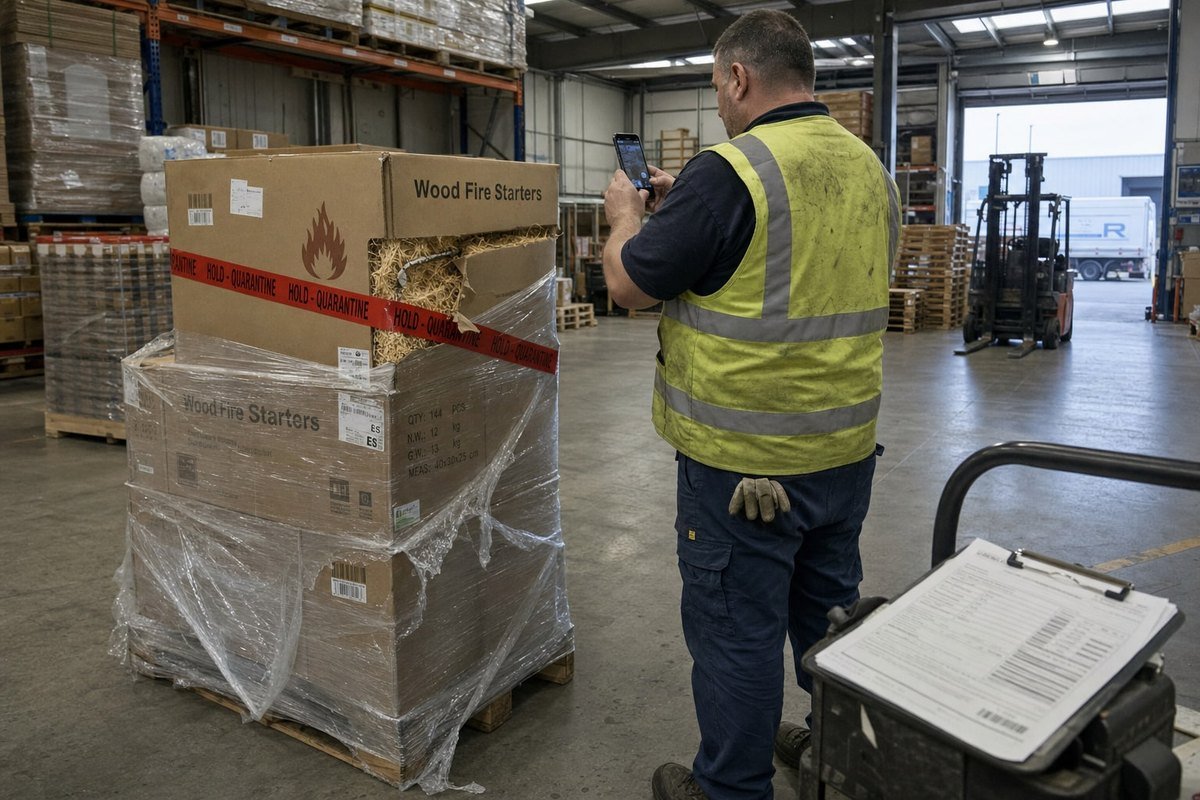
Quality issues found upon delivery of wood fire starters can wreck a whole retail season. I have watched containers from our Ningbo lines arrive perfect — and heard horror stories from buyers burned by other suppliers.
Handle quality issues found upon delivery of wood fire starters by quarantining the shipment, photographing packaging and defects immediately, checking moisture content and ignition on random samples, and filing a documented claim within the supplier's window — typically 48 hours to 30 days — requesting refund, replacement, or credit.
That is the short version. Below, I will walk you through each stage: documentation, remedies, third-party test reports, and long-term prevention. Let's start with the first hour after the truck leaves.
What Should I Document First When Wood Fire Starters Arrive Damaged or Defective?
A German distributor once called me in a panic. His pallet arrived with crushed cartons, and he had already signed the delivery receipt clean. That mistake nearly killed his freight claim.
Document the outer packaging first, before anything is unpacked. Photograph the pallet, carton damage, and shipping labels, note visible damage on the delivery receipt, then record the defect itself — wet wood wool, wax pooling, or crushed rolls — alongside the order number and Bill of Lading.
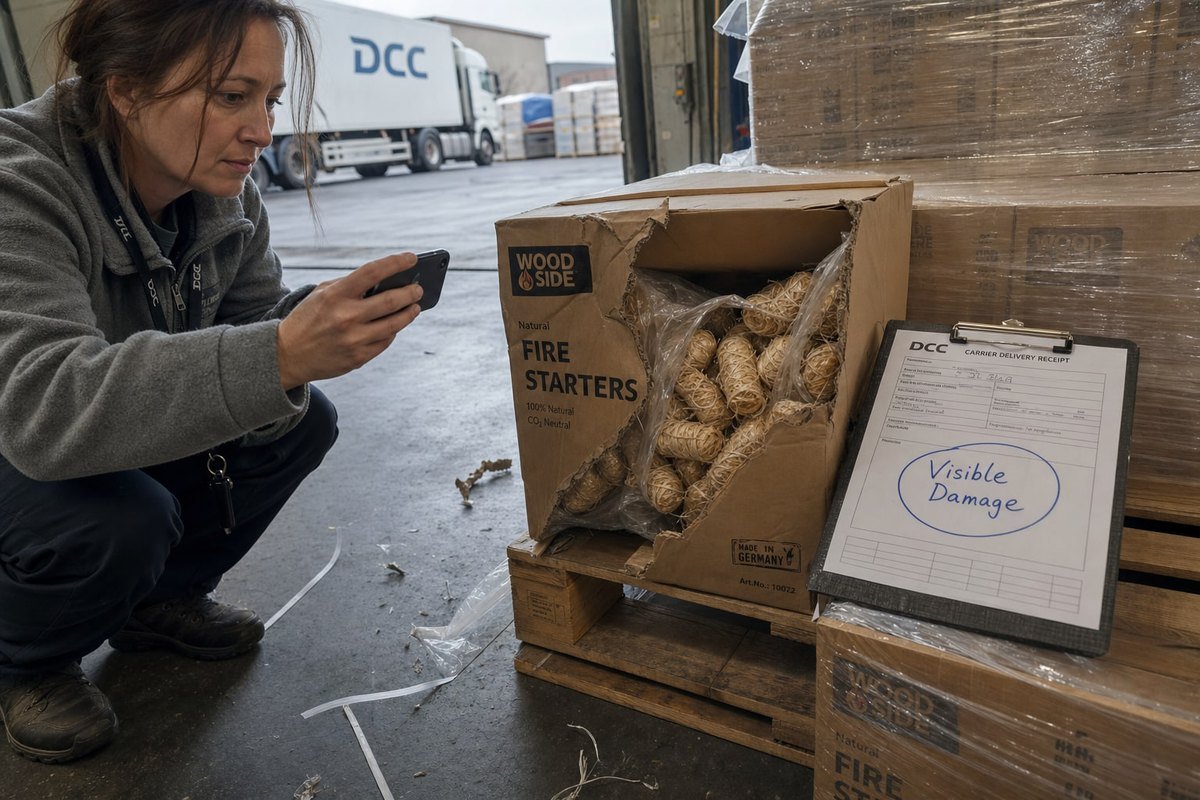
Evidence quality decides claim outcomes. In my seventeen years shipping fire-starting goods to the US, Germany, and the UK, I have seen valid complaints rejected simply because the buyer unpacked everything, threw away the cartons, and photographed loose product on a warehouse floor. Sellers and carriers cannot verify anything from that.
The Delivery-Day Evidence Checklist
Work through this sequence before you touch a single fire starter:
- Photograph the pallet or parcel as delivered. Show shrink wrap, strapping, and any tears or water stains.
- Note "Visible Damage" on the carrier's delivery receipt before signing. For freight, this single line preserves your legal position.
- Keep the Bill of Lading and packing list together. Match carton counts against the documents.
- Open one carton at a time and photograph the internal liners. Concealed damage claims need proof the inner packaging was intact or compromised.
- Shoot close-ups of the defect. Two to three clear photos per defect type is the standard most suppliers request.
What Counts as a Documentable Defect?
| Defect Type | What to Photograph | Likely Cause |
|---|---|---|
| Wet or moldy wood wool 1 | Water stains, white mold, damp fibers | Transit moisture, poor container loading |
| Wax pooling at one end | Cross-section of the roll | Manufacturing wicking defect |
| Excessive fines and dust | Debris at carton bottom | Rough handling or brittle product |
| Crushed or deformed rolls | Side-by-side with intact unit | Carton compression in transit |
| Wrong SKU or pack size | Label versus purchase order | Fulfillment error |
Also record the delivery date and time. Claim windows start from that moment, and a timestamped photo set is the cheapest insurance you will ever buy.
Can I Get a Refund, Reorder, or Credit If a Batch Fails My Quality Check?
Trade-offs shape every claim negotiation. When a Canadian buyer found high moisture content in one lot from another wholesale supplier 2, we advised him on which remedy actually made commercial sense — and it was not a refund.
Yes. Buyers with documented evidence filed inside the claim window can typically secure a full or partial refund, a free replacement batch, or a credit note against the next order. The right remedy depends on defect severity, restocking urgency, and whether the goods are salvageable.
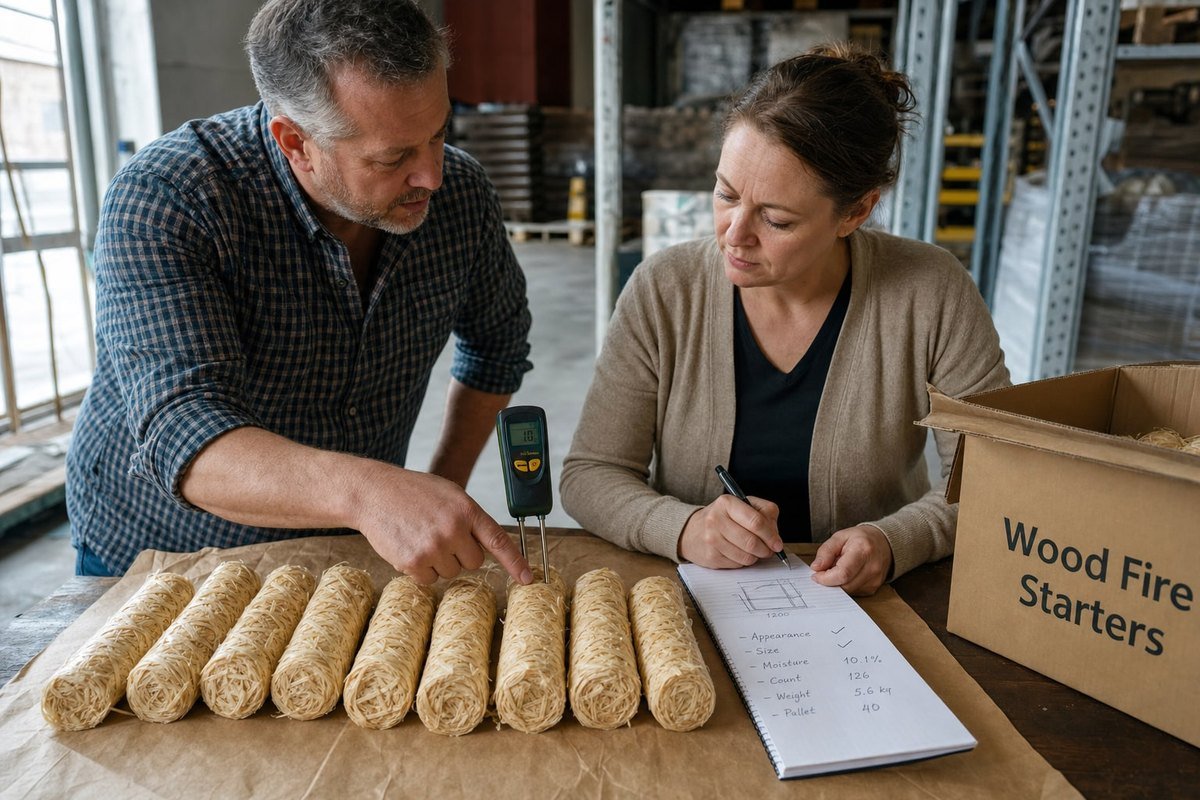
Reputable suppliers do not fight legitimate claims. What they push back on is vague complaints — "the product doesn't work well" — with no photos, no sample data, and no lot numbers. So build your quality check into a repeatable receiving routine before you negotiate.
Run a Structured Quality Check First
Before claiming, verify the failure objectively:
- Moisture check. Use a pin-type moisture meter on the wood components. Kiln-dried material 3 should read well under 20%. Higher readings mean smoldering, smoke, and ignition failure at the point of use.
- First-match ignition test. Pull random samples from different cartons. A healthy wax-dipped wood wool roll should light with one match and sustain a flame.
- Fines assessment. Tip a carton and measure the loose sawdust. Excessive fines signal brittle rolls or rough handling.
- Wicking uniformity. Cut a few rolls open. Wax should be distributed evenly, not pooled at the bottom with dry fibers on top.
Which Remedy Should You Request?
| Remedy | Best When | Typical Timeline |
|---|---|---|
| Full refund | Batch unusable or unsafe; relationship ending | 1–3 weeks after approval |
| Free replacement | You still need stock; supplier is at fault | Next production run plus shipping |
| Credit note | Partial defect rate; ongoing relationship | Applied to next PO immediately |
| Discount and keep goods | Cosmetic issues only; product still sellable | Negotiated within days |
In our own claims process, we often propose a hybrid: credit for the defective percentage plus expedited replacement units. For a distributor facing a seasonal shelf deadline, speed usually matters more than the money. State your preferred remedy clearly in the first message. Include the order number, delivery date, defect rate from your sample check, and your photo set. A precise claim gets a fast answer.
How Do Reputable Suppliers Handle Claims Backed by SGS or Intertek Test Reports?
Third-party reports changed how our factory handles disputes. Because we run SGS and Intertek testing 4 on our wood firestarters as standard, a buyer's inspection report rarely surprises us — and that is exactly the point.
Reputable suppliers treat SGS or Intertek reports as decisive evidence. They compare the findings against their own batch records and pre-shipment test data, accept liability quickly when results confirm a defect, and typically resolve the claim with replacement or refund plus a corrective action plan.
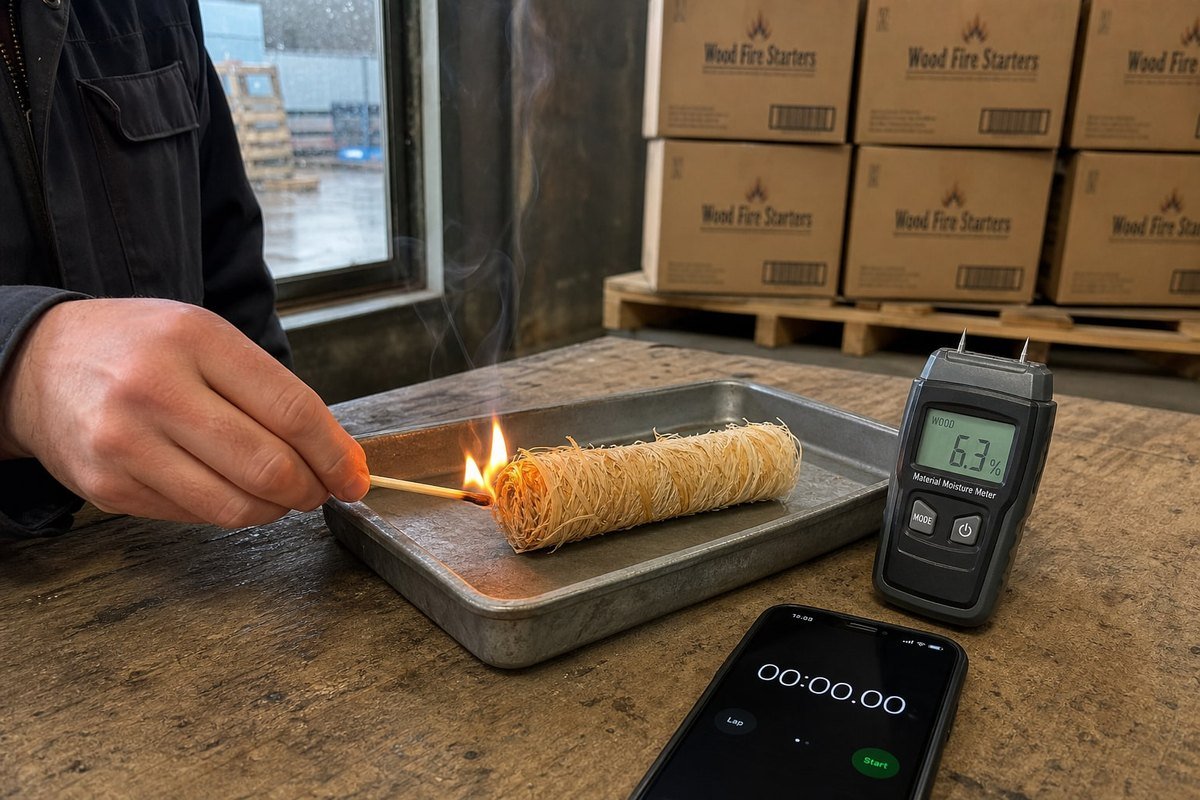
An independent test report shifts the conversation from opinion to data. When a buyer says "the fire starters won't light," a supplier can question storage or usage. When an accredited lab measures moisture content, burn time, and ignition performance against a defined benchmark like the EN1860-3 standard for barbecue firelighters, there is nothing left to argue about.
Why Third-Party Reports Work
Serious manufacturers keep retained samples from every production lot. When your inspection report arrives, we pull the retained sample, re-test it, and compare. Three outcomes are possible. First, our sample also fails — the defect is ours, and we settle immediately. Second, our sample passes but yours fails — this points to transit exposure or storage, and we look at the freight claim route together. Third, results match and both pass — then the issue is likely a usage or expectation gap, and we talk through application conditions.
How to Use a Report Effectively
- Commission testing on a statistically fair sample, drawn from multiple cartons, not just the worst-looking one.
- Test against a named benchmark: EN1860-3 parameters, your purchase specification, or the supplier's own datasheet.
- Include lot numbers and production dates so the supplier can trace batch records.
- Send the full report, not screenshots. Partial data invites suspicion.
A supplier who refuses to engage with an accredited SGS or Intertek report is telling you something important about future orders. In our experience exporting to 30+ countries, compliance-driven buyers in the US and EU treat that refusal as an automatic disqualification — and they are right to.
What Steps Can I Take to Prevent Recurring Quality Issues in Future Orders?
Prevention taught me more than any claim ever did. After one early-career transit moisture incident years ago, our team redesigned carton liners and container loading procedures — and that lot-level discipline still runs through our Ningbo production today.
Prevent recurring issues by writing measurable specs into your purchase order, requiring pre-shipment inspection reports, verifying certifications such as FSC and ISO 9001, using lot tracking with retained samples, and reviewing supplier corrective actions after every claim.

Most repeat problems trace back to one root cause: the buyer and supplier never agreed on measurable quality criteria. "Good quality fire starters" is not a specification. Moisture content below a stated percentage, minimum burn time in minutes, maximum fines by weight, and defined packaging drop-test performance — those are specifications.
Build Prevention into the Ordering Cycle
| Stage | Preventive Action | Why It Works |
|---|---|---|
| Sourcing | Verify ISO 9001 5, BSCI, and lab test reports | Filters out grey-market traders posing as factories |
| Purchase order | Attach a written spec sheet with tolerances | Makes defects objectively claimable |
| Pre-shipment | Require a pre-shipment inspection report with photos | Catches defects before the freight cost is sunk |
| Transit | Specify desiccants, liners, and pallet wrapping | Protects wood wool from container condensation |
| Receiving | Repeat the same sampling check every delivery | Builds a defect-rate history per supplier |
| Post-claim | Request a written CAPA-style corrective action 6 | Confirms the root cause was actually fixed |
Verify What Is Printed on the Box
Check that FSC certification marks 7, warning labels, and barcodes on the physical packaging match what was quoted. Substituted uncertified material is a real grey-market risk, and it becomes your compliance problem at retail. Also confirm shelf life expectations in writing: wax-coated products store well, but damp warehousing degrades ignition performance over time.
Finally, treat trial orders as audits. We encourage new buyers to start with a smaller MOQ, run their full receiving protocol, and scale only when the first lot matches the sample. A supplier whose first sample reliably reflects mass production is the one worth a long-term contract.
Conclusion
Quality issues found upon delivery of wood fire starters cost money fast — but disciplined documentation, timely claims, third-party test data, and written specifications turn a bad shipment into a solvable problem. Act quickly, keep the evidence, and partner with certified factories that stand behind every batch.
Footnotes
1. Authoritative Wikipedia entry defining wood wool and its uses. ↩︎
2. Alibaba.com represents the global wholesale sourcing marketplace referenced in the trade context. ↩︎
3. Background reference explaining kiln drying process affecting wood moisture levels. ↩︎
4. SGS is a leading third-party inspection and testing authority referenced for verification. ↩︎
5. Official ISO standard reference for quality management systems suppliers should hold. ↩︎
6. Explains corrective and preventive action methodology used in quality management. ↩︎
7. Forest Stewardship Council verifies sustainable wood sourcing claims on packaging. ↩︎


 English
  Spanish
  German
  French
  Arabic
  Portuguese
Join the Conversation