







Evaluating a supplier's custom manufacturing capabilities 1 for wood fire starters is harder than it looks. I learned this after 17 years running our own fire-product factory lines.
To evaluate a supplier's custom manufacturing capabilities for wood fire starters, verify four things: valid certifications and test reports, proven production capacity matching your volume, real OEM customization options for size, burn time, and packaging, and documented batch-to-batch quality assurance protocols.
Here is the problem. Many "suppliers" you meet online are traders, not factories. They can send a nice sample, but they cannot control formulation, moisture, or lead times. If a batch fails in your market, you carry the liability and the retail returns. The good news: with a structured checklist, you can separate a real manufacturing partner from a reseller before you wire a deposit. This article walks through that checklist, section by section.
What Certifications Should I Require Before Trusting a Wood Fire Starter Manufacturer?
A German distributor once asked us for our full audit file before even discussing price. In our experience exporting to 30+ countries, that is exactly the right order of operations.
Require ISO 9001 for quality management, BSCI for social compliance, CE marking where applicable, and third-party test reports from labs like SGS or Intertek. Also request SDS sheets covering the wax and wood fiber composition, plus FSC certification if sustainable raw material sourcing matters to your market.

Certifications are not decoration. They are the fastest way to filter out suppliers who cannot back up their claims. When a buyer from the Netherlands or Canada asks us for documentation, we can hand over the file the same day. A trading company usually has to "check with the factory" — and that delay tells you everything.
The Core Documents to Request
Ask for each document by name. Then verify the certificate number 2 with the issuing body. Fake or expired certificates are more common than most buyers expect.
| Document | What It Proves | Red Flag If Missing |
|---|---|---|
| ISO 9001 | A working quality management system | No documented process control |
| BSCI audit report | Ethical labor and factory conditions | Risk for retail channel compliance |
| SGS or Intertek test report | Independent burn and safety testing | Performance claims are unverified |
| SDS (Safety Data Sheet) | Wax and fiber composition transparency | Unknown chemicals, customs risk |
| CE marking (where applicable) | EU market conformity | Blocked or seized shipments |
| FSC certification | Responsible raw material sourcing | Weak sustainability story at retail |
Match Certificates to Your Market
Requirements differ by destination. EU buyers usually treat CE-relevant documentation and SDS sheets as hard requirements. Large US retail channels lean heavily on BSCI-type social audits 3 and lab test reports. If you sell in multiple regions, confirm the supplier has exported to those regions before. Ask for shipping records or customs documents as proof, not just verbal assurances.
One more point. Certificates prove the system exists. They do not prove every batch passes. So treat certification as the entry ticket, then verify quality separately — which we cover later in this article.
How Can I Confirm a Supplier's Production Capacity Matches My Order Volume?
Every October, our Ningbo production lines shift into peak mode for the winter fireplace season. That seasonal reality is why I always tell buyers: verify capacity before the rush, not during it.
Confirm production capacity by requesting stated monthly output in units, standard lead times, machine and shift counts, and evidence like production videos or a factory audit. Then compare those numbers against your peak-season order volume, including a buffer for reorders and demand spikes.
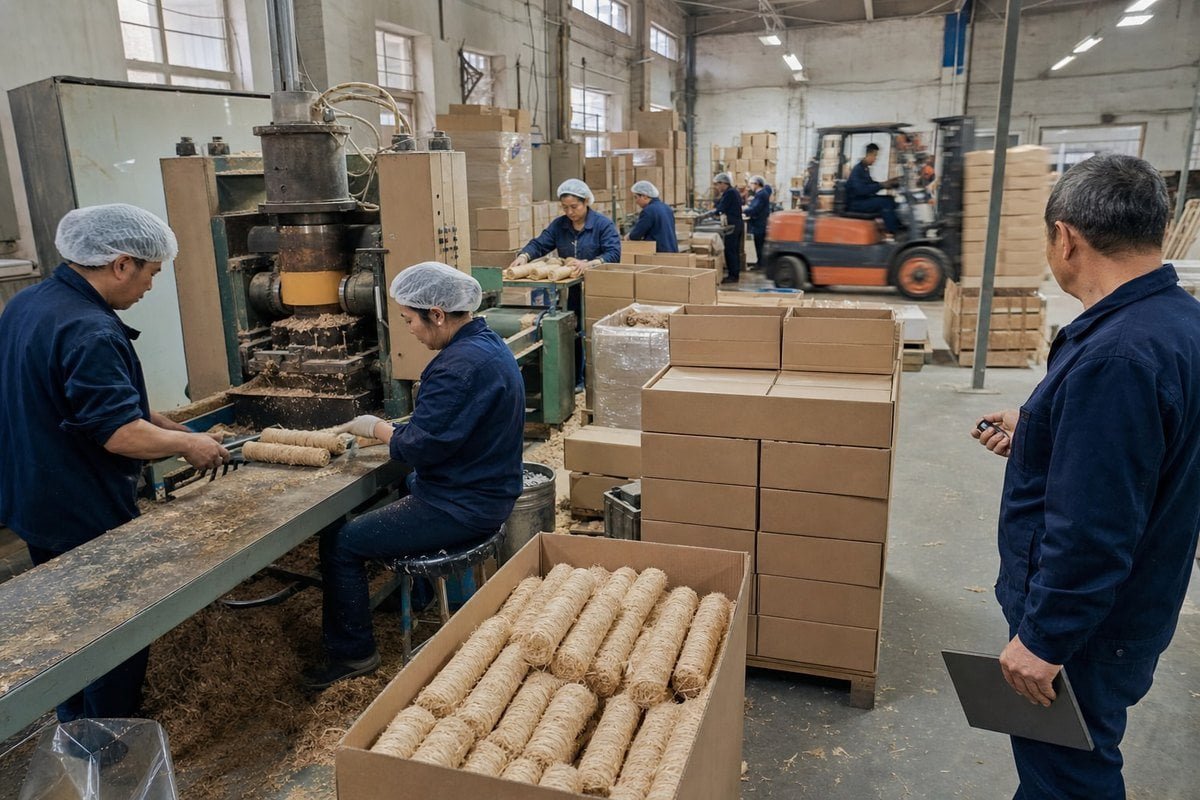
A supplier who makes a perfect sample can still fail at 40,000 units. Samples are often hand-finished. Mass production 4 depends on equipment, staffing, drying space, and raw material flow. Your job is to test whether the numbers add up.
A Simple Capacity Verification Process
- Ask for monthly output per product type, in units, not vague terms like "large capacity."
- Ask how many production lines and shifts run during peak season.
- Request the standard lead time for your order size, and the lead time during Q4.
- Ask what happens with rush orders — a real factory can explain overtime shifts and material buffers.
- Cross-check with a factory audit, either in person, through a third-party inspector, or via a live video walkthrough.
- Confirm minimum order quantity and whether trial-order MOQs differ from repeat-order MOQs.
Do the Math Yourself
Take the supplier's claimed monthly output. Divide your annual volume by their available months, accounting for Chinese New Year shutdowns and peak-season congestion. If your order would consume more than 30–40% of their stated capacity, ask hard questions. Either they are overstating capacity, or your order will get deprioritized when a bigger client calls.
Also watch how they answer. When buyers ask us about wax-dipped wood roll output, we can explain drying times, dipping line throughput, and packing speed step by step. A trader cannot. Vague process descriptions are one of the clearest red flags in this entire evaluation.
What Customization Options Should I Look for in OEM Wood Fire Starter Production?
When we developed a private-label line for a UK fireplace brand, the packaging took more engineering discussion than the fire starter itself. Real OEM work goes far beyond printing a logo.
Look for customization of core product variables — size, shape, wax ratio, burn time, and moisture content — plus full private label packaging support: custom retail boxes, display packaging, warning labels, barcodes, and market-specific compliance text. A true OEM partner also offers design-for-manufacturing feedback.

Customization capability is where manufacturers and resellers separate most clearly. A reseller can only sell what the factory already makes. A manufacturer can adjust the formulation, tooling, and packaging line to fit your spec.
Product-Level Customization
For wax-dipped wood fire starters, the meaningful variables are physical and chemical. Each one affects consumer experience.
| Custom Variable | What It Changes | Why Buyers Care |
|---|---|---|
| Size and shape | Rolls, pucks, bundles, cubes | Fits BBQ, camping, or fireplace use cases |
| Wax-to-fiber ratio | Ignition speed and flame height | Consistent lighting in damp conditions |
| Density and winding | Burn time and structural strength | Less crumbling and dust in the box |
| Moisture content | Ignition reliability and shelf life | Stable performance after long storage |
| Eco-friendly additives | Cleaner burn, indoor suitability | Meets consumer and retail expectations |
We control moisture content analysis 5 at intake because damp wood fiber ruins ignition consistency no matter how good the wax blend is. Ask any prospective supplier how they measure and control moisture. Their answer reveals their real depth.
Packaging-Level Customization
Retail-ready packaging is its own discipline. Confirm the supplier can handle custom box design, inner trays, multilingual warning labels, barcodes 6, and display cartons. Also clarify packaging MOQ versus production MOQ — printed boxes often carry their own minimums, and that mismatch surprises many first-time buyers.
Finally, test their design input. Send a rough spec and see whether they push back with manufacturability suggestions. A partner who says yes to everything without questions has not thought about how to actually make your product.
How Do I Verify Consistent Quality Across Multiple Production Batches?
A lesson we learned early: the first container is easy, and the fifth container is where reputations are made or lost. Batch consistency is the true test of a factory's quality assurance protocols.
Verify batch consistency by requesting samples from at least two separate production runs, comparing burn time testing results, ignition success, and defect rates. Then confirm the supplier keeps batch tracking records, incoming material inspection logs, and a written policy for handling failed or reworked batches.
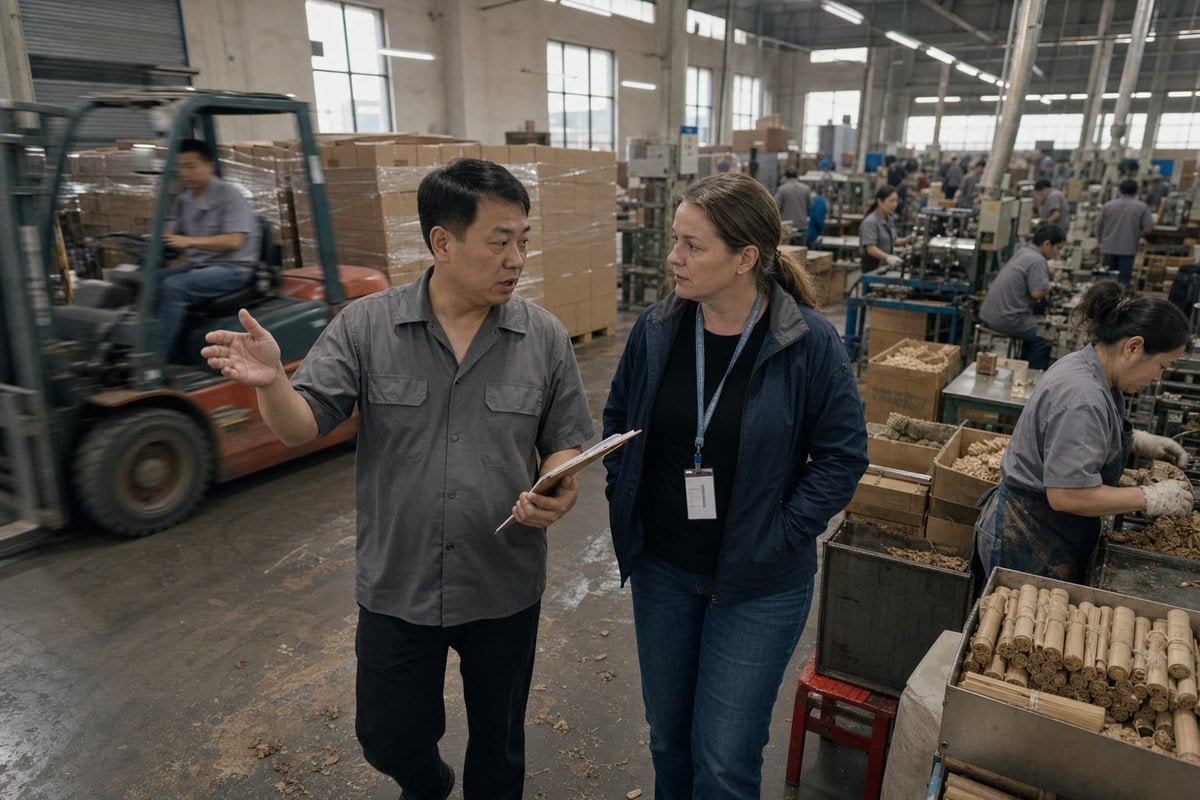
One good sample proves nothing about batch two hundred. Wood is a natural material. Fiber density, moisture, and wax absorption drift unless someone actively controls them. Your evaluation should target that control system directly.
Test Samples Like a QC Inspector
Do not just light one unit and nod. Score samples systematically, and repeat the test with units pulled from different cartons or different production dates.
| Test Metric | How to Test | Acceptable Signal |
|---|---|---|
| Ignition success | Light 10+ units with one match each | Near-100% first-strike ignition |
| Burn time | Time each unit to full burnout | Tight spread across all units |
| Flame behavior | Observe height and stability | Steady flame, no sputtering |
| Damp resistance | Test after humid storage | Reliable ignition after exposure |
| Structural integrity | Handle, drop, and shake units | Minimal crumbling or loose dust |
Audit the System Behind the Samples
Ask the supplier three questions. First, how do they inspect incoming raw materials — wood fiber and wax — before production? Second, what in-process checks 7 run during dipping, drying, and cutting? Third, what happens when a batch misses spec: rework, rejection, or replacement, and who pays?
On our lines, batch tracking means every carton traces back to a production date, material lot, and inspection record. That is what lets a first sample reliably predict mass-production quality. Also ask about shelf-life stability. Fire starters may sit in retail storage for a year or more, so accelerated aging data on ignition potency is worth requesting for long retail programs.
Conclusion
Choosing a wood fire starter supplier on price alone risks failed batches, blocked shipments, and retail returns. Verify certifications, capacity, customization depth, and batch consistency — then commit to a long-term manufacturing partner.
Footnotes
1. NIST provides authoritative guidance on evaluating manufacturing capabilities and supply chain resilience for businesses. ↩︎
2. ISO's official page explains how to verify certificates and the importance of valid certification numbers. ↩︎
3. Wikipedia entry explaining the purpose and process of social auditing in global supply chains. ↩︎
4. Overview of mass production principles, relevant to scaling from samples to high-volume manufacturing. ↩︎
5. Explains the technical importance of moisture control in wood products for stability and performance. ↩︎
6. GS1 is the global authority for barcode standards used in retail and supply chain management. ↩︎
7. ASQ defines the role of in-process checks within a professional quality control framework. ↩︎



 English
  Spanish
  German
  French
  Arabic
  Portuguese
Join the Conversation