






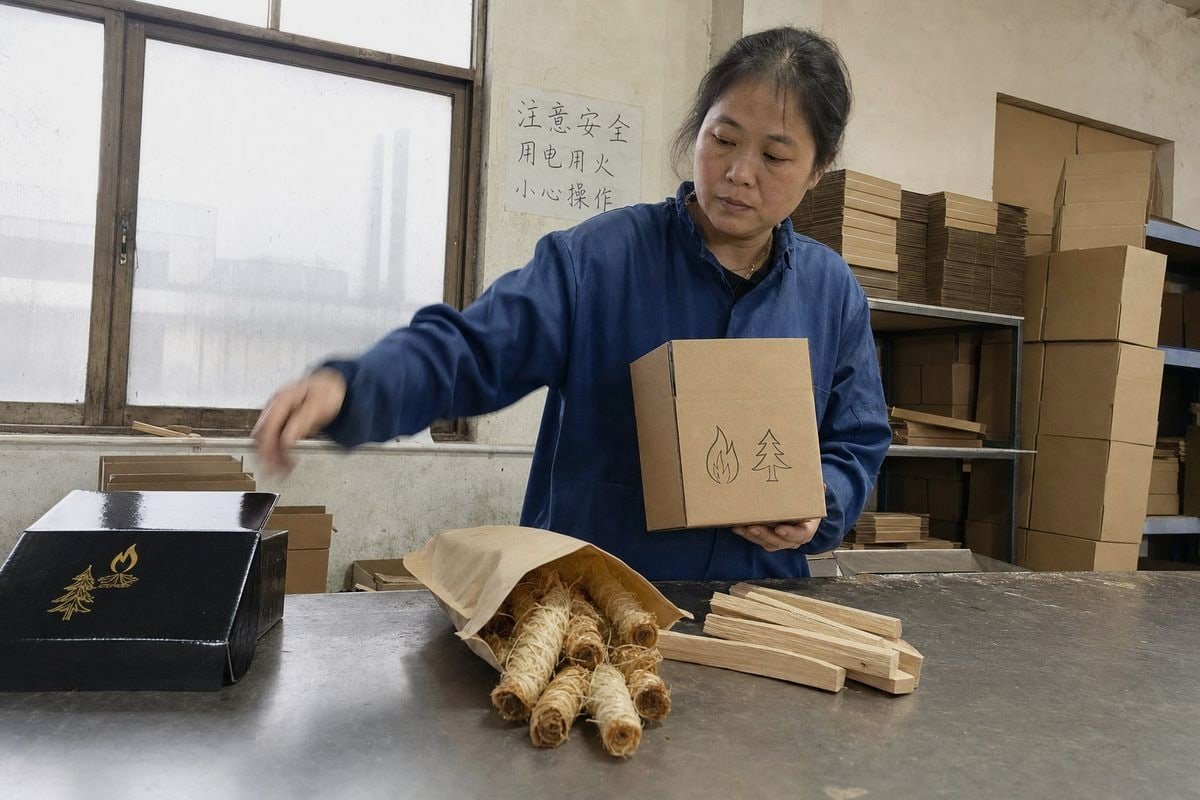
Rustic private-label packaging for wood fire starters can make or break a launch. On our production line, we have watched great products fail simply because the box looked wrong.
Rustic private-label packaging for wood fire starters should combine kraft paper, recycled cardboard, or pulp trays with earthy colors, matte finishes, and simple typography — while still carrying clear lighting instructions, flammability warnings, ingredient lists, and retail-ready barcodes for full shelf compliance.
That is the short answer. Below, I will walk you through materials, compliance, MOQs, and how we handle custom packaging projects at our factory.
What packaging materials and finishes best match a rustic, eco-friendly wood fire starter brand?
Last year, a German distributor sent us a glossy laminated box design for wax-dipped wood rolls. We advised switching to uncoated kraft 1. Their reorder rate told the rest of the story.
Kraft paper, recycled corrugated cardboard, molded pulp trays, and uncoated stock with matte finishes best match a rustic wood fire starter brand. Pair these with earth-tone inks, jute or twine accents, and debossed or stamped logos to signal natural, eco-friendly, artisanal quality.

The material you choose is the first message your customer reads. Before they see your logo, they feel the box. So the texture has to match the product. A wood-wool fire starter already looks natural and handmade. A shiny plastic clamshell fights against that story. Kraft and pulp support it.
Core material options compared
| Material | Best For | Rustic Score | Cost Level | Notes |
|---|---|---|---|---|
| Kraft paper bag or pouch | Small counts, samples, value packs | High | Low | Easy to brand with labels or direct print |
| Custom-printed cardboard box | Retail-ready 12/24/50-count lines | High | Medium | Strongest shelf presence |
| Molded pulp / egg-crate tray | Gift sets, premium eco positioning | Very high | Medium | Insert can double as extra tinder |
| Twine-tied bundle with band | Hostess gifts, holiday sets | Very high | Low–Medium | Labor-intensive at scale |
| Plain shipper carton with label | Refills, bulk, e-commerce | Medium | Low | Works if the label system is strong |
Finishes and accents that keep the look honest
Matte and uncoated finishes almost always beat gloss for this category. Gloss reads as industrial. Uncoated reads as crafted. If you need a premium touch, we recommend selective spot printing, debossing, or a heat-stamped logo instead of full lamination. In our OEM work, we also add natural fiber accents — jute twine, cotton string, or a simple ribbon — for gift-oriented SKUs. These small touches lift perceived value without lifting unit cost much.
One caution from experience: rustic does not mean flimsy. Kraft stock still needs enough grammage to survive transit. We test our custom boxes for stacking strength and edge crush 2 before we approve mass production, because a crushed corner destroys the artisanal impression instantly.
A simple color and type system
Stick to kraft brown, charcoal, forest green, cream, and a warm flame-orange accent. Use a serif or slab-serif for the brand name. Use a clean sans-serif for instructions and warnings. Add line-art icons — flames, pine trees, logs, cabins — rather than photos or cartoons. Readability first, personality second.
Can Sunrich help me create custom private-label boxes and warning labels for my wood fire starter line?
A US camping brand once came to us with only a logo file and a rough pack count. Twelve weeks later, their retail-ready boxes were on a container out of Ningbo.
Yes. Sunrich provides true one-stop OEM/ODM private-label service for wood fire starters, including custom box design and printing, warning labels, barcodes, display packaging, pack-size configuration, and artwork support — all backed by ISO 9001, BSCI, CE, and SGS/Intertek certification.

Private label 3 is different from white label, and the difference matters for rustic branding. White label means you slap a logo on a generic product and a generic box. Private label means you control the packaging material, the colors, the pack size, and the full brand system. We only recommend the private-label route for buyers who want shelf differentiation, because a generic box will never carry a rustic story convincingly.
How our custom packaging process works
- You send us your brief: product format, target channel, pack counts, and any brand assets.
- Our team proposes packaging structures — kraft box, pouch, pulp tray, or display carton — with dielines.
- We prepare artwork drafts, including the required warning text, ingredient composition, instructions, and barcode placement.
- We produce physical samples. You review print quality, stock weight, and assembly.
- After approval, we lock the specification. Because our batch-to-batch quality control is strict, the mass-production box matches the approved sample.
What we can customize
Beyond the box itself, we customize the product inside it. Burn time, roll size, count per pack, and even color-flame variants can all be adjusted. That matters for packaging because the box structure must fit the exact product dimensions. When one of our fireplace distributor clients in the Netherlands moved from a 12-count to a 24-count format, we re-engineered both the insert and the carton in the same project — no second supplier needed.
For compliance labeling, we prepare flammability warnings, keep-away-from-children notices, composition statements (for example, wood fiber and wax percentages), and country-specific text. We have exported to 30+ countries for 17+ years, so we know what US, EU, and UK buyers typically need printed before goods clear inspection.
How do I balance rustic aesthetics with retail compliance requirements like safety warnings and barcodes?
The hardest design reviews we run at our factory are always the same fight: the brand wants clean minimalism, and the retailer wants six lines of mandatory text. Both can win.
Balance rustic design and compliance by zoning the package: reserve the front panel for brand and imagery, place warnings, instructions, and ingredient lists on side or back panels in clean sans-serif type, and position the UPC barcode on the base or rear with adequate quiet zones.
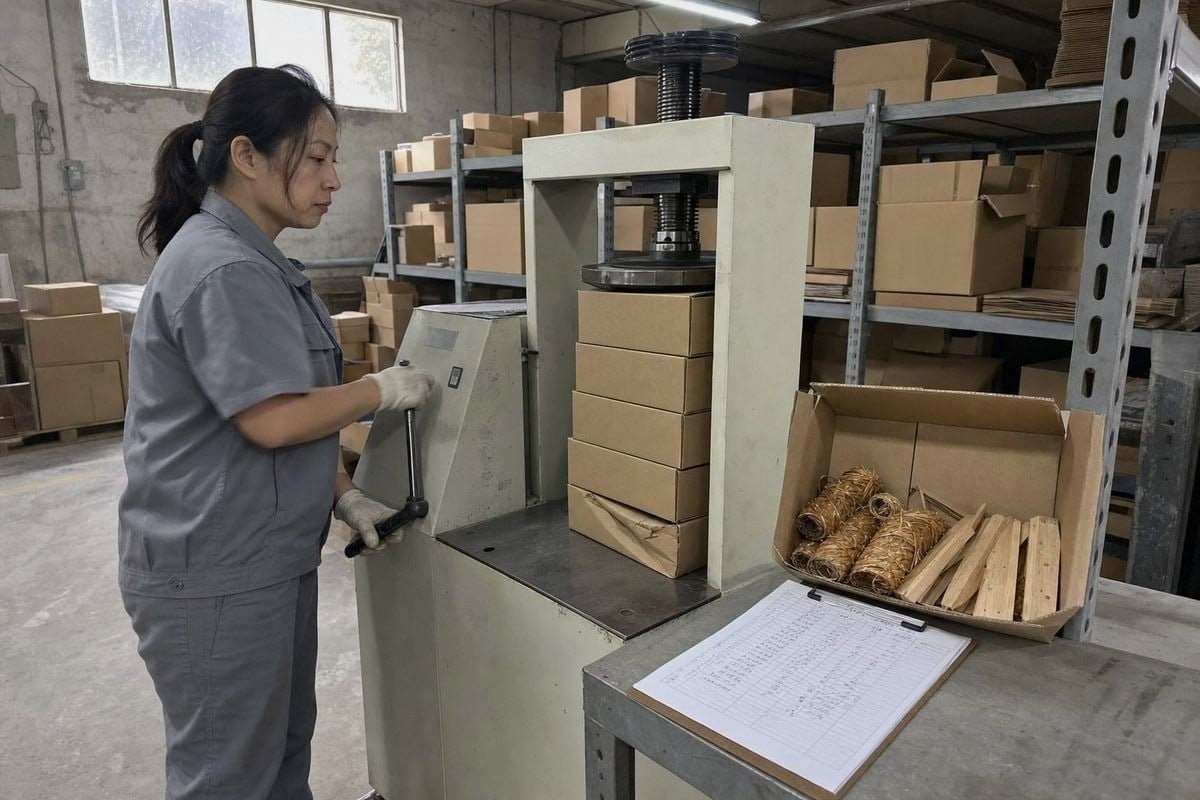
Compliance text is not the enemy of rustic design. Cluttered layout is. The trick is treating mandatory information as part of the design system, not an afterthought squeezed in at the end. We build compliance zones into the dieline from day one.
The panel zoning approach
| Panel | Content | Design Treatment |
|---|---|---|
| Front | Brand name, product name, count, hero icon | Serif type, line art, generous white (kraft) space |
| Side A | Lighting instructions, 3-step usage | Small sans-serif, numbered steps, simple icons |
| Side B | Flammability warning, keep-from-children notice, composition | High-contrast sans-serif, warning symbol |
| Back / Base | UPC barcode 4, batch code, importer details, contact | Barcode on white patch for scan contrast |
Instructions are a compliance and satisfaction issue
Missing instructions cause bad reviews. We have seen it repeatedly across our export markets. Customers who place a starter incorrectly blame the product, not their technique. So we always print simple steps: place the starter under kindling, light one edge, and add larger wood after two to three minutes. Three lines. Small footprint. Big impact on reviews and returns.
Barcode and printing details that trip people up
Kraft brown stock reduces barcode scan contrast 5. So we print the UPC on a white patch or use a white label on the base. For retail chains, master cartons need their own barcodes too — we prepare both individually barcoded units and barcoded master cartons for brick-and-mortar programs. Also consider transit: fire starters contain wax and are combustible goods 6, so shipping documentation and carton labeling must match the actual classification for your lane. Our logistics team handles this routinely, and our SGS/Intertek 7 test reports back up what the label claims. One more modern option: a small QR code linking to sourcing transparency or usage videos keeps panels clean while adding depth for curious buyers.
What is the typical MOQ and lead time for custom private-label wood fire starter packaging?
Trial orders are where trust gets built. Most of our long-term accounts in the US and Germany started with a single cautious test run, not a full container.
Custom private-label packaging for wood fire starters typically starts at MOQs of roughly 1,000 to 5,000 units, with sampling taking 1–2 weeks and mass production plus packaging usually requiring 4–8 weeks, depending on box complexity, pack counts, and seasonal factory load.

MOQ is driven mostly by printing setup, not by the product itself. A custom-printed box requires plate-making and a minimum press run to be economical. That is why fully custom boxes carry higher minimums than labeled kraft pouches. If you are testing a market, we often suggest a staged approach: start with printed labels on stock kraft packaging, prove sell-through, then move to fully custom-printed boxes on the reorder.
Typical timeline for a first private-label order
| Stage | Duration | What Happens |
|---|---|---|
| Brief and quotation | 2–5 days | Specs, pack counts, target price confirmed |
| Artwork and dieline | 3–7 days | Design drafts with compliance text placed |
| Physical sampling | 7–14 days | Product plus printed packaging sample shipped |
| Mass production | 3–5 weeks | Product manufacturing and box printing in parallel |
| QC and loading | 3–7 days | Batch inspection, carton marking, container loading |
| Ocean freight | 3–6 weeks | Depends on destination port |
Factors that stretch or shrink the timeline
Peak season is the biggest variable. Fire starters are Q4-heavy products in most of our markets. Orders confirmed in May ship comfortably; orders confirmed in September fight for capacity everywhere in the supply chain. Complexity also matters. A single-SKU kraft box moves fast. A holiday gift set with a pulp tray, twine binding, and a printed sleeve adds sampling rounds. Finally, revisions cost time. Buyers who approve artwork decisively save one to two weeks compared with those who iterate through five rounds. My practical advice: lock your compliance text early, because legal wording changes late in the process force reprints of plates.
Conclusion
Rustic private-label packaging sells the story your wood fire starters already tell. Choose honest materials, zone your compliance text, sample properly, and start with a manageable trial MOQ.
Footnotes
1.



 English
  Spanish
  German
  French
  Arabic
  Portuguese
Join the Conversation