







Magic Fire powder packaging failures cost buyers real money. On our Ningbo production line, we have seen how one weak heat seal turns a full container into a claims nightmare.
To improve Magic Fire powder packaging and reduce shipping damage, send suppliers a detailed damage report with photos, request puncture-resistant Mylar pouches, reinforced cartons, and drop-tested inserts, require ISTA or SGS test documentation, and validate everything with a measured trial shipment before committing to bulk orders.
That is the short answer. Below, I will walk you through each step in the order a real sourcing conversation should happen.
What questions should I ask suppliers about their packaging materials and drop-test results before placing a bulk order?
A German distributor once asked us only one question before ordering flame colorant packets: "What is the price?" Three months later, he asked much better questions. I want to save you that lesson.
Before a bulk order, ask suppliers about pouch material and thickness, heat-seal strength values, moisture barrier properties, carton edge crush test ratings, whether they perform drop, vibration, and compression testing, and whether they can share written results from a third-party lab.

The goal here is simple. You want to find out whether the supplier engineers their packaging or just buys the cheapest film available. In our 17+ years exporting color-flame products to the US, Germany, and 30+ other markets, the suppliers who struggle with damage claims are almost always the ones who cannot answer basic material questions.
The core questions and why they matter
Ask about the sachet first. Magic Fire powder is a fine crystalline product. If the foil pouch is too thin, corners of neighboring sachets puncture it during vibration. Ask for the film structure, such as PET/AL/PE laminate 1, and the micron thickness. Then ask for heat-seal strength data, because seal failure is the most common cause of leaking powder inside master cartons.
Then move to the outer carton. Request the edge crush test value 2 of the corrugated board. A carton that stacks fine in a warehouse can still collapse at the bottom of a container after weeks at sea with humidity swings.
| Question to Ask | What a Good Answer Looks Like | Red Flag |
|---|---|---|
| What film do you use for the sachet? | Named laminate structure with thickness | "Standard foil bag" |
| What is your heat-seal strength? | A measured value with test method | No data available |
| Do you drop-test packed cartons? | Yes, with documented heights and results | "We have never had complaints" |
| What is the carton ECT rating? | Specific board grade and ECT value | Only carton dimensions |
| Can you share third-party reports? | SGS or Intertek documents on request | Refusal or delay |
Finally, ask how they run quality control inspection during production. At our factory, we check seal integrity batch by batch, because one bad sealing-machine setting can affect thousands of sachets before anyone notices.
How can I request custom protective packaging without significantly increasing my per-unit cost?
Here is a trade-off I weigh with buyers almost every week: more protection usually means more material, but smarter protection often means less. Those two paths have very different price tags.
Request design changes before material upgrades: right-sized cartons, corrugated partitions, and better sachet layout often cost little. Share your annual volume so tooling costs amortize, bundle packaging with product orders, and compare the added cents per unit against your current damage and return costs.

The mistake I see most often is buyers asking for "stronger everything." Double-wall cartons, thicker film, extra void fill. That works, but it inflates unit cost, adds weight, and increases freight. Good packaging engineering stops movement and absorbs impact without adding bulk.
Start with fit, not thickness
When we redesigned the master carton for our Magic Fire flame colorant packets, the biggest damage reduction came from a simple change: corrugated partitions 3 that immobilized the inner display boxes. Product that cannot move cannot abrade or crush itself. Ask your supplier to review the actual filled dimensions of the sachets, not the flat mockup, because a filled pouch behaves very differently from a flat one.
Ways to keep costs controlled
- Give volume visibility. Tooling and plate costs drop per unit fast when the supplier can plan a year of orders instead of one.
- Ask for a separated quote. Insist on line items for film, cartons, inserts, tooling, and printing. Bundled quotes hide where your money goes.
- Use paper-based protective dunnage materials. Molded pulp and corrugated inserts are often cheaper than foam at scale, and they support a recycled-content story your retail buyers increasingly ask for.
- Reduce, then reinforce. A snug carton with partitions may outperform an oversized carton stuffed with filler, at lower cost.
- Count total landed cost. If improved packaging adds two cents per unit but cuts damage claims and replacement shipments, your true cost falls.
One more point from experience: sustainability and protection are not enemies. Several of our European buyers moved to kraft stand-up pouches with recycled outer cartons, and damage rates stayed flat because the internal structure did the protective work.
What certifications or test reports should I require to confirm the packaging meets international shipping standards?
Compliance paperwork is where many sourcing deals with us begin, not end. Our US and EU buyers treat certificates as a hard gate, and honestly, they are right to.
Require ISTA transit test reports for the packed configuration, third-party lab verification such as SGS or Intertek, material safety documentation for the powder itself, and evidence of a certified quality system like ISO 9001. For hazardous classifications, insist on UN-rated packaging and correct labeling.
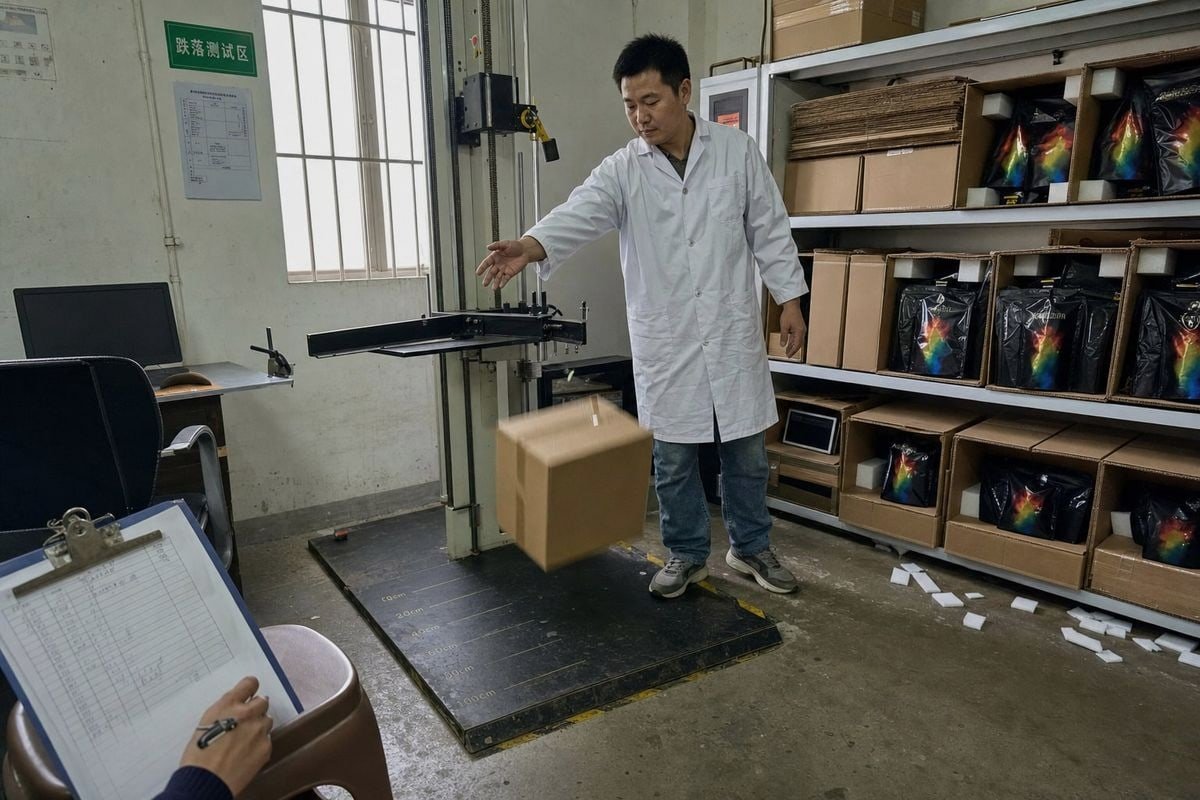
Documents matter for two reasons. First, they prove the packaging actually passed a controlled test, not just a factory's optimism. Second, if damage still occurs, the paper trail defines who is accountable. That is why we recommend building these requirements into a supplier compliance agreement rather than leaving them in an email thread.
The documents that actually protect you
ISTA 3A testing is the standard I point buyers toward for parcel-style shipments. It simulates the drops, vibration, and compression of small-package delivery networks 4, which is exactly the environment your retail cartons will face. For palletized container freight, other ISTA series or equivalent internal protocols apply. Ask the supplier which procedure they used and request the full report, including the failure criteria.
For the product itself, confirm the powder's classification. Most quality color-flame products, including ours, are made from eco-friendly compositions without harmful chemicals, but your carrier and customs authority still expect clear documentation. If a formulation is classified as hazardous in your market, UN-certified packaging 5 and hazmat labeling become mandatory, and carrier handling actually improves when labels are correct.
| Document | What It Proves | Who Issues It |
|---|---|---|
| ISTA transit test report | Packed carton survives drops, vibration, compression | Certified lab or ISTA-registered facility |
| SGS / Intertek test report | Independent verification of materials and safety | Third-party lab |
| ISO 9001 6 certificate | The factory runs a documented quality system | Accredited certification body |
| BSCI audit report | Social compliance for retail programs | Audit body |
| Material safety documentation | Powder composition and handling data | Manufacturer, verified by lab |
At our Liuyang headquarters, we keep ISO 9001, BSCI, CE, and SGS/Intertek documentation current specifically because large retail sourcing channels will not onboard a supplier without them. A transit stress analysis on the final packed configuration is worth requesting too, since a sachet that passes alone can still fail inside a poorly designed master carton.
How do I evaluate a trial shipment to verify the improved packaging actually reduces damage rates?
A Canadian camping brand once approved our redesigned display boxes from photos alone. I pushed back and insisted on a paid trial shipment first. The trial caught a label-placement issue photos never would have shown.
Ship a pilot order through your real logistics route, then measure damage rate, seal integrity, powder leakage, carton deformation, and moisture exposure against your baseline. Compare results to your previous damage percentage, document findings with photos, and only lock the specification after the data confirms improvement.

A trial shipment is only useful if you treat it like an experiment. That means a baseline, defined metrics, and honest inspection at the destination. Here is the process I recommend to our B2B buyers, refined over years of pilot orders to the US, Australia, and the Middle East.
A five-step trial evaluation process
- Set the baseline. Pull your last three to six months of carrier claims, returns, and damaged-in-transit photos. Calculate your current damage rate per thousand units.
- Ship the real route. Use the same freight mode, carrier, and fulfillment path as production orders. Include air freight if you use it, since pressure changes stress sealed pouches, and consider degassing or pressure-tolerant seals for high-altitude legs.
- Add evidence tools. Place moisture-indicating desiccant cards 7 inside master cartons to create a visual audit trail of humidity exposure. Shock or tilt indicators on a few cartons reveal handling abuse.
- Inspect systematically at destination. Open a defined sample of cartons. Check seal integrity, powder clumping, sachet punctures, insert deformation, and corner crush. Photograph everything.
- Compare and decide. Score the trial against your baseline using agreed pass/fail thresholds.
| Metric | How to Measure | Suggested Pass Threshold |
|---|---|---|
| Unit damage rate | Damaged units ÷ total units inspected | Meaningfully below your baseline |
| Seal failures | Leaking or open sachets per carton | Zero tolerance |
| Carton deformation | Visible crush, bulge, or corner collapse | None beyond cosmetic scuffing |
| Moisture exposure | Desiccant card color change | Within safe indicator range |
| Powder condition | Clumping or caking on inspection | Free-flowing crystals |
One caution from hard experience: lock the approved specification in writing. If a supplier quietly "improves" the film or board grade mid-production to cut cost, the tested performance no longer applies. We photograph and archive golden samples for every buyer precisely so the first approved sample matches every mass-production batch that follows.
Conclusion
Damaged Magic Fire powder packaging drains margin shipment after shipment. Ask precise material questions, negotiate engineered protection, demand test documentation, and verify with a measured trial before scaling.
Footnotes
1. Authoritative Wikipedia entry for multilayered film structures like PET/AL/PE. ↩︎
2. Overview of the standardized test used to measure the stacking strength of corrugated shipping containers. ↩︎
3. Explains the use of corrugated fiberboard for internal partitions and structural support in shipping. ↩︎
4. Reliable Wikipedia reference for package testing standards in delivery networks.

 English
  Spanish
  German
  French
  Arabic
  Portuguese
Join the Conversation