






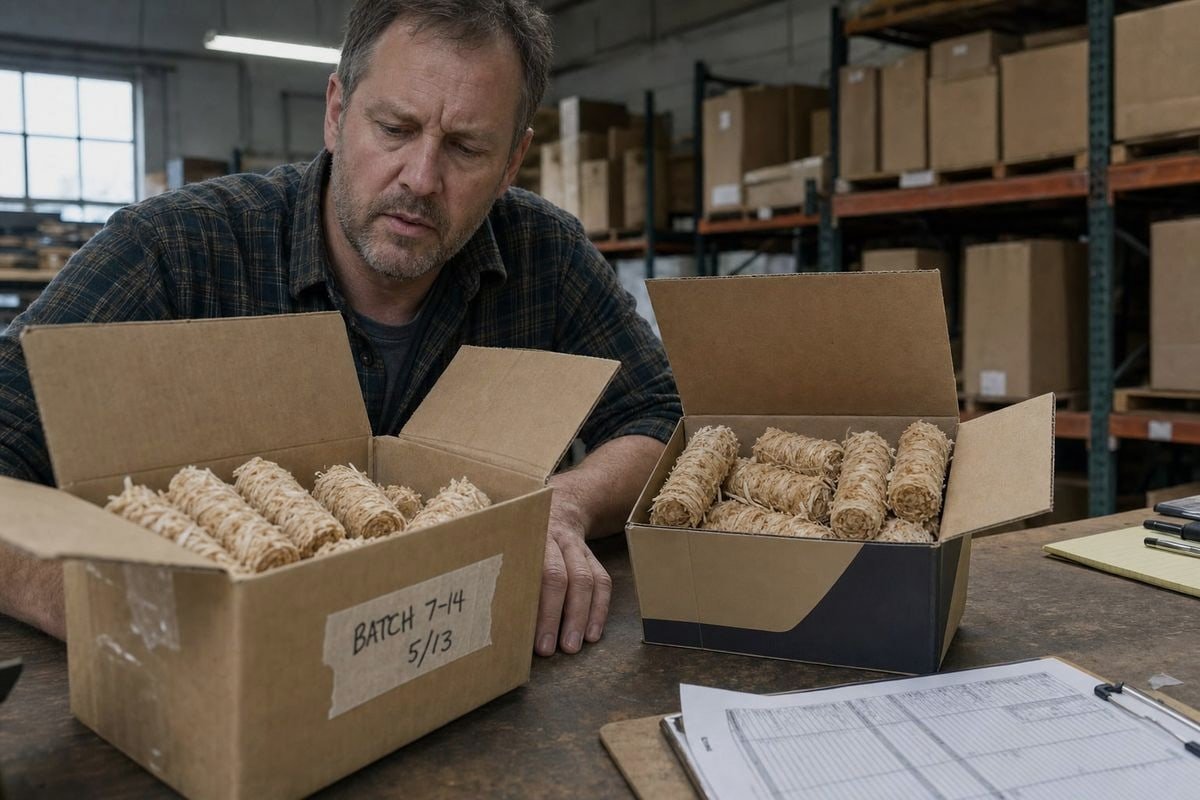
Choosing between marque de distributeur 1 and an established brand for wood fire starters keeps many of our buyers awake at night Conformité chimique REACH 2. Pick wrong, and margins or trust evaporate fast.
Private label wood fire starters win on margin, control, and differentiation, especially in mature European retail markets. Established brands win on trust and faster sell-through, particularly in the US. Your channel, compliance readiness, and volume goals should decide which model fits your business.
Let me break this down the way I do with buyers who visit our factory FSC/PEFC sourcing proof 3. We will look at certifications, margins, MOQs, and quality — the four questions that actually decide the outcome.
What Certifications Do I Need Before Launching a Private Label Wood Fire Starter in the EU or US?
A German distributor once asked me to ship samples before we discussed compliance. I refused, politely. In our 17+ years exporting fire products, paperwork problems sink more launches than product problems.
For the EU, you need CE-aligned safety testing, REACH chemical compliance, CLP labeling, and increasingly FSC/PEFC sourcing proof. For the US, you need CPSC-aligned safety documentation, proper flammability warning labels, and retailer-specific audits like BSCI. Third-party test reports from SGS or Intertek are the practical entry ticket.

Compliance is where private label buyers feel the most pain, because an established brand has already absorbed these costs. When you launch your own label, the burden shifts to you and your manufacturer. This is not a reason to avoid private label. It is a reason to choose a factory that already holds the documents.
The Core Compliance Stack
Here is what we prepare for our EU and US private label clients. Our own lines run under ISO 9001 4 and BSCI, and we maintain SGS and Intertek test reports because most serious retail buyers will not open a conversation without them.
| Exigence | Marché européen | Marché américain |
|---|---|---|
| Tests de sécurité des produits | CE-aligned testing, EN standards for firelighters | CPSC-aligned safety documentation 5 |
| Conformité chimique | REACH, CLP hazard labeling | State-level chemical rules (e.g., California) |
| Sustainable sourcing | FSC/PEFC increasingly expected by retail chains | FSC/PEFC growing, driven by big-box retailers |
| Factory audits | BSCI 6 / social compliance for major retailers | Retailer-specific audits (Home Depot–type programs) |
| Étiquetage | Multilingual warnings, pictograms, barcodes | English warning labels, UPC barcodes |
The Regulation Coming Next
Watch the EU's Ecodesign for Sustainable Products Regulation and the Passeport numérique de produit 7. These will demand traceable documentation on materials and sourcing. Established brands have compliance teams for this. Private label sellers usually do not. The fix is simple: your manufacturer must supply batch-level documentation, composition sheets, and chain-of-custody records as part of the service, not as an extra. We build warning labels, barcodes, and compliance markings into the packaging design stage, because retrofitting them after printing is expensive and slow.
One more point. Certification costs are largely fixed. Spread across small first orders, they hurt per-unit economics. Spread across a year of repeat orders, they become trivial. Plan your compliance budget on annual volume, not on your first shipment.
How Do Private Label Margins Compare to Selling an Established Brand in My Market?
The trade-off I walk buyers through most often is this: distribute a known brand and earn thin but easy margins, or build your own label and earn fat margins that you must work for.
Private label wood fire starters typically deliver 20–30% higher gross margins than reselling an established brand, because you remove brand royalty costs and control pricing. Established brands offer lower margins but faster sell-through, less marketing spend, and lower inventory risk in trust-driven channels.
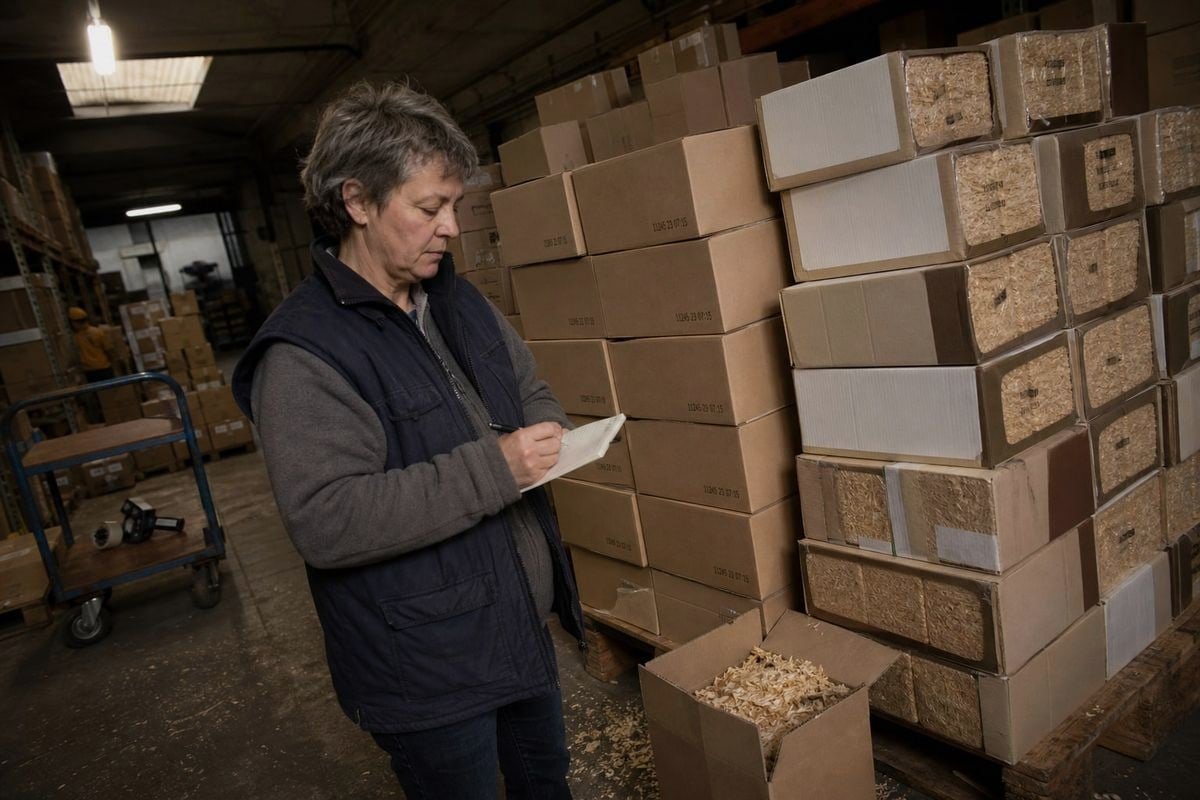
The margin math looks simple on paper. In practice, the answer depends heavily on your region and channel. Europe is a mature private label environment. Shoppers in Germany, the UK, and France accept retailer brands as quality products, and private label share in European retail is far higher than in the US. In the US, consumers still perceive a wider quality gap between national brands and store brands. That gap means US private label sellers must spend more on packaging, proof, and reviews to convert.
Where Each Model Wins
| Facteur | Nous travaillons avec des importateurs, des grossistes, des propriétaires de marques, de grands détaillants, des distributeurs de produits d'extérieur, des vendeurs d'accessoires de cheminée et des acheteurs de cadeaux saisonniers qui ont besoin d'une qualité stable, d'un emballage pratique et d'une communication d'exportation fiable. | Established Brand |
|---|---|---|
| Gross margin | Higher — often 20–30% better | Lower — set by brand's wholesale price |
| Pricing control | Contrôle total | Limited, often MAP-restricted |
| Marketing burden | On you | Brand carries most of it |
| Sell-through speed | Slower at first | Faster, trust already built |
| Shelf/listing control | Yours to design | Brand dictates presentation |
| Long-term equity | You build an asset | You build the brand's asset |
The Channel Question
Think about where your fire starters will actually sell. Supermarkets, DIY chains, and garden centers reward private label, because the retailer controls placement and shoppers buy on value and packaging. Amazon-style marketplaces and specialist outdoor retailers reward established brands, because reviews and recognition drive conversion there. In our experience shipping to both the US and Germany, the same wax-dipped wood roll performs very differently depending on the shelf it sits on. Fire starters are a low-ticket, repeat-purchase product. That profile favors private label economics — once the first purchase happens, packaging loyalty forms quickly. Your job is surviving that first purchase.
What MOQ and Lead Times Should I Expect When Switching to My Own Fire Starter Brand?
A Dutch importer recently told me his previous supplier quoted a 40,000-piece minimum for a first private label run. That number scared him off for a year. It should not have — flexible MOQs exist if you know what actually drives them.
Expect MOQs of roughly 5,000–20,000 units for a first private label wood fire starter order, with custom packaging as the main driver of the minimum. Standard lead times run 30–45 days for production, plus 25–40 days for sea freight to EU or US ports.
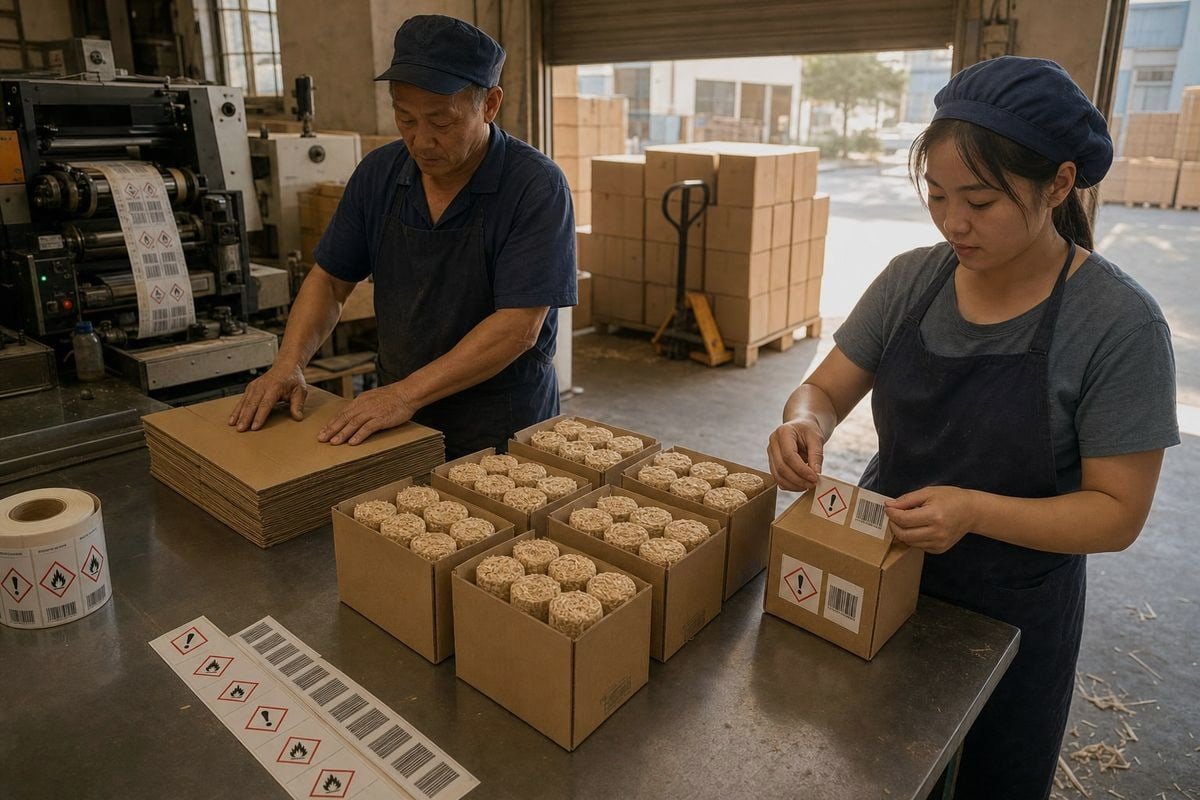
The MOQ is rarely about the fire starter itself. Wax-dipped wood rolls run on continuous lines, so the product is flexible. The constraint is packaging. Printed retail boxes, display cartons, and custom labels each carry printing minimums. This is why we often propose a stepped approach for new brands: start with a standard box and a custom label, then graduate to fully custom packaging once sell-through is proven.
A Realistic Timeline for Your First Order
- Sampling and spec confirmation: 7–14 days. We adjust size, burn time, and wax composition here.
- Packaging design and approval: 7–21 days. Warning labels, barcodes, and compliance text must be finalized before printing.
- Mass production: 30–45 days depending on order size and season.
- QC inspection and loading: 3–7 days. Batch testing against the approved sample.
- Sea freight: roughly 30–40 days to US ports, 28–38 days to Northern Europe.
The Seasonality Trap
Fire starters are brutally seasonal. EU and US demand peaks from September through January. Factories in our sector hit capacity in Q3. If your goal is autumn shelf placement, your purchase order needs to land with the factory by June, not August. I have watched buyers lose an entire season by ordering six weeks too late. Build your calendar backward from your retail reset date, add buffer for customs, and lock production slots early. A reliable manufacturer will hold capacity for repeat clients — one more reason the first order is really an audition for a multi-year relationship, on both sides.
Can a Manufacturer Really Match Established Brand Quality for My Private Label Wood Fire Starters?
Here is a truth from our production floor in Ningbo: many established fire starter brands are made in factories like ours. The brand on the box and the hands that made the product are usually not the same company.
Yes — a certified manufacturer with batch-level quality control can match or exceed established brand quality, because many branded fire starters are already contract-made. The real risks are spec drift between batches and multi-factory sourcing, both solved by working with one audited production partner.
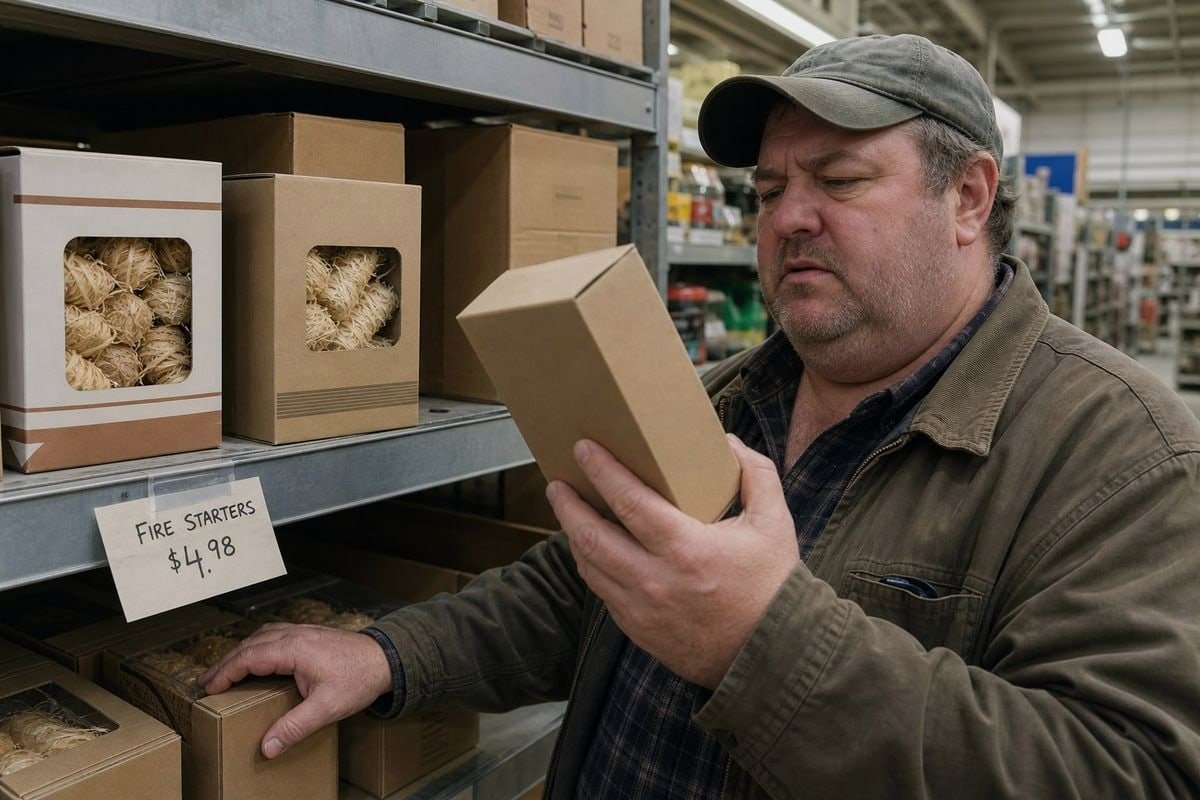
The honest concern behind this question is consistency, not capability. A fire starter that fails is noticed immediately — cold fireplace, frustrated customer, one-star review. Established brands earned trust by delivering the same ignition performance box after box. Private label fails when a seller chases the lowest quote across multiple contract producers and gets batch-to-batch variation. It succeeds when the seller treats the manufacturer as a long-term quality partner.
What Quality Actually Means in This Category
For wood wool and wax fire starters, quality comes down to measurable specs. We control these on every batch, because the first sample must reliably predict mass production — that is the entire basis of trust in OEM work.
| Quality Attribute | Ce qu'il faut spécifier | Pourquoi c'est important |
|---|---|---|
| Fiabilité de l'allumage | Lights with one match, every unit | The core promise; failure is instantly visible |
| Temps de combustion | e.g., 8–10 minutes minimum | Determines whether kindling catches |
| Composition ratio | Wood fiber to wax ratio, e.g., 50/50 | Controls flame size, burn time, and cost |
| Odor and smoke | Odor-free, low-smoke wax | Critical for indoor fireplace use |
| Résistance à l'humidité | Wax coating integrity | Product must survive shed and garage storage |
| Uniformity | Weight and size tolerance per unit | Signals professional quality on the shelf |
Where Private Label Can Beat the Brand
Private label is also your innovation lane. Testing an eco-formulation — natural wood wool, plant-based wax, recyclable kraft packaging — carries less reputational risk under a new label than under a flagship brand. Europe in particular rewards sustainable positioning in this category. Our eco-friendly, chemical-free formulations exist precisely because European buyers pushed for them. Demand a pre-shipment inspection against a golden sample, insist on documented batch QC, and put burn-time tolerances in your purchase contract. Do that, and the quality gap between your label and the established brand disappears.
Conclusion
Getting this decision wrong costs you a season, a retail listing, or worse — your reputation. The fix is matching the model to your market, not guessing.
Private label wood fire starters are the stronger play in Europe, where shoppers trust own brands and sustainability sells. Established brands still carry more weight in US marketplaces where reviews and recognition drive conversion. Either way, your outcome rests on three things: verified compliance documentation, batch-consistent quality, and a manufacturing partner who treats your first order as the start of a long relationship. At our factory, that is exactly how we have built 17+ years of exports to 30+ countries — and it is the standard you should demand from anyone who makes your product.
Notes de bas de page
1. Wikipedia background on the private label business model central to the article's comparison. ↩︎
2. Official EU source explaining REACH requirements referenced for fire starter compliance. ↩︎
3. FSC is the official body behind the sustainable sourcing certification discussed for wood products. ↩︎
4. ISO is the standards authority for the quality management certification the factory operates under. ↩︎
5. CPSC is the US authority governing product safety documentation mentioned in the article. ↩︎
6. Official source for the BSCI social compliance audit program referenced for factory certification. ↩︎



 English
  Spanish
  German
  French
  Arabic
  Portuguese
Rejoignez la conversation