






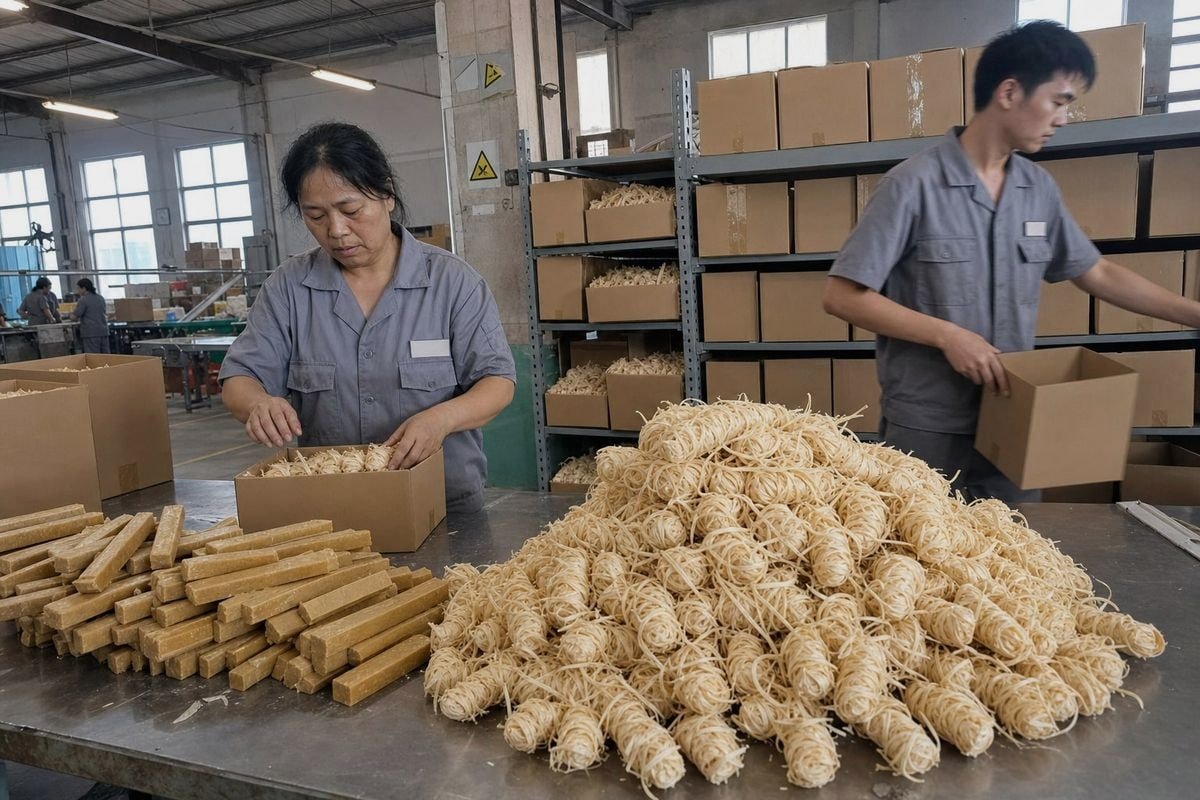
Choisir entre les plateformes B2B 1 et l'approvisionnement direct auprès des usines pour les allume-feu en bois semble simple — jusqu'à ce qu'un mauvais lot bloque votre saison. Sur notre chaîne de production, nous avons vu les deux voies réussir et échouer.
Les plateformes B2B offrent une découverte plus rapide des fournisseurs, une protection de l'acheteur et des commandes plus petites à moindre risque, tandis que l'approvisionnement direct en usine pour les allume-feu à bois offre des coûts unitaires plus bas, un contrôle qualité plus strict, une personnalisation plus poussée et une capacité saisonnière fiable. Le meilleur canal dépend de votre volume de commande, de vos besoins en marque privée et de vos exigences de conformité.
Les deux canaux peuvent fonctionner. Mais ils résolvent des problèmes différents. Ci-dessous, je détaille les compromis entre la conformité, le contrôle qualité, les MOQ, l'étiquetage privé, les délais de livraison et la communication — afin que vous puissiez choisir la bonne voie pour le stade de développement de votre entreprise.
Comment vérifier les certifications et la conformité lors de l'approvisionnement en allume-feu en bois via une plateforme par rapport à directement auprès d'une usine ?
Un acheteur d'Allemagne nous a un jour transmis une annonce de plateforme qui prétendait être "entièrement conforme à l'UE" — sans aucun rapport de test joint. Émissions de COV 2. Lorsque nous avons demandé à notre équipe de conformité de l'examiner, le numéro de certificat n'existait pas. Cette expérience a façonné la manière dont nous présentons notre propre ISO 9001 3, BSCI, CE et documentation SGS/Intertek à chaque prospect.
Les plateformes affichent des badges de vérification et des certificats auto-déclarés, mais vous permettent rarement de les valider. L'approvisionnement direct auprès des usines vous permet de demander des rapports de test originaux, de vérifier les numéros de certificat auprès des organismes émetteurs tels que SGS ou Intertek, et d'auditer l'installation, ce qui rend la vérification de la conformité beaucoup plus fiable pour les canaux de vente au détail réglementés.

La conformité est là où les deux canaux d'approvisionnement divergent le plus. Sur une plateforme B2B, vous voyez ce que le vendeur choisit de télécharger. Les badges de vérification confirment qu'une entreprise existe et paie son adhésion. Ils ne confirment pas qu'un lot spécifique d'allume-feu en bois a passé un test de sécurité spécifique. Cet écart est important lorsque vous vendez dans des canaux de vente au détail réglementés aux États-Unis ou dans l'UE.
Ce que les plateformes vérifient réellement
La vérification de la plateforme couvre généralement l'enregistrement de l'entreprise, les photos de l'usine et parfois une inspection sur site par un tiers. Elle ne couvre généralement pas les tests au niveau du produit. Les normes de sécurité incendie, Émissions de COV 4, et les exigences d'étiquetage des emballages varient selon les pays. Une annonce indiquant "certifié CE" peut faire référence à un ancien produit, pas à votre commande.
À quoi ressemble la vérification directe
Lorsque vous travaillez directement avec une usine, vous pouvez faire quatre choses qu'une plateforme ne peut pas entièrement prendre en charge :
- Demander le rapport de test PDF original et vérifier le numéro de rapport auprès de SGS ou Intertek 5 directement.
- Confirmer que la portée du certificat couvre votre produit exact — rouleaux de bois trempés à la cire, pas un SKU différent.
- Demandez Audit BSCI 6 résultats pour confirmer la conformité sociale pour les acheteurs de détail.
- Commander vos propres tests de lot par un tiers avant l'expédition.
| Tâche de conformité | Plateforme B2B | Usine directe |
|---|---|---|
| Vérification de l'enregistrement de l'entreprise | Badge intégré | Demander une copie de la licence |
| Rapports de tests produits | Souvent auto-déclaré | Vérifiable auprès du laboratoire émetteur |
| Audit d'usine (BSCI/ISO) | Rarement visible dans son intégralité | Rapports d'audit complets sur demande |
| Tests au niveau du lot | Difficile à organiser | Pratique standard |
| Documentation sur la durabilité (allégations de type FSC) | Difficile à vérifier à partir des annonces | Traçable via les registres des matières premières |
Dans notre travail d'exportation dans plus de 30 pays, les canaux d'approvisionnement de détail traitent la documentation vérifiée comme une exigence stricte. Quel que soit le canal, commandez toujours des tests indépendants par des tiers pour les produits de sécurité incendie. Mais les relations directes avec les usines rendent ce processus plus rapide, moins cher et plus transparent.
Puis-je obtenir un contrôle qualité plus cohérent en travaillant directement avec un fabricant d'allume-feu à bois ?
La leçon la plus difficile dans cette catégorie est survenue tôt dans nos 17 ans : deux lots de laine de bois avec une teneur en humidité différente ont produit des temps de combustion visiblement différents, même si les deux "semblaient corrects". C'est pourquoi nous effectuons maintenant des contrôles d'humidité et d'allumage lot par lot avant même le trempage dans la cire.
Oui. Les partenariats directs avec les usines vous donnent un contrôle qualité constant car vous pouvez définir des spécifications écrites pour le temps de combustion, la teneur en humidité et le rapport de cire, approuver des échantillons dorés et exiger des tests par lots. Les commandes de la plateforme passent souvent par des intermédiaires qui ne peuvent pas contrôler ou expliquer les variations de production.
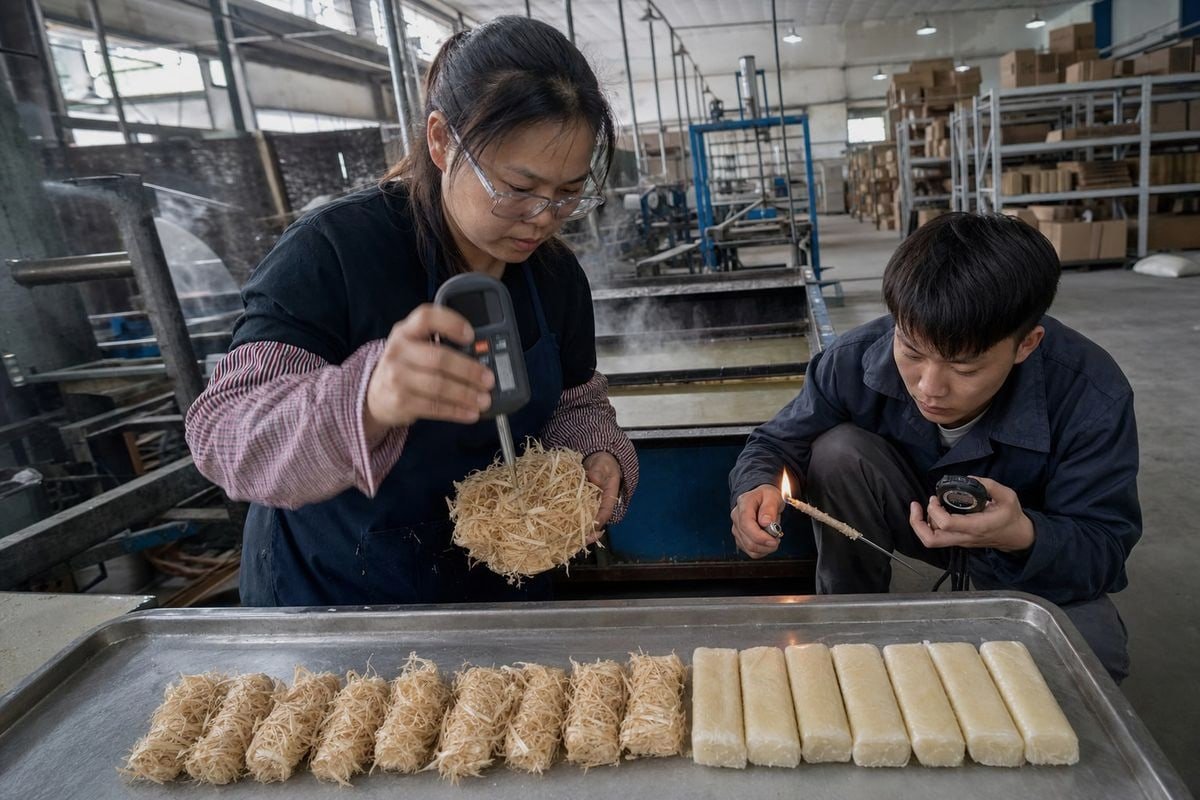
Les allume-feu en bois ressemblent à une simple marchandise. Ils ne le sont pas. La performance de combustion dépend de variables que la plupart des annonces ne mentionnent jamais : épaisseur des copeaux de bois, teneur en humidité, type de cire, ratio cire/fibre et constance du trempage. Un allume-feu de qualité commerciale typique utilise environ 50/50 de fibres de bois et de de paraffine 7 composition. Si vous modifiez ce ratio, même légèrement, vous modifiez la vitesse d'allumage, la durée de combustion et la production de fumée.
Pourquoi la qualité des plateformes fluctue
De nombreuses annonces sur les plateformes appartiennent à des sociétés commerciales, pas à des usines. Un commerçant peut changer de source de production entre les commandes pour rechercher la marge. Votre première commande brûle pendant huit minutes ; votre réapprovisionnement brûle pendant cinq. Le commerçant ne peut pas expliquer pourquoi, car le commerçant n'a jamais contrôlé le processus. Les retouches, les retours et les plaintes des détaillants effacent alors tout ce que vous avez économisé sur le prix unitaire.
Ce que permet le contrôle qualité direct
En travaillant directement avec le producteur, vous pouvez verrouiller le processus :
- Fiche technique écrite. Définir les dimensions, le poids, la plage de temps de combustion et les limites d'humidité.
- Approbation de l'échantillon de référence. L'échantillon approuvé devient la référence contractuelle pour la production de masse.
- Contrôles en cours de fabrication. La température de la cire, le temps de trempage et les conditions de séchage sont surveillés par lot.
- Inspection avant expédition. Vous ou un tiers testez des unités aléatoires par rapport aux spécifications.
Sur nos lignes à Ningbo, le premier échantillon doit refléter de manière fiable la qualité de la production de masse — ce principe ne fonctionne que parce que la même installation produit les deux. Lorsqu'un intermédiaire se situe entre vous et la production, cette chaîne de responsabilité est rompue. Pour un produit saisonnier où un envoi défaillant peut vous coûter une fenêtre de vente entière d'automne/hiver, cette responsabilité vaut plus qu'un devis marginalement inférieur.
Quelle option me donne une meilleure flexibilité de MOQ et un meilleur support de marque privée — plateformes B2B ou partenariats directs avec les usines ?
L'un des compromis que nous évaluons constamment est la flexibilité des commandes d'essai par rapport à l'efficacité de la production. Une marque de camping américaine nous a récemment demandé une petite première série avec des boîtes de vente au détail entièrement personnalisées—quelque chose qu'un commerçant de plateforme leur a proposé à près du double de notre prix, car le commerçant devait externaliser l'emballage.
Les plateformes B2B gagnent généralement en flexibilité sur les MOQ pour les produits génériques, car les commerçants consolident les petites commandes. Les usines directes gagnent de manière décisive sur le support de marque privée — emballage personnalisé, codes-barres, étiquettes d'avertissement et boîtes d'exposition — et les usines OEM expérimentées offrent de plus en plus des MOQ d'essai raisonnables pour obtenir des récommandes à long terme.

Cette question se divise en deux décisions distinctes, et les acheteurs les confondent souvent. La flexibilité des MOQ et la profondeur de l'étiquetage privé vont dans des directions opposées sur la plupart des plateformes.
La réalité des MOQ
Les vendeurs de plateformes, en particulier les commerçants, peuvent proposer de petites quantités car ils agrègent la demande de nombreux acheteurs. C'est vraiment utile pour les échantillons et les tests de marché. Les usines directes exigent traditionnellement des MOQ plus élevés car les séries de production ont des coûts d'installation. Cependant, les usines axées sur des partenariats OEM à long terme — y compris la nôtre — acceptent souvent des commandes d'essai plus petites lorsque l'acheteur montre une voie crédible vers un volume répété. Nous préférerions exécuter une première commande allégée pour un distributeur sérieux plutôt que de perdre une relation de cinq ans pour un créneau de production.
L'écart de l'étiquetage privé
L'étiquetage privé est là où les plateformes font défaut. La personnalisation réelle prête à l'emploi implique plus que l'impression d'un logo :
| Exigence d'étiquetage privé | Plateforme/Commerçant | Usine directe |
|---|---|---|
| Conception et impression de boîtes personnalisées | Externalisé, majoré | En interne ou géré directement |
| Code-barres et étiquetage de détail | Souvent problème de l'acheteur | Intégré dans le flux de travail d'emballage |
| Étiquettes d'avertissement spécifiques au pays | Rarement proposé | Service OEM standard |
| Taille et temps de combustion personnalisés | Généralement pas possible | Contrôle total de la formulation |
| Emballage d'exposition (unités de comptoir/de sol) | Limité | Conçu avec optimisation du carton |
| Image de marque cohérente sur les récommandes | Risqué si la source change | Fichiers graphiques et matrices verrouillés |
Pour nos acheteurs OEM aux États-Unis et en Europe, l'emballage n'est pas une décoration — c'est une conformité et un placement en rayon. Les étiquettes d'avertissement doivent correspondre aux règles du marché de destination. Les codes-barres doivent être lus par le système du détaillant. Les cartons doivent optimiser le chargement des conteneurs pour contrôler les coûts de fret. Un commerçant qui transmet vos graphiques à un atelier d'impression inconnu ne peut garantir rien de tout cela. Une usine qui contrôle toute la chaîne peut le faire. Donc, la réponse pratique : utilisez les plateformes lorsque votre produit est générique et petit ; allez directement dès que l'étiquetage privé entre en jeu.
Comment les délais de livraison et la communication diffèrent-ils entre les places de marché B2B et les fabricants directs pour mes commandes d'allume-feu en bois ?
Chaque septembre, notre calendrier de production à Ningbo se remplit de créneaux réservés pour les acheteurs qui ont confirmé leurs volumes d'automne/hiver au printemps. Les acheteurs qui attendent et font des achats sur les plateformes en octobre découvrent souvent que les stocks partagés sont déjà épuisés.
Les plateformes permettent un premier contact plus rapide grâce aux outils RFQ et aux fonctionnalités de traduction, mais ajoutent une couche de communication qui ralentit la résolution des problèmes. Les fabricants directs offrent une intégration plus longue mais des délais de production plus courts et plus prévisibles, des réservations de capacité saisonnière dédiées et une communication directe en anglais avec les personnes qui gèrent réellement la production.
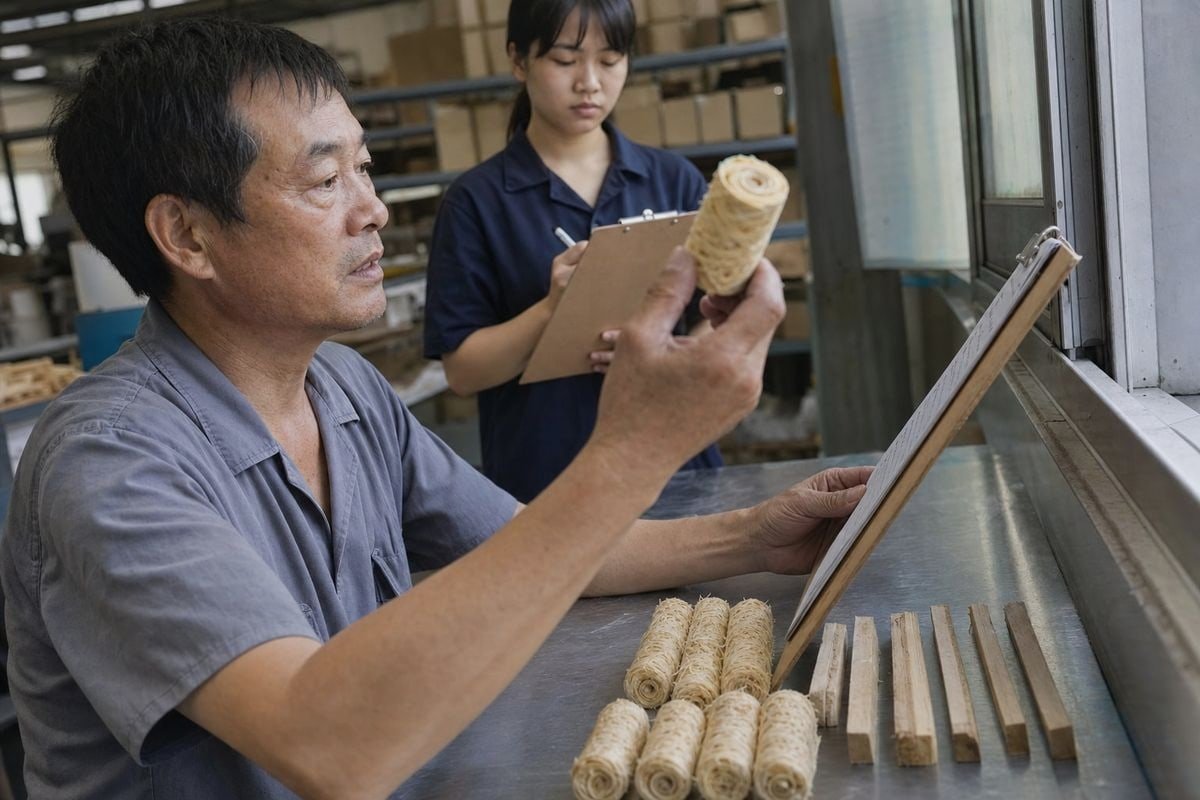
Le délai de livraison n'est pas un seul chiffre. Il comporte trois parties : le temps d'approvisionnement, le temps de production et le temps de résolution des problèmes. Les plateformes et les usines directes performent très différemment sur chacune.
Temps d'approvisionnement : les plateformes gagnent
Les plateformes vous permettent de comparer des dizaines de fournisseurs en un après-midi. Les modèles RFQ, les devis instantanés et les historiques d'avis réduisent la découverte de semaines à des jours. Si vous avez besoin d'un prix de référence rapide ou d'un échantillon rapide, cette vitesse a une valeur réelle. Aucune relation d'usine ne peut égaler cela pour un acheteur novice.
Temps de production : les usines directes gagnent
Une fois que vous commandez, l'image s'inverse. Un commerçant reçoit votre commande, puis négocie avec son usine, qui vous programme après ses clients prioritaires. Chaque question passe par deux sauts. Une usine directe programme votre commande sur sa propre ligne. D'après notre expérience d'exportation vers les États-Unis, l'Allemagne et le Royaume-Uni, le plus grand avantage en termes de délai est saisonnier : les allume-feu en bois connaissent un pic important en automne et en hiver. Les partenaires directs peuvent réserver des créneaux de production et verrouiller les prix des matières premières pour le bois et la cire des mois à l'avance. Les acheteurs de plateformes tirent parti d'une capacité partagée et non réservée — exactement au moment où tout le monde en veut aussi.
Qualité de la communication
| Facteur de communication | Marché B2B | Fabricant direct |
|---|---|---|
| Vitesse du premier contact | Très rapide (chat, outils RFQ) | Intégration initiale plus lente |
| Questions techniques | Transmis par le biais des ventes/du commerçant | Répondu par le personnel de production |
| Résolution de problèmes | Multi-sauts, lent, dilué | Direct, responsable, rapide |
| Capacité saisonnière | Inventaire partagé, risque de rupture de stock | Créneaux de production réservés |
| Prévisibilité des réapprovisionnements | Variable | Processus stable et documenté |
Le schéma que suivent les acheteurs les plus expérimentés est hybride : découvrir et échantillonner via des plateformes, puis migrer les SKUs éprouvés vers une usine directe avant votre première véritable poussée saisonnière. Cette séquence capture la vitesse de la plateforme tôt et la fiabilité de l'usine quand cela compte.
Conclusion
Les deux canaux fonctionnent, à différentes étapes. Les plateformes conviennent à la découverte et aux petits tests ; les usines directes gagnent en vérification de conformité, en cohérence de qualité, en étiquetage privé et en fiabilité saisonnière. Commencez sur les plateformes si nécessaire, puis déplacez les SKUs d'allume-feux en bois éprouvés vers un partenaire d'usine certifié avant que la pression de l'échelle et de la saison n'arrive.
Notes de bas de page
Alibaba est un exemple leader du modèle de place de marché B2B comparé tout au long de l'article. ↩︎
L'EPA définit les normes d'émissions de COV pertinentes pour les tests de sécurité des produits d'allumage mentionnés dans l'article. ↩︎
Norme ISO officielle référencée comme la certification de gestion de la qualité que les usines présentent aux acheteurs. ↩︎
Contexte sur les composés organiques volatils pertinents pour les normes de sécurité incendie et de test d'émissions. ↩︎
Site officiel de l'organisme de test que les acheteurs utilisent pour vérifier l'authenticité des certificats. ↩︎
amf officiel

 English
  Spanish
  German
  French
  Arabic
  Portuguese
Rejoignez la conversation