






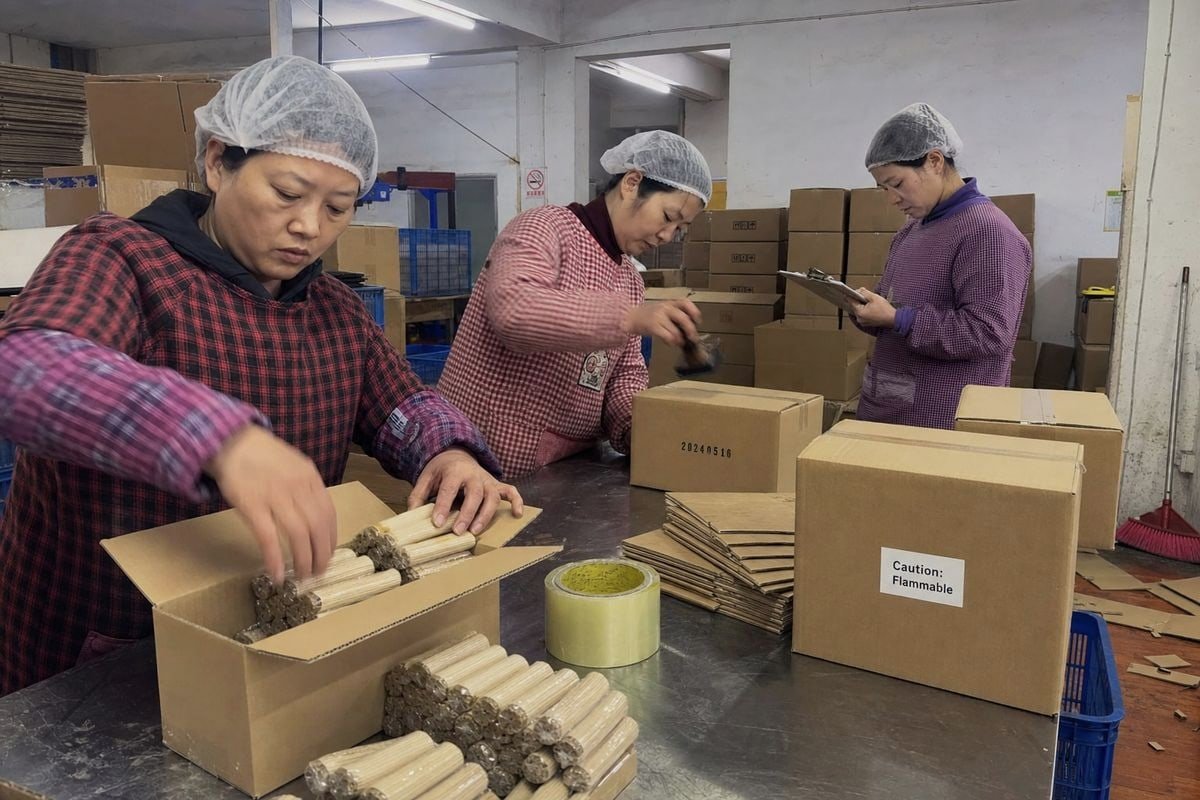
GPSR manufacturer obligations 1 for wood fire starters caught many of our European buyers off guard. On our production line, we saw orders stall at customs over missing paperwork nobody had mentioned before.
Brand owners meet GPSR manufacturer obligations for wood fire starters by acting as the legal manufacturer: performing a documented risk assessment, keeping a technical file for ten years, appointing an EU Responsible Person if based outside the EU, and applying traceable, batch-marked labeling.
That single sentence covers a lot of ground. Let me break each requirement down into practical steps you can actually execute with your supplier.
What Documentation Do I Need to Prove GPSR Compliance for My Wood Fire Starters?
A German distributor once sent us a one-page supplier certificate and asked if it was enough for GPSR. We had to tell him honestly: it was not even close.
You need a technical documentation file containing a product description, material composition, an internal risk analysis, test evidence, safe-use instructions, warning labels, and traceability records. This file must exist before the product goes on sale and stay available for ten years.

The technical file is the backbone of GPSR compliance. Les autorités de surveillance du marché 2 can request it at any time. If you cannot produce it, your product can be pulled from shelves even if nothing ever went wrong. In our seventeen-plus years supplying fire-starting goods to Germany, France, the Netherlands, and Poland, we have learned that a well-organized file also speeds up retail onboarding. Big-box sourcing teams often ask for the same documents before they list a product.
What Goes Into the File
For a wax-dipped wood roll fire starter, your file should cover the exact product you sell. A generic certificate for "firelighters" does not describe your specific wax blend, wood wool density, or packaging format. Regulators want product-specific evidence.
| Document | What It Must Show | Who Usually Provides It |
|---|---|---|
| Description du produit | Materials, dimensions, wax-to-fiber ratio, intended use | Factory, verified by brand owner |
| Risk analysis | Fire, burn, chemical, and misuse hazards assessed | Brand owner, with factory input |
| Rapports de test | Burn behavior, composition verification (e.g., SGS/Intertek) | Laboratoire tiers |
| Instructions and warnings | Safe use, storage, disposal, in local languages | Brand owner |
| Dossiers de traçabilité | Batch codes, supplier chain, distribution records | Les deux parties |
One File Per Product Variant
If you sell a 24-piece kraft box and a 100-piece retail carton, treat them as separate configurations. The core risk data overlaps, but packaging, warnings, and batch marking differ. We help our OEM clients maintain variant-level files because mixing them up is a common audit failure.
Also remember chemical overlap. Fire starters containing paraffin or accelerants may trigger REACH checks 3 on top of GPSR. Keep those substance declarations in the same file so nothing gets lost.
How Can I Verify My Manufacturer Handles Risk Assessments Under GPSR?
There is a trade-off we discuss with every new EU buyer: speed to market versus depth of hazard mapping. Skipping the second to gain the first always costs more later.
Verify your manufacturer by requesting their written risk analysis for your exact product, checking it covers ignition, flare-up, storage, and misuse scenarios, confirming third-party test reports match your formulation, and auditing their batch-level quality control records.
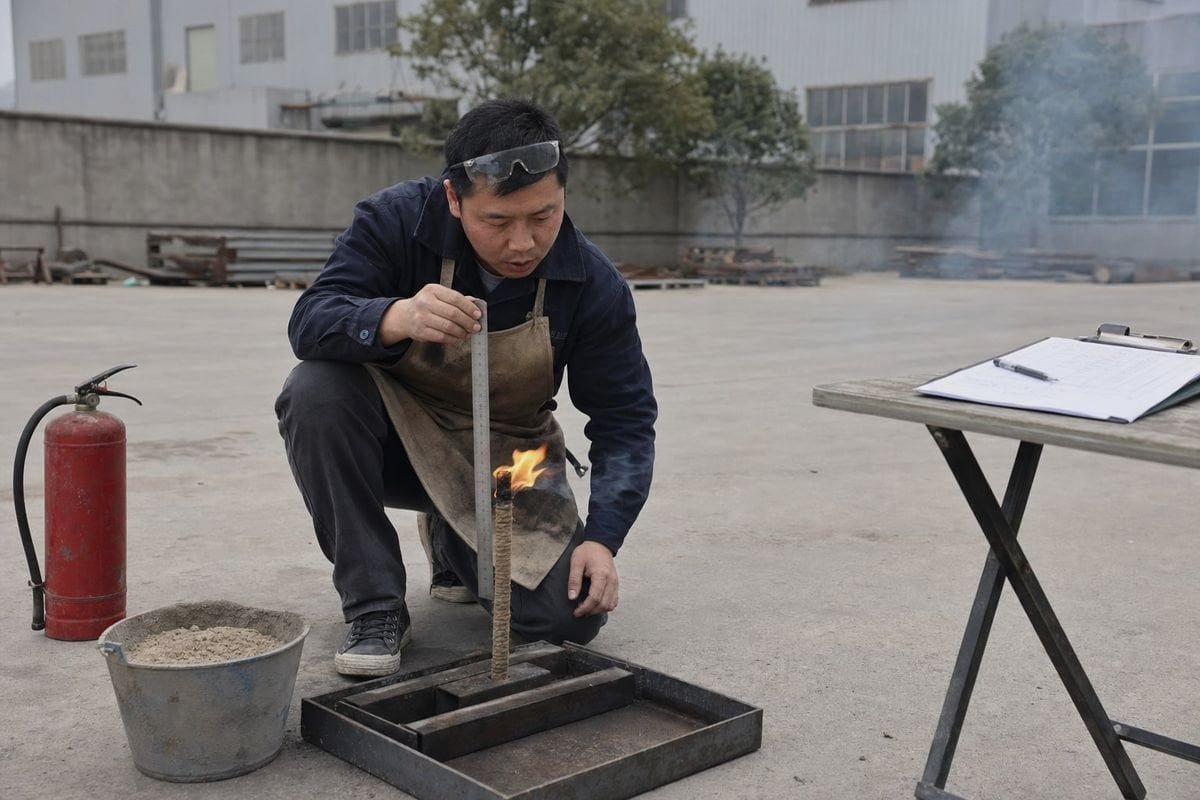
Here is the uncomfortable truth: under GPSR, the risk assessment is legally your responsibility as the brand owner, even if your factory drafts it. So verification is not optional politeness. It is you checking work that carries your name. When our engineers run burn tests on wax-dipped wood rolls, we document flame height, burn time, and residue behavior across humidity conditions, because damp wood wool burns differently than dry stock. A serious factory will show you this data without hesitation.
The Hazards a Real Assessment Must Cover
Ask your supplier to walk you through each of these. If they cannot, that is your answer.
- Accidental ignition during storage and transport, including heat exposure in shipping containers.
- Flare-up and flame height when the wax content is high or unevenly applied.
- Tipping, dripping, and ember spread during use on grills or open fire pits.
- Heat transfer to nearby combustible packaging or surfaces.
- Smoke and fumes, especially foreseeable indoor misuse.
- Child access, including the risk of fire starters being mistaken for snacks — a genuine concern, since des rouleaux de laine de bois 4 can visually resemble pastry.
- Shelf-life degradation, where moisture ingress changes burn behavior over time.
Questions That Separate Real Factories From Traders
Ask who performed the assessment and when. Ask for the raw burn-test data, not just the conclusion. Ask how la cohérence d'un lot à l'autre 5 is controlled, because a risk assessment based on a perfect sample means little if mass production drifts. Our ISO 9001 process ties every batch back to inspection records, and that link is exactly what you should demand from any supplier.
Who Qualifies as the Responsible Person for My Products Under GPSR Rules?
A UK-based buyer asked us last year why his EU orders were flagged while his supplier paperwork looked fine. The missing piece was a Responsible Person 6 inside the EU.
The Responsible Person must be an economic operator established in the EU: an EU-based manufacturer, importer, authorized representative, or fulfillment service provider. Their name and contact details must appear on the product or packaging before it can be sold in the EU.
If your brand is headquartered in the US, UK, or anywhere outside the EU, you cannot legally place fire starters on the EU market without this appointed operator. The Responsible Person keeps a copy of your technical documentation, cooperates with market surveillance authorities, and verifies that required labeling and instructions exist. Think of them as the EU's guaranteed point of contact when something needs answering fast.
Your Four Options Compared
| Option | Idéal pour | Key Consideration |
|---|---|---|
| EU-based importer | Brands selling through one main EU distributor | The importer's details go on your packaging |
| Authorized representative | Brands selling direct or via marketplaces | A paid service; keeps your supply chain flexible |
| EU subsidiary | Larger brands with EU operations | Full control, higher overhead |
| Fulfillment service provider | Marketplace sellers using EU warehouses | Provider must formally accept the role |
Practical Points We Flag for Buyers
Choose based on your sales channel, not just cost. If you sell through several EU distributors, an authorized representative avoids putting one distributor's name on stock that others also sell. Get the appointment in writing, because the Responsible Person must formally accept the obligations. And plan artwork early: we print Responsible Person details directly onto private-label boxes during production, which is far cheaper than stickering thousands of cartons after arrival. Marketplaces like Amazon now check these details at listing stage, so missing information can block your product before it ever reaches a customs officer.
What Labeling and Traceability Details Must I Include to Meet GPSR Standards?
Batch marking taught us a hard lesson years ago. One early client mixed two production runs in one carton, and a minor packaging issue turned into a full-shipment investigation instead of a quick fix.
Your label must show the manufacturer's name, registered address, and email, the EU Responsible Person's details if applicable, a batch or lot number, product identification, and safety warnings with instructions in the official languages of every EU country where you sell.

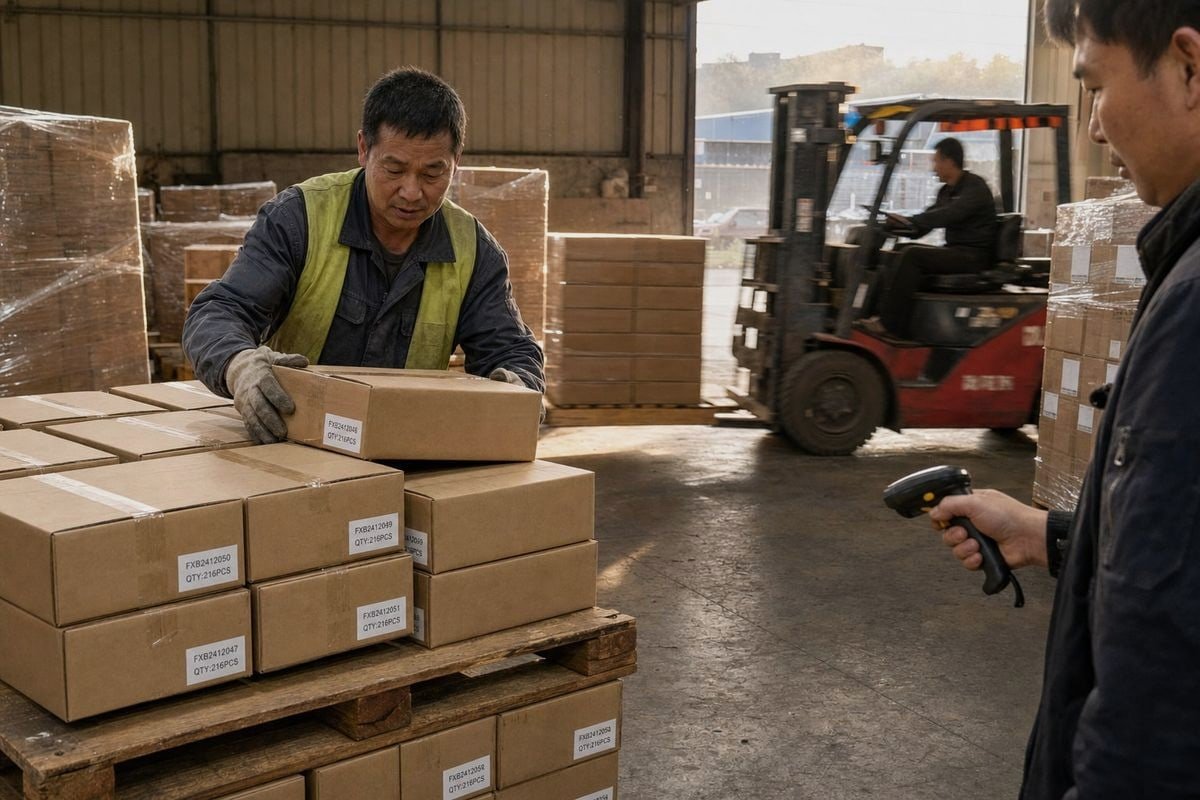
Traceability exists for one reason: if something goes wrong, you must be able to find every affected unit fast. GPSR expects you to know what you bought, who supplied it, and where you shipped it. A clean batch system turns a potential recall of your entire catalog into a targeted action on one production run.
The Label Checklist
| Élément | Exigence | Erreur courante |
|---|---|---|
| Manufacturer identity | Brand owner name and postal address | Listing only a website or PO box |
| EU Responsible Person | Name and contact details on product or packaging | Omitting it for non-EU brands |
| Numéro de lot/de lot | Durable, legible, linked to production records | Printing on a removable sleeve only |
| Avertissements | Flammability, keep-away-from-children, ventilation | English-only text in non-English markets |
| Instructions | Safe use, storage, and disposal guidance | Copying generic firelighter text |
Language and Durability
Warnings must appear in the official language of each member state where the product sells. For our clients shipping to Germany, France, Poland, and the Netherlands, we design multi-language panels into the box artwork from day one. Print quality matters too. A batch code that smudges off a wax-coated surface fails the durability expectation, so we mark cartons and inner packaging rather than the waxed rolls themselves.
Build the Chain Before You Need It
Keep supplier invoices, production dates, shipping records, and customer distribution lists connected by batch number. We assign batch codes at production and carry them through QC reports and packing lists, so our OEM clients inherit a ready-made traceability chain. Forward-looking brands are also structuring these records with future Passeport numérique de produit 7 requirements in mind, since EU traceability rules are only tightening.
Conclusion
GPSR compliance is not paperwork for its own sake. It protects your brand from blocked shipments and recalls. Build the file, appoint your Responsible Person, mark every batch — and partner with a factory that documents everything alongside you.
Notes de bas de page
1. Links directly to the official EU regulation text defining these obligations for manufacturers. ↩︎
2. Official EU page describing how market surveillance authorities enforce product safety rules. ↩︎
3. ECHA explains REACH chemical registration rules relevant to wax and accelerant components. ↩︎
4. Background reference explaining the wood wool material used in these fire starters. ↩︎
5. ISO 9001 standard underpins quality management systems ensuring consistent production batches. ↩︎
6. European Commission page explains the Responsible Person role under EU product safety law. ↩︎
7. Background reference explaining this emerging EU traceability requirement mentioned in the text. ↩︎



 English
  Spanish
  German
  French
  Arabic
  Portuguese
Rejoignez la conversation