






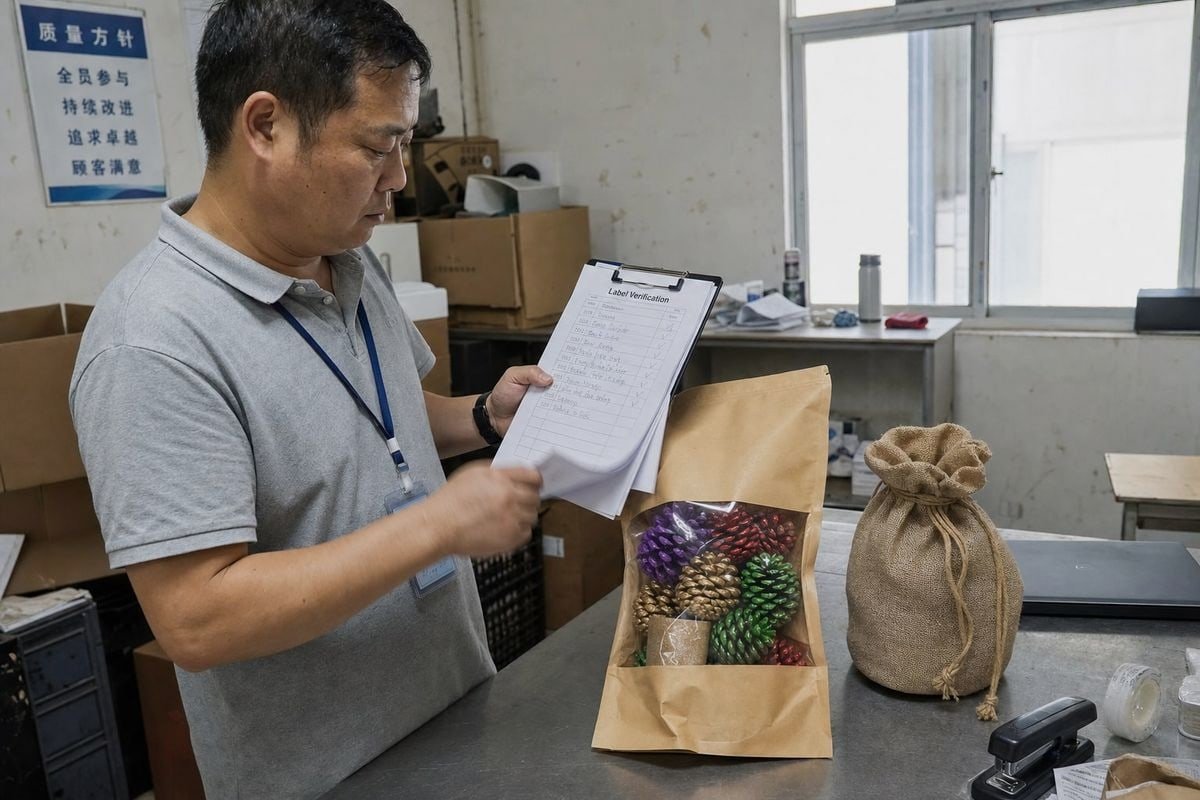
Vérification Conformité des étiquettes d'avertissement FHSA 1 pour les pommes de pin de cheminée découragent de nombreux importateurs. Sur notre chaîne de production, j'ai vu des étiquettes qui disaient "avertissement" mais qui enfreignaient toutes les règles fédérales — une erreur coûteuse à la douane.
Pour vérifier la conformité de l'étiquette d'avertissement FHSA pour les pommes de pin de cheminée, demandez au fournisseur la détermination des dangers, la divulgation complète de la formulation, un certificat de conformité général et les illustrations finales de l'étiquette. Vérifiez ensuite le mot indicateur, l'énoncé des dangers, le nom chimique, les précautions, les premiers secours, l'avertissement pour enfants et l'identité de l'entreprise par rapport au 16 CFR 1500.121.
C'est la réponse courte. Le reste de ce guide le détaille en étapes pratiques que vous pouvez suivre avant de passer une commande, afin que rien ne passe à travers.
Quelles certifications devrais-je demander pour confirmer la conformité FHSA avant de passer une commande ?
Lorsque les acheteurs des États-Unis contactent notre bureau de Liuyang, le premier document qu'ils demandent généralement est un certificat. Après 17 ans d'exportation de pommes de pin à flamme colorée, je comprends exactement pourquoi.
Demander un certificat général de conformité faisant référence au 16 CFR 1500, aux rapports de tests de laboratoire tiers pour les tests de solides inflammables selon le 16 CFR 1500.44, à une évaluation des risques toxicologiques ou à une détermination des dangers pour les produits chimiques de revêtement, et aux fiches de données de sécurité couvrant chaque colorant, cire et additif utilisé.

Les certificats ne sont utiles que s'ils correspondent au produit réel. Les pommes de pin à flamme colorée ne sont pas des décorations botaniques brutes. Elles sont traitées avec des sels métalliques 2, et souvent trempées dans de la cire. Ce traitement peut transformer une pomme de pin ordinaire en un substance dangereuse réglementée selon les normes réglementaires de la CPSC. Ainsi, chaque certificat que vous collectez doit faire référence au produit fini et traité — pas à la pomme de pin non traitée.
L'ensemble documentaire de base
Voici le dossier de certification que je recommande de demander avant la signature de toute commande :
| Document | Ce qu'elle prouve | Qui le délivre |
|---|---|---|
| Certificat général de conformité (CGC) | Le produit a été testé ou évalué selon les règles applicables de la CPSC | L'importateur ou le fabricant, sur la base des données de test |
| Rapport de laboratoire tiers (SGS, Intertek ou similaire) | Test de solides inflammables et criblage chimique sur le produit fini | Laboratoire d'essai accrédité |
| Détermination du danger FHSA | Le fournisseur a déterminé si le produit est une substance dangereuse et pourquoi | Fournisseur, soutenu par des données de laboratoire |
| Fiches de données de sécurité | Identité chimique et dangers des colorants, cires et revêtements | Fournisseur ou fabricant de produits chimiques |
| Certificats ISO 9001 / BSCI | Système de qualité et statut d'audit d'usine | Organismes de certification |
Pourquoi la vérification par un laboratoire tiers est importante
Le propre test interne d'un fournisseur n'est qu'un point de départ, pas une preuve. Vérification par un laboratoire tiers d'un laboratoire reconnu 3 vous donne des données indépendantes que vous pouvez défendre si la CPSC remet en question votre envoi. D'après notre expérience d'exportation dans plus de 30 pays, les acheteurs qui insistent sur les rapports SGS ou Intertek passent les contrôles douaniers beaucoup plus rapidement. Demandez que le rapport nomme clairement le SKU fini, le lot testé et la méthode de test utilisée. Un rapport générique pour "pommes de pin" sans référence de formulation est presque inutile.
Comment vérifier que la formulation et le placement des étiquettes d'avertissement respectent les exigences américaines ?
Un acheteur au détail a une fois renvoyé notre premier projet d'étiquette avec un commentaire : "Le bloc d'avertissement n'est pas parallèle à la base." Cet unique commentaire a appris à notre équipe de conception plus qu'un résumé de réglementation.
Vérifiez que l'étiquette porte un mot signalétique, une déclaration du danger principal, le nom commun ou chimique de la substance dangereuse, des énoncés de précaution, des instructions de premiers secours, des instructions de stockage, "Tenir hors de portée des enfants" et le nom et l'adresse de la partie responsable — le tout de manière visible, lisible, en caractères contrastés, conformément au 16 CFR 1500.121.
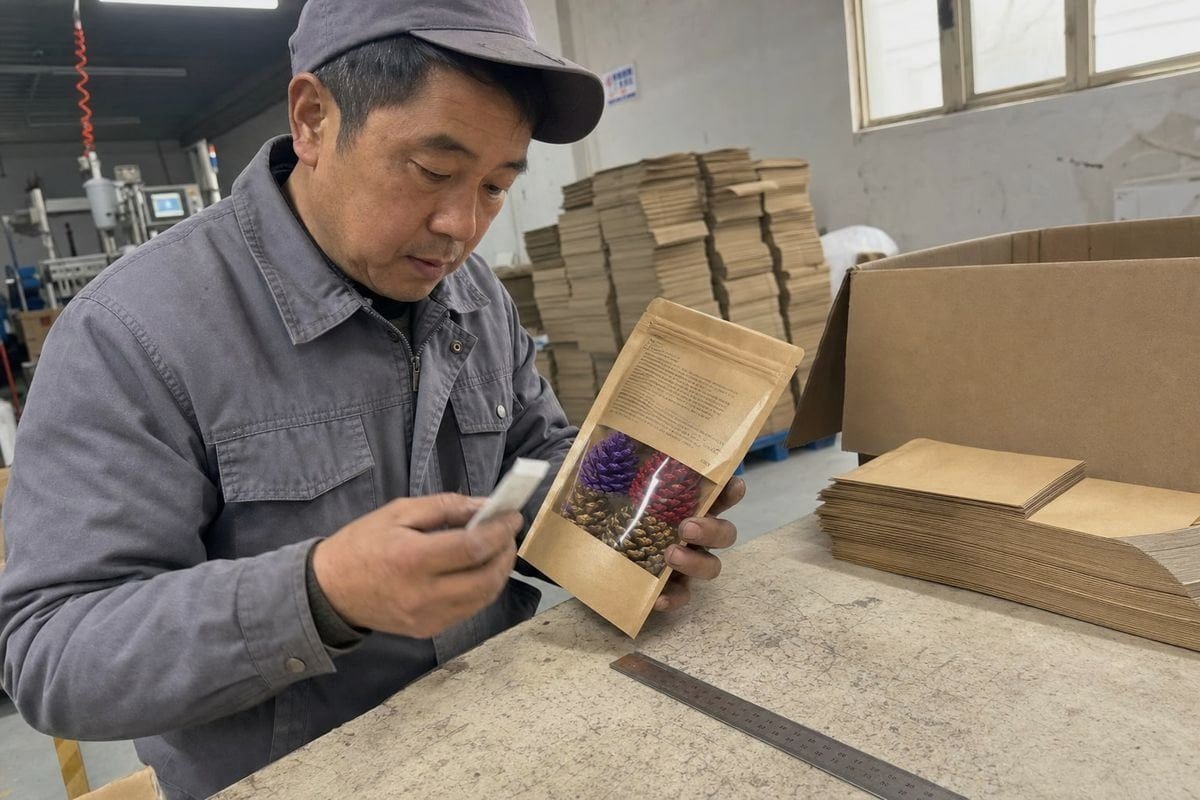
Ne supposez pas qu'une étiquette est conforme simplement parce qu'elle contient le mot "avertissement". L'étiquetage FHSA est une liste de contrôle d' éléments nommés 4, et chacun d'eux doit apparaître. Lorsque nous préparons des emballages sous marque de distributeur pour des clients américains, nous faisons passer chaque fichier graphique par la liste complète des éléments avant qu'il n'aille à l'impression. Vous devriez faire de même avec les illustrations de votre fournisseur.
Les éléments d'étiquetage requis
| Élément requis | Ce qu'il faut rechercher | Échec courant |
|---|---|---|
| Mention d'avertissement | "AVERTISSEMENT" ou "ATTENTION" correspondant au niveau de danger | Mot signalétique manquant ou mal adapté au danger |
| Déclaration du danger principal | Formulation spécifique comme "INFLAMMABLE" ou "COMBUSTIBLE" | Texte vague comme "utiliser avec précaution" |
| Nom commun ou chimique | Les sels colorants nommés, par exemple, sulfate de cuivre ou chlorure de strontium | Uniquement les "additifs colorants" listés |
| Mentions de prudence | Conseils de manipulation, de ventilation et de stockage en toute sécurité | Générique "manipuler avec soin" seulement |
| Premiers secours | Instructions correspondant au danger réel, le cas échéant | Copié d'un produit sans rapport |
| Avertissement pour les enfants | "Tenir hors de portée des enfants" ou équivalent pratique | Omis entièrement |
| Présentation de l'usine au lieu du propriétaire de la marque | Nom légal et lieu d'activité du responsable | Nom de marque uniquement, sans adresse |
Règles de proéminence et de placement
Les exigences relatives aux mots-indicateurs vont au-delà des formulations. Le texte de mise en garde doit être visible, dans une taille de caractères que les lecteurs peuvent réellement voir, et dans une couleur qui contraste fortement avec l'arrière-plan. La plupart des éléments de mise en garde 5 doivent être généralement parallèles à la base de l'emballage tel qu'il se présente sur l'étagère. L'avertissement doit apparaître sur le contenant immédiat. Si la pochette se trouve à l'intérieur d'un carton extérieur qui cache l'étiquette intérieure, l'emballage extérieur doit répéter l'avertissement. Sur nos pochettes kraft à fermeture éclair, nous imprimons le bloc de mise en garde au dos en noir sur kraft — contraste élevé, parallèle à la base et regroupé en un seul bloc. Demandez à votre fournisseur des photos de l'emballage imprimé montrant les avertissements de sécurité contre les flammes nues, pas seulement des PDF de conception graphique, car la qualité d'impression peut détruire un contraste qui semblait correct à l'écran.
Quelle documentation mon fournisseur doit-il fournir pour prouver la conformité lot par lot ?
L'un des compromis que nous évaluons constamment dans notre usine de Ningbo est la profondeur de la documentation par rapport à la vitesse. Les dossiers de lots complets ralentissent légèrement l'expédition, mais ce sont eux qui protègent nos acheteurs lorsqu'un conteneur est inspecté.
Votre fournisseur doit fournir des identifiants de lot ou de lot sur l'emballage, des enregistrements de contrôle qualité par lot, des notifications de changement de formulation, des illustrations d'étiquettes contrôlées par version, des fiches de données de sécurité mises à jour lorsque la chimie change, et des rapports de re-test périodiques confirmant que le produit fini correspond toujours à la formulation certifiée d'origine.

La conformité à la FHSA n'est pas un événement unique. Un fournisseur peut réussir un test sur le premier échantillon, puis passer discrètement à un mélange de colorants moins cher trois expéditions plus tard. Si ce nouveau mélange modifie le profil de danger, votre étiquette peut ne plus décrire le produit que vous vendez. Cet écart est votre exposition juridique, pas celle du fournisseur.
Un flux de travail documentaire pratique
Voici le processus que nous suivons pour nos propres clients en marque privée, et il sert de modèle pour auditer n'importe quel fournisseur :
- Verrouiller la formulation. Obtenir une divulgation de formulation signée énumérant chaque sel métallique, cire, colorant et revêtement avec des plages de pourcentage.
- Lier les tests à la recette. Le rapport de laboratoire et les données de sécurité des colorants chimiques doivent faire référence à cette version exacte de la formulation.
- Attribuer des codes de lot. Chaque série de production reçoit un numéro de lot imprimé sur la pochette ou le carton pour la traçabilité.
- Enregistrer le contrôle qualité par lot. Les tests de combustion, les vérifications de poids, la cohérence du revêtement et l'inspection visuelle sont enregistrés par rapport au numéro de lot.
- Contrôler les versions des étiquettes. La conception graphique porte un numéro de version ; toute modification nécessite une approbation écrite avant l'impression.
- Exiger une notification de changement. Le contrat doit obliger le fournisseur à vous informer avant toute substitution de matière première.
- Ré-tester selon le calendrier. Des tests annuels ou par commande importante permettent de détecter les dérives avant qu'elles n'atteignent vos étagères.
Certains fournisseurs soutiendront que le codage par lot n'est pas un élément essentiel de l'étiquetage FHSA, et techniquement, ils ont raison. Mais sans traçabilité, vous ne pouvez pas prouver que le lot certifié est celui qui se trouve dans votre entrepôt. Si une question de danger chronique se pose un jour — par exemple, si les sels métalliques présentent une toxicité à long terme par contact cutané en vertu du 16 CFR 1500.135 — les dossiers de lots sont le seul moyen d'isoler le problème. Conservez votre propre dossier de validation de conformité avec des photos, des versions de conception graphique et des déclarations du fournisseur. Cette piste papier est une assurance bon marché.
Quels sont les signaux d'alarme indiquant qu'un fournisseur pourrait ne pas respecter réellement les normes d'étiquetage de la FHSA ?
Au début de ma carrière d'exportateur, un distributeur m'a montré une pochette "100% Natural" d'un concurrent qui contenait des cônes traités à l'aide de sels métalliques et revêtus de paraffine. Cette étiquette était une catastrophe juridique en devenir, et elle a façonné la manière dont nous vérifions nos propres affirmations.
Les principaux signaux d'alerte comprennent les étiquettes d'avertissement génériques sans danger nommé, l'absence du nom et de l'adresse de l'entreprise, les affirmations "non toxique" ou "100% naturel" contredites par la formulation, les rapports de test pour les cônes bruts plutôt que traités, les textes minuscules à faible contraste et le refus de divulguer la chimie des colorants.

Les signaux d'alerte apparaissent rarement seuls. D'après mon expérience, un fournisseur qui omet l'adresse de l'entreprise omet généralement aussi le texte de premiers secours. Traitez chaque signe d'avertissement comme une invitation à approfondir, et traitez les groupes de signaux comme une raison de vous retirer.
Guide de sévérité des signaux d'alerte
| Signal d'alarme | Gravité | Ce que cela signifie généralement |
|---|---|---|
| Étiquette d'avertissement sans danger spécifique nommé | Élevé | Aucune détermination réelle du danger n'a jamais été effectuée |
| "Marketing "non toxique" ou "100% naturel" sur un produit traité | Élevé | Risque d'écoblanchiment ; exposition potentielle à la FTC en plus d'un étiquetage erroné de la FHSA |
| Le rapport de test ne couvre que les cônes bruts non traités | Élevé | Les données d'inflammabilité ne s'appliquent pas au produit fini |
| Nom et lieu d'activité du fabricant absents de l'étiquette | Élevé | Aucune partie responsable et identifiable dans la chaîne d'approvisionnement |
| Avertissement uniquement sur le film rétractable ou le carton extérieur | Moyen | Le contenant immédiat vendu aux consommateurs ne porte aucun texte de mise en garde |
| Texte de mise en garde minuscule et à faible contraste | Moyen | Ne respecte pas la règle de visibilité même si la formulation est correcte |
| Refus de partager les fiches de données de sécurité | Élevé | Le fournisseur peut ne pas connaître ou cacher la chimie |
| Pas de codage par lot ou de lot | Moyen | Aucune traçabilité en cas de problème de conformité |
Deux objections que vous entendrez — et comment y répondre
Certains fournisseurs prétendent que les pommes de pin décoratives sont des biens de consommation ordinaires 6, et non des substances dangereuses, donc le FHSA ne s'applique pas. Cela peut être vrai pour les cônes non traités. Mais les cônes colorés sont formulés avec des sels métalliques et souvent de la cire, ce qui modifie le profil de danger lors d'une utilisation prévisible — les brûler à l'intérieur. Le nom de la catégorie de produits ne décide de rien ; la formulation et l'exposition prévisible décident de tout. D'autres soutiennent que l'ajout d'avertissements supplémentaires de style étatique couvre toutes les bases. Ce n'est pas le cas. La loi fédérale peut supplanter un langage d'avertissement non identique d'un État pour le même danger, et Californie Proposition 65 7 les avertissements abrégés doivent être harmonisés avec — et non substitués à — le texte du FHSA. Lorsqu'un fournisseur répond clairement et par écrit à ces questions, c'est en soi un bon signe. Lorsqu'ils éludent, escaladez vers des tests de laboratoire indépendants ou des conseils juridiques avant de vous engager.
Conclusion
La conformité des étiquettes d'avertissement FHSA pour les pommes de pin de cheminée est vérifiable : demandez le GCC, les rapports de laboratoire, la divulgation de la formulation et les éléments d'étiquette corrects — puis documentez tout avant de commander.
Notes de bas de page
Orientations officielles du CPSC sur les exigences de la loi fédérale sur les substances dangereuses pour l'étiquetage et la sécurité des produits de consommation. ↩︎
Aperçu scientifique des sels, y compris les sels métalliques utilisés comme colorants dans les formulations chimiques. ↩︎
Répertoire du CPSC des laboratoires accrédités pour les tests par des tiers et la vérification de la sécurité des produits. ↩︎
Texte juridique direct de 16 CFR 1500.121 spécifiant les éléments d'étiquette requis. ↩︎
Réglementations fédérales spécifiant la proéminence, le placement et la visibilité de l'étiquetage d'avertissement requis. ↩︎
Définition statutaire et cadre juridique des produits de consommation en vertu de la loi sur la sécurité des produits de consommation. ↩︎
Informations officielles sur les exigences de la Proposition 65 de la Californie concernant les avertissements d'exposition chimique. ↩︎



 English
  Spanish
  German
  French
  Arabic
  Portuguese
Rejoignez la conversation