






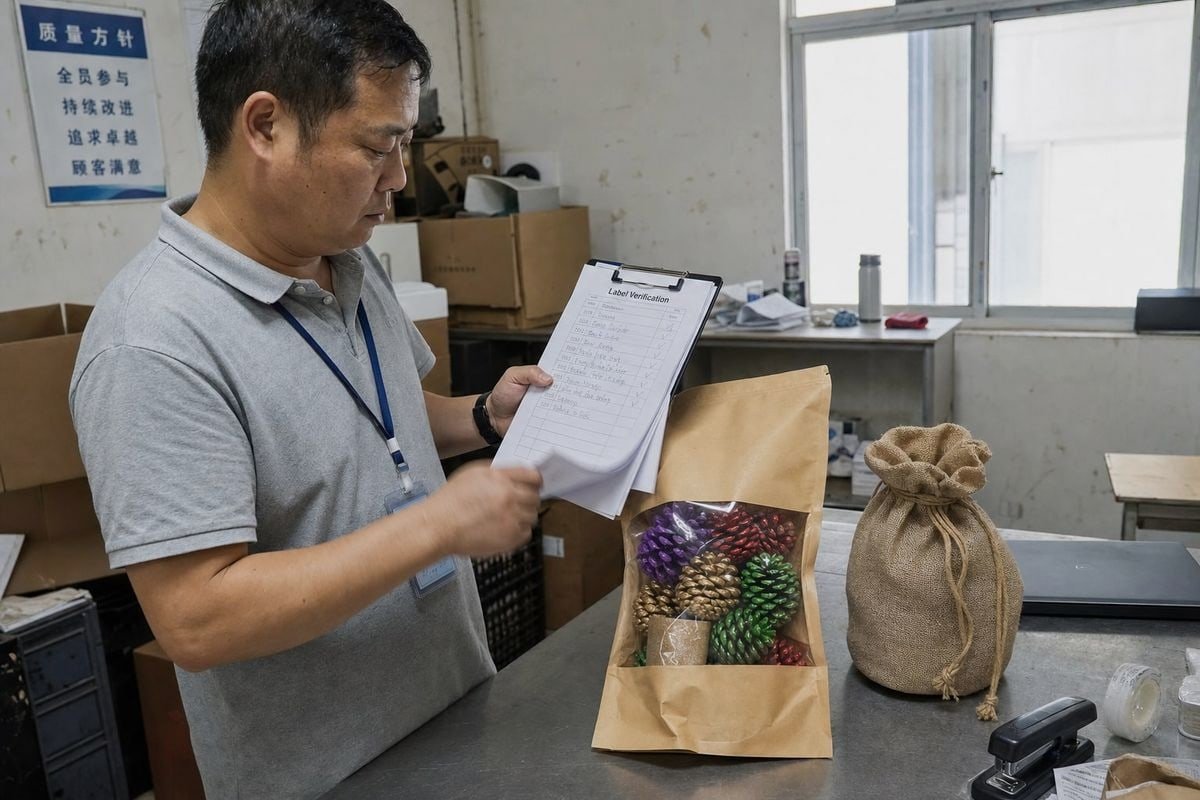
Verificando Cumplimiento de la etiqueta de advertencia de la FHSA 1 para conos de pino para chimeneas confunde a muchos importadores. En nuestra línea de producción, he visto etiquetas que dicen "advertencia" pero fallan en todas las reglas federales, un error costoso en la aduana.
Para verificar el cumplimiento de la etiqueta de advertencia de la FHSA para piñas de chimenea, solicite la determinación de peligros del proveedor, la divulgación completa de la formulación, un Certificado General de Conformidad y el arte final de la etiqueta. Luego, verifique la palabra de señalización, la declaración de peligros, el nombre químico, las precauciones, los primeros auxilios, la advertencia para niños y la identidad comercial según 16 CFR 1500.121.
Esa es la respuesta corta. El resto de esta guía lo desglosa en pasos prácticos que puede ejecutar antes de realizar un pedido, para que nada se escape.
¿Qué certificaciones debería solicitar para confirmar el cumplimiento de la FHSA antes de realizar un pedido?
Cuando los compradores de EE. UU. se ponen en contacto con nuestra oficina de Liuyang, el primer documento que suelen pedir es un certificado. Después de 17 años exportando piñas de color flameado, entiendo exactamente por qué.
Solicite un Certificado General de Conformidad que haga referencia a 16 CFR 1500, informes de pruebas de laboratorio de terceros para pruebas de sólidos inflamables según 16 CFR 1500.44, una evaluación de riesgo toxicológico o determinación de peligro para los productos químicos de recubrimiento, y Hojas de Datos de Seguridad que cubran cada colorante, cera y aditivo utilizado.

Los certificados solo son útiles si coinciden con el producto real. Las piñas de color flameado no son decoración botánica cruda. Se tratan con sales metálicas 2, y a menudo se sumergen en cera. Ese tratamiento puede convertir una piña ordinaria en una sustancia peligrosa regulada según las normas reglamentarias de la CPSC. Por lo tanto, cada certificado que recopile debe hacer referencia al producto terminado y tratado, no a la piña sin tratar.
El conjunto de documentos principal
Aquí está el paquete de certificación que recomiendo solicitar antes de firmar cualquier orden de compra:
| Documento | Lo que prueba | Quién lo emite |
|---|---|---|
| Certificado General de Conformidad (GCC) | El producto fue probado o evaluado según las reglas aplicables de la CPSC | El importador o fabricante, basándose en los datos de prueba |
| Informe de laboratorio de terceros (SGS, Intertek o similar) | Prueba de sólidos inflamables y cribado químico del producto terminado | Laboratorio de pruebas acreditado |
| Determinación de peligros de la FHSA | El proveedor evaluó si el producto es una sustancia peligrosa y por qué | Proveedor, respaldado por datos de laboratorio |
| Hojas de datos de seguridad | Identidad química y peligros de los colorantes, ceras y recubrimientos | Proveedor o fabricante químico |
| Certificados ISO 9001 / BSCI | Sistema de calidad y estado de auditoría de fábrica | Organismos de certificación |
Por qué la verificación de laboratorio de terceros es importante
La prueba interna de un proveedor es un punto de partida, no una prueba. Verificación de laboratorio de terceros de un laboratorio reconocido 3 le proporciona datos independientes que puede defender si la CPSC alguna vez cuestiona su envío. En nuestra experiencia exportando a más de 30 países, los compradores que insisten en informes de SGS o Intertek superan las revisiones aduaneras mucho más rápido. Pida que el informe nombre claramente el SKU terminado, el lote probado y el método de prueba utilizado. Un informe genérico de "piñas" sin referencia de formulación es casi inútil.
¿Cómo compruebo que la redacción y la colocación de la etiqueta de advertencia cumplen los requisitos de EE. UU.?
Un comprador minorista una vez devolvió nuestro primer borrador de etiqueta con un comentario: "El bloque de advertencia no es paralelo a la base". Esa única revisión enseñó a nuestro equipo de diseño más que cualquier resumen de regulación.
Verifique que la etiqueta contenga una palabra de señalización, la declaración de peligro principal, el nombre común o químico de la sustancia peligrosa, las declaraciones de precaución, las instrucciones de primeros auxilios, las instrucciones de almacenamiento, "Mantener fuera del alcance de los niños" y el nombre y la dirección del responsable, todo visible, legible, en tipo contrastante, según 16 CFR 1500.121.
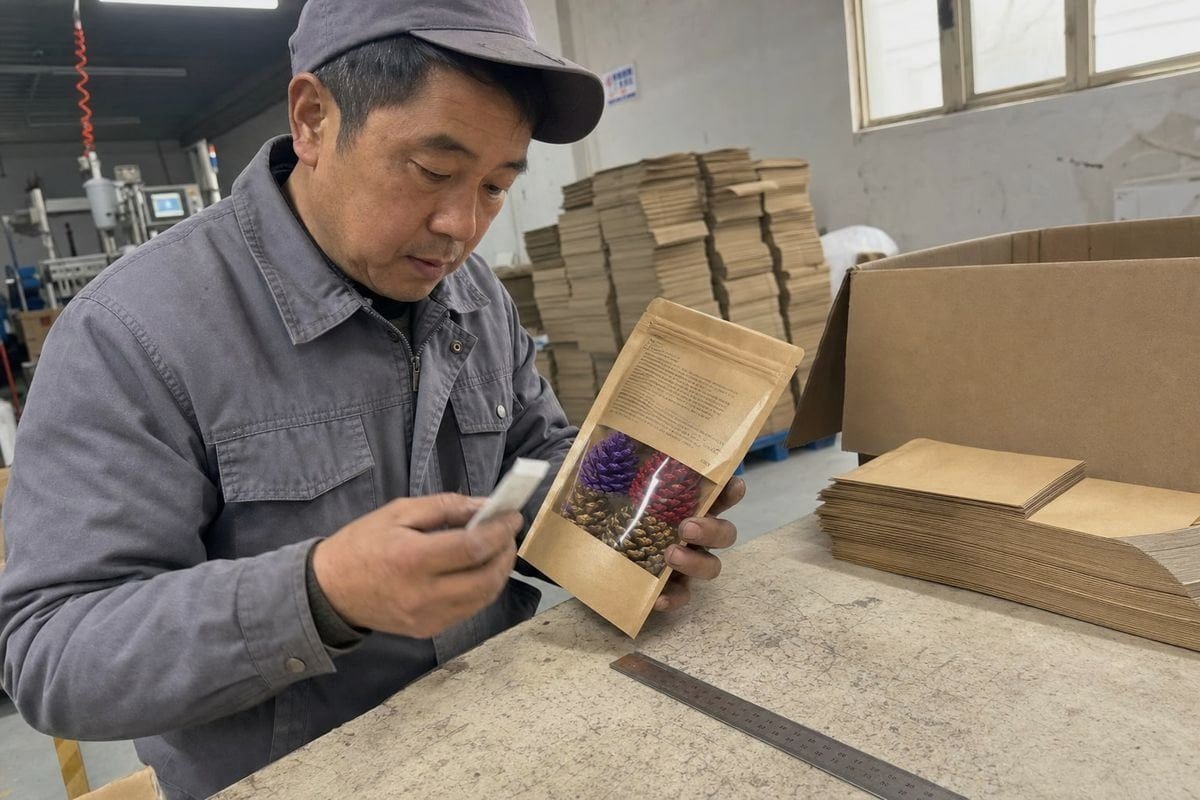
No asuma que una etiqueta cumple solo porque contiene la palabra "advertencia". El etiquetado de la FHSA es una lista de verificación de elementos nombrados 4, y todos deben aparecer. Cuando preparamos empaques de marca privada para clientes de EE. UU., ejecutamos cada archivo de arte a través de la lista completa de elementos antes de imprimirlo. Debe hacer lo mismo con el arte de su proveedor.
Los elementos de etiqueta requeridos
| Elemento requerido | Qué buscar | Fallo común |
|---|---|---|
| Palabra de señalización | "ADVERTENCIA" o "PRECAUCIÓN" que coincida con el nivel de peligro | Palabra de señalización faltante o no coincidente con el peligro |
| Declaración de peligro principal | Redacción específica como "INFLAMABLE" o "COMBUSTIBLE" | Texto vago como "usar con cuidado" |
| Nombre común o químico | Las sales colorantes nombradas, por ejemplo, sulfato de cobre o cloruro de estroncio | Solo se enumeran "aditivos de color" |
| Indicaciones de precaución | Orientación sobre manipulación segura, ventilación y almacenamiento | Solo un genérico "manipular con cuidado" |
| Primeros auxilios | Instrucciones que coinciden con el peligro real, cuando corresponda | Copiado de un producto no relacionado |
| Advertencia para niños | "Mantener fuera del alcance de los niños" o equivalente práctico | Omitido por completo |
| Identidad empresarial | Nombre legal y lugar de negocio del responsable | Solo nombre de marca, sin dirección |
Reglas de prominencia y colocación
Los requisitos de la palabra de señal van más allá de la redacción. El texto de precaución debe ser visible, en un tamaño de letra que los lectores puedan ver realmente, y en un color que contraste fuertemente con el fondo. La mayoría material de precaución 5 debe correr generalmente paralelo a la base del paquete tal como se asienta en el estante. La advertencia debe aparecer en el envase inmediato. Si la bolsa se encuentra dentro de una caja exterior que oculta la etiqueta interior, el embalaje exterior debe repetir la advertencia. En nuestras bolsas kraft de pie, imprimimos el bloque de precaución en el panel trasero en negro sobre kraft — alto contraste, paralelo a la base y agrupado en un solo bloque. Pregunte a su proveedor por fotos del embalaje impreso que muestren las advertencias de seguridad contra llamas abiertas, no solo archivos PDF de arte, porque la calidad de impresión puede destruir el contraste que parecía bien en la pantalla.
¿Qué documentación debe proporcionar mi proveedor para probar el cumplimiento lote a lote?
Una compensación que sopesamos constantemente en nuestras instalaciones de Ningbo es la profundidad de la documentación frente a la velocidad. Los registros completos de lotes ralentizan ligeramente el envío, pero son lo que protegen a nuestros compradores cuando se inspecciona un contenedor.
Su proveedor debe proporcionar identificadores de lote o partida en el embalaje, registros de control de calidad por lote, notificaciones de cambios en la formulación, arte de etiquetas con control de versiones, hojas de datos de seguridad actualizadas cuando cambie la química e informes de re-análisis periódicos que confirmen que el producto terminado aún coincide con la formulación certificada original.

El cumplimiento de la FHSA no es un evento único. Un proveedor puede pasar las pruebas en la primera muestra, y luego cambiar silenciosamente a una mezcla de colorante más barata tres envíos más tarde. Si esa nueva mezcla cambia el perfil de peligro, su etiqueta puede ya no describir el producto que está vendiendo. Esa brecha es su exposición legal, no la del proveedor.
Un flujo de trabajo de documentación práctico
Este es el proceso que seguimos para nuestros propios clientes de marca blanca, y funciona como una plantilla para auditar a cualquier proveedor:
- Bloquear la formulación. Obtener una divulgación de formulación firmada que enumere cada sal metálica, cera, tinte y recubrimiento con rangos de porcentaje.
- Vincular las pruebas a la receta. El informe de laboratorio y los datos de seguridad del colorante químico deben hacer referencia a esa versión exacta de la formulación.
- Asignar códigos de lote. Cada lote de producción recibe un número de lote impreso en la bolsa o caja para su trazabilidad.
- Registrar el control de calidad por lote. Las pruebas de combustión, los controles de peso, la consistencia del recubrimiento y la inspección visual se registran contra el número de lote.
- Controlar las versiones de las etiquetas. El arte lleva un número de versión; cualquier cambio requiere aprobación por escrito antes de la impresión.
- Requerir notificación de cambios. El contrato debe obligar al proveedor a notificarle antes de cualquier sustitución de materia prima.
- Re-evaluar según lo programado. Las pruebas anuales o por pedido importante detectan la deriva antes de que llegue a sus estantes.
Algunos proveedores argumentarán que la codificación por lotes no es un elemento central de la etiqueta de la FHSA, y técnicamente tienen razón. Pero sin trazabilidad, no puede probar que el lote certificado es el que está en su almacén. Si alguna vez surge una pregunta sobre un peligro crónico — por ejemplo, si las sales metálicas plantean toxicidad a largo plazo por contacto con la piel según 16 CFR 1500.135 — los registros de lotes son la única forma de aislar el problema. Mantenga su propio archivo de aprobación de cumplimiento con fotos, versiones de arte y declaraciones del proveedor. Ese rastro de papel es un seguro barato.
¿Qué señales de alerta indican que un proveedor podría no cumplir realmente con los estándares de etiquetado de la FHSA?
Al principio de mi carrera de exportación, un distribuidor me mostró una bolsa de la competencia "100% Natural" que contenía conos tratados con sales metálicas y recubiertos de parafina. Esa etiqueta era una demanda esperando a suceder, y dio forma a cómo evaluamos nuestras propias afirmaciones.
Las principales señales de alerta incluyen etiquetas de advertencia genéricas sin peligro nombrado, nombre y dirección comercial faltantes, afirmaciones de "no tóxico" o "100% natural" contradichas por la formulación, informes de prueba para conos crudos en lugar de tratados, texto diminuto de bajo contraste y negativa a divulgar la química del colorante.

Las señales de alerta rara vez aparecen solas. En mi experiencia, un proveedor que omite la dirección comercial generalmente también omite el texto de primeros auxilios. Trate cada señal de advertencia como una indicación para profundizar, y trate grupos de ellas como una razón para alejarse.
Guía de gravedad de señales de alerta
| Señal de alerta | Severidad | Lo que suele significar |
|---|---|---|
| Etiqueta de advertencia sin peligro específico nombrado | Alto | Nunca se realizó una determinación real del peligro |
| "Marketing "no tóxico" o "100% natural" en un producto tratado | Alto | Riesgo de greenwashing; posible exposición a la FTC junto con el etiquetado erróneo de la FHSA |
| El informe de prueba cubre solo conos crudos sin tratar | Alto | Los datos de inflamabilidad no se aplican al producto terminado |
| No hay nombre del fabricante ni lugar de negocio en la etiqueta | Alto | No hay parte responsable en la cadena de suministro |
| Advertencia solo en envoltorio retráctil o caja exterior | Medio | El envase inmediato vendido a los consumidores no lleva texto de precaución |
| Texto de precaución diminuto y de bajo contraste | Medio | No cumple la regla de visibilidad aunque la redacción sea correcta |
| Negativa a compartir Hojas de Datos de Seguridad | Alto | El proveedor puede no conocer o estar ocultando la química |
| Sin codificación por lotes o partidas | Medio | Sin trazabilidad si surge un problema de cumplimiento |
Dos objeciones que escuchará — y cómo responderlas
Algunos proveedores afirman que las piñas decorativas son productos de consumo ordinarios 6, no sustancias peligrosas, por lo que la FHSA no se aplica. Eso puede ser cierto para las piñas sin tratar. Pero las piñas de llama de color se formulan con sales metálicas y, a menudo, cera, lo que cambia el perfil de peligro durante el uso previsible: quemarlas en interiores. El nombre de la categoría de producto no decide nada; la formulación y la exposición previsible lo deciden todo. Otros argumentan que agregar advertencias adicionales al estilo estatal cubre todas las bases. No lo hace. La ley federal puede anular el lenguaje de advertencia estatal no idéntico para el mismo peligro, y Proposición 65 de California 7 las advertencias de formato corto deben armonizarse con el texto de la FHSA, no sustituirlo. Cuando un proveedor responde a estas preguntas de manera clara y por escrito, eso es en sí mismo una buena señal. Cuando evaden, escale a pruebas de laboratorio independientes o a asesoramiento legal antes de comprometerse.
Conclusión
El cumplimiento de la etiqueta de advertencia de la FHSA para piñas de chimenea es verificable: exija el GCC, informes de laboratorio, divulgación de la formulación y los elementos de etiqueta correctos — luego documente todo antes de realizar el pedido.
Notas al pie
Orientación oficial de la CPSC sobre los requisitos de la Ley Federal de Sustancias Peligrosas para el etiquetado y la seguridad de los productos de consumo. ↩︎
Resumen científico de las sales, incluidas las sales metálicas utilizadas como colorantes en formulaciones químicas. ↩︎
Directorio de laboratorios acreditados por la CPSC para pruebas de terceros y verificación de seguridad del producto. ↩︎
Texto legal directo de 16 CFR 1500.121 que especifica los elementos de etiqueta requeridos. ↩︎
Regulaciones federales que especifican la prominencia, colocación y visibilidad del etiquetado de advertencia requerido. ↩︎
Definición legal y marco legal para productos de consumo bajo la Ley de Seguridad de Productos de Consumo. ↩︎
Información oficial sobre los requisitos de la Proposición 65 de California para advertencias de exposición química. ↩︎



 English
  Spanish
  German
  French
  Arabic
  Portuguese
Únete a la conversación