






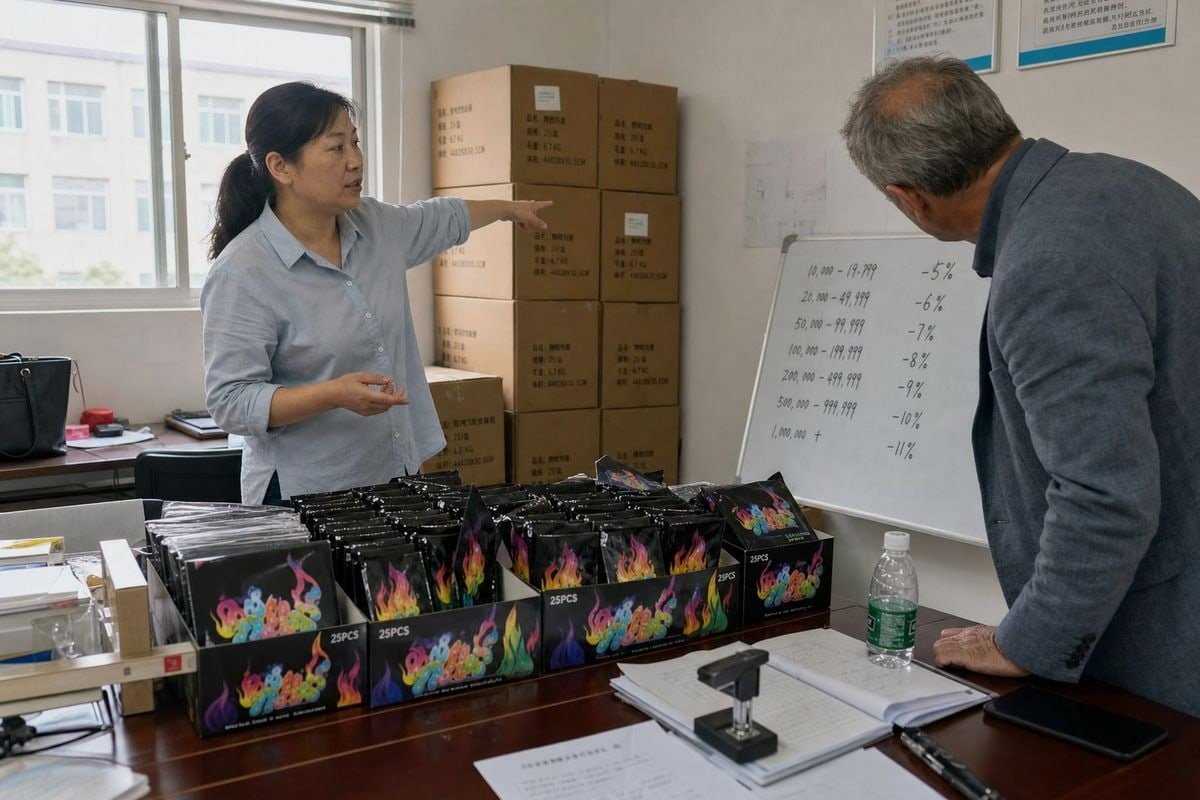
Tiered wholesale pricing for Magic Fire Powder trips up many buyers I meet Mindestbestellmenge 1. They discount too deep, too early, and our export data from 30+ countries shows exactly where margins quietly bleed out.
Design tiered wholesale pricing for Magic Fire Powder using 3–4 volume tiers built on landed cost plus a margin floor. Anchor breaks to case packs (25-unit display boxes), reward reorders with 10–20% volume-based discounts, and reserve the deepest pricing for committed, high-volume distributor accounts.
That is the short answer. But the details decide whether your ladder builds profit or leaks it gross margin 2. Let me walk you through each decision, step by step.
What MOQ Thresholds Should I Set for Each Pricing Tier?
A gift-chain buyer from the Netherlands once asked me for pallet pricing on her very first order. I said no — and then explained why our tier ladder protected her too.
Set your entry Minimum Order Quantity (MOQ) at one display box of 25 sachets, a core tier at 500–1,000 units, a growth tier at 2,500–5,000 units, and a strategic tier at 10,000+ units. Each break should align with case-pack and freight economics, not arbitrary round numbers.
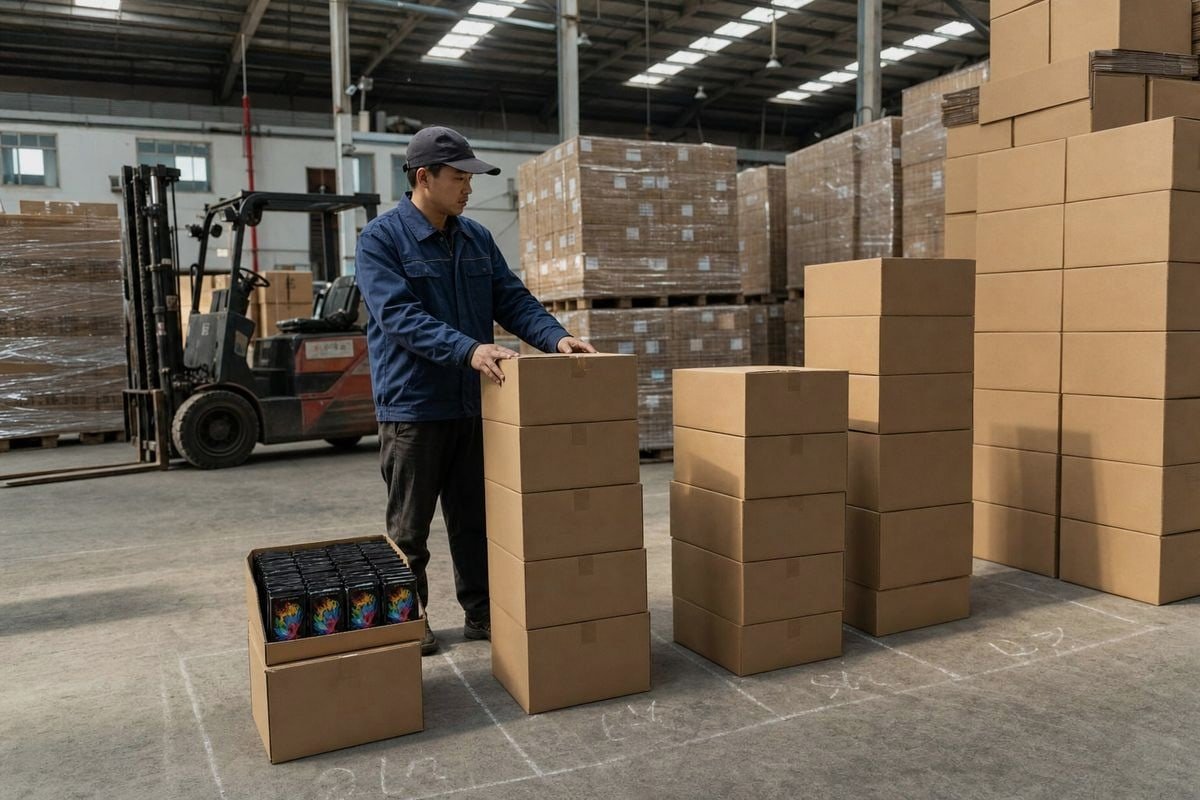
The biggest mistake I see in B2B sales strategy for novelty products is copying a competitor's price list without checking how party and gift stores actually buy. In our experience shipping color-changing flame packets from Ningbo to the US and Europe, retailers buy in three waves: a small trial order, a seasonal stock-up, and then repeat replenishment. Your MOQ thresholds should mirror that behavior exactly.
Map Tiers to Real Buying Behavior
Start with your case pack. Our standard display box holds 25 foil sachets. That box is your natural entry unit because it goes straight onto a counter as a point-of-purchase display. Everything above it should scale in clean multiples — full cartons, then layer quantities, then pallet quantities. When tiers match physical packaging, picking is faster, freight is cheaper, and damage rates drop.
Here is a practical four-tier structure we recommend to distributors:
| Tier | MOQ Threshold | Typischer Käufer | Discount off Base |
|---|---|---|---|
| Einstieg | 25 units (1 display box) | Single gift shop, trial order | 0% (standard wholesale) |
| Kern | 500–1.000 Einheiten | Small party store chain, reorders | 5–8% |
| Growth | 2,500–5,000 units | Regional distributor, seasonal stock-up | 10–15% |
| Strategisch | 000+ Einheiten | Importer, national chain | 18–22% (qualified accounts) |
Keep Breaks Meaningful
Each jump should feel worth reaching for. A 2% step between tiers motivates nobody. A 5–8% step changes ordering behavior. We have watched buyers consciously round their orders up to hit the next break — that is your ladder doing its job. Also, review tier eligibility quarterly. If an account's volume drops for two consecutive seasons, they should move down a tier. Tiers are living rules, not permanent entitlements.
How Can I Price Private-Label Packaging Without Losing Margin?
Our ODM team once redesigned a client's sachet artwork three times before launch — and the client still made money, because we priced the customization work separately from the powder itself.
Price private-label packaging as a separate cost layer: charge a one-time plate and design setup fee, set a 5,000-unit private-label MOQ, and add $0.03–$0.08 per unit for custom printing. Never bury branding costs inside your base tier discounts.

Private-label work is where our 17+ years of OEM/ODM experience matters most, and it is also where importers most often destroy their own profit margin calculation. The trap is simple: a buyer asks for custom pouches, custom display boxes, and custom warning labels, and the supplier absorbs those costs to win the deal. Six months later, the account is high-volume but low-profit.
Separate the Powder from the Package
Treat Magic Fire Powder itself and its packaging as two cost streams. The powder has a stable angekommene Kosten 3. The packaging varies wildly — glossy foil sachets, kraft stand-up pouches, plastic jars, and flip-top display boxes all carry different material and printing costs. At our factory, we quote the base bulk unit pricing first, then layer Verpackungsoptionen on top with transparent per-unit adders.
| Verpackungsformat | Bester Anwendungsfall | Typical Per-Unit Adder | Private-Label MOQ |
|---|---|---|---|
| Foil sachet, stock design | Trial orders, impulse racks | $0.00 | 25 units |
| Foil sachet, custom brand | Gift store house brands | $0.03–$0.05 | 5,000 units |
| Stehbeutel aus Kraftpapier | Eco-positioned retailers | 0,05–0,08 $ | 5,000 units |
| Custom CDU display box | Counter-top impulse buys | $0.15–$0.30 per box | 500 boxes |
Protect the Retailer's Margin Too
Publish an UVP 4 — for a 25g packet, the gift-store sweet spot typically lands between $1.39 and $1.99. MSRP compliance protects your retail partners from price erosion, and a healthy retail markup percentage of 100% or more keeps them reordering. When we help brands set private-label pricing, we work backward from that MSRP: retail price, minus retailer margin, minus your margin floor, equals the maximum landed cost you can accept. If custom packaging pushes you past that ceiling, raise the private-label MOQ instead of eating the difference. Higher volume amortizes the setup fee; a discount never does.
Should I Offer Different Tiers for Trial Orders Versus Long-Term Distributors?
Flexible MOQs for first orders are one of the most common requests we hear from purchasing managers in the US and Germany — and we say yes, with structure.
Yes. Offer a low-friction trial tier at standard wholesale pricing with a 25-unit MOQ, then a separate distributor track with committed-volume pricing, replenishment subscriptions, and account-based benefits. Trial tiers remove entry friction; distributor tiers reward proven, repeat volume.
Some suppliers argue that a single public price ladder is enough, and that negotiated account pricing just complicates things. I understand the appeal of simplicity. But in campfire accessories wholesale, volume alone does not tell you an account's value. A boutique that orders monthly, pays on time, and merchandises your product beautifully can be worth more than a big-box buyer who orders once a year and demands endless exceptions. So we run a hybrid: a posted ladder for everyone, plus account-based overrides for qualified partners.
The Trial Track
Keep it dead simple. One display box, standard price, fast shipping, no paperwork beyond the basics. The goal is to get color-changing flame packets onto the shelf and let sell-through data make your sales argument. In our experience, a gift store that sells through its first display box reorders within four to eight weeks.
The Distributor Track
Long-term accounts earn structural benefits, not just cheaper units. Here is how we differentiate the two tracks:
- Committed-volume pricing — annual or seasonal volume commitments unlock growth-tier or strategic-tier rates.
- Replenishment subscription — a 5–10% discount for a committed monthly or quarterly delivery schedule, which stabilizes production planning on our side and inventory on theirs.
- Early-bird seasonal windows — priority allocation before the June–July camping peak and the October–December gift season.
- Digital asset access — unbranded product video and lifestyle photography for the retailer's own marketing channels.
- Bundle eligibility — experience bundles pairing fire powder with fatwood firestarters or long matches to lift average order value.
One guardrail: never let a trial account claim distributor pricing "to see if it works out." Qualification must come from actual order history. We review distributor status twice a year, and accounts that stop performing move back to the posted ladder. That discipline is what keeps the distributor tier worth having.
How Do I Factor Compliance and Logistics Costs into My Tiered Pricing Structure?
Getting our CE-Kennzeichnung 5 and SGS test reports in order years ago taught us a hard lesson: compliance is a real cost line, and pricing that ignores it is fiction.
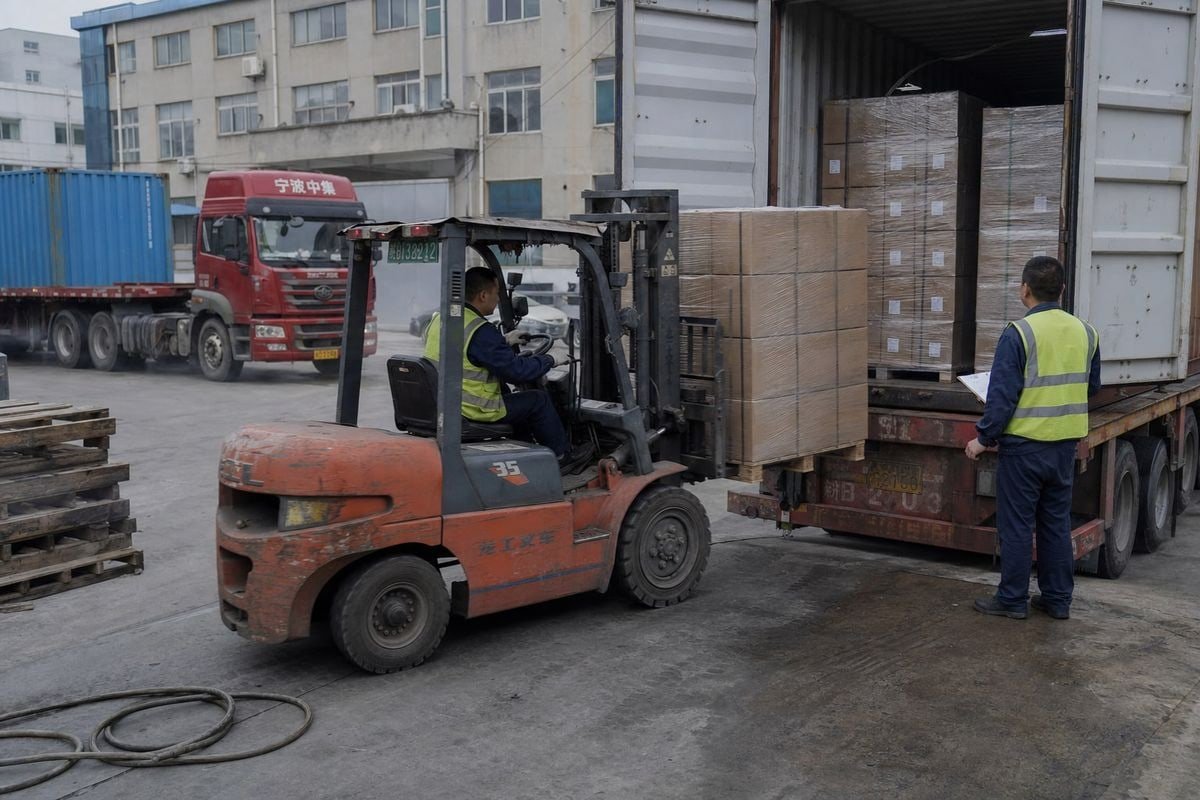
Build every tier from true landed cost: product cost plus freight, duties, compliance testing, labeling, and handling. Set a margin floor below which no tier may fall, and price region-specific compliance work — like pre-applied safety labels — as its own tier feature.

Fire-related novelty products face scrutiny that ordinary giftware never sees. In our export work across the US, EU, UK, Canada, and Australia, buyers require test reports before purchase orders — ISO 9001 6, BSCI, CE, and SGS or Intertek documentation is a hard requirement, not a nice-to-have. Those certifications cost money to obtain and maintain. So do warning labels, barcodes, retail-ready cartons, and freight. If your tier ladder discounts from factory cost alone, every "great deal" you sign is quietly underwater.
Start with the Landed Cost Formula
The math is simple, and skipping it is expensive:
Landed cost = product cost + freight + duties + packaging + compliance and handling.
Then set your wholesale base price from your target margin: wholesale price = landed cost ÷ (1 − desired gross margin). Your margin floor is the line no tier crosses, ever. Any exception below floor should require explicit approval — not a sales rep's judgment call on a Friday afternoon.
| Cost Input | Typical Impact on Per-Unit Cost | How to Handle in Tiers |
|---|---|---|
| Ocean freight (Ningbo to US/EU) | Falls sharply at pallet and container volume | Fund deeper tier discounts with freight savings |
| Duties and customs | Fixed percentage of declared value | Bake into landed cost at every tier |
| Compliance testing and reports | One-time and periodic; amortized per unit | Include in base price; never discount away |
| Region-specific labels (e.g., Kalifornien Prop 65 7) | Small per-unit adder | Offer as a geo-compliance tier feature |
| Seasonal freight surcharges | Spikes before Q4 | Use early-bird ordering windows to avoid them |
Turn Compliance into a Selling Point
Here is the reframe that changed our own B2B sales strategy: compliance is not just a cost — it is a tier benefit. Pre-applied, region-specific safety labels save boutique retailers the labor of secondary marking. Batch-consistent quality control means the first sample reliably reflects mass production, which reduces the buyer's inspection burden. Distributors will pay for that certainty. Price it in, present it clearly, and your volume-based discounts stay funded by real logistics savings rather than by your profit margin calculation.
Schlussfolgerung
Weak tier design silently drains profit on every reorder. Build 3–4 tiers from landed cost, anchor MOQs to case packs, separate private-label costs, and reward true distributors — margin-safe growth follows.
Fußnoten
1. Explains the lowest amount of inventory a supplier is willing to sell. ↩︎
2. Explains the calculation of profit relative to revenue after accounting for cost of goods sold. ↩︎
3. Defines the total price of a product once it has arrived at a buyer's door. ↩︎
4. Provides context on manufacturer's suggested retail prices for retail consistency. ↩︎
5. Official European Commission page explaining safety, health, and environmental protection requirements. ↩︎
6. Comprehensive Wikipedia entry detailing the history, requirements, and global implementation of the ISO 9001 quality standard. ↩︎
7. Official California government site for consumer product chemical safety warnings. ↩︎



 English
  Spanish
  German
  French
  Arabic
  Portuguese
Diskutieren Sie mit