







Damp fireplace pine cones frustrate buyers every winter BSCI audit 1. On our production line in Ningbo, we hear this complaint often: a shipment arrives, and the cones feel soft, heavy, or cold.
Yes, damp fireplace pine cones can still be used, but only after thorough drying. Burning them wet causes smoke, smoldering, and creosote buildup. Air-dry them for several days, or oven-dry at 150–200°F for about one hour, then burn them as natural fire starters.
That is the short answer. Below, I will walk you through how to spot moisture damage, how to fix it safely, what it means for long-term quality, and how to prevent it at the packaging stage.
How can I tell if my color-flame pinecones have absorbed too much moisture during shipping or storage?
Last year, a distributor in the Netherlands emailed us photos of a pallet that sat in a humid port warehouse for three weeks. The cones told the whole story before any lab test did.
Check the scales first: tightly closed scales mean high moisture content, while fully open, crisp scales mean the cone is dry. Damp cones also feel heavier, smell earthy or musty, resist snapping, and may show white or green mold spots on the surface.

Pine cones behave like a natural hygrometer. Their scales open when dry and close when wet. This is the fastest field check you can do, and it costs nothing. When our QC team inspects returned or delayed shipments, we run the same checks any buyer can do at the warehouse door.
The five-point moisture inspection
Here is the inspection routine we recommend to our B2B partners before they release stock to retail shelves:
| Check | Dry Cone (Good) | Damp Cone (Problem) |
|---|---|---|
| Scale position | Fully open, spread wide | Closed or partially closed |
| Weight | Light for its size | Noticeably heavy |
| Sound when tapped | Dry, hollow click | Dull, soft thud |
| Smell | Faint pine or resin scent | Musty, earthy, or moldy |
| Scale flexibility | Snaps crisply when bent | Bends without breaking |
For color-flame pinecones specifically, add one more check: look at the coating. Our cones carry a mineral-salt treatment that produces the colored-flame effect. If moisture has soaked deep into the cone, you may see slight dulling, streaking, or crystalline residue on the surface. Light surface dampness rarely harms the treatment. Deep saturation is the real risk.
An enthusiast tip worth borrowing from firewood handling: a wood moisture meter 2 reading below 20% indicates the cone is ready to burn cleanly. It is not an industry standard for cones, but it removes the guesswork. Anything above that, and you should assume the cone will smolder instead of ignite.
Finally, sort ruthlessly. Slightly damp cones are recoverable. Moldy, rotting, or crumbling cones are not, and they should be discarded rather than dried.
What drying methods can I use to restore damp pinecones without affecting their color-flame performance?
There is a real trade-off we weigh in our own factory drying rooms: heat speeds things up, but too much heat melts resin and can degrade the color-flame coating. The same trade-off applies in your warehouse or home.
Air-dry damp pinecones in a warm, ventilated space for three to seven days, or oven-dry them at 150–200°F for about one hour on a foil-lined tray. Keep temperatures low, never leave the oven unattended, and avoid the microwave entirely.
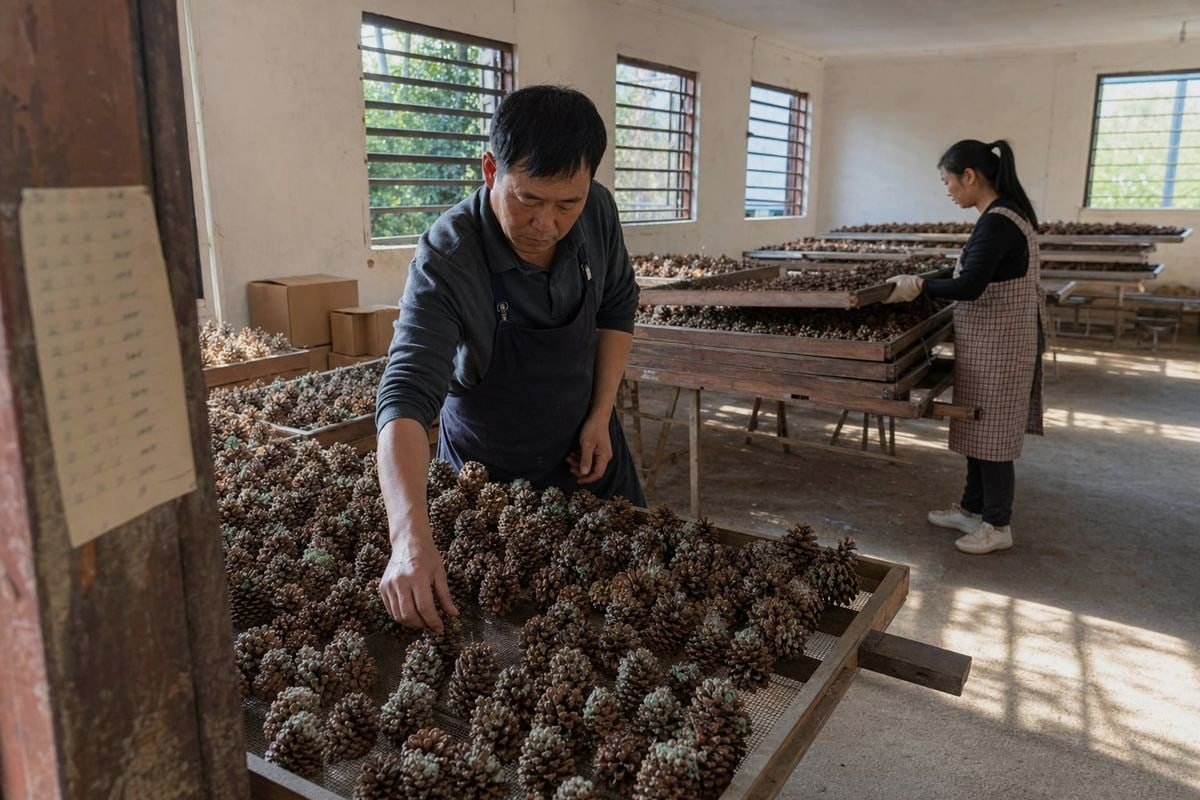
Both methods work. The right choice depends on how many cones you have, how wet they are, and how quickly you need them. Here is how the options compare:
| Method | Temperature | Time | Best For | Risk Level |
|---|---|---|---|---|
| Air-drying | Room temp, low humidity | 3–7 days (up to weeks) | Large batches, coated cones | Very low |
| Oven-drying | 150–200°F | ~1 hour | Small batches, fast turnaround | Moderate |
| Dehydrator | Lowest setting | Several hours | Small quantities, gentle heat | Low |
| Microwave | Any | Never | Nothing | Dangerous |
Air-drying: the safest route for coated cones
Spread the cones in a single layer on cardboard or mesh racks. Choose a dry, well-ventilated area away from concrete floors, which wick ground moisture. Turn the cones every day or two. When the scales open fully and snap crisply, they are done. For our color-flame products, this is the method we recommend first, because zero heat means zero risk to the mineral coating.
The oven drying method: faster, but supervise it
Line a baking tray with foil. Set the oven between 150°F and 200°F. Bake for roughly one hour, checking every 15 minutes. The scales will open as moisture escapes. Two cautions matter here. First, resin content 3 is what makes pine cones excellent kindling, but melted sap is flammable, so never leave the oven unattended. Second, keep the temperature low; craft guides that suggest 250°F are aiming to melt sap for decoration, which you do not want for treated cones.
Why the microwave is off the table
Microwaves heat resin pockets unevenly. Trapped steam inside a dense cone can burst scales apart or ignite the resin suddenly. It is a shortcut that risks a kitchen fire. Skip it.
One nuance for color-flame buyers: some sources describe borax or salt soaks as a home remedy for colored flames. Do not re-soak factory-treated cones. Adding more solution and re-wetting them only restarts the moisture problem and can create uneven color effects. Drying alone is the correct remedy.
Will moisture exposure compromise the quality or safety of my color-flame pinecones long-term?
A purchasing manager in Germany once asked me a sharp question during a factory audit: if a batch gets damp and is then dried, is it as good as new? The honest answer is: usually yes, but not always, and safety is where you cannot compromise.
Brief moisture exposure rarely causes permanent damage if cones are dried promptly. However, prolonged saturation can leach flammable terpenes, dilute color-flame coatings, and invite mold. Burning cones that stay damp accelerates creosote buildup in the flue, creating a genuine chimney fire hazard.
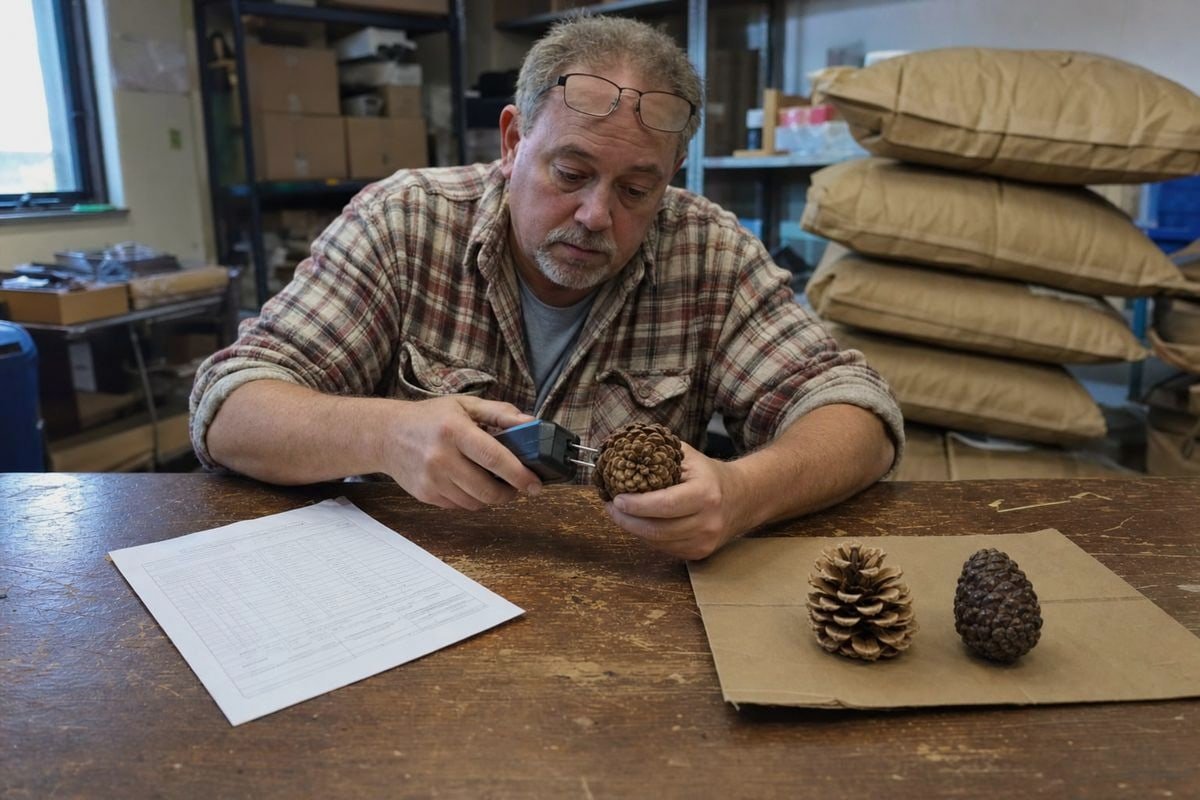
Let me separate the quality question from the safety question, because they behave differently.
Quality: what moisture actually degrades
The burning power of a pine cone comes from its resin content. Resin-rich cones ignite fast and burn hot, which is why they outperform paper or twigs as natural fire starters and serve as practical fatwood alternatives. Short-term dampness does not remove resin. But prolonged soaking can leach out flammable terpenes 4, leaving a cone that dries fine yet burns weakly. For color-flame cones, extended saturation can also migrate the mineral treatment unevenly, so one side flames vividly and the other barely colors at all.
The severity depends on exposure time:
| Exposure | Typical Effect | Recovery Outlook |
|---|---|---|
| Humid air, days | Scales close, slight weight gain | Full recovery after drying |
| Rain or condensation, 1–2 weeks | Coating dulling, slower ignition | Good recovery; test-burn a sample |
| Standing water or soaked pallet | Terpene loss, mold, coating loss | Poor; discard affected units |
Safety: the creosote problem
The bigger issue is what happens if damp cones reach the fireplace anyway. Wet fuel burns cool and incomplete. That sends unburned particles up the chimney, where they condense as creosote 5 — the primary cause of dangerous chimney fires. This is a core principle of wood stove safety 6: only seasoned kindling and dry fuel belong in the firebox. Regular flue maintenance helps, but it does not excuse burning wet material.
One more coastal note: cones gathered near the sea should be rinsed in fresh water before drying, because salt residue can corrode metal fireplace components over time. Factory-treated color-flame cones use controlled mineral salts precisely to avoid this kind of uncontrolled residue.
My practical advice to distributors: after any drying rescue, test-burn a sample of five to ten cones. If they ignite cleanly and show full color, release the batch. If they smolder, the terpenes are gone, and the batch is not worth your brand's reputation.
How can I work with my manufacturer to ensure better moisture-proof packaging for future orders?
Seventeen years of exporting fire products to 30+ countries has taught our team one blunt lesson: most moisture damage happens in transit and warehousing, not at the customer's home. Packaging is where the battle is won.
Ask your manufacturer for resealable, moisture-barrier packaging with desiccant packs, verified pre-shipment moisture content checks, sealed inner liners inside outer cartons, and documented QC records per batch. Reputable factories will also share SGS or Intertek test reports and adjust packaging specs for humid shipping routes.

Packaging is a specification, not an afterthought. When we develop private-label pinecone lines for outdoor brands and fireplace distributors, moisture protection is one of the first items on the OEM spec sheet. Here is how I suggest you structure the conversation with any supplier, including us.
A five-step packaging checklist for your next purchase order
- Specify the barrier layer. Kraft-look pouches sell well on shelves, but the kraft aesthetic should sit over a laminated moisture-barrier film. A resealable zipper matters too, because end customers rarely burn the whole pack at once.
- Require desiccants and inner liners. Silica gel packs inside each retail unit, plus a sealed poly liner inside the master carton, protect the goods through ocean freight humidity swings.
- Set a moisture threshold at packing. Ask the factory to verify cone moisture content before sealing — dried, open-scale cones only. This should appear on the batch QC record. Our production lines log this per batch, which is why our first sample reliably matches mass production.
- Match packaging to the route. A container to Brazil or the Middle East faces different humidity than one to Poland. A good manufacturing partner adjusts liner thickness and desiccant quantity by destination.
- Demand documentation. ISO 9001 7 process control, BSCI audit status, and CE plus SGS/Intertek test reports tell you the factory treats moisture control as a compliance issue, not a favor. For serious importers, this is a hard requirement.
There is also a shared-responsibility angle. Once goods land, warehouse conditions matter. Store cartons off concrete floors, away from exterior walls, in low-humidity areas. We include storage guidance on our export cartons for exactly this reason, and we can print custom warning labels, barcodes, and storage icons for private-label orders.
If your current supplier shrugs at these requests, that tells you something. Moisture-proofing costs pennies per unit. A damp pallet costs you a season.
Conclusion
Damp fireplace pine cones are salvageable, not ruined. Inspect the scales, dry them low and slow, burn only fully dry cones, and fix packaging with your manufacturer.
Footnotes
1. Amfori runs the BSCI compliance program cited as a manufacturer documentation requirement. ↩︎
2. Explains the tool used to objectively verify fuel dryness before burning. ↩︎
3. Scientific reference on resin explains why it drives fire-starting performance in cones. ↩︎
4. Wikipedia background on terpenes clarifies the compounds lost during prolonged moisture exposure. ↩︎
5. Background reference explaining the chimney byproduct linked to burning damp fuel. ↩︎
6. EPA program covers safe wood burning practices directly relevant to dry fuel guidance. ↩︎
7. Authoritative Wikipedia entry for the ISO 9001 quality management system standard. ↩︎



 English
  Spanish
  German
  French
  Arabic
  Portuguese
Join the Conversation