






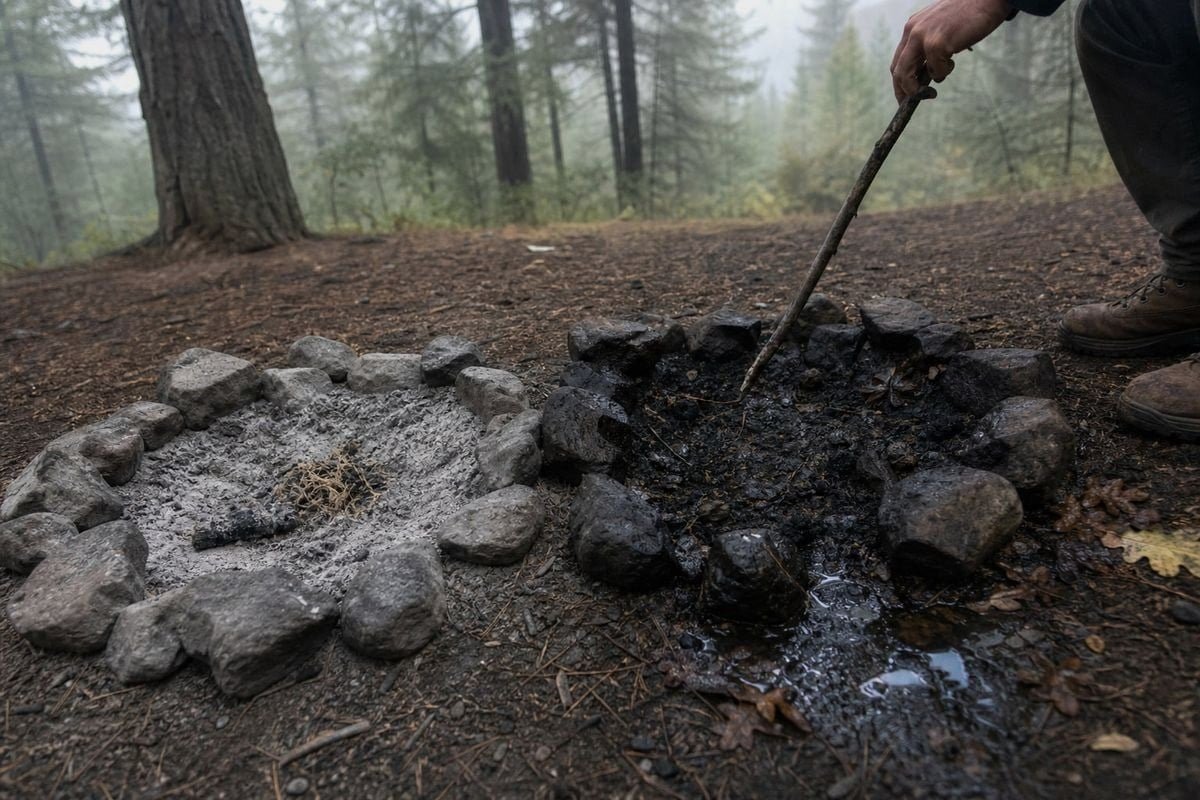
Buyers keep asking me whether wood fire starters leave eco-friendly residue at campsites. Their retail customers demand proof, refunds pile up without it, and our production line answers this daily.
Wood fire starters made from wood fiber, wood wool, and natural or food-grade waxes burn down to a small amount of inert ash that is generally safe for campsite soil and water. Petroleum-based starters, by contrast, can leave sticky residue and leach harmful compounds into the ground.
That short answer hides real nuance. The materials matter. The certifications matter. The disposal habits matter. Let me walk you through each layer, based on what we see on our factory floor and in third-party test labs.
How do I verify wood fire starters are truly safe for soil and water at campsites?
A few years back, a German distributor sent our wax-dipped wood rolls to an independent lab before signing. That order taught me exactly what verification looks like in practice.
Verify safety by checking three things: the full ingredient list (wood fiber plus natural or refined wax, no accelerants), independent lab test reports such as SGS or Intertek, and complete combustion behavior. Starters that burn fully to ash pose minimal risk to campsite soil and water.
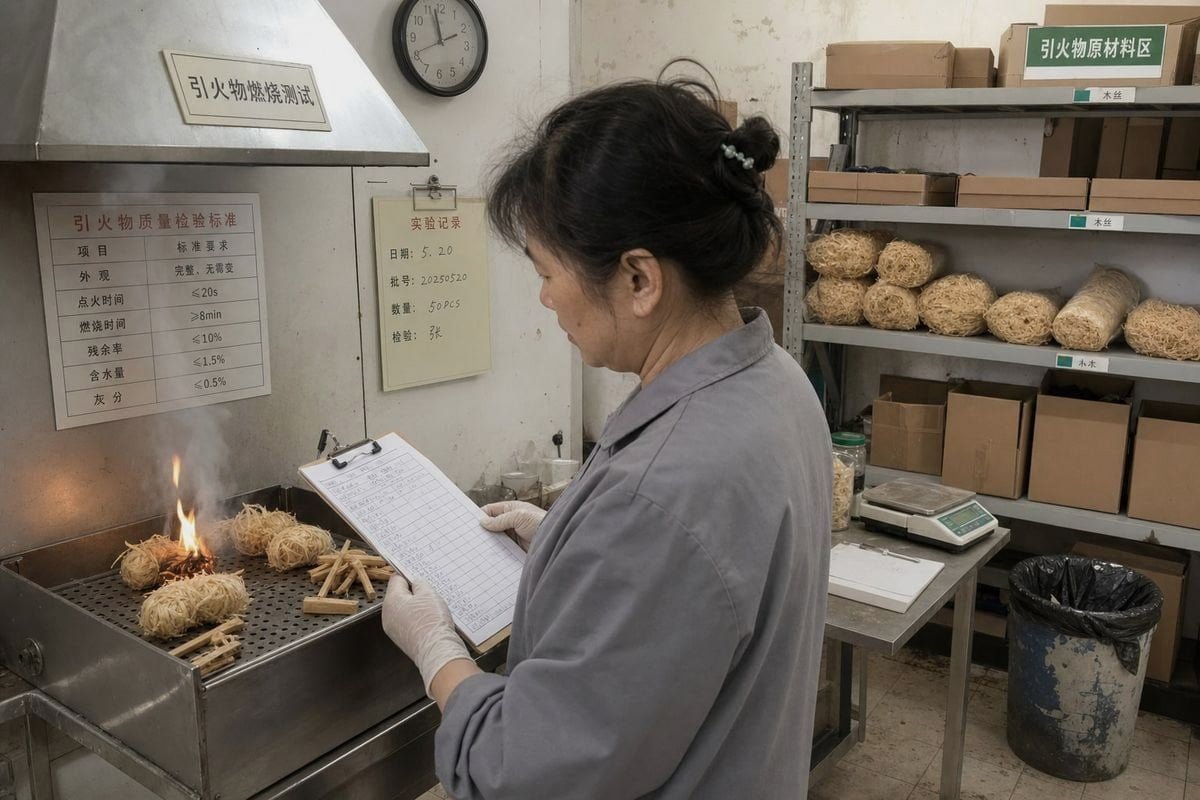
Verification is not complicated, but most buyers skip steps. In our 17+ years shipping fire-starting goods to 30+ countries, we have seen the same weak points again and again. So let me break the process into a workable checklist.
Start with the ingredient declaration
Ask your supplier for the exact composition. A trustworthy answer looks like "50% wood fiber, 50% wax" with the wax type named. A vague answer like "natural materials" is a red flag. You want to know whether the binder is paraffin, soy wax 1, beeswax, or vegetable oil, because that single detail drives most of the residue question. Petroleum distillates in cheap accelerant-soaked starters are the main culprit behind soil toxicity levels rising near heavily used fire rings.
Then confirm combustion completeness
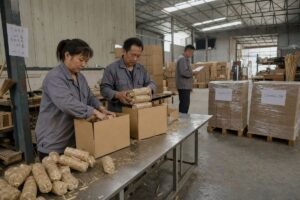
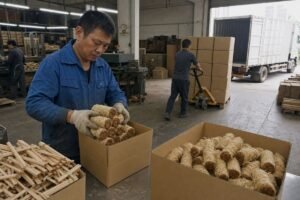
A well-made starter should ignite with one match and burn for roughly 8 to 20 minutes, consuming itself entirely. Incomplete combustion leaves unburned wax fragments, and even natural waxes can create localized soil hydrophobicity 2 — a water-repellent layer that blocks moisture infiltration. On our line, we control wax saturation batch by batch so the wood wool core wicks the wax fully into the flame.
Finally, assess disposal conditions
| Verification step | What to request | What it proves |
|---|---|---|
| Ingredient audit | Full material declaration | No hidden accelerants or petroleum distillates |
| Lab testing | SGS or Intertek report | Combustion byproducts and heavy metals 3 within limits |
| Burn test | Sample burn video or trial order | Complete combustion, minimal ash |
| Disposal guidance | Printed usage instructions | Alignment with Leave No Trace principles 4 |
Even the cleanest ash should be cooled, packed out, or dispersed away from streams. Residue safety is a chain: materials, combustion, and camper behavior all count.
What certifications should I request to confirm my fire starters are eco-friendly and non-toxic?
Compliance paperwork is the first thing serious purchasing managers request from us — often before pricing. In our export experience with the US, Germany, and the UK, missing documents kill deals faster than high quotes.
Request SGS or Intertek test reports covering combustion emissions and material safety, CE marking for the European market, ISO 9001 for consistent production quality, and BSCI for ethical sourcing. Together, these confirm the fire starters are non-toxic, eco-friendly, and manufactured under controlled conditions.

Certifications answer different questions, and buyers often confuse them. One document proves the product is safe. Another proves the factory can repeat that safety across ten thousand cartons. You need both, and here is why.
Product-level versus factory-level proof
A one-time SGS report tells you a specific sample passed. That is necessary but not sufficient. If the factory has no quality system, batch two may use a cheaper wax blend and the report becomes meaningless. This is why we hold ISO 9001 5 alongside our product test reports — the combination shows the first sample reliably reflects mass production. When a Dutch importer audited us, they checked our wax sourcing records against three separate production batches for exactly this reason.
What each certification actually covers
| Certification | Level | What it confirms for you |
|---|---|---|
| SGS / Intertek report | Product | No harmful chemicals, safe combustion byproducts, low volatile organic compounds |
| CE marking | Product | Meets EU safety requirements for market entry |
| ISO 9001 | Factory | Documented quality control, batch-to-batch consistency |
| BSCI | Factory | Audited social compliance and ethical production |
Questions to ask beyond the paperwork
Ask when each report was issued and whether it matches the exact formulation you are buying. Ask if the lab tested for heavy metals in the campfire ash composition. Ask whether the supplier will support retesting under your private label. In our case, we provide test reports as standard and re-test when a buyer customizes size, burn time, or wax blend — because an old report on a modified product protects nobody. Biodegradable fire starters deserve documentation that is just as current as the product itself.
Can I trust the wax and materials used in wood fire starters not to harm the environment?
The wax question is where I spend the most time educating new buyers. We weigh a real trade-off on every OEM project: wax type affects burn time, cost, and environmental profile all at once.
Yes, when the starter uses natural tinder materials like wood wool or sawdust bound with soy wax, beeswax, or fully refined food-grade wax. These burn cleanly to biodegradable ash. Untested industrial paraffin or accelerant-soaked starters are the ones that risk environmental harm.
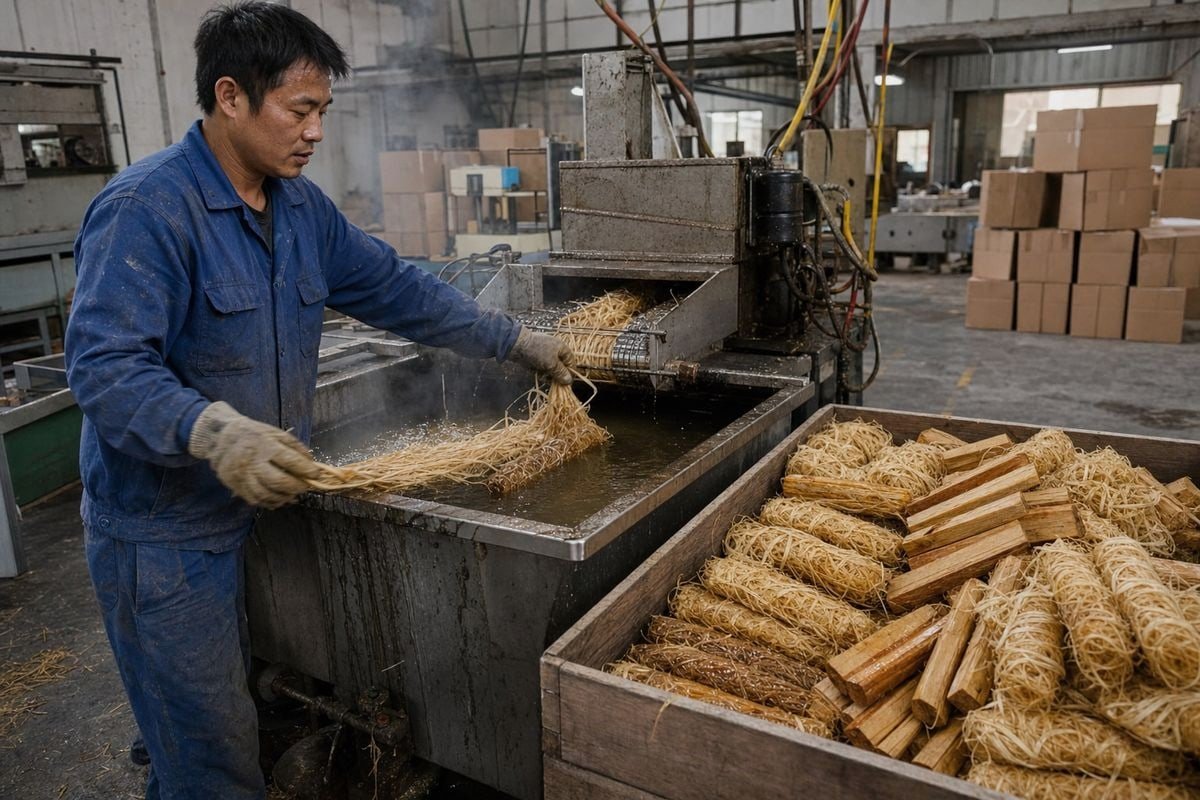
Trust starts with understanding what each material actually does in a flame. Let me compare the common options the way we do when developing a product for an outdoor brand.
How the main wax options compare
| Wax type | Source | Residue behavior | Environmental profile |
|---|---|---|---|
| Soy wax | Plant-based, renewable | Burns clean, minimal ash | Excellent; biodegradable |
| Beeswax | Natural, renewable | Very clean burn, pleasant scent | Excellent; fully natural |
| Refined paraffin (food-grade) | Petroleum-derived, purified | Clean burn when fully refined | Acceptable with test reports |
| Crude industrial paraffin | Petroleum distillates, unrefined | Sooty, sticky residue possible | Poor; avoid |
Notice that paraffin appears twice. This is the nuance most retail listings miss. Fully refined paraffin, the same grade used in food packaging 6, combusts cleanly and passes emissions testing. Crude paraffin does not. So "paraffin-free" is not automatically better — an untested soy blend can perform worse than a tested refined wax. That said, we see growing demand for paraffin wax alternatives in the EU market, and we formulate soy and beeswax versions for buyers who position their brands that way.
The wood component matters too
Wood wool, sawdust, and compressed fiber are all biodegradable. Two cautions apply. First, wood that is not kiln-dried can carry fungal spores or insect larvae 7 across borders, which is why phytosanitary handling matters in export. Second, fatwood resin — while natural — can leach into small stagnant water bodies in high concentrations and stress sensitive aquatic life. Wood wool and sawdust starters avoid that concern almost entirely, which is one reason they dominate our export volume.
Which testing or documentation proves my fire starters won't leave harmful residue after burning?
A lesson we learned early: one US buyer once asked us to prove a negative — that nothing harmful remained after burning. That request reshaped how we document residue behavior today.
Combustion emission testing, heavy-metal analysis of the ash, and material safety data sheets together prove residue safety. Independent labs like SGS or Intertek measure volatile organic compounds during burning and analyze leftover ash, confirming it contains no toxins that could cause groundwater contamination.
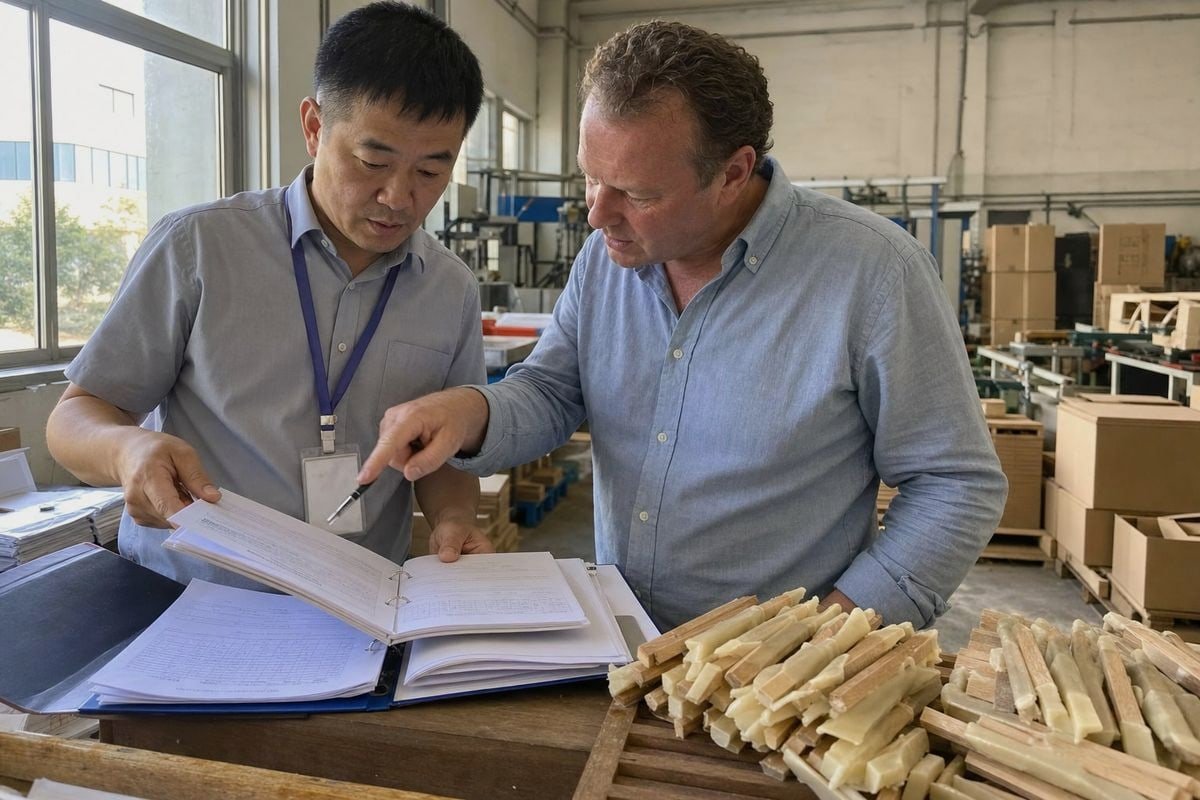
Documentation only works when you know what each test measures. Most product pages claim "no harmful residue" without a single data point behind it. Here is the document stack I recommend every importer build before placing a container order.
The four-document stack
- Material Safety Data Sheet (MSDS). This lists every ingredient and its hazard classification. It is your baseline — no MSDS, no deal.
- Combustion emission report. An accredited lab burns the product and measures smoke, particulates, and volatile organic compounds. Clean numbers here mean the flame itself deposits little onto surrounding vegetation and water.
- Ash analysis. The lab tests leftover ash for heavy metals and pH. Natural wood ash is mildly alkaline and mineral-rich, mostly potassium and calcium. That is generally benign, though concentrated ash dumping at high-traffic sites can spike soil pH locally — another reason disposal guidance belongs on your packaging.
- Biodegradability or composition statement. For starters marketed as compostable, this confirms the unburned material breaks down naturally.
What the documentation cannot replace
No lab report substitutes for field behavior. Even certified-clean ash should follow Leave No Trace principles: burn everything down completely, cool the ash, and scatter it widely away from water sources — or pack it out. We print this guidance on custom retail boxes for our OEM clients, because a compliant product paired with careless disposal still creates campsite complaints. Documentation proves the product is safe; instructions help the end user keep the campsite safe. Your brand needs both, and a supplier who understands the difference is worth keeping.
Conclusion
Residue claims without proof cost brands returns and trust. Verified materials, current certifications, and honest disposal guidance solve this — and that is exactly what we build into every batch.
Footnotes
1. Provides technical details on the production and properties of soy wax as a renewable resource. ↩︎
2. Explains the phenomenon of soil water repellency and its impact on hydrological processes. ↩︎
3. EPA resource on common contaminants, including heavy metals, found in soil and water. ↩︎
4. Official .gov source from the National Park Service detailing the seven core principles. ↩︎
5. Highly accessible and stable authoritative reference for the quality management standard. ↩︎
6. FDA overview of food packaging materials and safety regulations. ↩︎
7. USDA information on how insect larvae in wood can threaten forest health during transport. ↩︎

 English
  Spanish
  German
  French
  Arabic
  Portuguese
Join the Conversation