






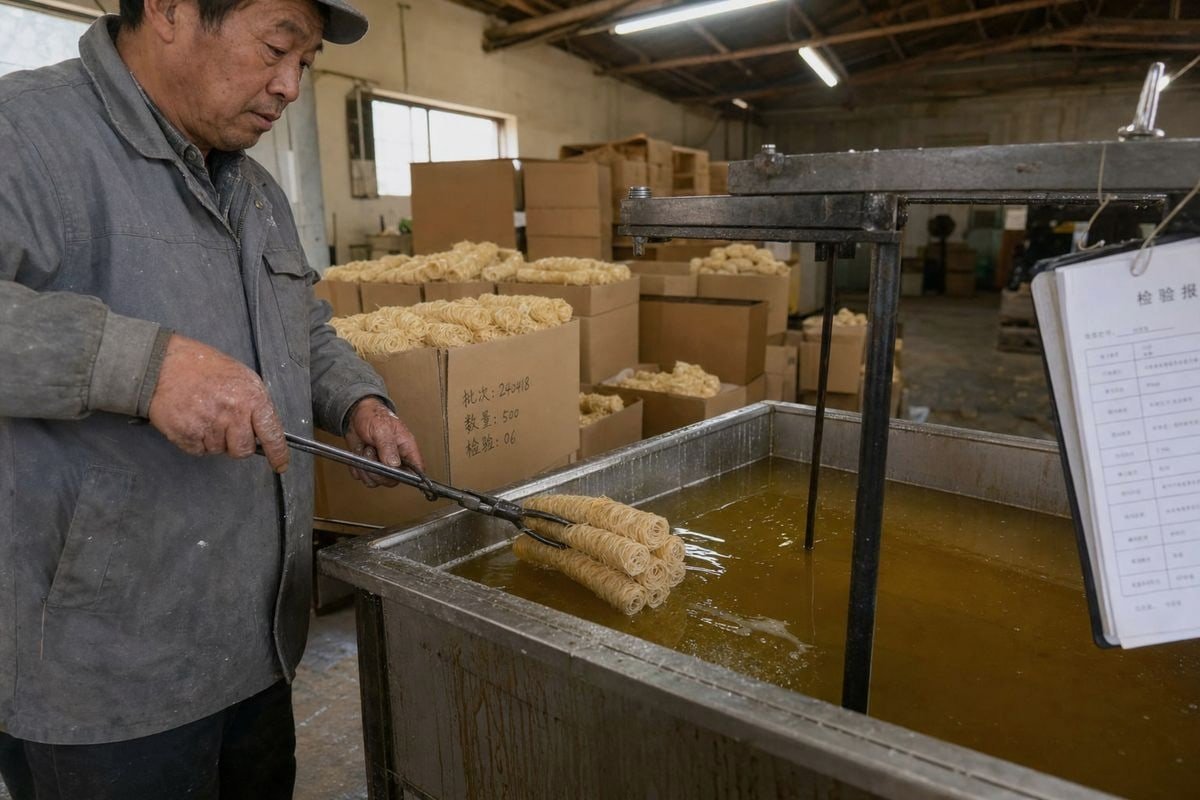
Sourcing paraffin-free wood fire starters for public outdoor areas nearly derailed one of our first big park-supply contracts. The buyer had been burned — literally and figuratively — by mislabeled "natural" starters that smoked black and smelled of petroleum near public grills. Complaints piled up, permits were questioned, and the whole program stalled. On our production line, we solved it by switching that client to natural wood wool rolls dipped in vegetable wax coating, backed by third-party test reports. That experience taught me exactly what buyers need to check before ordering.
To find paraffin-free wood fire starters for public outdoor areas, verify the wax source on the ingredient statement (soy, vegetable, or beeswax), request SGS or Intertek test reports, confirm ISO 9001 production controls, and choose FSC-aligned wood wool or shavings with low smoke emission and no petroleum content.
That sounds simple. In practice, labels lie, claims blur, and bulk orders raise the stakes. Below, I walk through certifications, chemical verification, customization, and quality control — the four questions every serious buyer should ask.
What certifications should I look for to confirm a wood fire starter is truly paraffin-free and safe for public use?
A German distributor once sent us a competitor's "eco" starter to analyze. The ingredient list said "natural wax." Our lab check found it was mostly paraffin. Labels alone prove nothing — certifications and test reports do.
Look for SGS or Intertek composition test reports confirming the wax type, ISO 9001 certification for consistent production, CE marking for the European market, BSCI for ethical manufacturing, and FSC-aligned sourcing for the wood fibers. A "natural" or "eco" label alone is not proof of a paraffin-free formula.

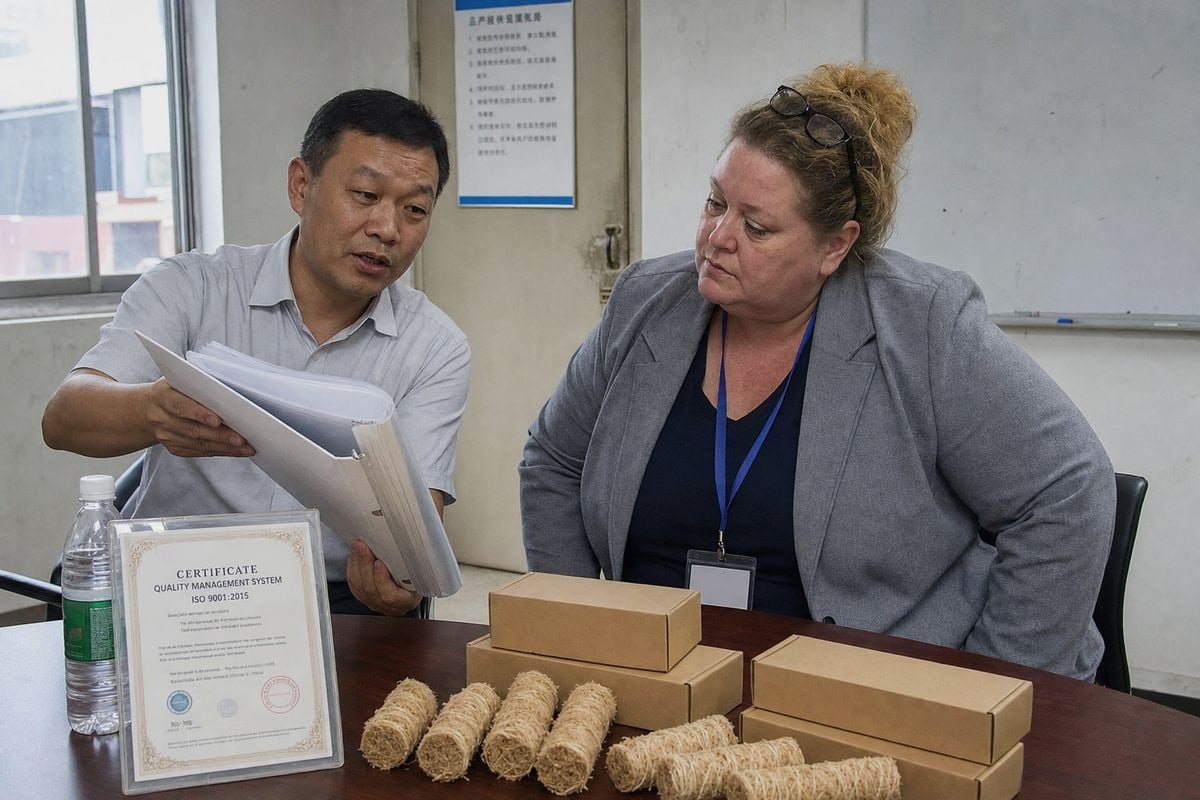
Certification is where I tell buyers to start, because it filters out most weak suppliers before you even discuss price. In our 17-plus years exporting fire-starting goods to the US, Germany, the UK, and 30-plus other markets, I have never seen a serious retail or municipal buyer accept a paraffin-free claim without paperwork behind it. Here is what each document actually tells you.
The core certifications and what they prove
| Certification / Report | What it verifies | Why it matters for public areas |
|---|---|---|
| SGS / Intertek test report | Actual wax composition and absence of harmful chemicals | Direct evidence the product is petroleum-free |
| ISO 9001 1 | Documented quality management system | The formula stays consistent batch after batch |
| CE marking | EU safety compliance for the product category | Required for European parks and retail channels |
| BSCI audit | Ethical, audited factory conditions | Protects your brand reputation in public procurement |
| FSC-aligned sourcing | Wood fibers from sustainable forestry products | Aligns with park and municipal sustainability policies |
A test report is the single most important item on that list. Certifications like ISO 9001 tell you the factory runs a controlled process. But only a lab analysis of the finished product confirms the vegetable wax coating is genuinely petroleum-free. When we onboard a new B2B client, we send current test reports with the first sample — before any money changes hands. If a supplier hesitates to do the same, treat that hesitation as your answer.
Also check the paperwork dates. A report from five years ago says little about today's production. Ask for documentation issued within the last 12 to 24 months, tied to the actual product SKU you plan to order, not a similar-looking one.
How can I verify a manufacturer's paraffin-free wax formula won't release harmful chemicals in parks or campgrounds?
There is a real trade-off we weigh in our formulation work: paraffin ignites cheaply and easily, but it produces soot and odor. Plant-based waxes cost more, yet burn cleaner. Verifying which one you are actually getting takes a method.
Request a full material safety data sheet, a combustion or emissions test report, and a written ingredient declaration naming the wax (soy, vegetable, or beeswax). Then burn a sample yourself: paraffin-free formulas produce low smoke emission, minimal soot, and no petroleum odor near food or people.
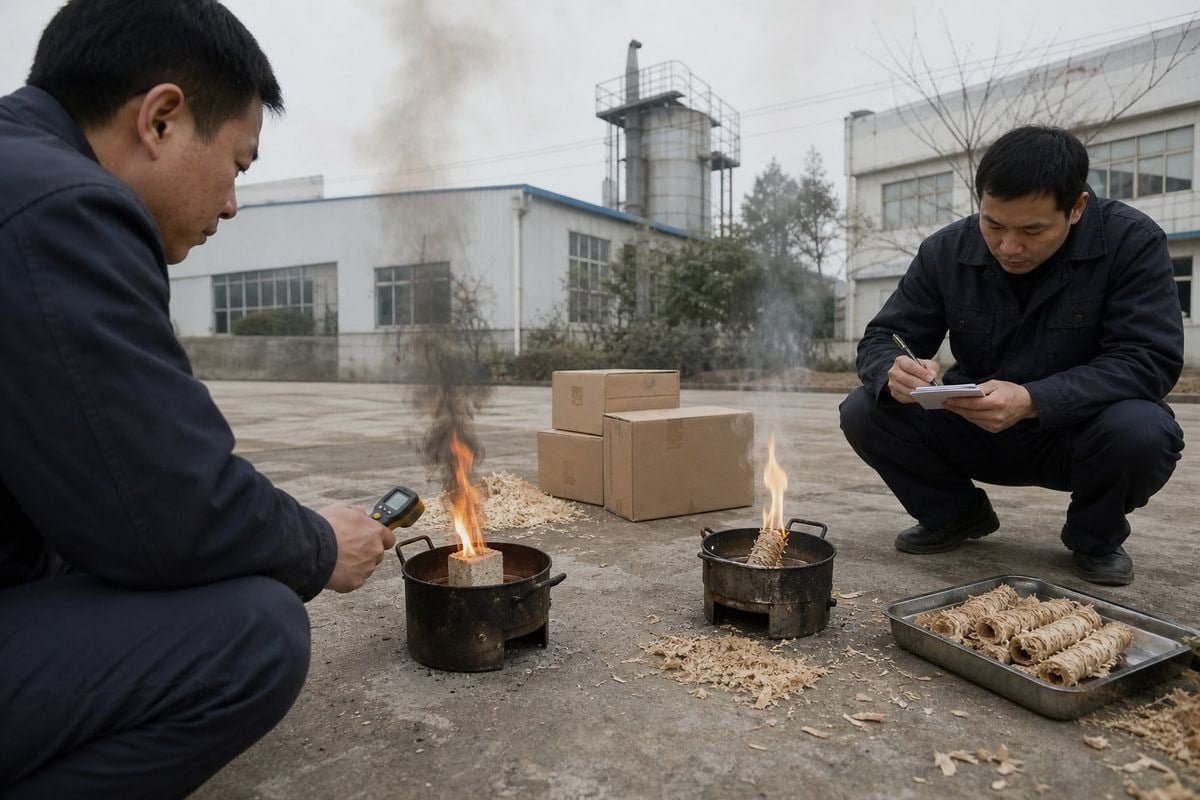
Paperwork comes first, but I always tell buyers to trust their own burn test too. When we developed our wax-dipped wood rolls, our engineers ran side-by-side burns against paraffin cubes in an open courtyard at the factory. The difference was obvious within a minute. The paraffin cubes released visible black smoke and a chemical smell. Our vegetable-wax rolls burned with a steady yellow flame and only faint wood aroma. You can replicate that comparison in ten minutes with samples from any supplier.
A practical five-step verification process
- Get the ingredient declaration in writing. It should name the exact wax: soy wax, vegetable wax, beeswax, or recycled plant-based wax — not vague terms like "wax blend."
- Request the safety data sheet. Check the composition section for any petroleum distillates 2 or paraffin hydrocarbons.
- Ask for an emissions or combustion test. This matters most for food-safe grill starters used near public BBQs, where residue can transfer to cooking surfaces.
- Run your own sample burn. Watch for black smoke, dripping residue, and odor. Non-toxic fire starters based on plant waxes leave almost no oily film.
- Check the binder and any wick material. For public watersheds, natural fibers like hemp or unbleached cotton avoid microplastic shedding 3; our torch cores use cotton, wood, or bamboo for the same reason.
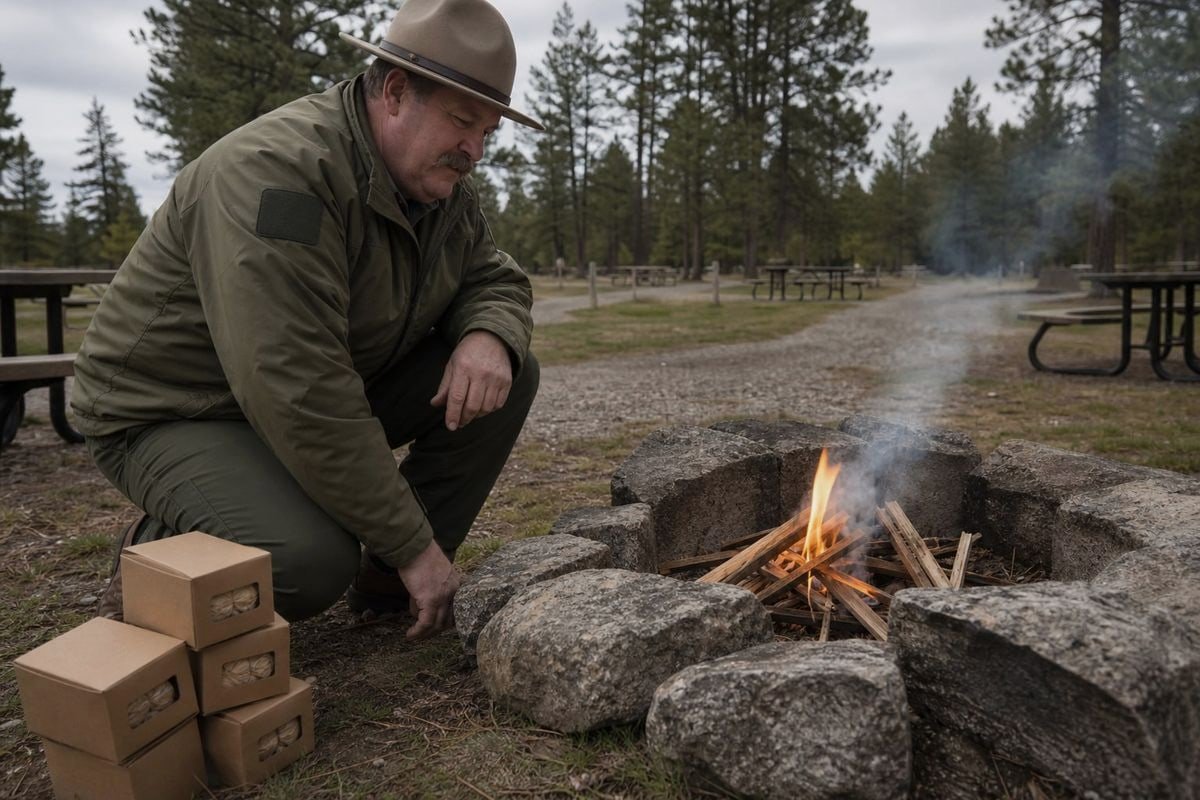
Public outdoor areas raise the bar further. Parks care about wildlife habituation 4, so unscented formulas are safer than aromatic ones. Seed-free wood wool prevents accidental introduction of invasive plants. And fully biodegradable fire starters support Leave No Trace 5 camping policies that many public land agencies now enforce. A supplier who understands these constraints — not just the chemistry — is the one you want long-term.
Can I request custom sizes, burn times, or private-label packaging for paraffin-free fire starters used in public spaces?
Last year, a Canadian camping brand asked us for a longer-burning starter for windy lakeside fire pits, packed in a retail display box with their logo. Six weeks later, they had shelf-ready product. That kind of request is routine for a real factory.
Yes. Established OEM/ODM factories can customize starter size, wax load, burn time (typically 8 to 20 minutes), roll diameter, and full private-label packaging — including branded boxes, display packaging, warning labels, and barcodes — usually with flexible MOQs for trial orders before scaling up.
Customization is where working with a genuine manufacturer, rather than a trading company, pays off. On our lines in Ningbo, burn time is not a fixed spec — it is an engineering variable. We adjust it by changing the wood wool density, the roll diameter, and how deeply the roll is dipped in vegetable wax. A small starter for backpacking stoves might target eight minutes. A starter for a public fire pit with damp logs might need fifteen or more. Both come off the same line with different settings.
What you can typically customize
| Element | Common options | Public-area consideration |
|---|---|---|
| Size and shape | Rolls, pucks, tumbleweed fire starters, mini sticks | Match the firebox: grills need compact pucks, fire pits need larger rolls |
| Burn time | Roughly 8–20 minutes via wax load and density | Longer burns help in wind and cold at exposed sites |
| Kit contents | Starters alone, or paired with fatwood kindling sticks | Kits simplify use for casual park visitors |
| Scent | Unscented (recommended) or lightly scented | Unscented avoids attracting wildlife on public lands |
| Packaging | Kraft bags, jars, retail boxes, bulk cartons | Display-ready boxes for retail; bulk packs for park operators |
| Branding | Private label, custom warning labels, barcodes | Compliance labeling required for US and EU retail channels |
Packaging deserves as much attention as the product. Public procurement buyers often need multilingual warning labels and disposal instructions. Retail buyers need barcodes, display cartons, and shelf-ready presentation. We build all of that into the same order, then optimize the carton dimensions for container loading 6 — a detail that quietly cuts freight cost per unit on transatlantic shipments.
One honest note: customization works best when you start with a trial order. A modest first run lets you validate burn performance in your actual climate before committing to full volume. Any confident factory will support that.
What should I ask a supplier about batch testing and quality control before placing a bulk order for public outdoor fire starters?
Early in my career, I learned a hard lesson: a beautiful first sample means nothing if batch fifty drifts. One inconsistent wax dip, and a starter that burned twelve minutes in your test burns six in the field. QC questions are how you prevent that.
Ask how each batch is tested for burn time, ignition reliability, wax composition, and moisture content; whether records are traceable by lot number; how often third-party audits occur; and whether the sample you approve is produced on the same line as mass production.
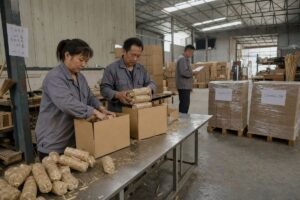
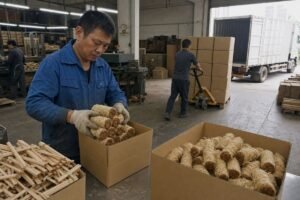
Quality control is the least glamorous part of sourcing and the most decisive. In our factory, every production lot of wood firestarters goes through the same sequence: incoming wood wool is checked for moisture and contamination, the wax bath temperature is logged, dipped rolls are weighed against the target wax load, and random samples from each batch are burn-tested for ignition speed and duration. Those records stay tied to the lot number. If a buyer in Poland or Australia ever raises a question, we can trace their exact shipment back to its production data.
Here are the questions I would put to any supplier, with the answers that should worry you.
| Question to ask | Good answer | Red flag |
|---|---|---|
| How do you test burn time per batch? | Random samples burn-tested and logged per lot | "We tested it once during development" |
| Is the wax verified petroleum-free per batch? | Wax supplier certificates plus periodic lab checks | No documentation on wax sourcing |
| Can I trace my order to a batch record? | Yes, lot numbers on cartons and records | No traceability system |
| Does the sample match mass production? | Same line, same materials, same process | Samples made in a separate "showroom" workshop |
| How is moisture controlled? | Humidity-controlled storage and moisture checks | No answer — damp wood wool ignites poorly |
| Are you third-party audited? | ISO 9001 and BSCI audits with current certificates | Expired or missing audit reports |
For public outdoor programs, add two more checks. First, ask about seed and debris screening in the wood fiber, since unburned organic matter can carry invasive species 7 into protected ecosystems. Second, confirm the finished product supports petroleum-free fire lighting with no accelerant residue, because park grills often double as food-contact surfaces 8. Eco-friendly firelighters only stay eco-friendly if the QC system holds every batch to the original spec.
Conclusion
Mislabeled starters can cost you permits, shelf space, and trust. Verify certifications, test the wax formula, customize for real conditions, and demand batch-level QC. We are ready to help you get there.
Footnotes
1. Explains the international quality management standard referenced for production consistency. ↩︎
2. General background on petroleum-derived compounds buyers must screen out of wax formulas. ↩︎
3. Replaced 404 with the EPA's primary hub for microplastics research. ↩︎
4. Background on the behavioral concept explaining why unscented formulas matter in parks. ↩︎
5. Replaced with a stable National Park Service guide to the 7 principles. ↩︎
6. Background on shipping containerization referenced for optimizing freight cost per unit. ↩︎
7. Updated to an active EPA resource covering invasive and non-native species. ↩︎
8. FDA guidance on food-contact safety relevant to grill starters used near cooking surfaces. ↩︎

 English
  Spanish
  German
  French
  Arabic
  Portuguese
Join the Conversation