






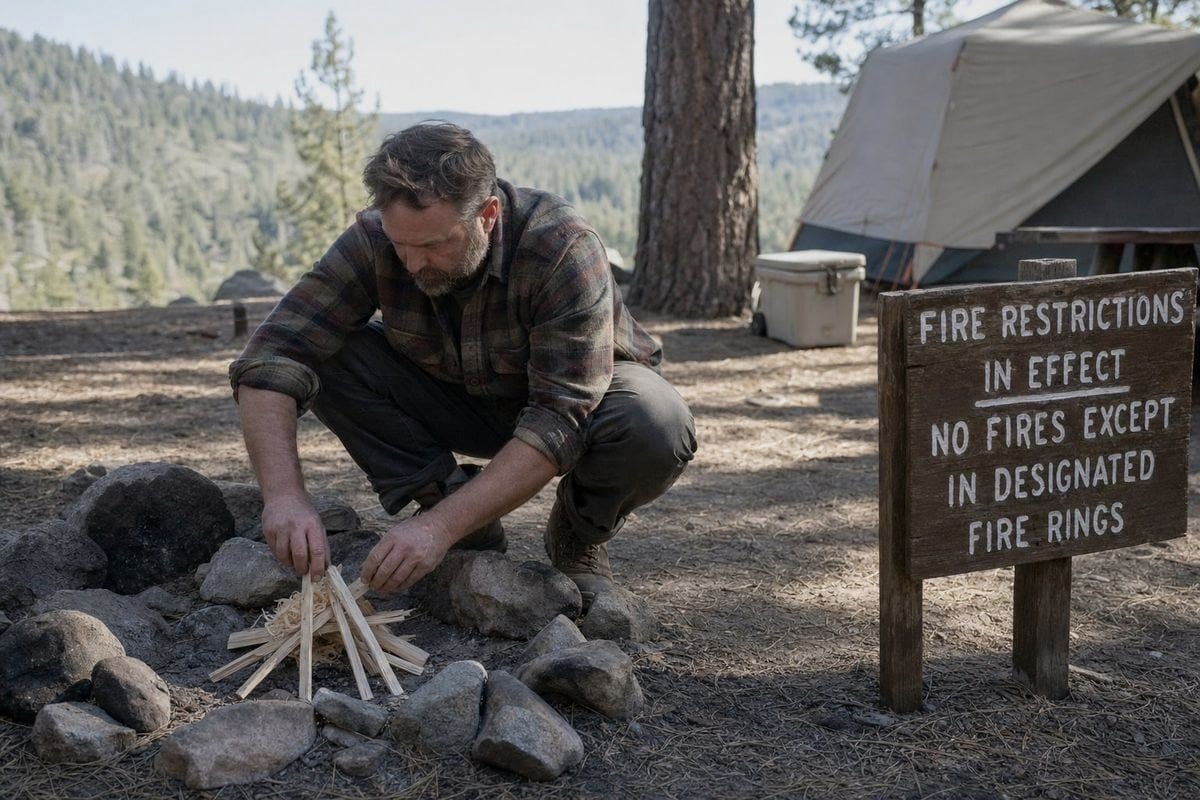
Wood fire starters seem simple, but selling them into park retail channels can turn into a compliance headache fast. Our export team learned this firsthand when a U.S. distributor returned an entire order because the product lacked documentation that matched NPS fire regulations at the point of sale.
Wood fire starters meet North American national park safety regulations when they are non-toxic, free of liquid accelerants, compliant with USDA heat-treatment standards for invasive species prevention, used only in designated fire rings under current park fire rules, and backed by verifiable test reports and certifications such as ISO 9001 and CE.
The regulations are not one-size-fits-all. Park rules vary by location, season, elevation, and daily fire danger levels. This article breaks down the certifications, testing, and documentation a B2B buyer needs to confidently import and sell wood fire starters into the U.S. and Canadian market.
What certifications should I request to confirm compliance with National Park Service fire regulations?
A buyer we work with in Colorado once asked us for "the NPS certification" for fire starters. The truth is, there is no single NPS stamp of approval for fire-starting products. Compliance is built from multiple certifications and park-specific rules.
Request ISO 9001 quality management certification, CE safety marks, SGS or Intertek test reports for combustion safety and toxicity, and USDA-compliant heat-treatment documentation to confirm your wood fire starters align with National Park Service fire regulations and vendor requirements.

Why There Is No Single "NPS Certification"
The National Park Service does not certify fire-starting products directly. Instead, each park superintendent 1 sets fire rules for that specific park. Those rules control where fires are allowed, what fuels are permitted, and whether any fire is legal on a given day. A fire starter that is perfectly fine at one park may be prohibited at another during Stage 1 fire restrictions or a parkwide burn ban.
What the NPS does regulate is the fire context. Fires must occur in designated fire rings 2 or approved receptacles. Liquid accelerants like gasoline are explicitly banned. Some parks, like Olympic National Park, go further and prohibit synthetic materials, plastics, and aerosol canisters as ignition aids. This means your wood fire starters must be made from natural or approved processed materials, with no harmful chemical additives.
Certifications That Build a Compliance Case
Since no single certificate exists, smart buyers assemble a compliance package. Here is what we typically provide from our production facility:
| Certification / Document | What It Covers | Why It Matters for Parks |
|---|---|---|
| ISO 9001 | Quality management system | Proves consistent manufacturing processes |
| CE Mark | European safety conformity | Recognized globally as a baseline safety standard |
| SGS / Intertek Test Report | Combustion behavior, toxic emissions, material composition | Confirms non-toxic fire starters with safe burn characteristics |
| USDA Heat-Treatment Compliance | Wood processed at 140°F for 60 minutes minimum | Addresses invasive species 3 prevention (e.g., Emerald Ash Borer) |
| MSDS / SDS Sheet | Material safety data | Required by many park vendors and retail chains |
| BSCI Audit Report | Social compliance | Needed by large retail sourcing channels |
The "Buy It Where You Burn It" Factor
Many parks enforce strict rules about moving firewood. USDA certified firewood must be heat-treated or kiln-dried to prevent the spread of invasive species like the Emerald Ash Borer. Raw firewood often cannot travel more than 10 to 50 miles. However, processed wood fire starters — compressed sawdust and wax products manufactured at high temperatures — frequently bypass raw firewood bans because the manufacturing process itself eliminates pest risks. Our production line uses heat-treated wood products as the base material, which simplifies this compliance step for our buyers.
How can I verify a supplier's wood fire starters meet ISO 9001 and CE safety standards?
Last year, a European distributor told me they had been burned — not by fire, but by a supplier who presented borrowed certificates. The ISO 9001 logo was on the packaging, but the actual certificate belonged to a different factory. Verification matters.
Verify a supplier's ISO 9001 and CE compliance by requesting the original certificate with the factory's legal name and address, cross-checking the certificate number on the issuing body's online database, and asking for the most recent audit report or surveillance audit summary.
Step-by-Step Verification Process
Start with the certificate itself. An authentic ISO 9001 certificate 4 will show the factory's registered legal name, the scope of certification (it should cover fire-starting product manufacturing), the certifying body's name and accreditation mark, an expiration date, and a unique certificate number. Our certificate, for example, covers our production lines in both Liuyang and Ningbo.
Next, go to the certifying body's website and enter the certificate number. Reputable registrars like TÜV, SGS, Bureau Veritas, and Intertek all maintain public databases. If the number does not appear, or the scope does not match, that is a red flag.
For CE marking, the process is slightly different. CE is a self-declaration in many product categories, but responsible manufacturers back it with third-party test reports. Ask for the Declaration of Conformity 5 document and the test report that supports it. The test report should come from an accredited lab and reference applicable EN standards for combustion products.
What to Look For in an Audit Report
| Verification Point | What to Check | Red Flag |
|---|---|---|
| Factory legal name | Must match the certificate exactly | Name mismatch or trading company name |
| Scope of certification | Should include fire starters or combustion products | Scope covers unrelated product categories |
| Certifying body accreditation | Check IAF or national accreditation body databases | Unknown or unaccredited registrar |
| Surveillance audit date | Should be within the last 12 months | No recent surveillance audit on file |
| CE Declaration of Conformity | Signed by manufacturer, references specific product line | Generic or unsigned declaration |
| Supporting test report | From accredited lab (ISO 17025) | No test report or self-tested only |
Beyond the Certificate: Factory Capability
Certificates confirm systems, not necessarily product quality. When we host buyer visits at our Ningbo facility, we walk them through the actual production line. They see the raw material intake, the wax-dipping stations, the compression process, and the packaging area. That physical reality check is something no PDF can replace. If you cannot visit, request a video walkthrough or a virtual audit. A factory with genuine manufacturing depth — like 17 years of production experience — will not hesitate to show its processes.
What test reports do I need before importing wood fire starters into the US or Canadian market?
One trade-off we weigh constantly is how many test reports to run versus what the destination market actually requires. Over-testing wastes money. Under-testing risks a customs hold or a rejected shipment. The key is knowing exactly which reports your market demands.
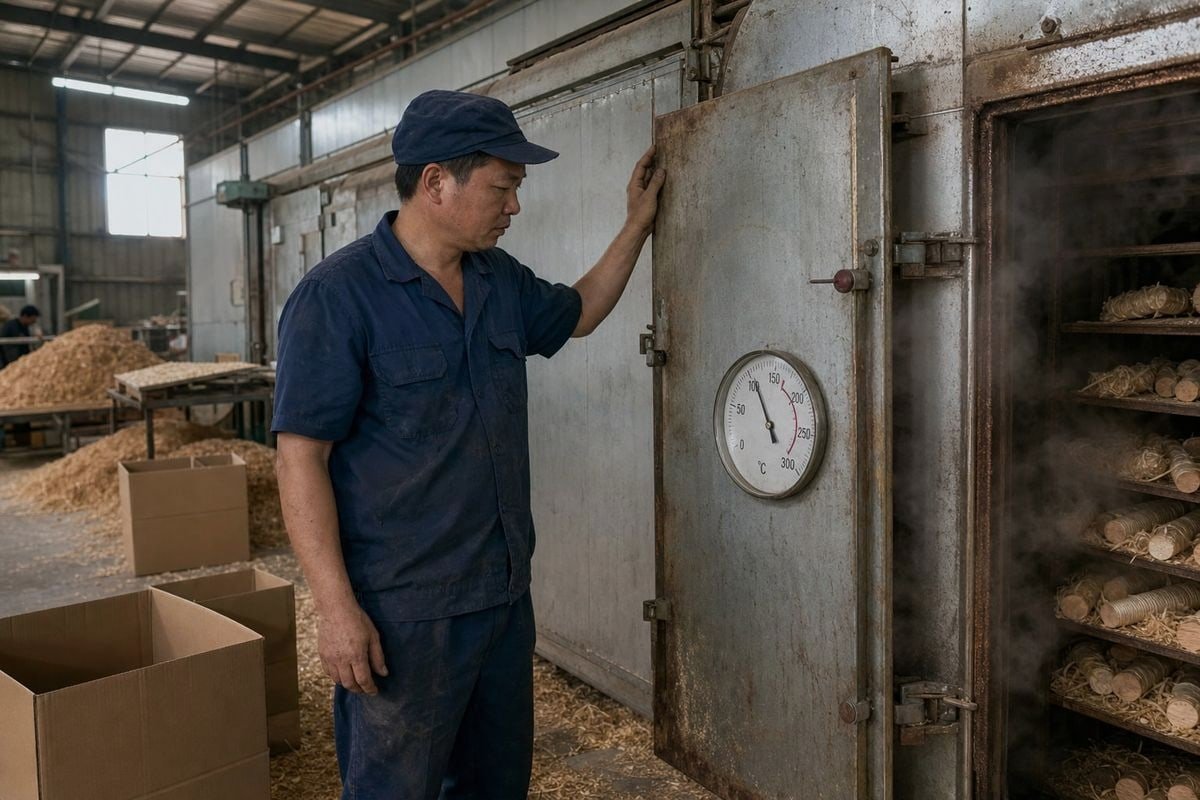
Before importing wood fire starters, you need combustion safety test reports, toxic emissions analysis (volatile organic compounds and PM2.5 particulates), material composition verification, USDA-compliant phytosanitary documentation for wood products, and ASTM or CSA standard compliance reports relevant to your product category.
U.S. vs. Canadian Import Requirements
The United States and Canada share some regulatory frameworks 6 but diverge in others. In the U.S., the Consumer Product Safety Commission 7 oversees general product safety. Wood products crossing the border also face USDA APHIS inspection for pest risk. In Canada, the Canadian Food Inspection Agency handles phytosanitary requirements, and products sold in Canadian national parks must comply with Parks Canada's fire regulations, which restrict fires to superintendent-provided fireplaces or permitted devices.
Here is a comparison of the core documentation needs:
| Requirement | United States | Canada |
|---|---|---|
| Combustion safety testing | ASTM-based or equivalent | CSA or equivalent |
| Toxic emissions / air quality | EPA guidelines; PM2.5 compliance in Smoke Sensitive Areas 8 | Environment and Climate Change Canada standards |
| Wood pest treatment | USDA APHIS / ISPM-15 heat treatment | CFIA phytosanitary certificate |
| Material composition | SDS / MSDS required | SDS / MSDS required |
| Fire restriction awareness | Park-specific, NPS superintendent rules | Parks Canada Fire Protection Regulations |
| Labeling requirements | English; state-specific warnings (e.g., California Prop 65) | Bilingual English / French |
| Retail compliance | Varies by retailer (UPC, shelf-ready packaging) | Varies by retailer |
Combustion and Emissions Testing
For wood fire starters destined for park retail or outdoor supply chains, combustion testing verifies ignition temperature, burn time, flame height, and whether the product produces dangerous flare-ups. This is especially important because NPS guidelines and Forest Service safety standards explicitly prohibit accelerants. Your test report must show that the product burns in a controlled, predictable manner — not like a liquid accelerant.
Emissions testing addresses a growing concern: air quality in national parks. Many parks, especially in the western U.S., are designated Smoke Sensitive Areas with strict PM2.5 particulate standards. Wood fire starters that produce excessive smoke or particulates can face restrictions. Our products use a 50/50 blend of wood fiber and paraffin, which burns cleaner than raw wood kindling. We have SGS test data confirming low particulate output, which helps our buyers position the product for backcountry campfire safety channels.
BTU Output and Over-Firing Risk
An often-overlooked test is BTU output. Some national park lodges and yurts have wood stoves with specific heat limits. A fire starter with excessive BTU output can over-fire a small stove, risking chimney fires. If your market includes park cabin or yurt suppliers, request a BTU output test and compare it against the stove manufacturer's guidelines.
Leave No Trace and Bio-Based Binder Trends
The outdoor industry is shifting toward Leave No Trace principles 9. Backcountry zones increasingly prefer non-toxic fire starters with bio-based binders like soy wax or beeswax instead of petroleum-based paraffin. While paraffin-based starters are still widely accepted, having test data for bio-based alternatives gives you a competitive edge. Our R&D team has developed formulations using both binder types, and we can provide separate test reports for each, which helps buyers target different segments of the market.
Can Sunrich provide batch-to-batch quality documentation for regulatory audits and park vendor approvals?
When a major U.S. outdoor retailer asked about our quality tracking, they did not just want a certificate on the wall. They wanted to see the paper trail from raw material intake to the finished carton on the pallet. That level of traceability is what separates a reliable manufacturing partner from a one-time supplier.
Yes, Sunrich provides complete batch-to-batch quality documentation including raw material certificates, in-process inspection records, finished product test reports, and lot-traceable packaging data — all formatted for regulatory audits, park vendor approval processes, and retail compliance reviews.

What Our Batch Documentation Includes
Every production run at our facility generates a documentation package. This is not a formality. It is part of our ISO 9001 quality management system. Each batch file contains the raw material source and lot number, the production date and line, in-process quality checks (moisture content, weight tolerance, dimensional consistency), wax penetration depth for our wax-dipped wood rolls, burn time verification on random samples, and final packaging inspection records.
For buyers who sell into national park retail channels or supply wildfire prevention protocols-focused agencies, this documentation is essential. Park vendors often face audits from the park concessioner or the NPS itself. Having traceable, organized quality records makes those audits straightforward.
How We Handle Regulatory Audits
Over 17 years, we have supported audits from multiple angles. BSCI social compliance audits examine working conditions and ethical practices. ISO 9001 surveillance audits verify our quality system. Buyer-initiated factory audits focus on product-specific concerns. In every case, the batch documentation we maintain allows us to trace any finished product back to its raw materials within hours.
OEM/ODM and Private-Label Documentation
Many of our buyers sell under their own brand. For private-label orders, we extend our documentation to include custom packaging specifications, print proofs, barcode assignments, and warning label compliance records. If your product will be sold as fatwood fire starters or marketed for designated fire rings use in national parks, we ensure the packaging language aligns with your target market's regulatory expectations — including bilingual English and French labeling for Canadian distribution.
Trial Orders and Sample Consistency
A concern we hear from new buyers is whether the production sample will match the bulk order. Because our quality system tracks every variable from the first sample run through mass production, we can guarantee consistency. We often ship a pre-production sample set alongside the batch documentation so buyers can compare. This is especially important when the buyer needs to submit product samples for park vendor approval before committing to inventory.
Conclusion
Wood fire starters meet North American national park safety regulations through layered compliance — correct certifications, verified test reports, and batch-traceable quality documentation. We help buyers navigate every step, from production to park-ready shelves.
`
Footnotes
1. Official National Park Service page detailing fire management policies and the role of park superintendents. ↩︎
2. National Park Service safety guide for campfires and the use of designated fire rings. ↩︎
3. USDA resource explaining the impact of the Emerald Ash Borer on wood movement regulations. ↩︎
4. Reliable Wikipedia overview of the ISO 9001 quality management standard. ↩︎
5. Encyclopedic entry explaining the CE marking process and the Declaration of Conformity requirement. ↩︎
6. Canadian government site outlining trade controls and regulatory frameworks for international commerce. ↩︎
7. Official government directory page for the U.S. Consumer Product Safety Commission. ↩︎
8. EPA overview of particulate matter pollution and its impact on air quality standards. ↩︎
9. Official National Park Service guide to the seven Leave No Trace principles. ↩︎



 English
  Spanish
  German
  French
  Arabic
  Portuguese
Join the Conversation