






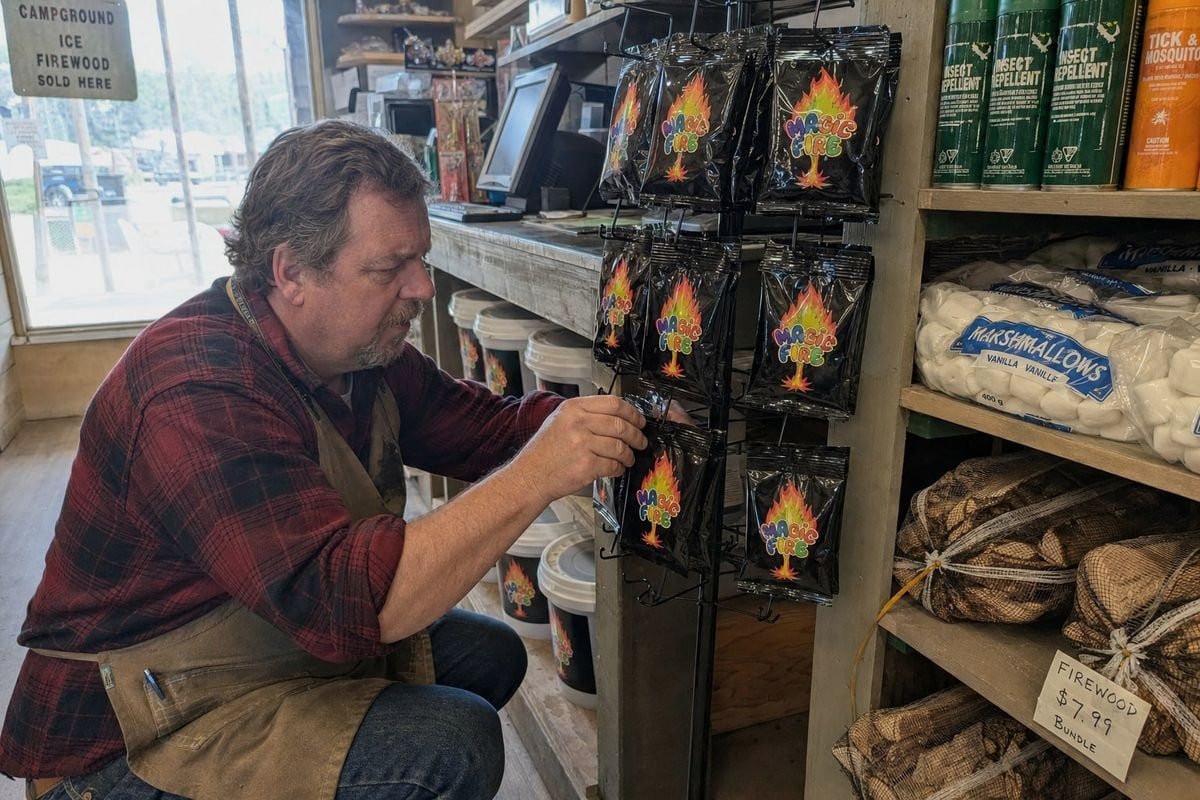
Magic Fire Powder packaging sizes make or break sell-through in tiny stores. On our production line, we've watched oversized tubs stall while compact sachets fly off cramped campground shelves.
For limited-shelf retailers like campground stores, the best Magic Fire Powder packaging is a 20–25 g single-use sachet, ideally sold through a 25-unit countertop display box. Smaller 10–15 g trial packets and small multi-packs work next; 50 g+ pouches suit larger stores or online channels.
Shelf space is the real constraint here, not price per gram. In this guide, I'll break down which packet sizes earn their spot, how to sample before committing, how sizing affects MOQ and pricing, and which materials keep the product compliant and shelf-ready.
What packet sizes work best for compact campground store shelves?
A buyer from a Canadian camping distributor once told me his stores had exactly one clip strip and half a counter to spare. That conversation reshaped how we design our color-flame packet lineup for tight retail spaces.
The 20–25 g single-use sachet is the best packet size for compact campground shelves. It fits pegs, clip strips, and counter bins, drives impulse purchases, and matches how campers actually use the product — one memorable colored fire per packet, with no leftover storage problem.
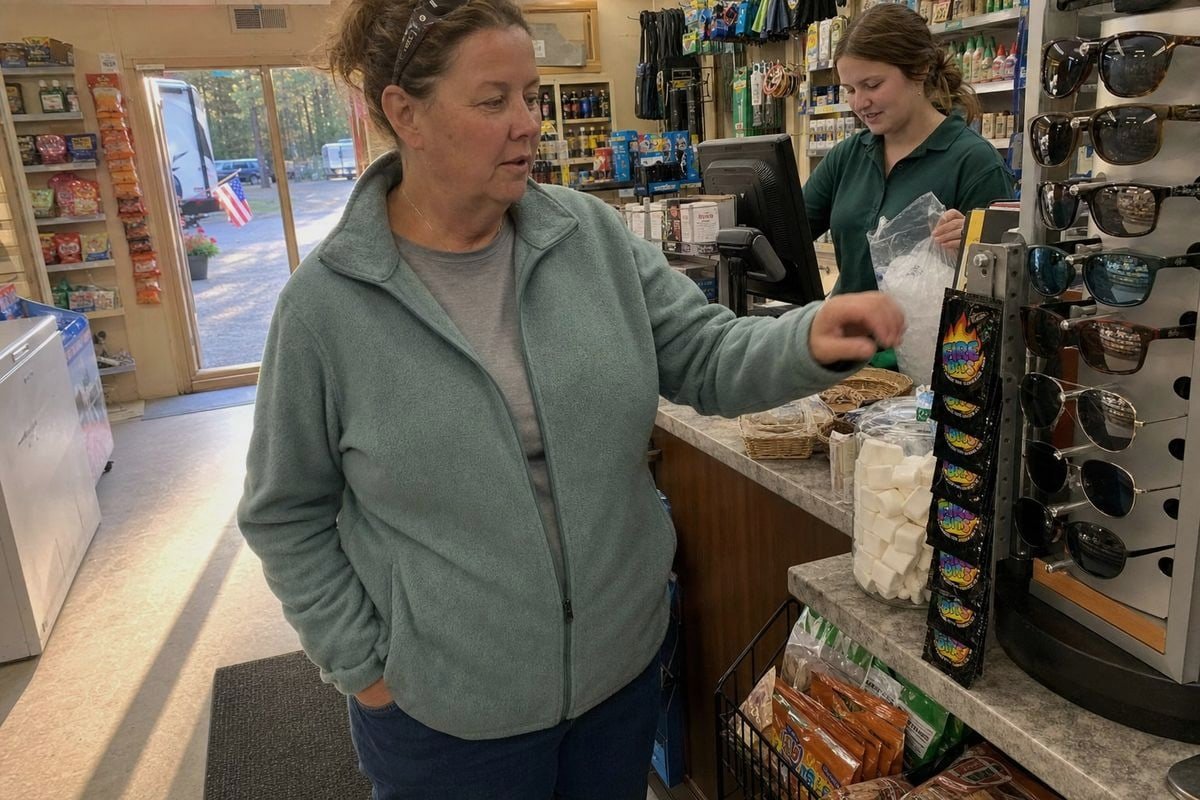
Campground convenience store supplies live or die by turnover per square inch. A camper walks in for ice and marshmallows, sees rainbow flame powder at the register, and adds it to the basket. That impulse moment only happens if the packet is small, visible, and cheap enough to grab without thinking.
The size ladder for limited-shelf retail
Here is how we advise buyers to think about the size range:
| Packet Size | Melhor Uso | Retail Fit for Campgrounds |
|---|---|---|
| 10–15 g | Trial size, checkout add-on | Excellent — ultra-compact, lowest price point |
| 20–25 g | Standard single-use packet | Best overall — the sweet spot |
| 50 g | Premium add-on, one full fire | Acceptable for larger camp shops |
| 150 g pouch | Multi-evening use | Marginal — takes real shelf depth |
| 500 g jar/tub | Seasonal or group campers | Poor fit — reserve for online or destination stores |
The physical footprint matters as much as the gram weight. A typical 25 g sachet measures around 105 × 60 × 10 mm — thin enough to front-face a dozen units in a strip barely wider than a hand. Compare that to a 500 g tub, which occupies the same space as six to eight sachets while serving a much narrower buyer: the planned purchaser, not the impulse shopper.
There is a counterargument worth addressing. Some retailers push for larger sizes because a bigger pack raises perceived value and margin per transaction. That logic works in outdoor superstores and gift shops with deep shelves. But in a campground store, shelf space is the binding constraint. A slow-moving 150 g pouch ties up space that could turn over five sachets in the same week. When we build assortments with our distribution partners, the compact single-use format almost always wins the campground channel.
Can I get sample packaging before committing to a bulk order?
Before any container leaves our Ningbo facility, we push buyers to hold the actual packet in their hands first. Photos flatten everything — foil gloss, seal texture, and print sharpness only reveal themselves physically.
Yes. Reputable factories provide pre-production samples of packaging and product before bulk orders. Expect stock samples within days and custom private-label samples in one to three weeks. Sample costs are usually modest and often credited back against your first production order.

Sampling is not a courtesy step. It is your quality-control checkpoint before real money moves. In our 17+ years of exporting color-changing fire packets to 30+ countries, the buyers who sample thoroughly almost never face surprises at the container stage. The buyers who skip it sometimes do.
What a proper sampling process looks like
- Request stock samples first. These show base material quality — the foil sachet, the kraft bag, the jar — and the powder itself. You can burn-test the product and check the colored-flame effect with your own eyes.
- Move to custom samples. If you want marca própria 1, request a printed sample with your artwork, barcode placement, and etiquetas de advertência 2. This is where you verify print registration and color accuracy.
- Check the display packaging. Ask for a sample of the countertop display box, not just the sachet. A display-ready carton that arrives dented or flimsy will look worse after ocean freight.
- Confirm the sample reflects mass production. This is the question most buyers forget. Because we run complete in-house production lines with controle de qualidade lote a lote 3, our first sample reliably matches what ships in the container. With trading companies, that link can break — the sample comes from one factory and the bulk order from another.
Also test practical details during sampling: does the sachet hang on a standard peg? Does the seal survive being tossed in a backpack? Does the powder stay dry after a week in a humid room? A ten-dollar sample answers questions a ten-thousand-dollar order cannot afford to ask.
How do smaller pack sizes affect pricing and MOQ requirements?
The trade-off we weigh most often in quoting is simple: smaller packs mean more sealing, more printing, and more labor per gram — but they also unlock smaller, safer trial orders for the buyer.
Smaller packs carry a higher cost per gram due to added material and sealing labor, but they lower the total order value needed to hit MOQ. A trial order of 25 g sachets typically requires far less capital than the same MOQ in bulk tubs, reducing buyer risk.
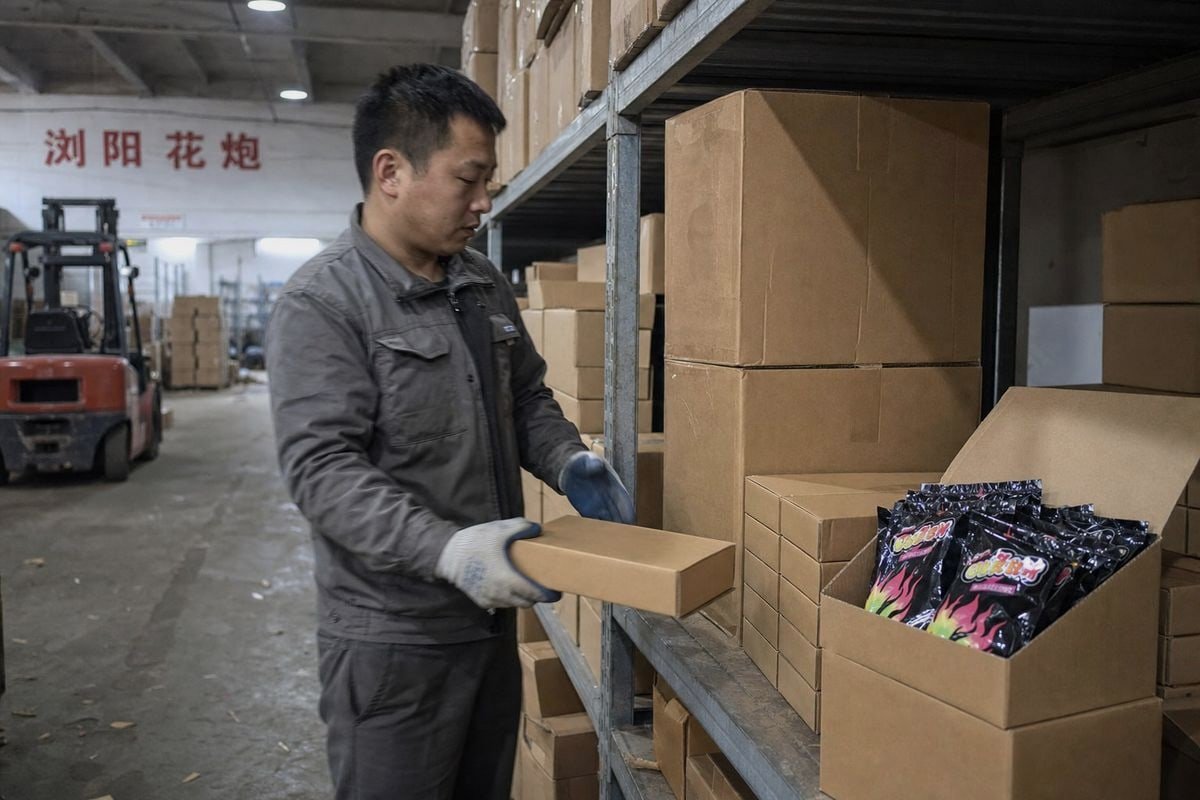
Purchasing managers often assume small packaging means punishing unit economics. The reality is more nuanced. Yes, packaging film, printing, and heat-sealing are fixed costs per unit, so a 10 g sachet costs proportionally more per gram than a 500 g jar. But retail pricing absorbs this easily. A single-use sachet sells at an impulse-friendly price point with a healthy percentage margin, while a large tub demands a bigger sticker price that many campground shoppers simply refuse.
How the economics compare
| Fator | Small Sachets (10–25 g) | Multi-Packs (e.g., 8 × 10 g) | Bulk Formats (150–500 g) |
|---|---|---|---|
| Custo por grama | Mais alto | 1 x 20 pés, vários produtos | Mais baixo |
| Retail margin % | Forte | Forte | Moderado |
| MOQ capital needed | Baixo | 1 x 20 pés, vários produtos | Maior |
| Risco de estoque parado | Baixo | 1 x 20 pés, vários produtos | 1 x 20 pés ou 40 pés |
| Fit for impulse buy items | Excelente | Bom | Ruim |
MOQ flexibility for trial orders
We deliberately keep MOQs flexible for first orders because we would rather earn a long-term partner than a single large purchase. A typical approach for wholesale fire colorants: start with a modest case quantity of sachets in display cartons, test sell-through across one season, then scale. A common case structure — around 25 units per display and multiple displays per case — lets a small chain seed a dozen locations without warehousing risk.
One more point on assortment math. Multi-packs, such as an 8 × 10 g bundle, sit between the extremes. They raise basket size for families planning several fires over a weekend stay, while each unit stays compact. For most campground programs, we recommend one entry-size sachet plus one multi-pack, and skipping oversized tubs unless the store has proven high-turnover retail products in the fire pit accessories category.
What packaging materials keep Magic Fire Powder compliant and shelf-ready?
Early in our export history, a shipment headed to a humid coastal market taught us a hard lesson about moisture barriers — and pushed us to upgrade every sachet spec we run today.
Compliant, shelf-ready Magic Fire Powder packaging uses high-barrier moisture-proof foil sachets with clear safety warnings, packed in display-ready cartons. Kraft paper outer pouches add rustic shelf appeal, while CE marking, SGS/Intertek test reports, and proper warning labels satisfy US and EU retail requirements.
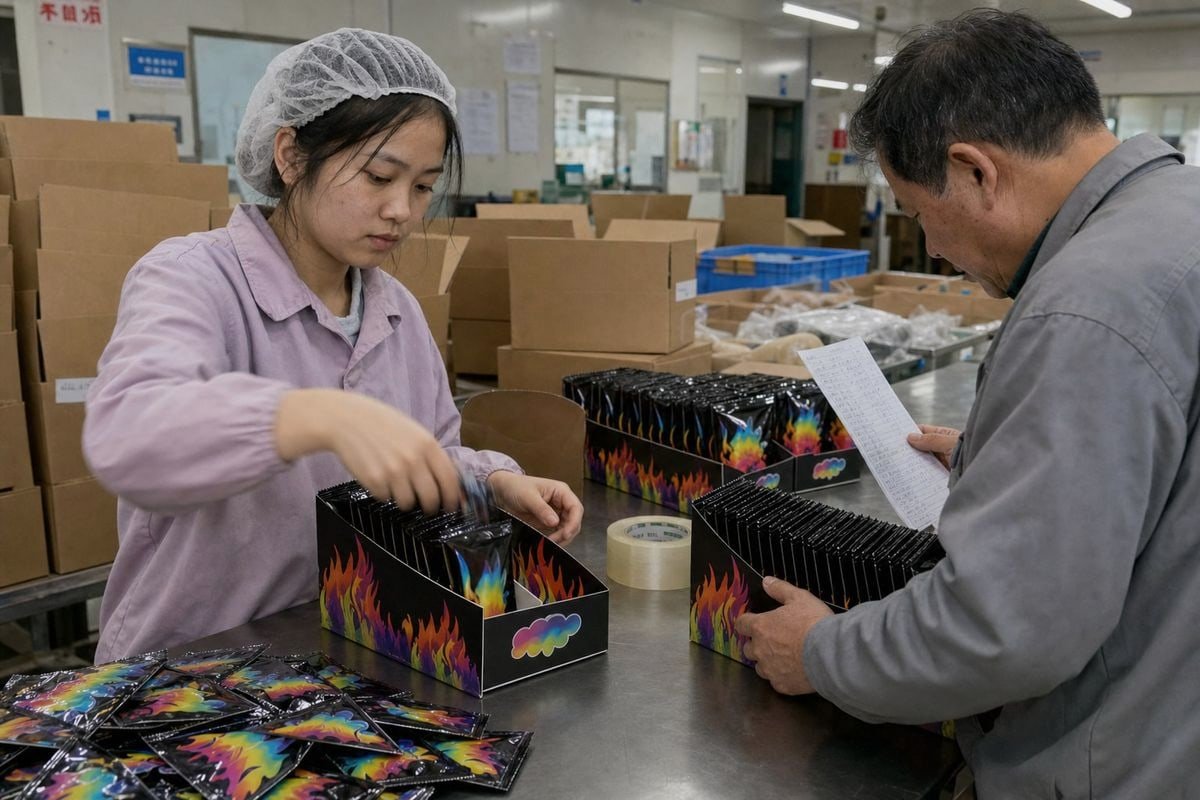
Materials do two jobs at once: they protect the product and they sell it. For campground stores — often semi-outdoor, humid, and seasonal — both jobs get harder.
The protection layer
The core requirement is a high-barrier foil lining. Color-flame powders are higroscópicos 4; moisture degrades performance long before the flames look wrong to the naked eye. A properly heat-sealed foil sachet keeps the crystalline powder dry and supports a multi-year shelf life, which matters enormously for seasonal retail where a display might sit through a slow winter. When we run production in Ningbo, seal integrity is checked batch by batch, because one leaky seam in a humid camp store means a refund conversation later.
The compliance layer
For our B2B buyers in the US, Germany, the UK, and beyond, compliance is a hard requirement, not a nice-to-have. Here is what shelf-ready means in practice:
| Elemento | Por que é importante |
|---|---|
| CE marking and SGS/Intertek test reports | Required by serious importers and large retail sourcing channels |
| High-contrast safety warnings | Reduces liability in self-service environments; "do not open packet" instructions must be unmissable |
| Barcodes and private-label printing | Enables scanning at any point of sale without extra stickering |
| ISO 9001 5 / certificação de fábrica BSCI | Assures consistent production and ethical sourcing for retail audits |
| Eco-friendly, non-harmful formulation | Increasingly demanded by outdoor and camping brands |
The selling layer
A glossy black foil sachet with vibrant rainbow flame graphics grabs the eye at the register. Pairing it with a kraft-paper outer pouch or kraft display elements adds the rustic aesthetic that fits campground store branding. Countertop display units — flip-top cartons holding around 25 sachets — turn a bare counter corner into a display de ponto de venda 6 without claiming shelf depth. Some brands go further with a código QR 7 linking to a short flame-effect video, so customers see the blue-green fire before buying and staff never need to explain the product. We handle all of this — custom boxes, display packaging, warning labels, barcodes — as part of one-stop OEM/ODM, so the sachet that lands on the shelf is genuinely ready to sell.
Conclusão
Tight shelves punish oversized packaging. Lead with 20–25 g single-use sachets in countertop displays, add a small multi-pack, demand certified moisture-proof materials, and sample before you commit.
Notas de rodapé
1. Alibaba is the leading B2B sourcing platform for private-label manufacturing and custom packaging. ↩︎
2. Stable and accessible reference for product warning labels, avoiding the 403 errors common on regulatory sites. ↩︎
3. ISO outlines standards for consistent batch quality control in manufacturing processes. ↩︎
4. Explains why moisture-absorbing powders require barrier packaging to maintain performance. ↩︎
5. ISO 9001 certification assures buyers of consistent factory quality control for compliance audits. ↩︎
6. Background on point-of-sale display strategy relevant to countertop retail merchandising. ↩︎
7. Background on QR code technology used for linking customers to product demonstration videos. ↩︎



 English
  Spanish
  German
  French
  Arabic
  Portuguese
Participe da conversa