






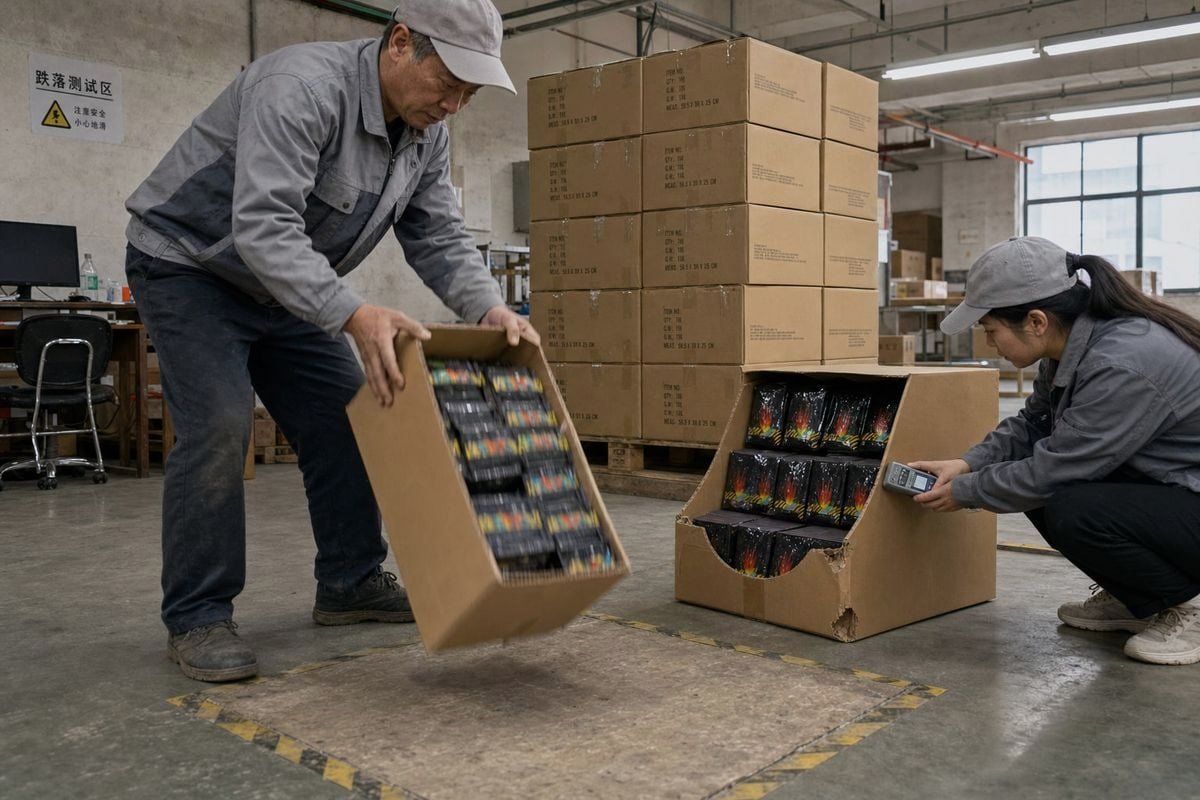
Choosing outer packaging for retail display of magic fire powder is where many buyers stumble. On our production line in Ningbo, we see the same costly mistakes repeated every season.
Choose a corrugated or heavy paperboard retail display box or counter tray for magic fire powder. Prioritize crush resistance, moisture protection, front-facing branding, barcode and warning-label space, and easy-open restocking features. Always validate the structure with drop and humidity testing before mass production.
That is the short answer. Below, I break down each decision point so you can brief your supplier with confidence and avoid packaging that fails on the shelf.
What Packaging Formats Work Best for Magic Fire Powder on Retail Shelves?
A buyer from Germany once sent us photos of a competitor's display box collapsing on a hardware-store shelf. That single image shaped how our team designs every retail format we ship today.
The best retail formats for magic fire powder are counter display boxes holding single-use foil sachets, corrugated shelf trays for multipacks, and retail-ready shippers for chain stores. Match the format to your sales channel: impulse racks favor sachets, while bulk channels favor resealable pouches.
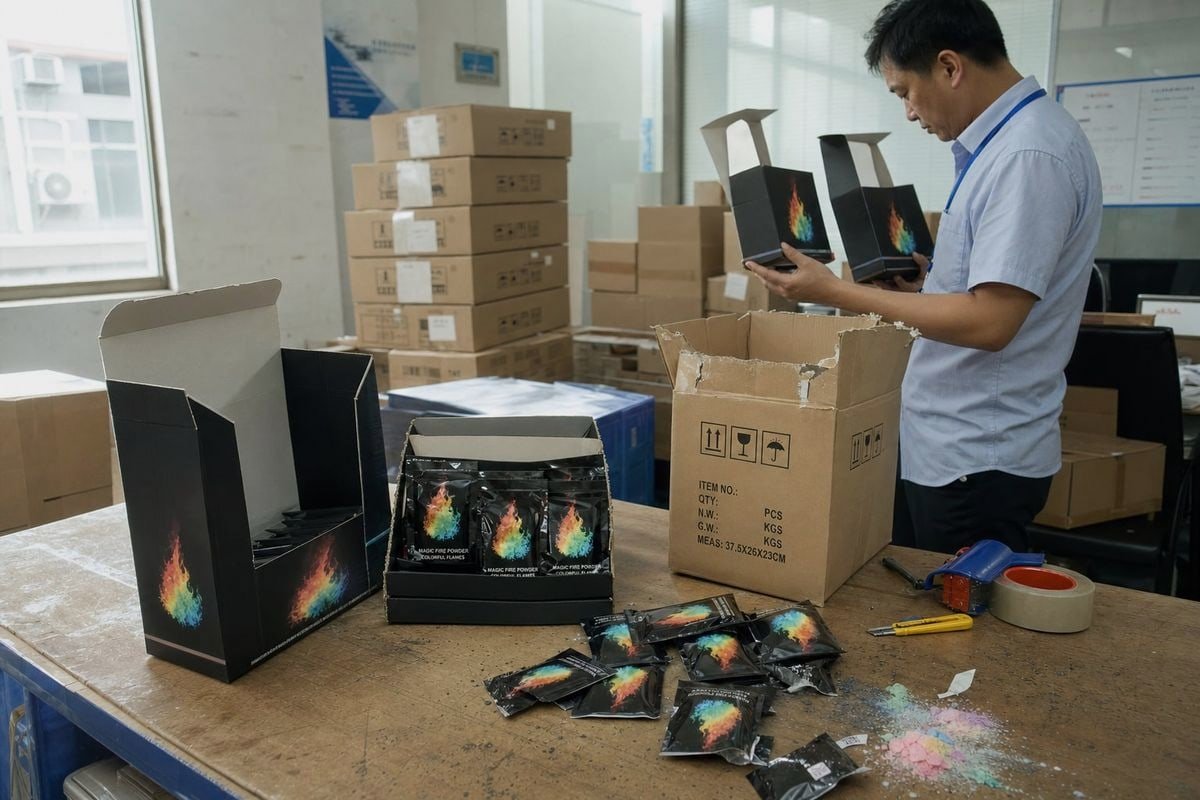
Format choice should start with where the product sells, not with what looks nicest in a mockup. In our 17+ years supplying outdoor and fireplace brands across the US and Europe, we have shipped color-flame packets in plastic bags, kraft stand-up pouches 1, and plastic jars. Each inner format demands a different outer package.
Match the Format to the Sales Channel
Here is how we usually frame the decision with buyers:
| Outer Format | Exposição de Caixa Inicial | Pontos fortes | Cuidado Com |
|---|---|---|---|
| Counter display box (flip-top) | Checkout impulse sales | High visibility, small footprint | Needs rigid board to stay neat |
| Corrugated shelf tray | Supermarket and hardware shelves | Fast restocking, stackable | Front panel must survive handling |
| Retail-ready shipper (SRP) | Big-box chains | Ships and displays in one unit | Retailer-specific specs apply |
| Windowed carton | Premium gift channels | Shows the product | Window film must seal tightly |
| Plain master carton + pouch | E-commerce bulk | Custo mais baixo | Zero shelf presence |
Tier Your Formats by Channel
We often recommend a tiered approach. Single-use sachets in a flip-top counter display work for impulse racks near the register. Resealable kraft or plastic pouches in a shelf tray suit camping and BBQ aisles. For large chains like the Home Depot type accounts we supply, a retail-ready corrugated shipper 2 cuts store labor because staff simply tear off the top and slide it onto the shelf.
One more practical point. A display box carrying 20 to 50 sachets behaves very differently from one carrying six jars. Weight per unit drives board grade, tray depth, and stacking strength. Decide your pack-out quantity before you approve any dieline.
How Do I Ensure My Packaging Meets Safety and Compliance Labeling Requirements?
Compliance paperwork is usually the first thing serious buyers ask us about — often before price. For fire-related products, a missing warning label can stop a container at customs or trigger a retailer rejection.
Ensure compliance by reserving label space for market-specific warnings, ingredient information, usage instructions, and barcodes before finalizing the dieline. Request CE marking, SGS or Intertek test reports from your supplier, and prepare separate label versions for EU REACH and US CPSC requirements.
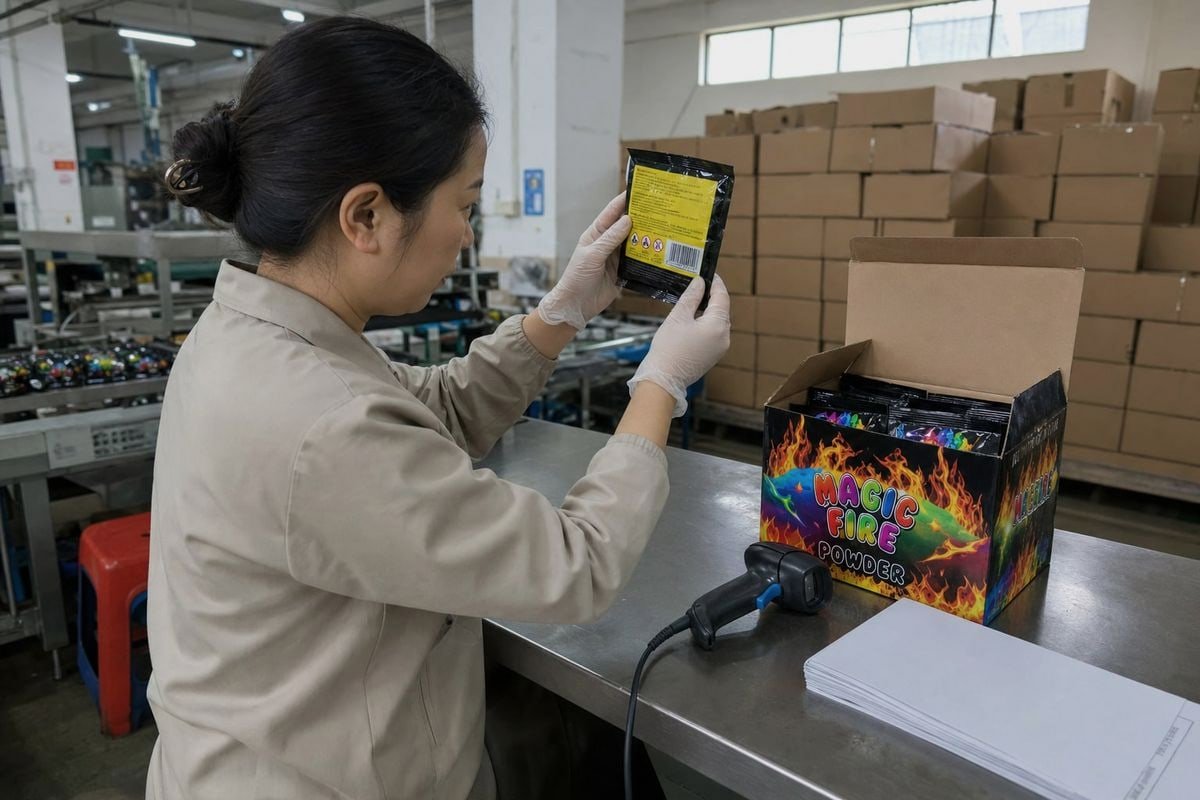
Labeling failures are rarely design failures. They are planning failures. In our experience exporting to 30+ countries, the packaging projects that go smoothly are the ones where the label layout is locked in before the artwork stage, not squeezed in afterward.
Plan the Label Zones Early
Every outer package for magic fire powder should reserve clear zones for these elements:
- Product name and brand on the front-facing panel.
- Usage instructions in the destination-market language.
- Safety warnings, typically in a high-contrast band. Our own sachets carry a yellow caution strip for exactly this reason.
- Barcode or UPC on a flat, scannable surface — never across a fold or crimp.
- Batch code area for traceability, which most EU importers now require.
Know Your Market Differences
Requirements are not universal. The same display box we produce for a French distributor carries different mandatory text than the version going to a US wholesaler. We routinely produce multiple label versions on one packaging structure, because reprinting labels is far cheaper than retooling a box.
| Mercado | Key Compliance Focus | Practical Impact on Packaging |
|---|---|---|
| UE (Alemanha, França, Holanda) | REACH, CE, local-language warnings | Multi-language panels, CE mark space |
| US / Canada | CPSC expectations, clear English warnings | Prominent caution text, UPC standards |
| Reino Unido | UKCA transition considerations | Separate marking from EU versions |
| Oriente Médio | Import documentation, Arabic labeling | Bilingual print files |
Ask your supplier for actual test reports, not just claims. We hold ISO 9001, BSCI, CE, e Certificação SGS/Intertek 3 precisely because our buyers treat documentation as a hard requirement. If a factory cannot produce reports on request, walk away. A QR code linking to a safety demonstration video is also worth adding — it reduces liability questions and builds buyer confidence at the shelf.
Can I Customize Packaging Design and Branding for My Private Label Products?
Private-label projects 4 make up a large share of what leaves our factory. Last year, one UK camping brand came to us with nothing but a logo file, and left with a full shelf-ready program.
Yes. A capable OEM/ODM factory can fully customize your magic fire powder packaging: sachet artwork, pouch or jar formats, display box structure, private-label branding, warning labels, barcodes, and inserts. Confirm MOQ per design, print method, and sample lead time before committing.
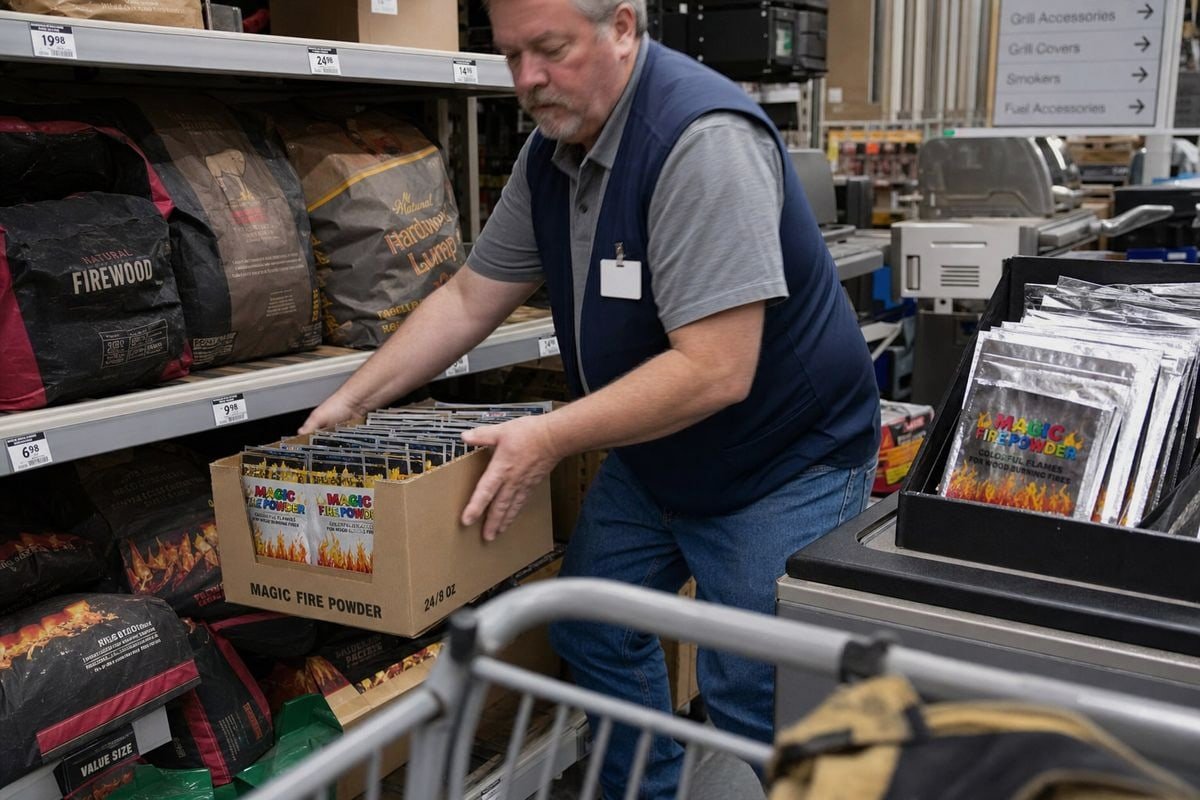
Customization is where a real factory separates itself from a trading company. Because we run complete production lines in-house, we control the sachet film printing, the pouch sealing, and the display box converting as one workflow. That matters because your brand colors need to match across the foil sachet, the kraft pouch, and the corrugated tray — and color drift between suppliers is a common private-label headache.
What You Can Typically Customize
- Inner format: foil sachet, kraft stand-up pouch, or plastic jar.
- Outer format: flip-top counter box, shelf tray, or retail-ready shipper.
- Artwork: full-surface printing, from graffiti-style lettering to minimalist premium looks.
- Functional details: burn time per sachet, sachet size, units per display.
- Compliance elements: your barcodes, your market's warning text, your QR codes.
Design for the Shelf, Not the Screen
A design that looks stunning on a monitor can vanish at three meters. We advise buyers to test artwork at actual shelf distance. Bold typography, a high-contrast background, and flame graphics that preview the actual colors — green, blue, purple, orange — sell the effect instantly. Our best-performing designs use a matte black background with rainbow-gradient lettering, because the contrast reads fast even in a crowded aisle.
One practical warning from experience: always request a physical pre-production sample, not just a digital proof. Foil sachets and kraft pouches render color differently than coated paperboard. We build this sampling step into every OEM project because the first sample must reliably predict mass-production quality. If your supplier resists sampling, that tells you something.
What Packaging Materials Best Protect Magic Fire Powder During Shipping and Storage?
Humidity is the silent killer of color-flame products. Early in our export history, we learned this the hard way when a shipment crossing into a tropical market arrived with clumped granules — the flames still worked, but the retail presentation suffered.
Use heat-sealed foil sachets or airtight pouches as the moisture barrier, then corrugated board for crush resistance during shipping. Choose B-flute or E-flute corrugated for display units, add moisture-resistant coating in humid markets, and confirm performance with drop and humidity testing.

The protection system has two layers, and each layer does a different job. The inner pack keeps moisture out. The outer pack keeps crushing forces out. Confusing the two roles leads to overbuilt, expensive packaging — or underbuilt packaging that fails in transit.
Layer One: The Moisture Barrier
Magic fire powder is a crystalline granule product. If it absorbs moisture, it clumps and can lose visual appeal before the first use. Our heat-sealed metallic foil sachets 5 with crimped edges exist for this reason. For multi-use formats, a resealable stand-up pouch with a proper zipper and barrier film keeps the remaining product dry between campfires.
Layer Two: The Structural Shell
| Material | Papel | Melhor Caso de Uso |
|---|---|---|
| Foil laminate film | Moisture and air barrier | Single-use sachets |
| Kraft barrier pouch | Resealable protection plus eco appeal | Multi-use retail packs |
| E-flute corrugated | Fine printing plus crush resistance | Counter display boxes |
| B-flute corrugated | Stronger stacking strength | Shelf trays and shippers |
| Coated paperboard | Premium print surface | Light cartons with sealed inner packs |
Test Before You Scale
Do not assume any material works until it survives real conditions. We recommend three checks before mass production: a drop test 6 from shelf height, a stacking test simulating a loaded pallet, and a humidity exposure test matching the destination climate. Also, be careful with recycled board 7 — it can be an excellent choice, but its strength varies, so it must pass the same tests, not get a free pass for being eco-friendly. Recyclable corrugated and kraft materials remain our default recommendation because they balance sustainability with genuine protective performance, and they align with what European retailers now expect.
Conclusão
Weak packaging quietly kills good products at the shelf. Match format to channel, plan compliance labels early, customize for your brand, protect against moisture and crushing — then test everything before scaling.
Notas de rodapé
1. Background on flexible packaging formats used for magic fire powder inner packs. ↩︎
2. FEFCO defines corrugated packaging standards relevant to retail-ready shipper design and construction. ↩︎
3. Official testing and certification body referenced for compliance verification. ↩︎
4. Background concept explaining private-label manufacturing referenced in the article. ↩︎
5. Explains the aluminium foil material used for moisture-barrier sachets. ↩︎
6. ASTM sets standard packaging testing methods like drop and humidity testing described. ↩︎
7. EPA guidance on recycled materials supports the sustainability and strength discussion. ↩︎



 English
  Spanish
  German
  French
  Arabic
  Portuguese
Participe da conversa