







Choosing the wrong Magic Fire Powder packaging size can kill a good retail listing SGS/Intertek 1. I have watched buyers order pallets of our color-flame packets in a format their channel simply could not sell. The product burned beautifully. The packaging sat on the shelf. When we run new packaging trials on our production line in Ningbo, size is the first variable we test — because size decides trial rate, price point, and posicionamento na prateleira 2 all at once. Get it right, and the same powder sells in a gas station, a camping store, and an online bundle. Get it wrong, and you eat inventory carrying costs for a year.
Distributors should choose Magic Fire Powder packaging size by matching each retail channel: 10g–25g single-use sachets for impulse and convenience retail, 25g–30g multipacks for specialty stores, and 50g–150g value pouches for e-commerce, then confirm MOQ, compliance labeling, and case-pack economics before ordering.
That is the short answer. The longer answer covers channel behavior, trial-order math, labeling rules, and customization. Let me walk through each one the way I would with a buyer on a sourcing call.
What packaging sizes work best for different retail channels and shelf formats?
A German fireplace distributor once told me his checkout-counter display sold three times faster than his shelf-facing box — same powder, different pack size. That conversation shaped how our factory now advises every new buyer on sizing.
Small 10g–25g sachets sell best at impulse and convenience retail, 25g–30g sachet multipacks fit specialty and gift stores, and 50g–150g pouches suit e-commerce and value channels. Retail-ready displays of 8–25 units per box maximize shelf impact across all formats.
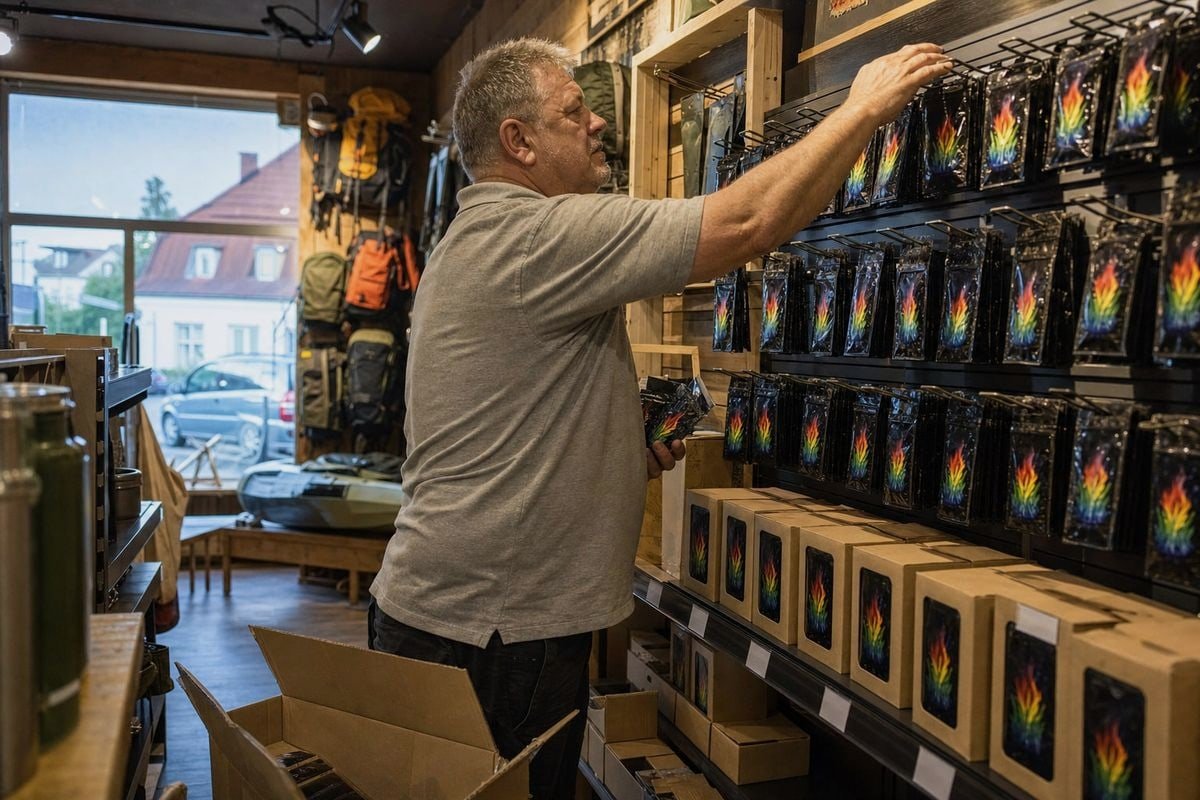
The market data is remarkably consistent here. Across marketplace and distributor listings, consumer units cluster around 10g, 15g, 25g, and 30g. The 25g sachet appears most often, and in our own export experience across 30+ countries, it is the safest default unit. But the right choice still depends on where the product sits in the store.
Match the size to the shopping behavior, not the powder
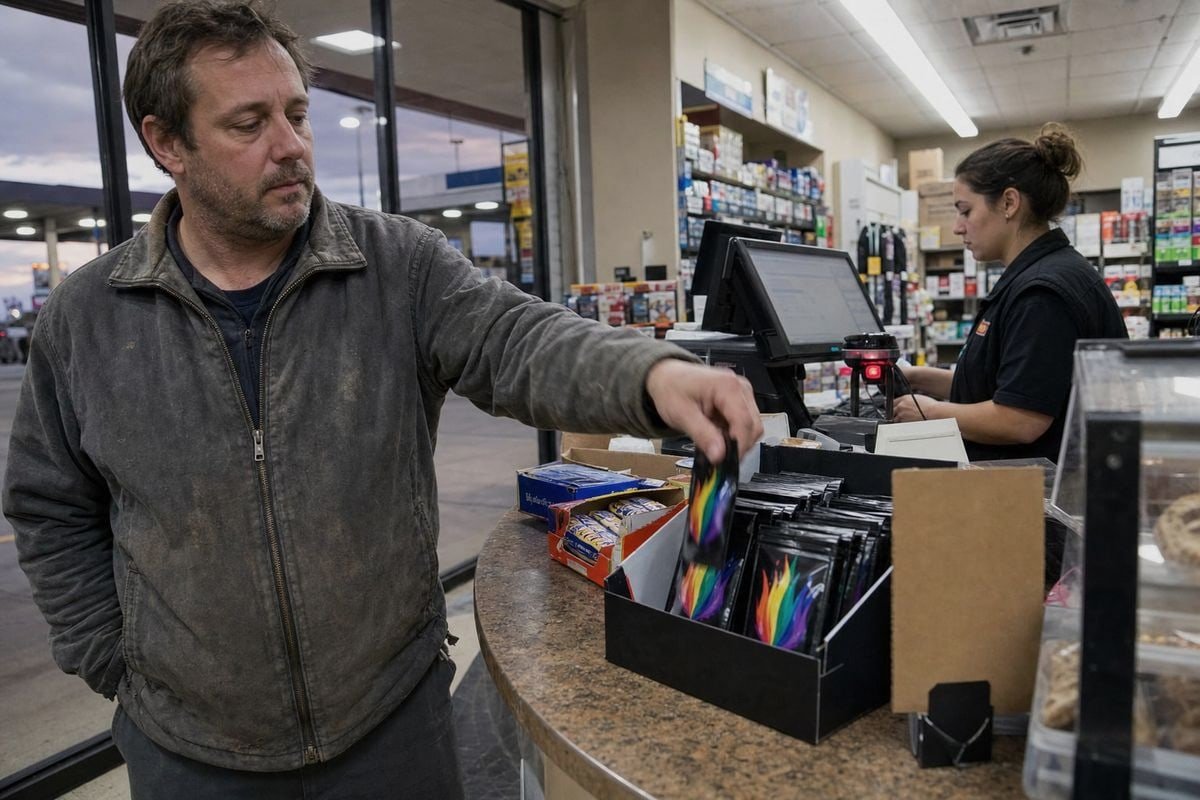
Customers at a gas station make a two-second decision. They want a low price and an obvious use case: one packet, one campfire. Customers at a specialty fireplace store plan ahead. They will pay for a multipack. Online shoppers compare price per gram and reward larger formats. The powder is identical in all three cases. The packaging size is what changes.
| Canal | Recommended unit size | Retail-ready format | Por que funciona |
|---|---|---|---|
| Convenience / gas station | 10g–15g sachet | 25 units per counter display | Low price, impulse grab, small footprint |
| Camping / outdoor specialty | 25g sachet | 8–10 sachets per hang-card or box | Fits hooks and endcaps, planned purchase |
| Gift and seasonal retail | 25g–30g sachet | 4-pack or 5-pack gift box | Giftable, decorative, higher margin |
| E-commerce / value | 50g–150g pouch | Single pouch or bundle | Better price per gram, no shelf limit |
| Wholesale / event supply | 250g–500g jar or bag | Carton of jars | Repeat users, bulk economics |
Think in units per case, not grams
One lesson from packing thousands of export cartons: retail buyers count facings, not weight. A carton of 50 sachets or 24 counter displays is easier for a store to merchandise than a loose bulk bag. When we build display boxes for private-label clients, we design the flip-top lid and unit count around the retailer's shelf depth first, then confirm the sachet weight second. Listings that instruct users to toss in 1–3 unopened packets also confirm the logic: the sachet itself is the dosing unit, so the retail unit and the usage unit should be the same thing.
How do I balance MOQ flexibility with packaging costs when trialing new sizes?
The trade-off I discuss most often with first-time importers is simple: small trial orders cost more per unit, but big orders risk dead stock in an unproven size. Our factory built flexible MOQ tiers 3 precisely because this question comes up on nearly every sourcing call.
Start with a low-MOQ trial of one or two sizes using stock packaging structures, pilot them in select stores, and scale only the size that proves sell-through. Accept a higher per-unit cost on trial runs; it is cheaper than warehousing an unsold pallet.
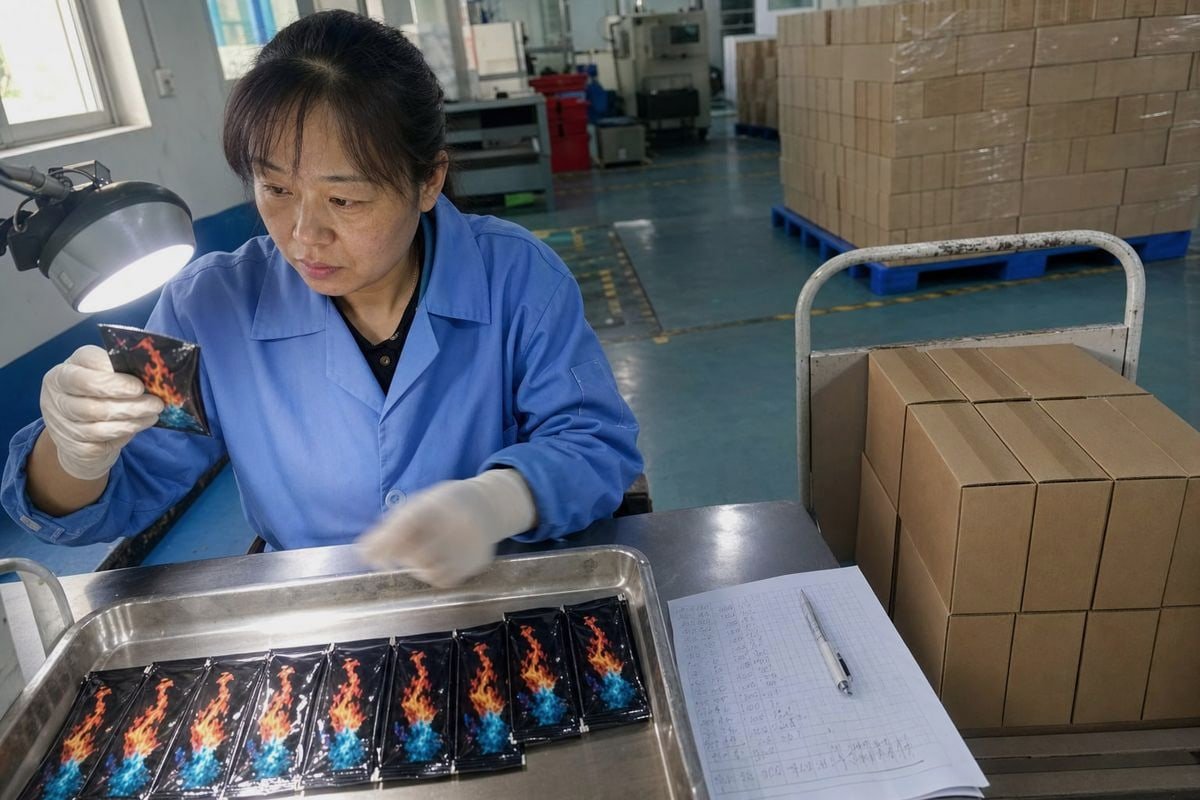
Packaging cost behaves differently from powder cost. The powder scales almost linearly with weight. The packaging does not. A 10g sachet and a 25g sachet cost nearly the same to form, fill, and seal. Printing plates, film rolls, and display boxes all carry setup costs that only dilute at volume. So a new size is really a new fixed-cost commitment, and you should treat the decision like one.
A practical trial sequence
- Pick a lead size. Default to the 25g class unless your channel clearly demands smaller or larger.
- Use stock pouch structures. Keep custom printing minimal on the first run to hold MOQ down. We often run trial orders in standard black foil sachets with a simple label.
- Pilot in a handful of stores. Track sell-through weekly for one season.
- Compare turnover per size, not revenue. A cheap sachet that turns six times beats a big pouch that turns once.
- Scale and rationalize. Commit full custom packaging to the winner. Cut the loser before it becomes carrying cost.
Para onde o dinheiro realmente vai
| Fator de custo | Small trial order | Scaled production order |
|---|---|---|
| Printing setup / plates | High per unit | Diluted across volume |
| Film and sachet material | Standard stock rates | Negotiated roll pricing |
| Display box tooling | Often skipped | Amortized, worth doing |
| Sea freight per unit | Higher (part container) | Lower (full container) |
| Inventory risk | Baixo | High if size unproven |
In our experience exporting to the US and Europe, distributors who trial two sizes side by side make faster, better decisions than those who debate sizes on paper for months. The pilot data ends the argument.
Which compliance and labeling requirements affect my packaging size decisions?
Before any pouch design reaches our printing line, it goes through a revisão de conformidade — and buyers are sometimes surprised how often the pack size itself changes as a result. Warning text, dosing instructions, and hazard symbols all need physical space, and a tiny sachet has very little of it.
Flame-effect powders require hazard warnings, usage instructions, quantity-based transport classification, and often child-safety considerations. Larger units may trigger stricter shipping rules, while very small sachets may lack space for mandatory label text — so compliance directly constrains viable packaging sizes.
Compliance is not a checkbox at the end of a packaging project. It shapes the project. Our ISO 9001 4, BSCI, CE, and SGS/Intertek documentation exists because our US and European buyers treat certification as a hard requirement, and their retailers audit it. Here is how the rules interact with size.
Label real estate is a size constraint
A 10g sachet has a printable face smaller than a business card. Mandatory elements — warning band, usage instructions, batch code, importer address, barcode — must all fit and remain legible. This is one reason multipack outer boxes matter: the display box carries the full label content, while each sachet carries a condensed version. If you go smaller than 10g, the label often cannot comply on the unit alone.
Quantity thresholds change transport and retail rules
Shipping regulations for produtos inflamáveis 5 frequently key off quantity per unit and per package. A carton of 25g sachets and a carton of 500g jars can fall into different handling categories even at the same total weight. We optimize case pack-outs with this in mind, because a misclassified shipment stalls at customs and destroys your retail launch date.
The sachet is a safety device
Product instructions across the market say the same thing: place unopened packets into the fire. The sealed sachet controls the dose, keeps hands off the granules, and prevents overuse. That means packaging integrity is part of the safety proposition, not just the branding. Heat-sealed foil 6, clear "do not open" instructions, and a warning band belong on every unit. When we develop private-label versions, we insist the warning label survives translation into every destination market's language — a small sachet in five languages is a real layout challenge, and one more reason 25g-class units are practical.
How can I customize packaging size and branding without disrupting my supply chain?
A UK outdoor brand once asked us to move from stock sachets to fully branded 4-packs mid-season. We managed it without a shipment gap — but only because we staged the changeover instead of switching everything at once. That project taught me the sequencing rules I now share with every OEM client.
Customize in stages: lock the sachet size and fill weight first, then layer on printed film, branded display boxes, barcodes, and warning labels in later production runs. Keeping the core unit stable lets branding change without re-tooling, re-testing, or delaying shipments.

True one-stop trabalho OEM/ODM 7 means the factory handles size, burn time, packaging structure, private-label artwork, warning labels, barcodes, and logistics under one roof. That integration is exactly what protects your supply chain during customization, because every change stays inside one quality system instead of bouncing between a trader, a printer, and a filler.
What changes easily and what does not
| Personalização | Supply chain impact | Tempo típico |
|---|---|---|
| Printed film artwork / logo | Low — new plates, same machinery | Add to second production run |
| Display box design and count | Low — box tooling, same sachets | Parallel with artwork |
| Barcode / retailer labels | Mínimo | Any run |
| Sachet size or fill weight | Medium — new sealing setup, new label layout | Lock before first mass run |
| Pouch structure (foil to kraft, bag to jar) | High — different line configuration | Plan a full lead time ahead |
| Burn time / formulation tweaks | High — re-testing required | Separate development cycle |
Keep sample-to-mass-production consistency
The customization risk buyers fear most is drift: the sample looks great, the mass shipment looks different. Our answer is process discipline built over 17+ years — the same line, the same batch-to-batch QC checks 8, the same sealing parameters from sample run to full run. When you change only the printed film, everything the machine touches stays identical. That is why we push clients to freeze the physical format early. Seasonal variants — a festival-themed 4-pack for winter holidays, a camping-season hang-card for spring — then become pure artwork swaps. You capture channel-specific demand spikes without ever touching the formulation, the fill weight, or the compliance file.
Conclusão
Wrong sizes stall on shelves and drain cash. The fix is a channel-matched ladder: 25g core sachets, small impulse packs, larger value pouches — trialed first, then scaled with a compliant, certified factory partner.
Notas de rodapé
1. Named third-party inspection body verifying product safety and compliance claims. ↩︎
2. Industry data source for retail shelf strategy and consumer purchasing behavior statistics. ↩︎
3. Global trade platform illustrating minimum order quantity practices relevant to sourcing negotiations. ↩︎
4. Official standard referenced as certification buyers require for retail compliance. ↩︎
5. Background concept on transport classification rules affecting packaging quantity thresholds. ↩︎
6. Explains the packaging technology used to secure and protect single-use sachets. ↩︎
7. Defines the manufacturing model described for integrated private-label production services. ↩︎
8. Links quality control consistency practices to formal management system standards frameworks. ↩︎



 English
  Spanish
  German
  French
  Arabic
  Portuguese
Participe da conversa