






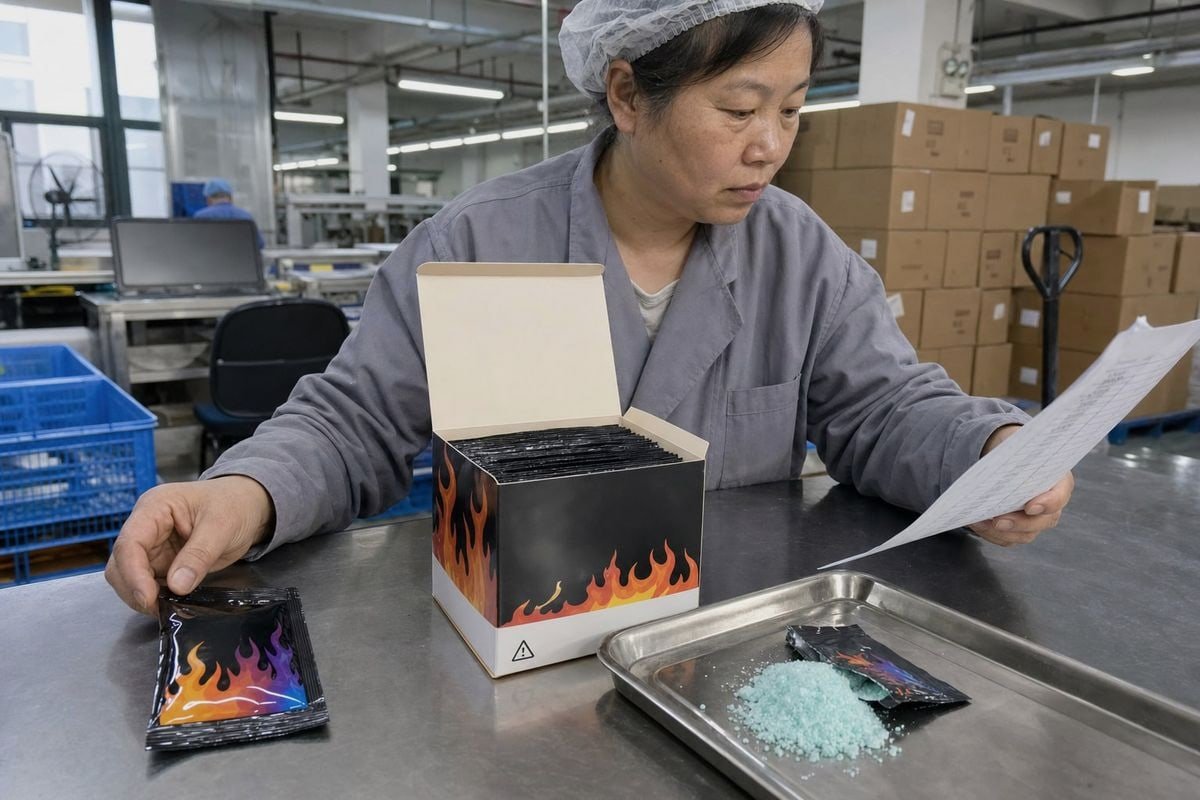
Especificações de embalagem de pó mágico de fogo confundem muitos compradores de primeira viagem regras de transporte DOT/IATA para quantidades limitadas 1. Em nossa linha de produção, vemos importadores pedindo o formato errado, depois lutando com a colocação na prateleira, custos de envio e dores de cabeça de conformidade.
Especificações de embalagem de pó mágico de fogo divididas em dois formatos: sachês de embalagem única de 10g–100g (25g é o padrão) em sachês plásticos ou de papel kraft, e caixas de exibição contendo 10–25 sachês cada, embaladas 12–24 displays por caixa de transporte, com códigos de barras separados para unidade e display.
Essa é a resposta curta. Mas a escolha certa depende do seu canal de vendas, do seu mercado e dos seus planos de marca. Vou guiá-lo por cada fator abaixo.
Quais Formatos de Embalagem Posso Escolher para o Pó Mágico de Fogo — Sachês Individuais ou Caixas a Granel?
Na primavera passada, um distribuidor holandês nos pediu para orçar três formatos de embalagem em um único pedido. Essa solicitação ensinou nossa equipe o quão diferente cada formato se comporta em diferentes canais de varejo.
Pó mágico de fogo está disponível em sachês de folha ou kraft de uso único (10g, 15g, 25g, 30g, 40g, 60g, 100g), potes de plástico ou kraft (250g–500g) e caixas de exibição de varejo contendo 10, 12 ou 25 sachês, além de caixas externas de envio para distribuição no atacado.
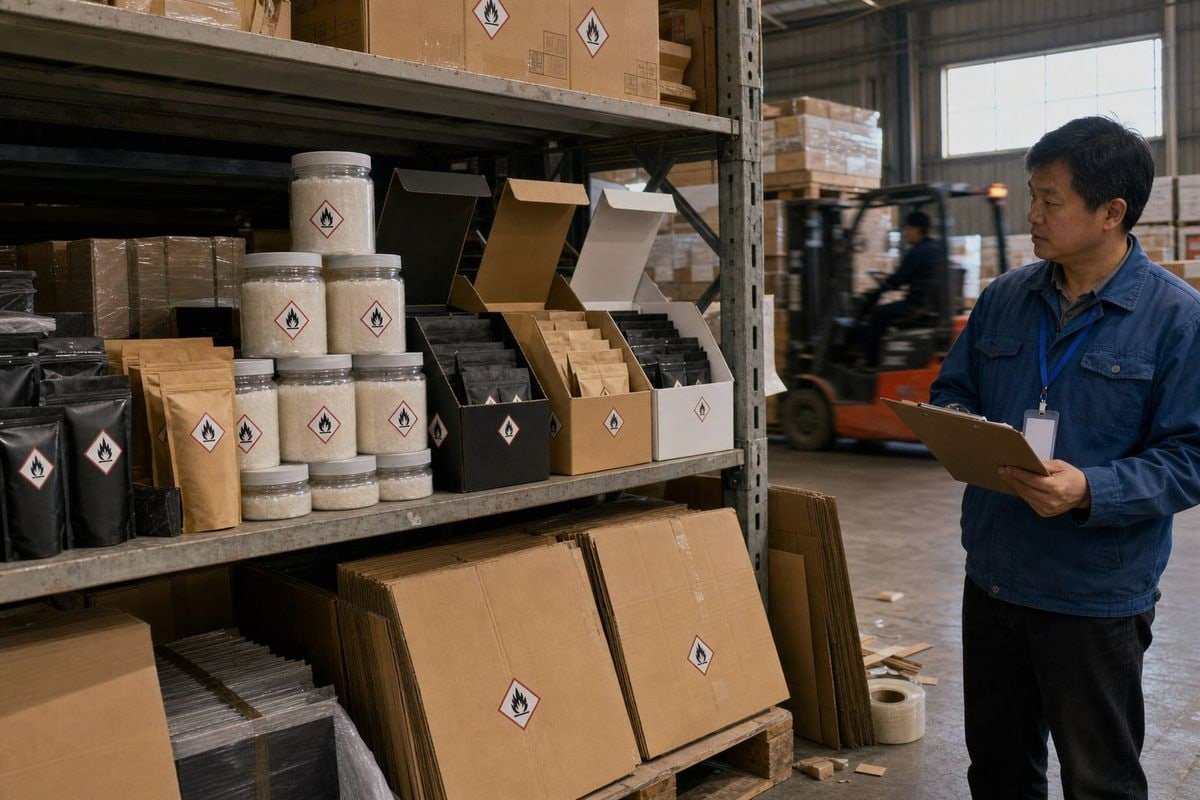
Aqui está uma visão geral rápida dos principais formatos que produzimos, para que você possa verificar as opções antes de nos aprofundarmos:
| Formato | Peso Típico | Material | Exposição de Caixa Inicial |
|---|---|---|---|
| Sachê único | 10g–30g (25g padrão) | Folha ou plástico selado a calor | Um uso para fogueira, compras por impulso |
| Sachê grande | 40g–100g | Bolsa autoportante de folha ou kraft | Consumidores de uso múltiplo, presentes |
| Pote / lata | 250g–500g | Lata de plástico ou lata de papel kraft | Usuários repetidos de lareira doméstica |
| Caixa de exibição | 10–25 sachês por caixa | Papelão impresso, tampa flip-top | Merchandising de balcão e prateleira |
| Caixa de envio | 12–24 displays por caixa | Caixa de papelão ondulado 2 | Carregamento de atacado e contêiner |
O Sachê Único
O sachê é a unidade de consumo principal. Um pacote trata um fogo. Os consumidores jogam todo o pacote selado nas chamas — sem abrir, sem despejar. É por isso que a selagem a quente crimpada é importante. Ela mantém a umidade fora e mantém o pó dosado corretamente. Nosso sachê padrão de 25g pesa aproximadamente 0,058 lbs, incluindo a embalagem, e cabe no bolso de uma jaqueta. Essa portabilidade impulsiona as vendas em acampamentos e festivais.
A Caixa de Exibição
A caixa de exibição é uma embalagem secundária. Ela agrupa sachês para prateleira, contagem e escaneamento no caixa. Uma especificação comum é 25 unidades por display e 24 displays por caixa. A caixa também faz trabalho de marketing. Seus painéis impressos carregam os gráficos da chama, a foto de uso inserida e a faixa de aviso. Em nossa experiência exportando para os EUA e Alemanha, os varejistas raramente aceitam sachês soltos — eles querem um display pronto para prateleira com seu próprio código de barras.
A Caixa de Envio Externa
Não confunda a caixa de exibição com a caixa de envio. O display fica na prateleira. A caixa protege os displays em trânsito e carrega as marcações logísticas. Ambos precisam de suas próprias especificações em seu pedido de compra.
Como Decido Entre Embalagem Individual e Caixa para o Meu Mercado de Retalho?
Uma marca de camping do Reino Unido testou ambos os formatos conosco: sachês únicos em lojas de artigos para atividades ao ar livre e caixas de 12 unidades online. Os resultados remodelaram como aconselhamos novos compradores.
Escolha embalagens individuais para compras por impulso, canais de camping e vendas de teste de baixo risco; escolha embalagens em caixa para comércio eletrônico, usuários de lareiras domésticas e varejo de grandes redes, onde embalagens múltiplas reduzem os custos por unidade em 15–30% e melhoram a presença na prateleira e o controle de estoque.
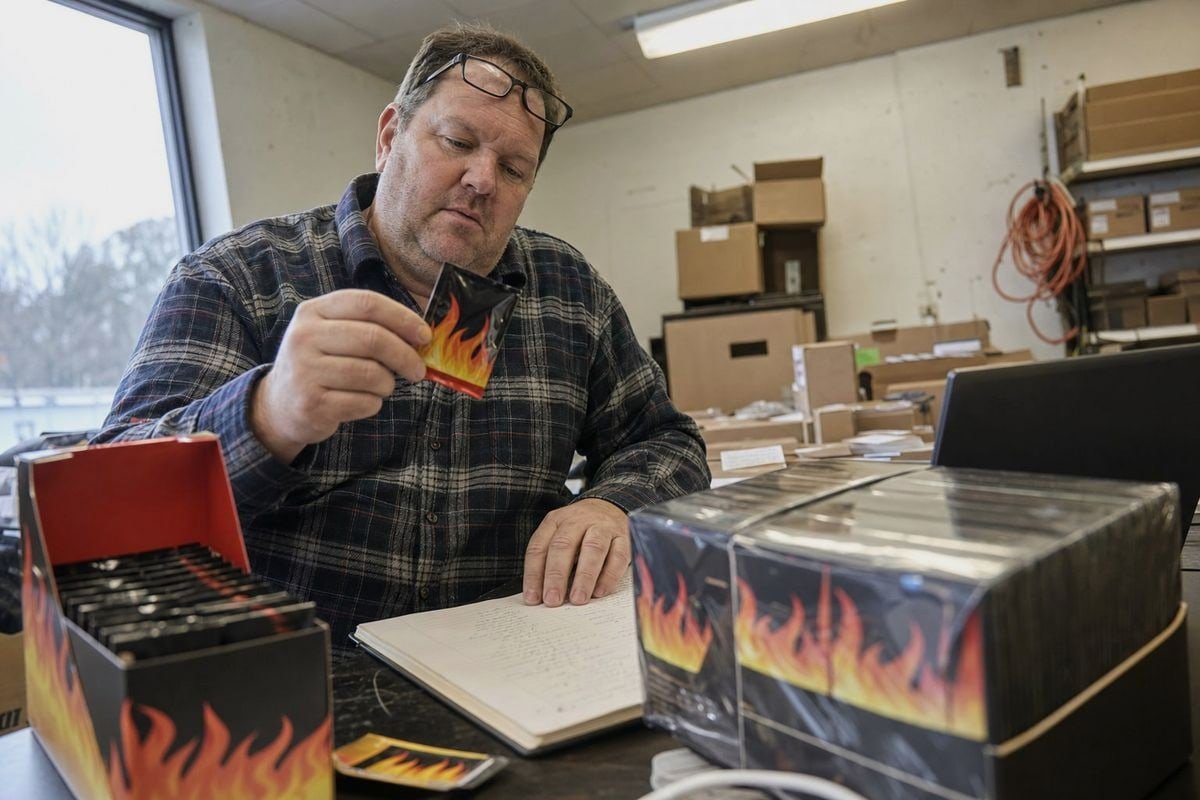
A resposta honesta é que a maioria dos importadores bem-sucedidos pede ambos. A verdadeira questão é a proporção. Veja como ajudamos os compradores a pensar sobre isso.
Combine o Formato com o Canal de Vendas
Cada canal recompensa uma arquitetura de embalagem diferente. Um balcão de posto de gasolina quer um pequeno display de sachês únicos perto da lenha. Um mercado online pune sachês únicos porque o envio de um pacote de 25g é antieconômico. Uma rede de lojas de ferragens quer uma caixa de 12 unidades com uma hierarquia de código de barras limpa.
| Canal de Vendas | Formato Recomendado | Por que Funciona |
|---|---|---|
| Lojas de camping / artigos para atividades ao ar livre | Sachês únicos em display de balcão | Compra por impulso, baixo preço, portátil |
| Mercados de comércio eletrônico | caixa com 10–12 unidades | Justifica o custo de envio, melhores avaliações por pedido |
| Varejo de casa e lareira | Caixa de 12–24 unidades ou pote de 250g | Usuários repetidos querem valor e estoque em casa |
| Comerciantes de festivais / presentes | Misto: sachês mais caixas de presente | Apelo de novidade, ocasiões de presente |
| Atacado / distribuidores | Caixas completas de displays | Manuseio eficiente e carregamento de paletes |
Pense na economia, não apenas na aparência
Sachês individuais carregam mais material de embalagem por grama de pó. Isso aumenta seu custo por grama e sua pegada de resíduos. Caixas distribuem o custo da embalagem por muitas doses. Mas caixas também aumentam o preço de entrada para um comprador de primeira viagem. Um comprador arriscará alguns dólares em um sachê. Eles hesitam em uma caixa cheia de um produto que nunca experimentaram.
Considere a sazonalidade
Pó de cor de fogo é sazonal na maioria dos nossos mercados de exportação. A temporada de fogueira impulsiona o volume de sachês no verão. A temporada de lareira impulsiona o volume de caixas e potes no inverno. Compradores que planejam ambas as ondas em uma única corrida de produção obtêm melhores preços e prazos de entrega mais suaves de nossa instalação em Ningbo.
Quais Certificações e Rótulos de Aviso Devem Aparecer na Embalagem do Meu Pó Mágico de Fogo?
Questões de conformidade surgem em quase todas as primeiras chamadas que recebemos. Um comprador dos EUA me disse que seu envio anterior ficou retido na alfândega por seis semanas devido a um relatório de teste ausente — uma lição cara.
A embalagem do pó mágico de fogo deve conter avisos de segurança (uso externo ou ventilado, manter longe de crianças, não abrir o sachê), rotulagem de perigo específica do país e certificações do fornecedor, como marcação CE e relatórios de teste SGS/Intertek; remessas em caixa também devem atender às regras de transporte DOT/IATA para quantidades limitadas.

A rotulagem é onde um produto de novidade se torna uma importação séria. Vou dividir isso nas três camadas que nossa equipe de conformidade verifica antes que qualquer contêiner saia da fábrica.
Camada 1: O Sachê em Si
O pacote único precisa de um rótulo de cautela com faixa amarela, instruções de uso claras e a mensagem "não abra — jogue o pacote inteiro no fogo". O peso líquido deve ser impresso. Como nossas formulações são ecológicas e livres de produtos químicos nocivos, evitamos o fardo de aviso de metais pesados que pós mais baratos à base de cobre ou bário carregam. Ainda assim, todo mercado quer a linha de mantenha longe das crianças e a orientação de ventilação visível na menor unidade vendável.
Camada 2: A Caixa de Exibição
A caixa repete os avisos em um tamanho maior e legível. Ela também carrega a referência do código de barras da unidade, o código de barras do display, códigos de lote e marcação de país de origem. Cada vez mais, os varejistas pedem um código QR que vincula a um lote específico ficha de dados de segurança 3. Imprimimos isso rotineiramente para clientes de marca própria — isso combate falsificações e satisfaz auditorias de varejistas ao mesmo tempo.
Camada 3: Credenciais de Transporte e Fábrica
Caixas de transporte para mercadorias embaladas podem cair sob quantidade limitada material perigoso 4 regras. Frete terrestre e aéreo têm padrões de marcação diferentes, portanto, diga ao seu fornecedor seu modo de frete antes de imprimir. Por trás dos rótulos, os compradores devem verificar a própria fábrica. Nossas auditorias ISO 9001 e BSCI, além de Marcação CE 5 e Relatórios de teste SGS/Intertek, existem precisamente porque as equipes de sourcing de varejo dos EUA e da Europa as tratam como requisitos rígidos, não como extras. Peça os documentos antes de assinar a ordem de compra — qualquer fábrica real pode produzi-los em um dia.
Posso Obter Tamanhos de Caixa Personalizados, Branding e Opções de MOQ para o Meu Pedido de Marca Própria?
Recentemente, ajudamos um distribuidor polonês de lareiras a transformar uma bolsa de papel kraft simples em um display totalmente personalizado de 12 unidades com tampa flip em cerca de cinco semanas. Trabalho personalizado como esse é agora a maior parte do nosso livro de pedidos.
Sim—fornecedores OEM/ODM oferecem personalização completa: sachês de marca própria em material plástico ou kraft, contagens de caixas personalizadas (10, 12 ou 25 unidades), dimensões de display e caixa personalizadas, etiquetas de aviso e códigos de barras impressos, e MOQs em camadas que permitem pedidos de teste menores antes de escalar para volume de contêiner.
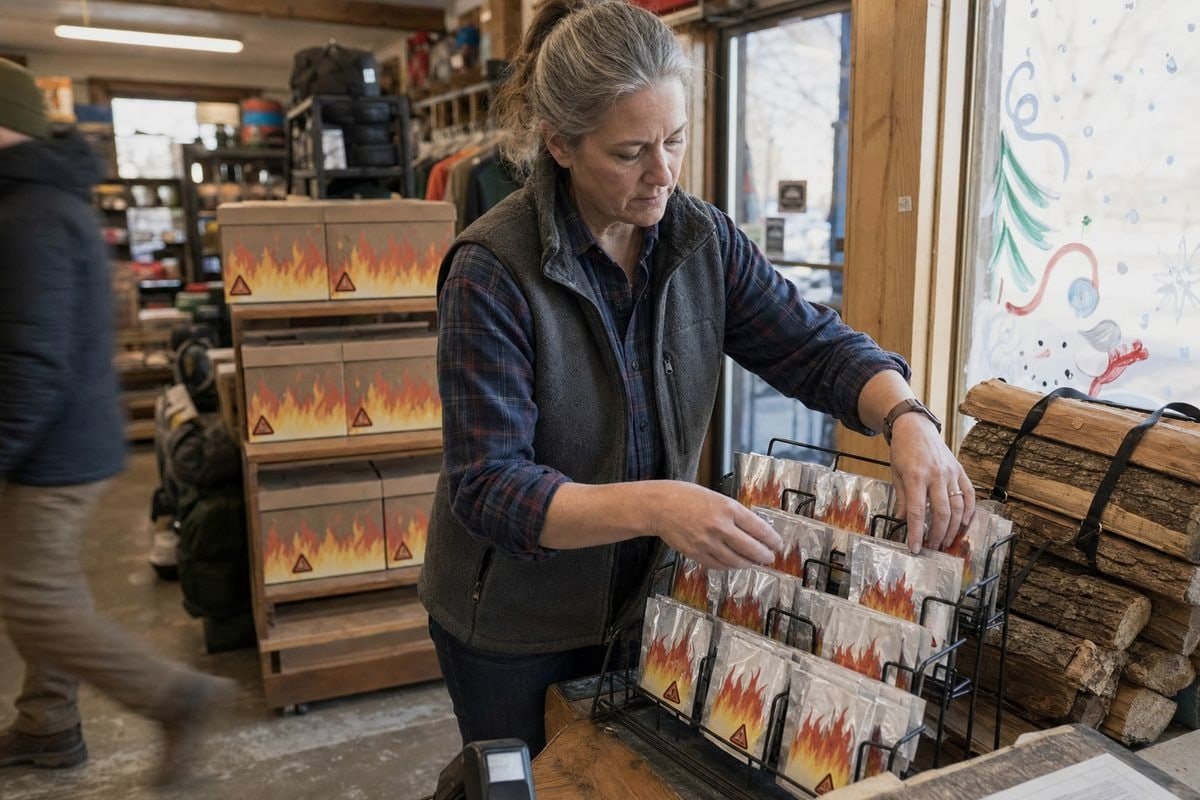
A rotulagem privada é onde as especificações de embalagem deixam de ser um detalhe técnico e se tornam sua estratégia de marca. Deixe-me explicar o que é realisticamente personalizável e o que planejar.
O Que Você Pode Personalizar
Quase tudo. Nosso processo de balcão único trabalho OEM/ODM 6 cobre peso do sachê, material da bolsa, tempo de queima, arte, estrutura da caixa e marcações de logística. Aqui está o menu típico que cotamos:
| Área de Personalização | Opções | Notas |
|---|---|---|
| Peso do sachê | porções de 10g–100g | 25g continua sendo o ponto ideal de varejo |
| Material da embalagem | Folha brilhante, plástico, papel kraft | Kraft sinaliza ecológico; folha maximiza a barreira de umidade |
| Contagem de caixas | 10, 12, 24 ou 25 sachês | 12 unidades é a unidade online mais comum |
| Estrutura da caixa | Display flip-top, caixa de encaixe, bandeja de balcão | Flip-top funciona melhor em balcões de checkout |
| Marca | Impressão em painel completo, emblema de logotipo, códigos QR | Tintas à base de soja e papelão reciclado 7 disponível |
| Códigos de barras | Hierarquia de unidade, display e caixa | Atribuímos e imprimimos todos os três níveis |
| Caixa | 12–24 displays por caixa | Otimizado para encaixe em paletes e contêineres |
Um cronograma realista
Pedidos personalizados seguem uma sequência clara. Primeiro, aprovação da arte e da linha de corte estrutural. Segundo, uma amostra física com sua marca. Terceiro, produção em massa com controle de qualidade lote a lote. Como executamos linhas de produção completas internamente, a amostra que você aprova corresponde de forma confiável ao que é enviado — esta é a maior reclamação que os compradores nos trazem sobre fornecedores de empresas comerciais anteriores, e é a mais fácil de corrigir por uma fábrica genuína.
Estratégia de MOQ para Novos Compradores
Incentivamos pedidos de teste. Uma primeira tiragem menor em uma caixa semimecanizada permite que você teste seu mercado antes de se comprometer com ferramentas totalmente personalizadas. Assim que seus dados de venda retornarem, escalar para cargas de contêineres completas com sua embalagem final é simples.
Conclusão
Especificações de embalagem incorretas custam espaço em prateleira, margem e atrasos na alfândega. Combine embalagens individuais para canais de impulso, caixas para varejo e e-commerce, e faça parceria com uma fábrica certificada para obter resultados em conformidade e prontos para prateleira.
Notas de rodapé
A IATA rege as regras de transporte de mercadorias perigosas referenciadas para os requisitos de conformidade de remessas em caixa. ↩︎
Contexto sobre o material de papelão ondulado usado para a construção e proteção de caixas de remessa. ↩︎
Referência de contexto para a documentação de segurança específica do lote que os varejistas solicitam via código QR. ↩︎
Explica as regras de classificação de transporte mencionadas para caixas de remessa sob regulamentações de quantidade limitada. ↩︎
A marcação CE é uma certificação de conformidade referenciada que requer contexto de fundo para os leitores. ↩︎
Contexto de serviços comerciais da OMC relevante para a fabricação de marca própria e processos de exportação. ↩︎
Recurso de reciclagem da EPA relevante para materiais de embalagem ecológicos mencionados nas opções de marca. ↩︎
 English
  Spanish
  German
  French
  Arabic
  Portuguese
Participe da conversa