






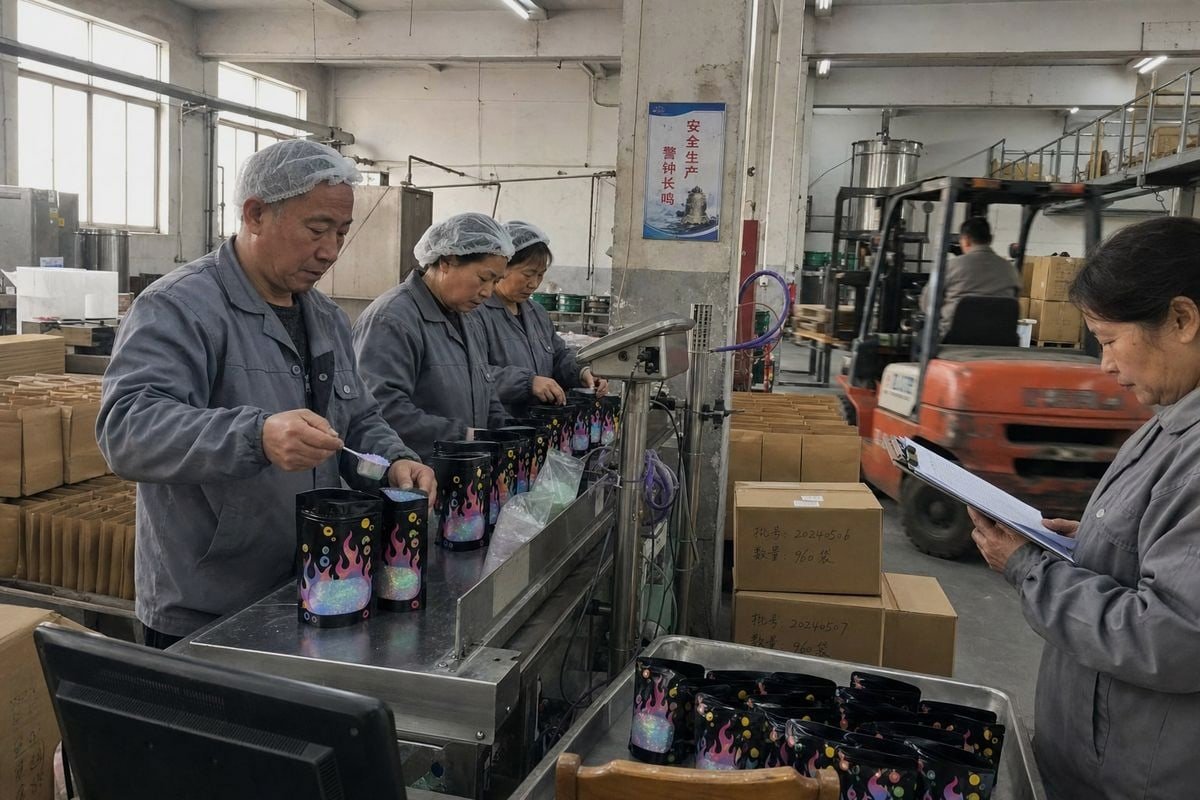
Choosing between a manufacturer vs trading company for Magic Fire Powder confuses many buyers. I hear it weekly on our production floor in Ningbo, and the wrong pick costs real money.
For Magic Fire Powder, a manufacturer typically wins on unit pricing, batch consistency, and OEM/ODM depth, while a trading company wins on small mixed orders and sourcing flexibility. High-volume, private-label, and compliance-focused buyers should go factory-direct; occasional small buyers may prefer a trader.
That is the short answer. But the details matter. Below, I break down each question one by one, using what I see in this industry every day.
How can I verify I'm sourcing Magic Fire Powder from a real manufacturer and not a relabeled trading company?
A buyer from Germany once told me he had "visited his factory" — then showed me photos of a rented showroom. After 17 years in Liuyang and Ningbo, I can spot the difference fast. You can too.
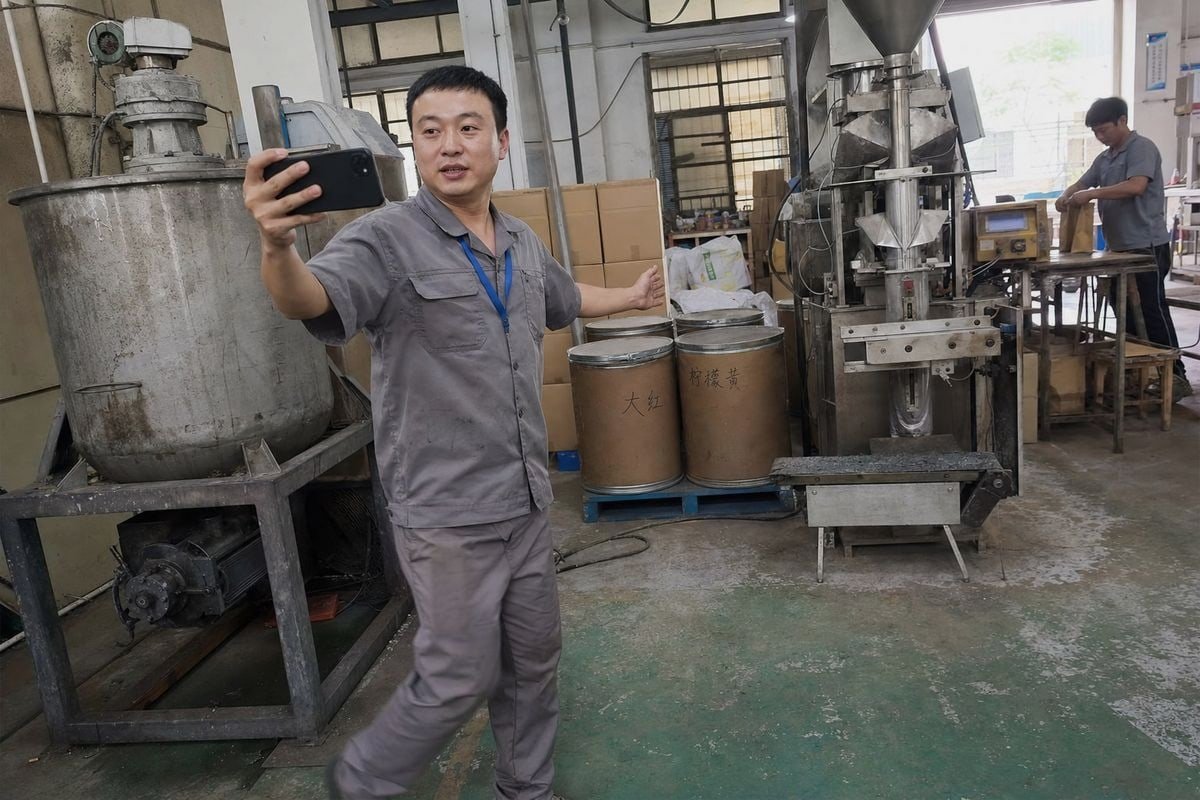
Verify a real Magic Fire Powder manufacturer by requesting a live video factory tour, checking the business license scope for "manufacturing," asking for ISO 9001 and BSCI audit reports in the same company name, and confirming they can explain formulation details a reseller cannot.
This matters because the market is full of hybrid sellers. Some listings on major B2B platforms label themselves as both "Manufacturer/Factory" and "Trading Company" at the same time. That is not always dishonest. But it means the label alone tells you nothing. You need to verify.
Five checks that expose a relabeled trader
Here is the checklist I give buyers who visit us:
- Business license scope. A Chinese manufacturing license lists production activities. business license 1 A trading license lists import/export and wholesale only. Ask for the license and have it translated.
- Live video walkthrough. Ask them to walk from the office to the mixing line, the filling machines, and the sealing station in one unbroken video call. A trader cannot fake this on demand.
- Audit reports in the same legal name. Our ISO 9001 2 and BSCI audits name our company and our site address. If the audit names a different entity, you are talking to a middleman.
- Technical questions. Ask why a batch might burn slightly different colors, or how moisture affects shelf life. A factory answers in detail. A trader stalls and "checks with the engineer."
- Sample-to-bulk traceability. Ask how they guarantee mass production matches the sample. A real factory describes batch QC steps. A trader describes a promise.
| Signal | Real Manufacturer | Relabeled Trading Company |
|---|---|---|
| License scope | Includes production | Wholesale/export only |
| Video factory tour | Immediate, unbroken | Delayed, edited, or refused |
| Audit certificates | Same name and address | Different or missing entity |
| Formulation questions | Detailed answers | Vague or delayed answers |
| MOQ flexibility logic | Tied to line changeover | Tied to "supplier policy" |
None of these checks takes more than a week. Together, they filter out almost every relabeled seller before you wire a deposit.
Will working directly with a factory actually save me money on Magic Fire Powder, or just shift the risk?
The trade-off I weigh with every new buyer is simple: our factory price is lower, but the buyer takes on more sourcing responsibility. Being honest about that builds longer partnerships than pretending price is the whole story.
Yes, factory-direct sourcing usually saves 10–30% per unit on Magic Fire Powder by removing trader margin, especially at volume. But savings are only real if the factory is verified, certified, and consistent — otherwise you trade the trader's markup for quality and compliance risk.
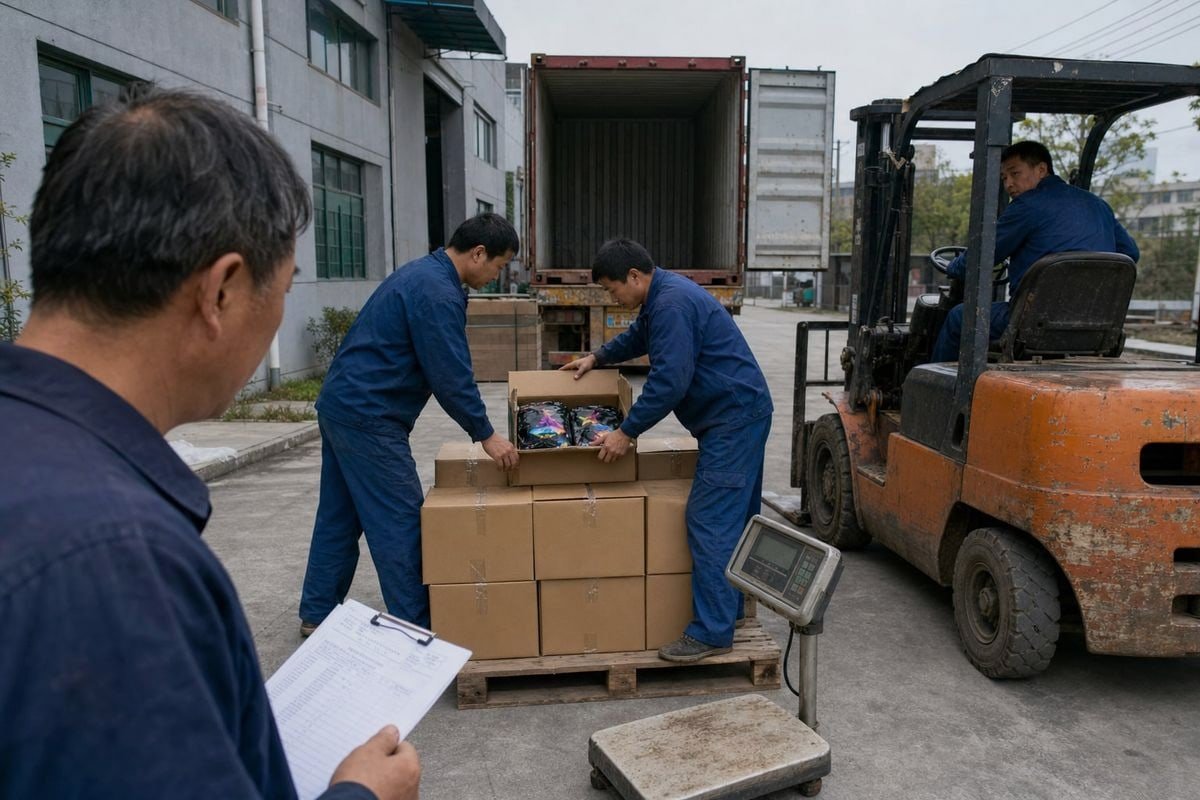
Let me put real market numbers behind this. Wholesale listings for color-flame powder packets commonly sit around $0.15–$0.40 per bag. One published listing drops from $0.39 at small quantities to $0.14 at 500,000+ bags. Meanwhile, retail multi-packs of comparable flame colorant products sell for roughly $6.94–$29.99 on Amazon. The margin room between ex-factory cost and shelf price is large. The question is who captures it.
Where the savings actually come from
A trading company adds a commission layer, typically 10–30%. At factory level, price breaks come from real production economics: longer runs, fewer line changeovers, and bulk raw material buying. That is why volume tiers exist. Lower advertised prices almost always sit behind larger MOQs.
| Order Profile | Better Channel | Why |
|---|---|---|
| Trial order, mixed SKUs | Trading company | Consolidates several factories in one shipment |
| Repeat orders, one SKU, private label | Manufacturer | No middle margin; direct spec control |
| High-volume seasonal program | Manufacturer | Best unit economics at scale |
| One-off small novelty purchase | Trading company | Lower friction, small MOQ |
The risk you take on
Here is the honest part. Going direct shifts three risks onto you: supplier verification, quality assurance, and export coordination. supply chain management 3 A good trader absorbs those for their fee. A good factory removes them a different way — through audited systems. In our case, buyers lean on our ISO 9001 process control, BSCI social audit, and SGS/Intertek 4 test reports instead of a trader's oversight. So the real question is not "factory or trader." It is "does this specific factory have systems that replace what the trader would have done?" If yes, the savings are clean. If no, the savings are borrowed against future problems.
One more caveat: raw material costs 5 fluctuate. A factory feels that volatility directly, while a trader can shop between suppliers. A stable manufacturer manages this with forward material purchasing and honest quarterly pricing — ask how your supplier handles it.
Which option gives me more stable lead times and consistent batch quality for repeat orders?
A UK fireplace distributor once switched to us after two seasons of color drift — his previous trader had quietly changed source factories between reorders, and his green flames turned pale. His customers noticed before he did.
Manufacturers deliver more consistent batch quality because they control raw materials, formulation, and QC in one place. Trading companies can offer more flexible availability by switching factories, but that same switching is the main cause of batch-to-batch inconsistency in repeat orders.

The key is to separate two things buyers often blur together: product consistency and supply availability. They are not the same, and the two channels win on different ones.
Product consistency: the factory advantage
Color-flame powder is unforgiving. Flame color, ignition behavior, burn duration, and moisture resistance all depend on raw material grade, granule size, and mixing control. When production stays on one audited line, every batch follows the same spec sheet. On our lines, batch QC means the first sample you approve is the standard quality control 6 every future carton is checked against. A trader who sources from whichever factory has stock cannot promise that. Even small formulation differences between plants show up as visible color differences in a customer's fire pit.
Supply availability: the trader's card
To be fair, a trading company holds one genuine advantage here. If a single factory has a production issue or is booked out, the trader can pivot to another plant. For a small buyer who just needs stock, that flexibility is useful. But for a brand with its name on the pouch, an unannounced factory switch is a quality event, not a convenience.
Lead times in peak season
Seasonal demand is real in this category. Camping season and the holiday gift window compress everyone's schedules. A factory manages this through capacity planning and forecast-based slot booking with repeat customers — we hold production windows for buyers who forecast early. A trader manages it by shopping availability, which works until every factory is full at once. My practical advice: whichever channel you choose, lock your peak-season orders one quarter ahead.
| Stability Factor | Manufacturer | Trading Company |
|---|---|---|
| Batch-to-batch color consistency | Strong — single controlled line | Variable — may switch factories |
| Sample matches bulk production | High, with in-house QC | Depends on source factory |
| Availability during factory downtime | Limited to own capacity | Can pivot to alternatives |
| Peak-season lead time control | Forecast-based slot booking | Dependent on partner factories |
| Accountability when quality slips | Direct and traceable | Diffused across suppliers |
How much OEM/ODM and compliance support can I expect from a manufacturer versus a trading company?
When we developed our kraft-bag and jar packaging formats for Magic Fire packets, the requests came straight from European buyers who needed shelf-ready retail units. That kind of back-and-forth only works when the person you email controls the production line.
Manufacturers provide far deeper OEM/ODM support — custom burn time, pack sizes, private-label pouches, display boxes, warning labels, and barcodes — plus first-hand compliance documentation like CE and SGS reports. Trading companies mainly relay requests and excel at commercial coordination, not technical customization.
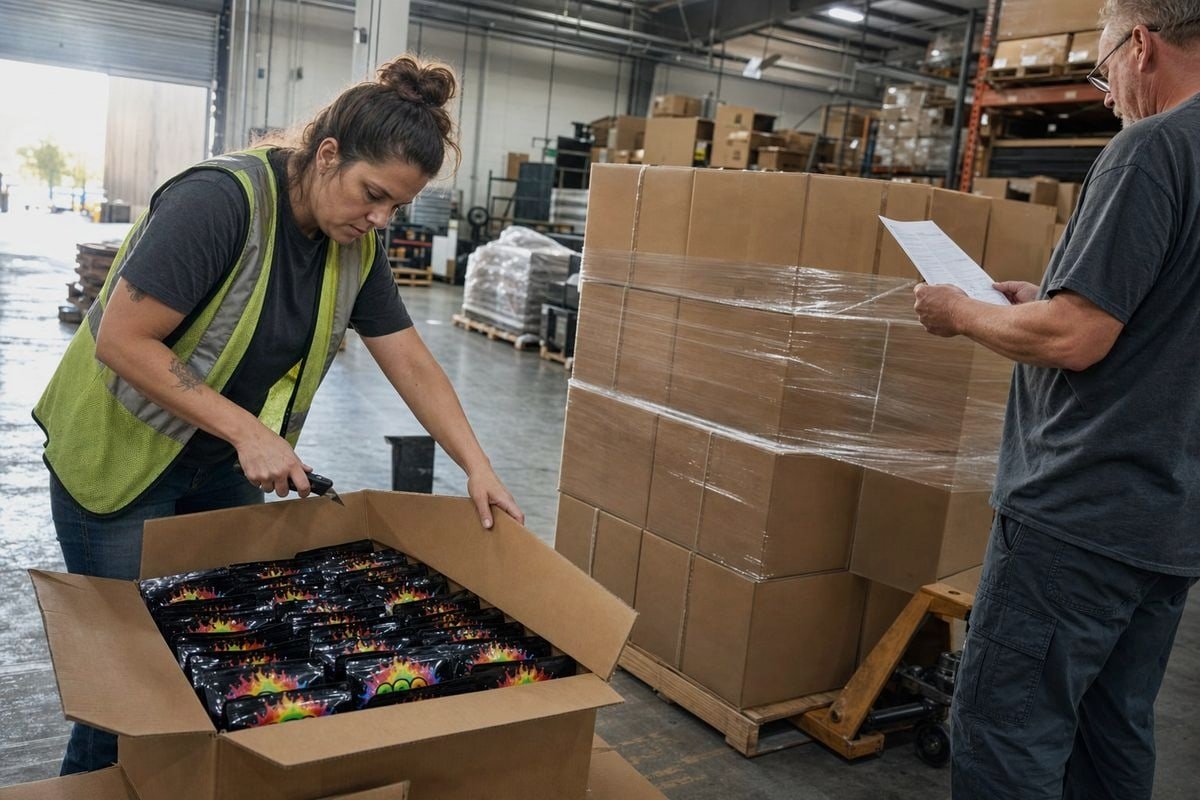
Support splits into two layers, and buyers should judge each channel on both.
Technical support: formulation and customization
Real OEM/ODM 7 means changing the product, not just the label. On our side, that includes adjusting gram weight per sachet, tuning burn duration, choosing between plastic bag, kraft stand-up pouch, or plastic jar formats, and building custom display boxes for retail shelves. It also includes the unglamorous details that make a product shelf-ready in the US or EU: market-correct warning labels, barcodes, and language variants. A trading company can pass these requests along, but every revision loop goes through an extra party. In practice, that adds days to each iteration and blurs accountability when something prints wrong.
Compliance support: who owns the paperwork?
For our buyers in the US, Germany, the UK, and France, compliance is a hard requirement, not a nice-to-have. Distributors and large retail channels ask for test reports before they ask for prices. A manufacturer holds these documents first-hand — in our case ISO 9001, BSCI, CE, and SGS/Intertek reports tied to our own production. A trader forwards documents from their source factory, and if they switch factories, your compliance file may quietly stop matching your actual goods. One more point worth knowing: flame colorant products have appeared in customs classification 8 rulings, so import classification is a real topic. Whoever supplies you should help you get the paperwork right, not leave you guessing at the border.
Commercial support: where traders genuinely shine
Credit where due. Trading companies are often faster at quoting, sampling coordination, mixed-container loading, and hand-holding first-time importers through export logistics. If your factory partner cannot offer responsive English communication and logistics coordination, a good trader fills that gap. The strongest factories close it themselves — that is exactly what buyers should demand.
Conclusion
The manufacturer vs trading company choice for Magic Fire Powder comes down to your priorities. If you need lowest stable unit cost, consistent batches, real OEM/ODM, and compliance documents you can trust, a verified factory wins. If you need small mixed trial orders with minimal effort, a trader serves you well early on. Most serious brands start careful, verify hard, and end up factory-direct — because at scale, control beats convenience.
Footnotes
1. Background concept explaining the licensing verification method described for manufacturers. ↩︎
2. Authoritative standard reference for the quality management certification repeatedly cited in the article. ↩︎
3. Background concept for sourcing responsibility and coordination discussed between channels. ↩︎
4. Official source for the third-party inspection and testing firm referenced for compliance. ↩︎
5. World Bank commodity data source supports discussion of raw material price volatility. ↩︎
6. Explains the batch Q



 English
  Spanish
  German
  French
  Arabic
  Portuguese
Join the Conversation