






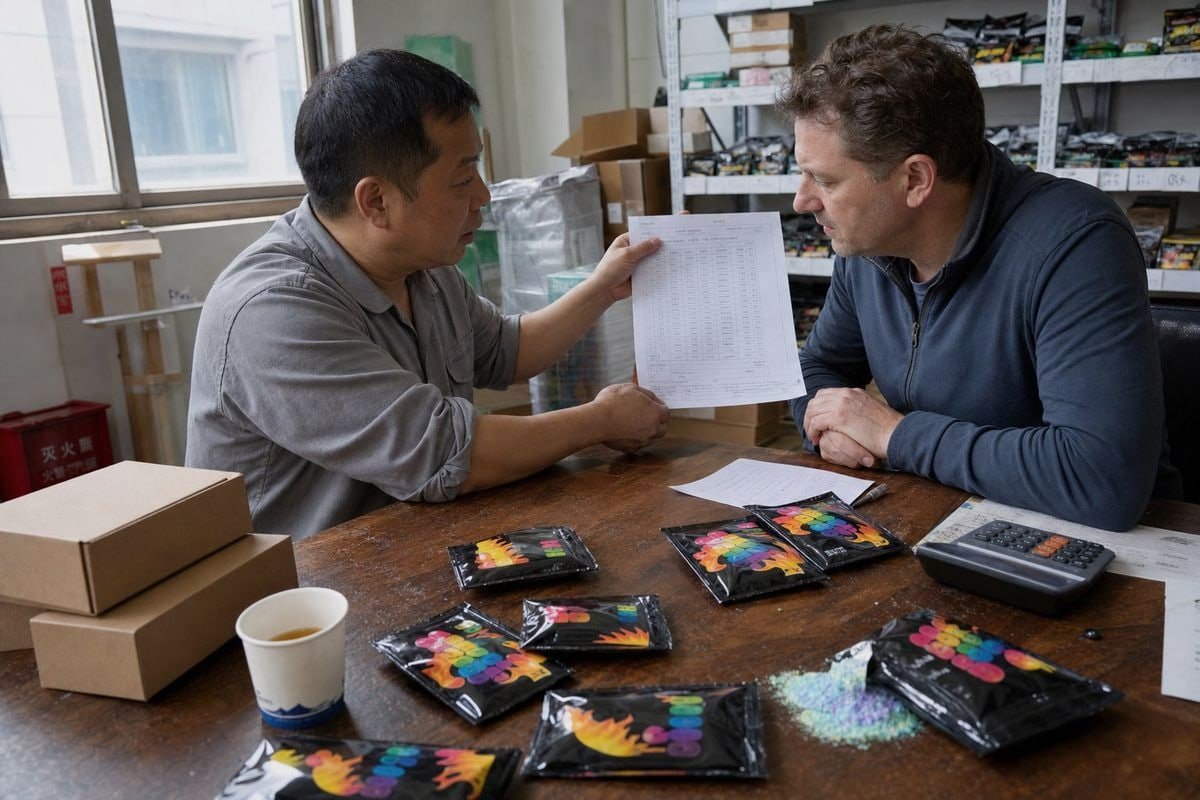
Supplier tiered pricing for Magic Fire powder confuses many buyers who reach our factory. The same sachet appears at $0.20 wholesale and $15 retail. That gap causes costly sourcing mistakes.
Supplier tiered pricing for Magic Fire powder means unit price drops as order quantity rises through set MOQ levels. Factory prices typically run $0.15–$0.40 per bag at volume, while retail packs cost $7–$15+. Price differences reflect MOQ, pack size, packaging, certifications, and branding.
Let me walk you through how these tiers actually work, what volumes unlock better pricing, [how to compare suppliers fairly](https://sunrichfire.com/how-determine-if-supplier-magic-fire-powder-price-reasonable/), and how to negotiate a low-risk trial order.
How do supplier pricing tiers actually work for Magic Fire Powder orders?
A buyer from Germany once asked me why our quote had four different prices for the same 25g sachet. After 17 years running production lines in Ningbo, I can tell you the answer is not just bulk discounting.
Pricing tiers work as stepped price breaks tied to minimum order quantities. A supplier might quote $0.30 per bag at 1,000 units, $0.25 at 6,000–29,999 units, and $0.23 at 30,000+ units. Each tier reflects production setup costs, packaging efficiency, and freight economics, not just volume rewards.
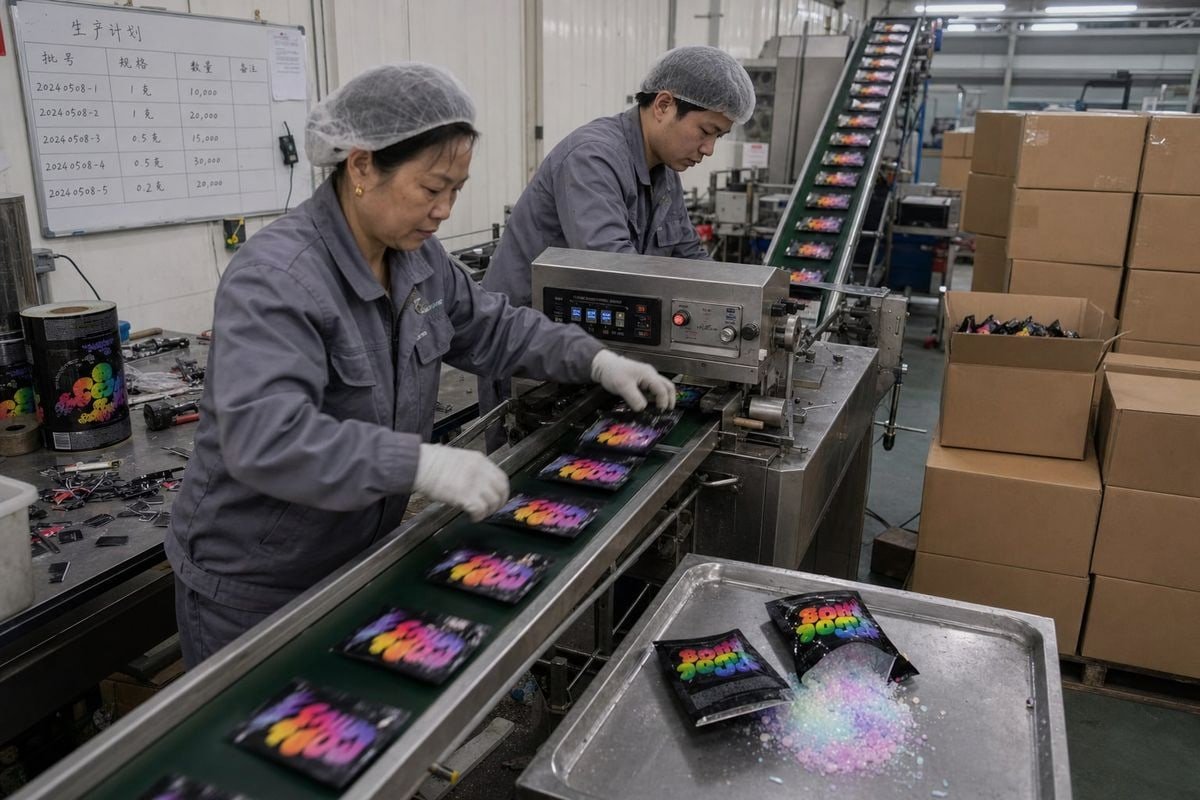
Every tier in a quote sheet has a real cost logic behind it. When our team sets up a production run, we face fixed costs 1 no matter the order size. Machine calibration, material batching, sealing-line changeovers, and quality inspection 2 all cost roughly the same for 1,000 bags or 10,000 bags. So a larger order spreads those fixed costs across more units. That is the honest engine behind tiered pricing.
The typical tier ladder
Marketplace listings for color-flame powder follow a clear pattern. Here is what the market data shows:
| Order Quantity | Typical Unit Price | What Changes at This Level |
|---|---|---|
| 1–100 bags (sample) | $0.40–$1.00+ | Hand-packed, no custom options |
| 150–500 bags | $0.21–$0.38 | Standard packaging, stock designs |
| 1,000–5,000 bags | $0.17–$0.25 | Efficient runs, some customization |
| 6,000–29,999 bags | ~$0.25 | Full production runs, OEM viable |
| 30,000+ bags | ~$0.23 or lower | Best freight rates, full private label |
Why the tiers exist beyond volume
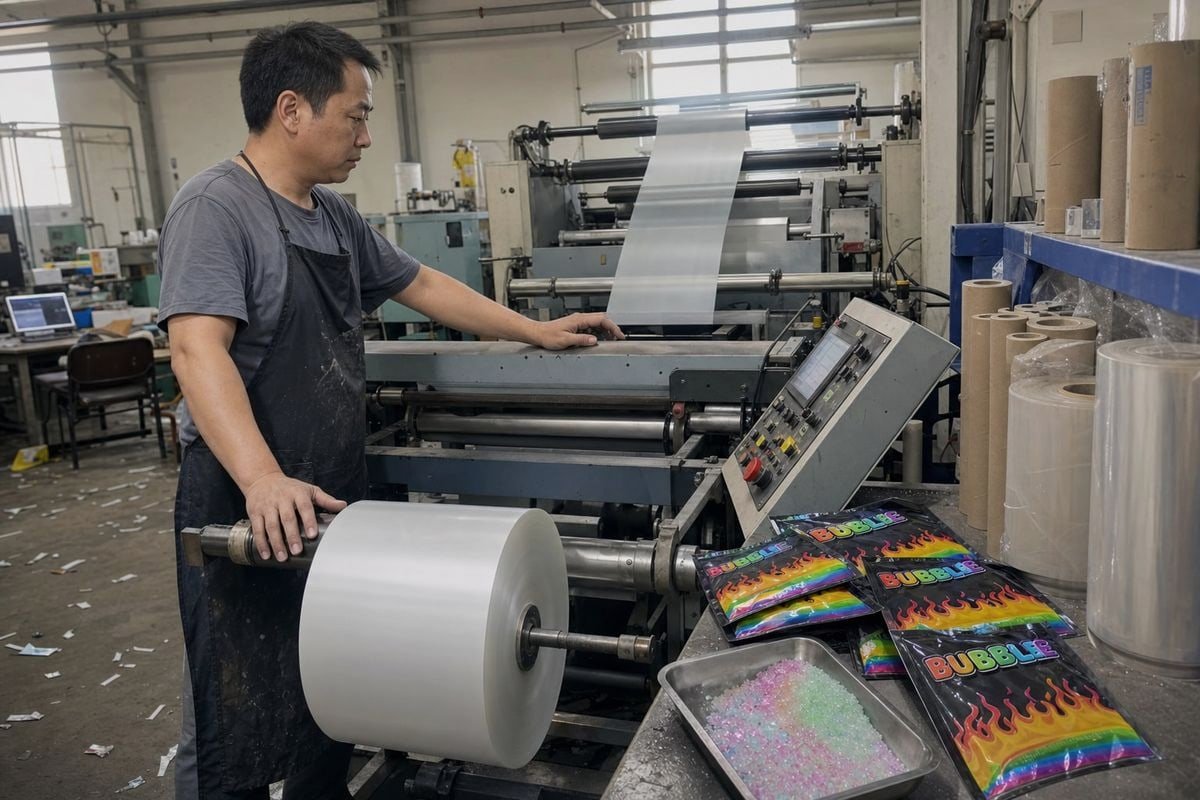
Three things shift as orders grow. First, packaging becomes more efficient. Full carton loads waste no space. Second, freight per unit drops sharply once you fill a pallet or container 3. Third, suppliers can justify custom work. In our Ningbo facility, we only run custom-printed pouches 4 at certain volumes because plate setup and film ordering carry real costs. Tiers are a map of those thresholds, not arbitrary discounts.
What order quantity do I need to reach better per-unit pricing?
There is a trade-off I discuss with almost every new distributor: order enough to hit a meaningful price break, but not so much that inventory risk eats the savings. Our export experience across 30+ countries shows the sweet spot varies by market.
Most suppliers offer meaningful price breaks starting at 1,000–5,000 bags, where unit prices drop to roughly $0.17–$0.25. The largest savings typically appear at 30,000+ units. However, buyers should target the tier where total landed cost per unit, not headline price, is lowest.

The right quantity depends on your channel, your cash flow 5, and your storage. A campfire-accessory brand selling through outdoor retailers needs different volumes than a festival gift trader testing a seasonal market. Let me break down the real math.
Landed cost beats unit price
A quoted unit price is not your real cost. You must add freight, duties, compliance documentation, and any hazmat or special handling fees where they apply. A $0.23 quote with expensive less-than-container shipping 6 can cost more per unit landed than a $0.27 quote that fills a container efficiently. I have seen buyers chase a two-cent saving and lose it five times over in freight.
A practical volume framework
| Your Situation | Suggested Order Range | Why |
|---|---|---|
| First-time market test | 500–1,000 bags | Limits risk, validates demand |
| Established reseller, one market | 5,000–10,000 bags | Hits mid-tier pricing, manageable stock |
| Multi-market distributor | 30,000+ bags | Best tier, full container economics |
| Private-label brand launch | 10,000+ bags | Justifies custom packaging setup |
Combine SKUs to reach a tier faster
Here is a lever many buyers miss. If a supplier counts total order volume across variants, you can mix pack sizes or product types to reach a tier without over-buying one item. We regularly consolidate Magic Fire sachets with color-flame pinecones and firestarters in one shipment for our distributors. That fills a container, unlocks a better tier, and diversifies their shelf offering at the same time. Always ask whether tier thresholds apply per SKU or per order. The answer changes your entire purchasing strategy.
How can I compare tiered pricing between suppliers without sacrificing compliance or quality?
A UK importer once showed me three quotes for "the same" color-flame sachet, ranging from $0.16 to $0.34. When we examined them together, one had no test reports, one quoted a 10g bag against the others' 25g bags, and only one included certified packaging. They were not comparable at all.
Compare suppliers by normalizing quotes to price per gram at identical pack sizes, then verify what each price includes: certifications with actual test reports, compliant warning labels, export-ready packaging, and documented quality control. A cheap quote missing compliance documentation is not a lower price; it is a hidden liability.
Price comparison only works when you compare identical things. Start with these steps before you look at any number:
- Normalize the pack size. Convert every quote to price per gram. A $0.25 quote for 25g beats a $0.20 quote for 10g.
- Confirm what the price includes. Packaging, inner cartons, labels, barcodes, and export documentation vary between quotes.
- Demand real test reports. "MSDS certified" in a listing means little without the actual document. Ask for SGS or Intertek reports and check the dates.
- Verify factory status. A trading company adds margin and removes your visibility into quality control.
- Check batch consistency processes. The first sample should reflect mass production. Ask how the supplier controls batch-to-batch variation.
The compliance cost that hides in cheap quotes
In our export work to the US, Germany, and France, compliance is a hard requirement, never an option. Retail buyers and customs authorities expect proper documentation, correct warning labels 7, and safe formulations. Our ISO 9001 and BSCI audits, plus CE marking and third-party test reports, exist because our buyers cannot sell without them. A supplier who skips these costs can quote a few cents lower. But if your shipment gets held at customs, or a retailer rejects your product for missing labels, the "savings" become losses.
A comparison checklist in table form
| Comparison Point | What to Ask | Red Flag |
|---|---|---|
| Pack size | Price per gram, not per bag | Vague or mixed pack sizes in one quote |
| Certifications | Copies of test reports, audit certificates | Claims with no documents |
| Packaging | Is retail-ready packaging included? | Bulk-only pricing presented as final |
| Quality control | Batch testing process description | No QC process explained |
| Supplier type | Factory audit or video tour | Refusal to show production |
Can I negotiate flexible MOQs for a trial order before committing to a higher pricing tier?
One lesson I learned early in our export business: buyers who start with a well-structured trial order become the longest-term partners. That is why we built flexible trial terms into how we quote, even though small runs are less efficient for our production lines.
Yes, most credible manufacturers will negotiate reduced MOQs for trial orders, typically 500–1,000 bags, sometimes with a small per-unit premium. Frame the trial as the first step in a committed purchasing plan, and many suppliers will also credit sample costs against your first bulk order.
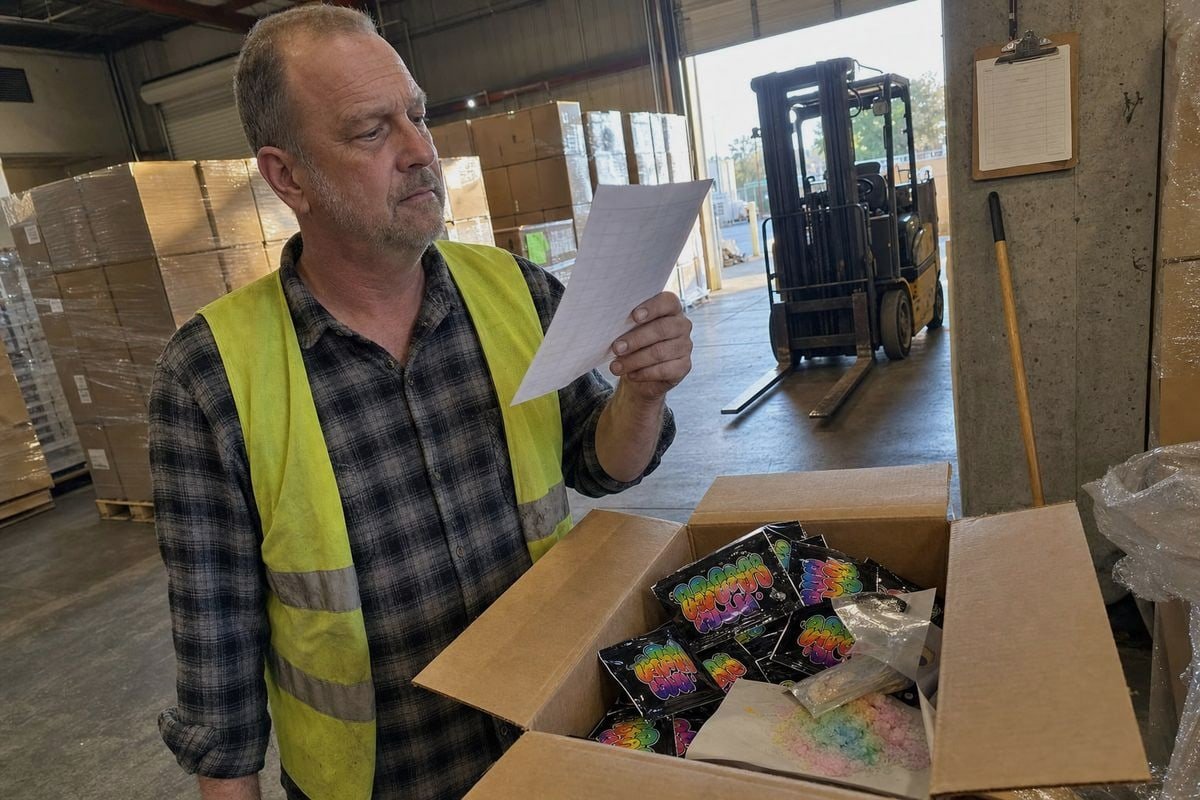
A trial order protects both sides. You verify flame color consistency, burn quality, packaging durability, and real lead times before committing serious capital. We get to demonstrate that our sample quality matches mass production, which is exactly where 17 years of process control pays off. Here is how to negotiate the trial well.
How to structure the negotiation
First, be transparent about your plan. Tell the supplier your target annual volume and your markets. A factory hearing "500 bags now, 20,000 next quarter if quality holds" responds very differently than one hearing "500 bags, cheapest price." Second, accept a fair trial premium. Small runs genuinely cost more per unit. Paying $0.35 on a trial that leads to a $0.22 tier later is smart money. Third, agree on the tier path in writing. Ask the supplier to document which price applies at which volume, and how long that pricing holds. Raw material costs for color-flame formulations do move, so many suppliers revise pricing after 60–90 days. Negotiating a price lock for your first repeat order is worth the conversation.
What to test during the trial
Use the trial deliberately. Burn samples from different bags to check color consistency. Test the sachets in the actual conditions your customers will use: campfires, fire pits, indoor fireplaces. Check seal integrity after transit. Review the warning labels against your market's regulations. In our experience, a distributor who tests thoroughly on the trial almost never has disputes on the bulk order. Also discuss private-label options during the trial phase. Custom pouches, kraft bags, jars, display boxes, and barcoding all have their own setup thresholds, and planning them early makes your first full tier order shelf-ready from day one.
Conclusion
Confusing quotes cost buyers real money. Understand tiered pricing as a ladder of MOQ, packaging, compliance, and channel costs — then compare landed costs, trial smart, and commit confidently.
Footnotes
1. Explains the fixed-cost concept that underlies why tiered pricing exists in manufacturing. ↩︎
2. Background on quality control processes underlying the fixed-cost inspection steps described in production runs. ↩︎
3. Explains container logistics that drive the freight economics discussed for bulk order shipping. ↩︎
4. Background on packaging processes relevant to the custom pouch setup costs mentioned in production. ↩︎
5. Clarifies the cash flow concept buyers must weigh when choosing an order volume tier. ↩︎
6. Defines the freight shipping method referenced when calculating true landed cost per unit. ↩︎
7. CPSC fireworks safety resource clarifies labeling regulations importers must verify before market entry. ↩︎


 English
  Spanish
  German
  French
  Arabic
  Portuguese
Join the Conversation