






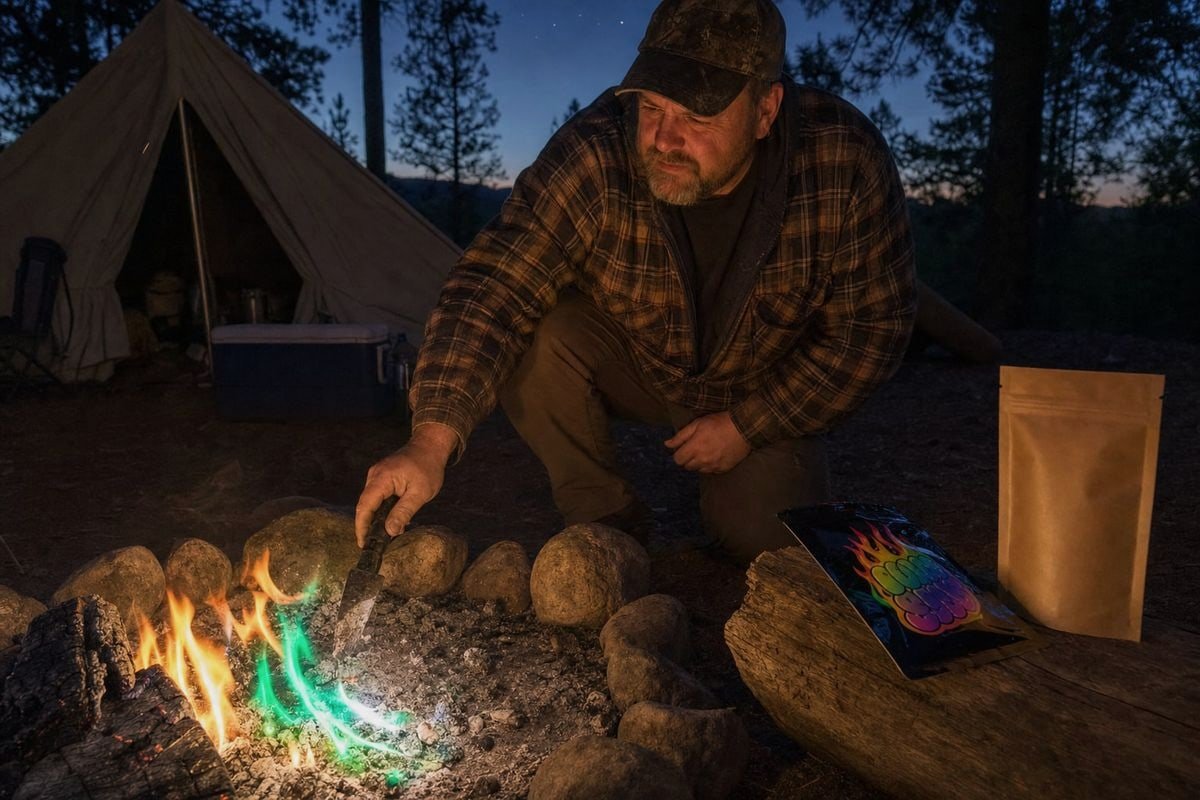
Magic Fire Powder residue worries many buyers I meet. One recalled shipment over a bad formula can wipe out a season's margin — and our production team has seen it happen to competitors.
Magic Fire Powder residue rarely causes serious campsite soil contamination from occasional use, but low-grade formulas leave metal-bearing ash that can build up with repeated burns. Certified eco-safe formulas, proper ash disposal, and never cooking over colored flames keep fire pits and soil essentially clean.
That answer has layers. The residue question depends on the formula, the frequency of use, and how the ash is handled. Let me walk you through each part, from a factory perspective.
How Do I Verify That Magic Fire Powder Meets International Safety and Eco-Compliance Standards?
Last spring, a German distributor sent our Liuyang office a competitor's packet for comparison. It had no SDS, no test report, and no traceable batch code. That is the real risk.
Verify compliance by requesting the supplier's SDS, SGS or Intertek test reports, CE documentation, and ISO 9001 certification, then cross-check batch numbers against those reports. A legitimate factory provides all four within days; a trading company usually cannot produce matching batch-level evidence.

Compliance is not one document. It is a stack of documents that must agree with each other. In our experience exporting to 30+ countries, buyers who check only one certificate often get burned later at customs or, worse, after a consumer complaint. Here is the verification stack we recommend to every purchasing manager.
The Four-Layer Verification Stack
| Layer | Document | What It Proves | Red Flag |
|---|---|---|---|
| 1 | Safety Data Sheet (SDS) | Full ingredient disclosure and hazard classification | Vague terms like "mineral salts" with no CAS numbers |
| 2 | SGS / Intertek test report | Third-party lab confirmation of heavy metal limits | Report older than 2 years or issued to a different company name |
| 3 | CE documentation | Conformity for the EU market | Self-declared CE mark with no technical file |
| 4 | ISO 9001 + BSCI audit | Consistent production quality and ethical factory conditions | Certificate belongs to a "partner factory" the seller cannot name |
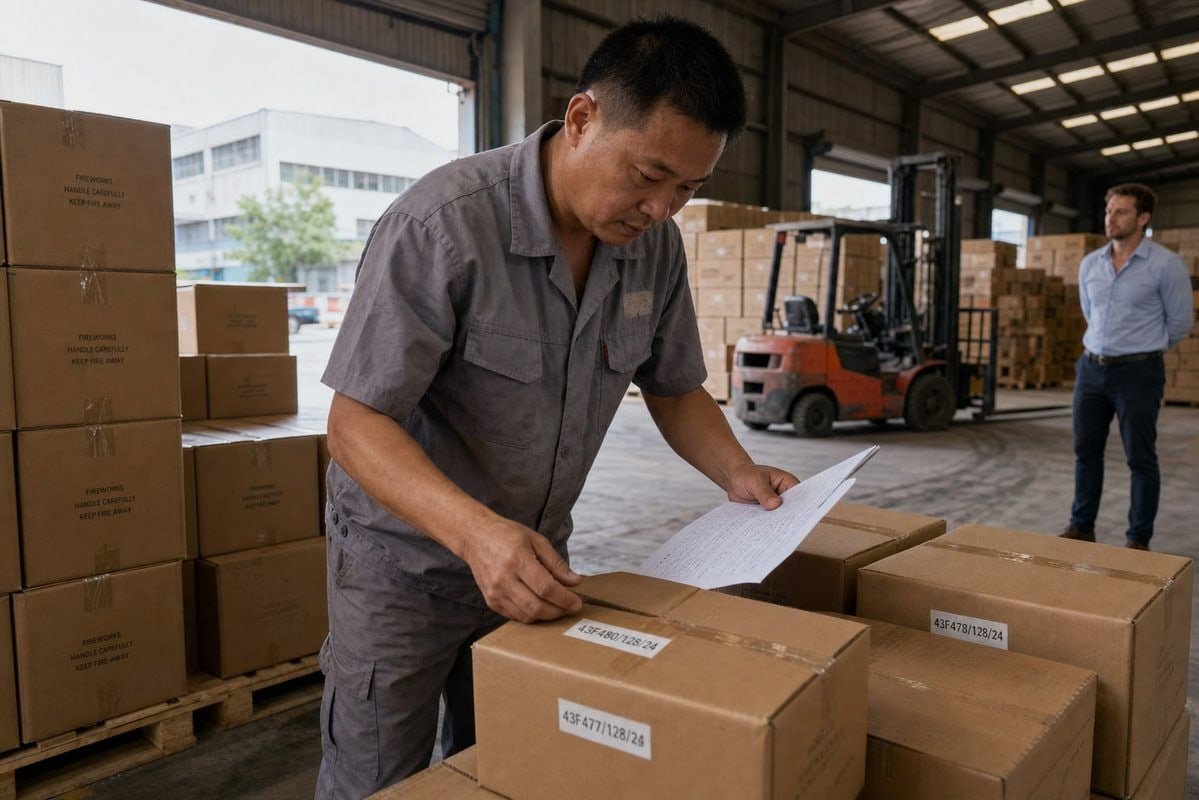
The batch-matching step matters most. A test report is only meaningful if the batch you receive matches the batch that was tested. On our lines in Ningbo, every production run carries a traceable batch code printed on the outer carton and linked to that run's QC file. When a buyer asks us to prove a shipment matches the tested formula, we can do it in one email. Ask your supplier to do the same before you sign anything.
Also check what the report actually tested. A flammability test 1 says nothing about copper sulfate 2 toxicity or soil toxicity levels. You want heavy metal screening, combustion byproduct analysis, and ingredient verification — all three.
What Happens to the Ash and Residue After the Color-Flame Packet Burns Out?
When we were developing our current formula, our engineers burned hundreds of test packets and analyzed what stayed behind. The results shaped everything about how we source raw materials today.
After burning, the metal salts that create the colors do not vanish — they change chemical state and remain concentrated in the ash. Eco-safe formulas leave trace, low-risk residue; cheap formulas can leave copper compounds, chlorides, and even polyvinyl chloride combustion byproducts in the fire pit.
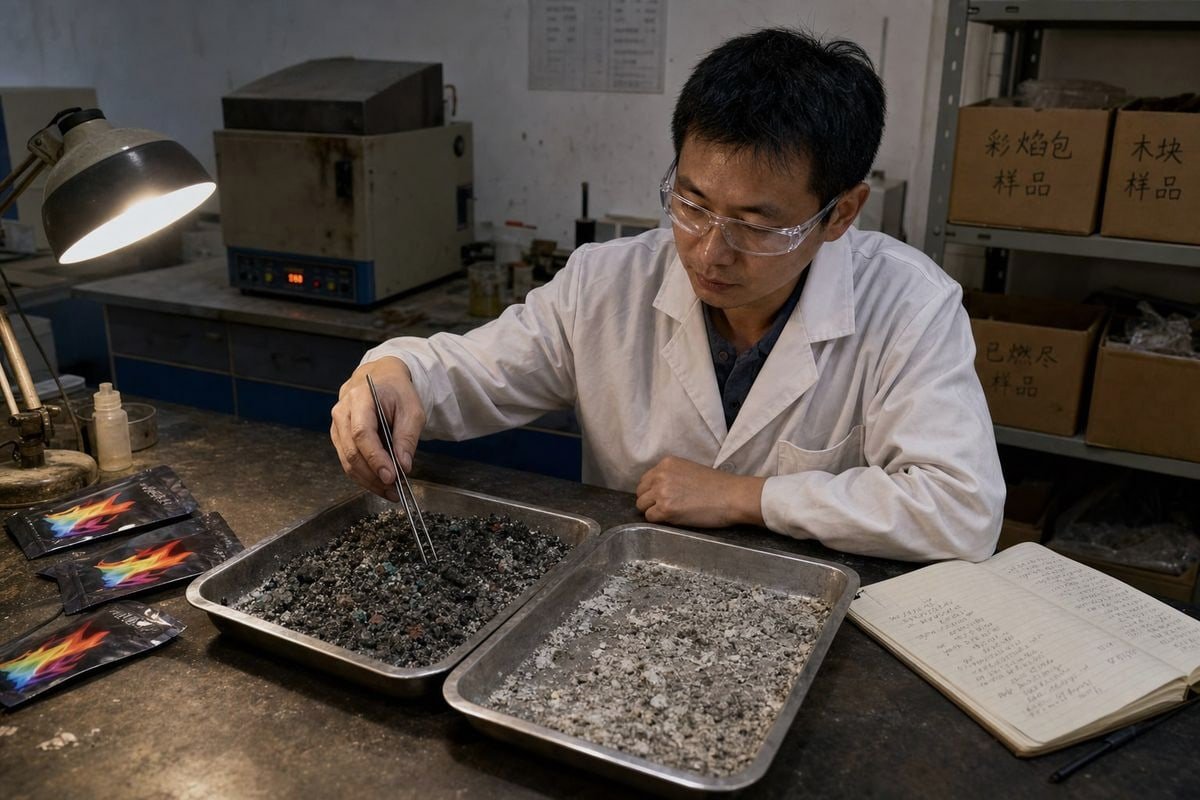
This is basic chemistry, and it is worth understanding before you put your brand name on a packet. Fire does not destroy metals. It transforms them. Copper sulfate, strontium chloride, and similar colorants oxidize during combustion, and the resulting metal oxides settle into the ash bed. USDA Forest Service guidance 3 describes ash from plain, untreated wood as essentially nontoxic. Colored-flame ash sits somewhere above that baseline, and exactly how far above depends entirely on the formula.
Three Residue Pathways to Understand
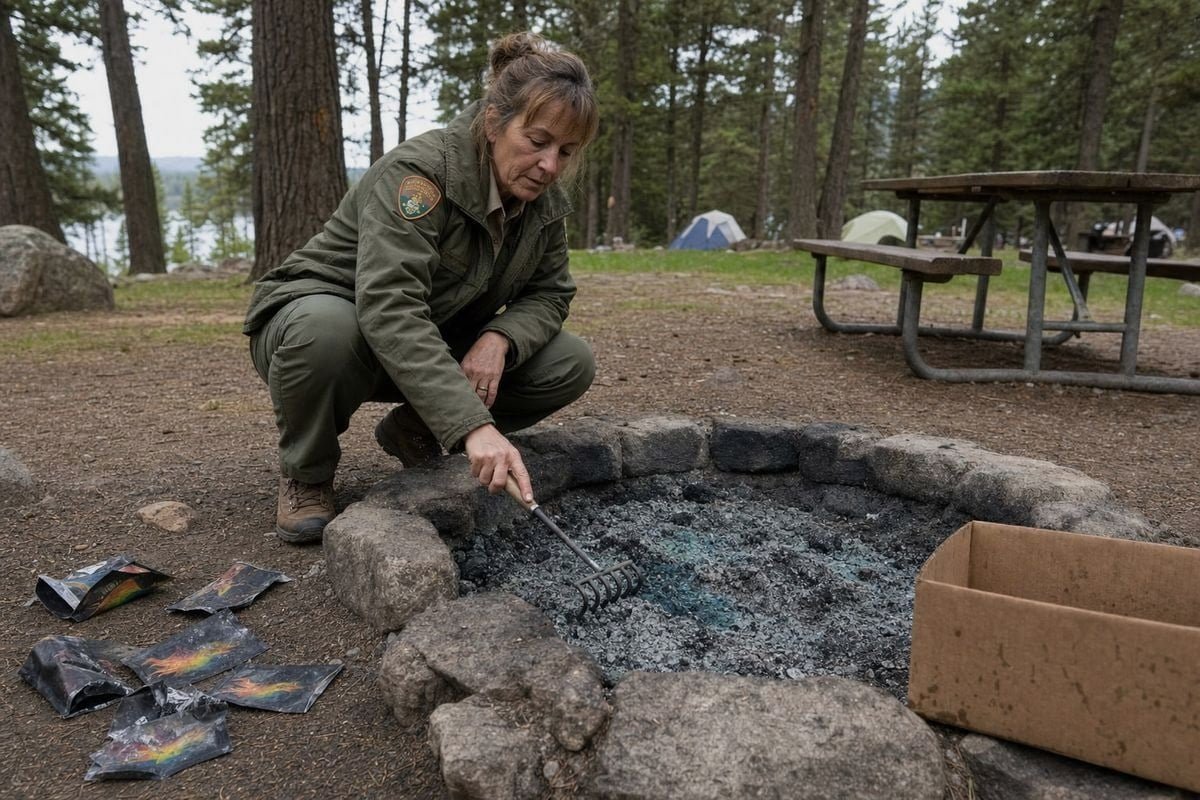
- Ash concentration. Metal ions stay in the ash long after the flames die. One packet leaves a trace amount. Ten packets in the same shared fire ring, week after week, create a localized pocket of metal-enriched ash. This is where heavy metal leaching 4 into the top soil layer becomes plausible, especially after rain.
- Soil contact. If ash is left in place or raked into the ground, salts can become fixed in the soil directly under the pit. Concentrated copper compounds act as a fungicide, which can suppress beneficial soil fungi and harm earthworms in that immediate footprint. Groundwater contamination risks from a single recreational packet are very low, but Leave No Trace principles exist precisely because small impacts accumulate.
- Combustion byproducts. This is the pathway that worries me most as a factory owner. Some low-cost formulas use PVC as a chlorine donor to enhance color. In the low-temperature, oxygen-starved conditions of a typical campfire, burning PVC can generate dioxins — persistent organic pollutants 5. We refuse to use PVC in any Sunrich formula for exactly this reason, and I would advise any buyer to make "PVC-free" a hard specification.
There is one more practical point that applies to every colorant, including well-made ones: cooking over colored flames is never acceptable. Metallic residues can settle on food surfaces, and cupric chloride 6 environmental impact is a very different question from cupric chloride on a grilled sausage. Your packaging should say this clearly, and ours does. Chloride and sulfate salts can also accelerate corrosion and pitting on stainless steel fire pits with repeated use — a fair disclosure point for premium fire pit retailers.
Proper chemical ash disposal is simple: let the ash cool fully, bag it, and pack it out with household waste rather than scattering it or dumping it near water.
Can I Get Test Reports or Certifications Proving My Supplier's Formula Is Non-Toxic?
A Canadian buyer once told me his previous supplier promised reports "after the deposit." That order ended in a customs seizure. The lesson stuck with both of us: documents come first, money second.
Yes — any credible manufacturer can provide SGS or Intertek test reports, a complete SDS, and CE documentation before you pay a deposit. Reports should cover heavy metal content, acute toxicity screening, and combustion emissions, and must be issued in the factory's own legal name.
Let me be direct about what "non-toxic" actually means on paper, because the phrase gets abused. No colored-flame product is safe to eat — Health Canada 7 explicitly warns consumers not to open the packets and to keep them away from children, since the fine crystalline powder is caustic if ingested and the glossy foil pouches can resemble candy wrappers. "Non-toxic" in a compliance context means the formula passes defined thresholds for heavy metals, produces no acutely hazardous combustion emissions under normal use, and leaves residue below regulatory concern levels. That is what the test reports should demonstrate.
What a Complete Report Package Looks Like
| Report Type | Testing Body | What to Check |
|---|---|---|
| Heavy metal screening | SGS / Intertek | Lead, cadmium, mercury, arsenic below EU limits |
| SDS (16-section format) | Manufacturer, verified by lab | Full ingredients with CAS numbers, no "proprietary blend" gaps |
| Combustion emission test | Accredited lab | No dioxin precursors; confirms PVC-free formula |
| Packaging safety review | Manufacturer + buyer's counsel | Child-warning labels, non-food-imitation design compliance |
At our factory, we keep current SGS and Intertek reports 8 on file for every active formula, and we re-test rather than let reports age past their credibility window. When a US retail sourcing team audits us, they check three things in this order: the report's issue date, the legal entity name on the report, and the ingredient list against the SDS. If any of those three do not line up, they walk. You should apply the same test.
One more tip from 17 years of doing this: ask for the report before requesting a quote, not after. Suppliers who genuinely have documentation send it within a day. Suppliers who need to "check with the factory" are usually not the factory. Campfire colorant safety starts with knowing exactly who made the powder and what is in it.
How Do I Choose a Manufacturer Who Can Customize Eco-Safe Formulas for My Market's Regulations?
The trade-off we weigh most often on our OEM line is color intensity versus residue profile. Stronger color usually means more metal salt. A good factory engineers around that instead of hiding it.
Choose a manufacturer with in-house formulation capability, current ISO 9001 and BSCI certification, market-specific compliance experience, and full OEM/ODM services including custom warning labels and packaging. They must adjust the formula itself — not just the label — to meet your country's chemical regulations.
Regulations differ sharply between markets, and this is where genuine manufacturing depth separates real partners from resellers. A formula acceptable in one market may need adjusted labeling, different chloride donors, or reduced copper content in another. A trading company cannot change the formula. A factory can. Our Ningbo production lines have reformulated packets for EU buyers concerned about cupric chloride environmental impact, and for Australian buyers whose retailers demanded stricter child-safety warnings — and in both cases the first sample matched mass production exactly, because the same line made both.
A Practical Selection Checklist
| Selection Criterion | Why It Matters | How to Verify |
|---|---|---|
| In-house formulation lab | Can adjust metal salt ratios for your regulations | Video call the lab; ask to see raw material stock |
| Batch-to-batch QC records | Sample quality must equal container quality | Request QC logs from a recent production run |
| Market-specific export history | Knows your customs and labeling rules already | Ask for references shipping to your region |
| Full private-label capability | Warning labels, barcodes, display boxes done right | Review past OEM packaging samples |
| Flexible trial MOQs | Lets you test the market before committing | Get MOQ terms in writing upfront |
Questions That Expose Weak Suppliers
Ask these three questions on your first call. First: "Is your formula PVC-free, and can your lab report prove it?" This addresses combustion byproduct risk directly. Second: "What happens to the residue chemistry if a consumer uses three packets in one fire pit?" A real formulator will discuss ash concentration and heavy metal leaching honestly. Third: "Can you print market-specific warnings about cooking over colored flames and keeping packets from children?" If they hesitate on any of these, keep looking.
I will also say this plainly: price-first sourcing is how contaminating formulas reach store shelves. The cheapest powder on the market is cheap because someone skipped the raw material screening or the emission testing. Buyers who position their brand around outdoor values — Leave No Trace principles, responsible camping, clean fire pits — cannot afford that shortcut. Note too that some national parks restrict burning any foreign materials in fire rings, so honest usage guidance on your packaging protects both your customers and your brand.
Conclusion
Magic Fire Powder residue is manageable, not mysterious. Verify certifications, understand the ash chemistry, demand batch-matched test reports, and partner with a factory that formulates for your market's rules.
Footnotes
1. Authoritative overview of international fire and flammability testing standards and procedures.

 English
  Spanish
  German
  French
  Arabic
  Portuguese
Join the Conversation