







Buyers often ask me whether Magic Fire powder expires CE documentation 1. On our production line in Ningbo, we have seen poorly stored stock lose color vibrancy — and cost distributors real money in returns.
Magic Fire powder does not have a short expiration date, but its color-flame effect can weaken over time if packets absorb moisture, suffer heat damage, or lose seal integrity. FIFO batch management — using the oldest stock first — is the simplest way to keep performance consistent.
Let me break this down properly. First, we will look at real shelf life. Then storage conditions. Finally, I will show you a practical FIFO system and the batch documentation you should demand from any supplier.
How long can I store Magic Fire powder before its color-flame effect weakens?
A distributor in Poland once returned a pallet to us for testing temperature cycling 2. The packets were three years old but had been kept dry and sealed. They burned almost exactly like fresh production stock.
Properly stored Magic Fire powder typically retains full color-flame performance for one to three years. The active mineral salts are chemically stable; degradation comes from moisture absorption and packaging damage rather than a fixed countdown. Sealed, dry packets can perform well even beyond three years.

The honest answer is that time alone is not the enemy. The color-producing compounds in our Magic Fire packets are mineral-based salts, and they are inherently stable when dry. In seventeen-plus years of producing color-flame products, we have never seen a properly sealed packet simply "die" from age. What we have seen — repeatedly — is performance loss caused by conditions during those months or years of storage.
What "effectiveness" actually means
Before you judge shelf life, define what weakening looks like. Effectiveness covers four things:
- Color intensity — how vivid the blues, greens, and purples appear
- Duration — one packet usually gives roughly 10–15 minutes of color; multiple packets can extend the effect to 30–60 minutes
- Ignition consistency — how quickly and evenly the effect starts
- Total failure — rare, and almost always tied to water damage
Realistic shelf-life expectations
| Storage Condition | Expected Effective Life | Typical Performance Change |
|---|---|---|
| Sealed, cool, dry warehouse | 3+ years | Little to none |
| Normal indoor retail shelf | 2–3 years | Minimal color fade |
| Humid or unconditioned storage | 6–18 months | Clumping, weaker color |
| Damaged or opened packets | Weeks to months | Rapid degradation |
One more point buyers often miss: weak color is sometimes a dosing issue, not an aging issue. A single packet in a large bonfire will look faint even when the powder is perfectly fresh. Our usage guidance recommends one to three unopened packets depending on fire size. So before blaming old stock, check whether the fire conditions and packet count were right.
What storage conditions help me preserve my Magic Fire powder inventory's shelf life?
During a factory audit for our BSCI certification 3, an inspector asked why our finished-goods warehouse ran dehumidifiers year-round. The answer is simple: moisture is the single biggest threat to color-flame powder.
Store Magic Fire powder in a cool, dry space below 60% relative humidity, away from direct sunlight, heat sources, and temperature swings. Keep packets sealed in original packaging, elevated off concrete floors, and inside outer cartons with desiccants for maximum shelf life.

Storage quality matters more than storage duration. That is the core lesson from our export experience across the US, Germany, Australia, and the Middle East — very different climates, very different results with identical product batches.
The three enemies of stored powder
Moisture is enemy number one. Hygroscopic salts 4 pull water from humid air. Even through intact foil, prolonged high humidity slowly works on seals and seams. Wet powder clumps, ignites unevenly, and produces washed-out color.
Heat and temperature cycling come second. A hot warehouse is bad; a warehouse that swings between hot days and cold nights is worse. Cycling causes condensation inside outer packaging and stresses heat-sealed seams. Never store stock in vehicles, metal sheds, or near exterior walls and HVAC vents.
Physical damage is the quiet one. Crushed cartons puncture sachets. A pinhole tear is invisible on a shelf but lets humidity in for months.
Practical storage checklist
| Factor | Target | Why It Matters |
|---|---|---|
| Humidity | Below 60% RH | Prevents moisture absorption and clumping |
| Temperature | 10–25°C (50–77°F), stable | Avoids condensation cycles and seal stress |
| Light | No direct sunlight | Protects packaging film and print |
| Floor contact | Pallets or shelving, never bare concrete | Concrete wicks moisture upward |
| Outer packaging | Keep original cartons closed | Adds a second moisture barrier |
| Desiccants | Silica gel in master cartons | Absorbs residual humidity |
We pack every export carton with these risks in mind, because a packet that leaves our SGS-tested line in perfect condition can still fail if it spends a summer in an unconditioned container yard. If your storage runs humid, shorten your rotation cycle and inspect stock quarterly instead of annually.
How do I set up a FIFO batch management system for my Magic Fire powder stock?
A UK camping brand we supply once found two-year-old cases buried behind six newer shipments. Nothing was labeled by arrival date. Their fix took one afternoon — and it is the same system I recommend to every buyer.
Set up FIFO by labeling every incoming shipment with a batch ID and receipt date, storing older batches in a clearly marked use-first zone, placing new stock behind old stock, and always picking by batch order. Add monthly spot checks for clumping or packet damage.

FIFO means first in, first out 5: the oldest batch you received is the first batch you sell or use. For a stable but storage-sensitive product like color-flame powder, FIFO prevents the worst-case scenario — old stock sitting in the back of a warehouse until it degrades, then reaching a customer who lights a disappointing fire under your brand name.
A simple five-step FIFO setup
- Assign a batch ID on arrival. Use the supplier's lot number if provided, or create your own (for example, MF-2025-03 for a March 2025 receipt).
- Log the essentials. Record receipt date, supplier lot number, quantity, and packaging condition in a spreadsheet or your inventory software.
- Label physically. Apply color-coded stickers or dated tags to every carton. Color-coding by quarter lets warehouse staff spot old stock at a glance without reading dates.
- Arrange for forced rotation. Put new stock behind or below old stock. If pickers can only reach the front, they will naturally pull the oldest cartons first.
- Audit regularly. Once a month or quarter, open one packet from your oldest batch. Check for clumping, discoloration, or damp smell. For stock nearing its estimated window, run a small burn test before committing it to a big order or event.
Scaling the system
| Operation Size | Recommended FIFO Method | Tools Needed |
|---|---|---|
| Household / small event use | Dated marker on each pouch | Permanent marker |
| Small retailer | Color-coded carton labels + spreadsheet log | Stickers, Excel |
| Distributor / importer | Barcode or QR batch tracking in inventory software | WMS or POS integration |
| Large retail channel | Automated expiry alerts tied to batch data | ERP with lot control |
For larger volumes, integrate batch data into your POS or inventory management system so it flags aging batches automatically. Manual logs work, but software removes human error — and when you handle seasonal inventory that peaks before winter and summer camping seasons, automation pays for itself quickly.
What batch coding and documentation should I request from my supplier to track expiration dates?
When we onboard a new distributor, the documentation conversation usually happens before the price conversation. Serious buyers in the US and EU know that traceability is what protects them if a quality question ever arises.
Request a printed lot or batch number on every carton and inner unit, a production date, a certificate of analysis or QC release record per batch, safety test reports from labs like SGS or Intertek, and a stated shelf-life recommendation with storage conditions.
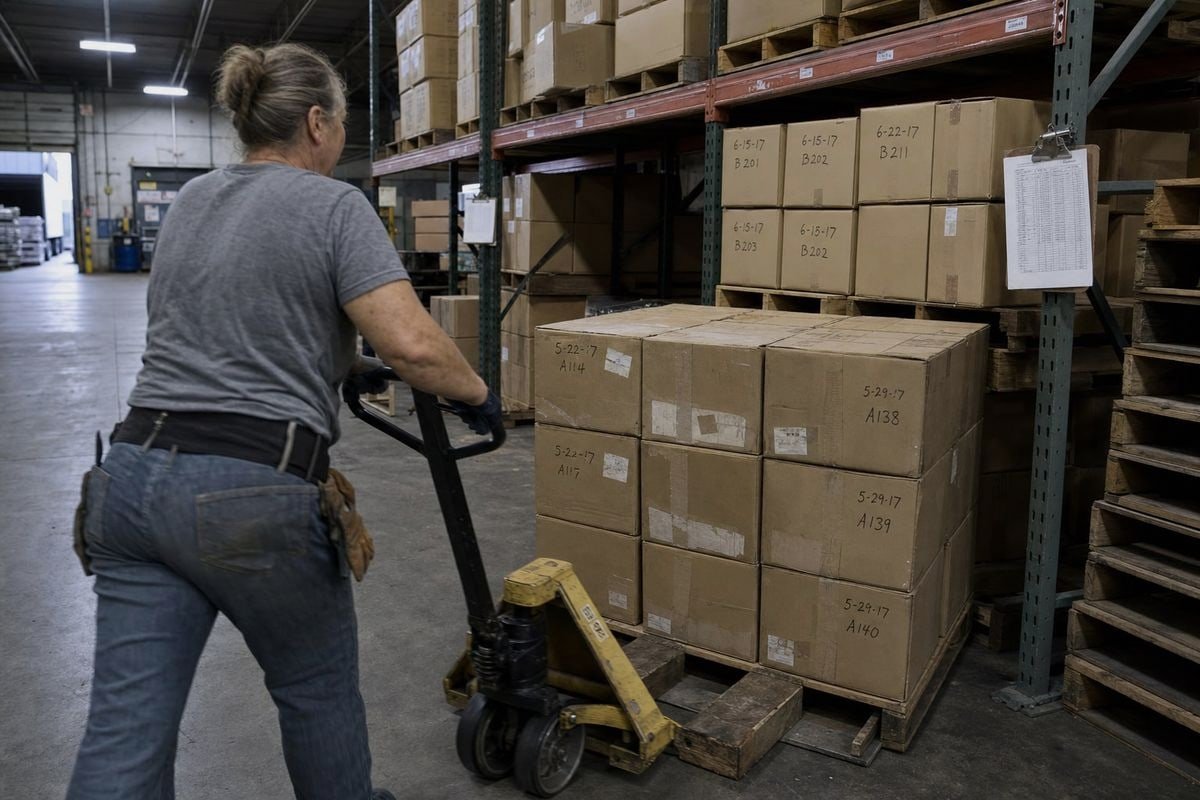
Good batch documentation turns FIFO from guesswork into a real system. If your supplier cannot tell you when a lot was produced and how it was tested, you cannot manage its lifecycle — and you carry all the risk if a customer complains. Here is what I tell buyers to put in their purchase agreements.
The five documents that matter
Lot numbers on every level of packaging. A batch code should appear on the master carton, the display box, and ideally each sachet or inner unit. Our own coding ties each lot back to a specific production run, raw material batch, and QC record — so a single packet can be traced end to end.
Production date, not just a lot code. A cryptic code helps the factory; a readable production date helps your warehouse team apply FIFO without a decoder sheet. Ask for both.
Batch QC release records. Every production run should pass internal quality checks before shipping — burn performance, seal integrity, and fill weight. Under our ISO 9001 system 6, no batch leaves the factory without a signed release. Request a copy or summary per shipment.
Third-party test reports. For color-flame products entering the US or EU, insist on current SGS or Intertek reports 7 and CE documentation. Retailers like large home-improvement chains will ask you for these, so get them upfront.
A written shelf-life statement. Ask the supplier to state a recommended shelf life and the storage conditions it assumes. This gives you a defensible basis for your own rotation policy and for retail sell-by guidance.
What to ask for private-label orders
If you are running OEM packaging under your own brand, also request lot-code printing on your custom pouches, warning labels in your market's language, and barcodes that link to your inventory system. We handle all of this routinely for private-label clients — batch codes, custom warning bands, and retail-ready barcoding — because a shelf-ready product must also be a traceable product.
Conclusion
Magic Fire powder rarely expires on a fixed date — but poor storage quietly degrades it. Control humidity, rotate stock with FIFO, and demand batch documentation from your supplier. Do those three things, and every packet you sell performs like the sample you approved.
Footnotes
1. Official EU page explaining CE marking requirements referenced for product compliance. ↩︎
2. Explains thermal cycling stress mechanism affecting packaging seals over time. ↩︎
3. Official body for BSCI social compliance audits referenced in factory certification context. ↩︎
4. Background on hygroscopy explains why mineral salts absorb moisture from air. ↩︎



 English
  Spanish
  German
  French
  Arabic
  Portuguese
Join the Conversation