







Moisture absorption and caking 1 in Magic Fire powder can quietly destroy a whole shipment. I have seen buyers lose entire pallets because humid air crept into weak packaging over one summer.
To prevent moisture absorption and caking in Magic Fire powder, store it in airtight, foil-laminated or multilayer packaging, keep warehouse humidity below 50–60% RH at 15–25°C, add desiccants, avoid frequent opening, keep stock off concrete floors, and rotate inventory using a FIFO system.
That is the short answer. Below, I break down each layer of protection in detail, from [packaging choices](https://sunrichfire.com/what-magic-fire-powder-packaging-specs-single-pack-vs-box/) to warehouse habits, so your color-flame products stay free-flowing and shelf-ready.
What Packaging Options Best Protect Magic Fire Powder from Humidity During Storage?
On our production lines in Ningbo, we heat-seal every Magic Fire sachet within minutes of filling. We learned early that packaging is the first and strongest barrier against humidity.
Aluminum-laminated foil sachets offer the best humidity protection for Magic Fire powder, followed by multilayer polyethylene bags and sealed plastic jars with gasket lids. Kraft paper pouches need an inner foil or PE liner. Whatever the format, a complete heat seal matters more than the material alone.
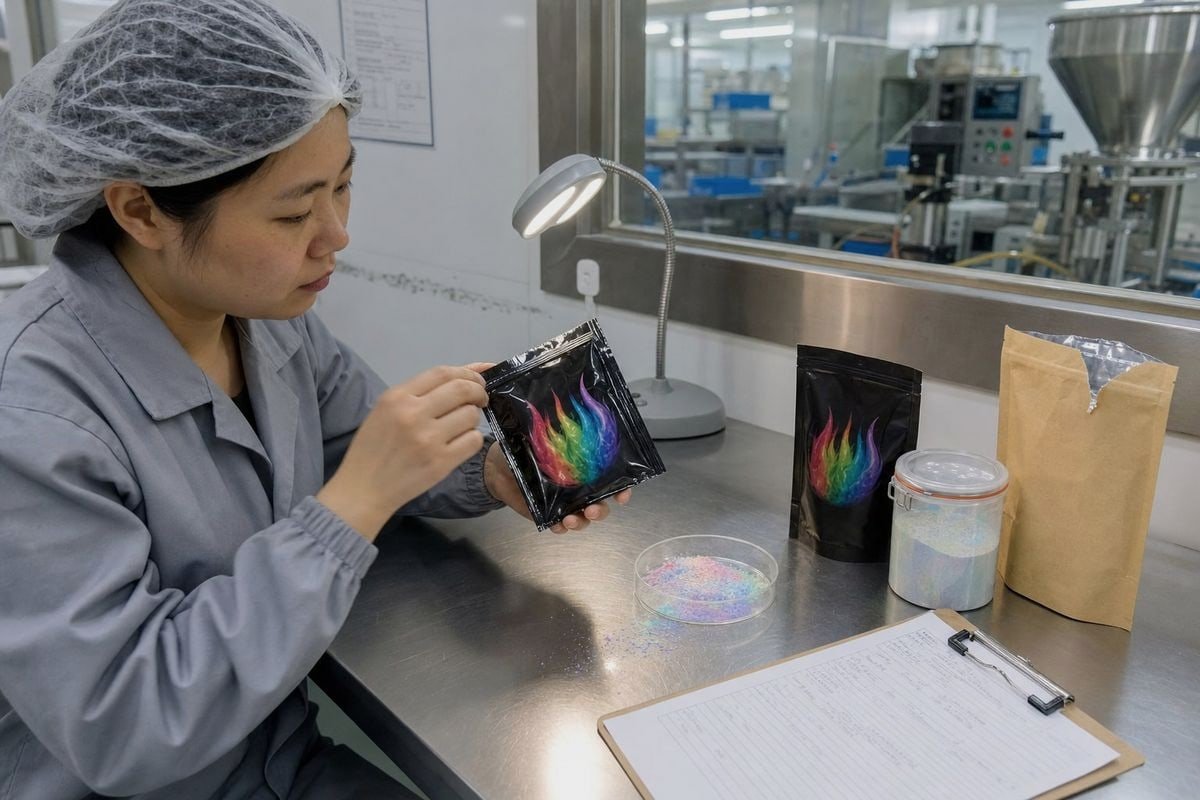
Packaging is where most moisture problems either start or stop. In our 17+ years of making color-flame products, we have tested nearly every common format. The result is consistent: the total amount of moisture 2 that enters the package matters more than any other single factor. A cheap bag with a weak seal will fail even in a good warehouse. A well-sealed laminated pouch will survive a humid shipping container.
Here is how the main options compare:
| Packaging Type | Moisture Barrier | Best Use Case | Notes |
|---|---|---|---|
| Aluminum-laminated foil sachet | Excellent | Single-use retail packets | Our standard for Magic Fire packets; blocks vapor and light |
| Multilayer PE bag | Good | Bulk inner bags inside cartons | Needs a strong heat seal on both ends |
| Plastic jar with gasket lid | Good | Multi-use retail formats | Seal quality depends on the gasket, not the jar |
| Kraft stand-up pouch | Poor alone | Eco-look retail packaging | Must include a foil or PE inner liner |
| Plain paper or thin poly bag | Very poor | Not recommended | Allows steady air exchange and vapor ingress |
What to Check on Any Powder Package
A good barrier film is wasted if the seal fails. So we check three things on every batch:
- Crimp integrity. Both heat-sealed ends must be complete, with no channels or wrinkles.
- Liner condition. For jars and boxes, the inner liner must be intact, not torn or pinched.
- Reseal quality. For resealable pouches, the zipper must close fully after each use.
For bulk B2B shipments, we recommend sealed inner PE bags inside cartons, or moisture-barrier pails 3 for loose powder. Frankly, if you are repacking our powder into your own private-label format 4, the barrier spec of your chosen film should be the first question you ask, not the last.
How Should I Store and Handle Magic Fire Powder in My Warehouse to Prevent Caking?
A German distributor once asked us why one pallet caked while another stayed perfect. The difference was simple: one sat against a damp exterior wall for four months.
Store Magic Fire powder in a cool, dry warehouse at 15–25°C with relative humidity below 50%, ideally on pallets away from walls and floors. Avoid sunlight, heat sources, and temperature swings. Open containers only when needed, reseal immediately, and rotate stock first-in, first-out.
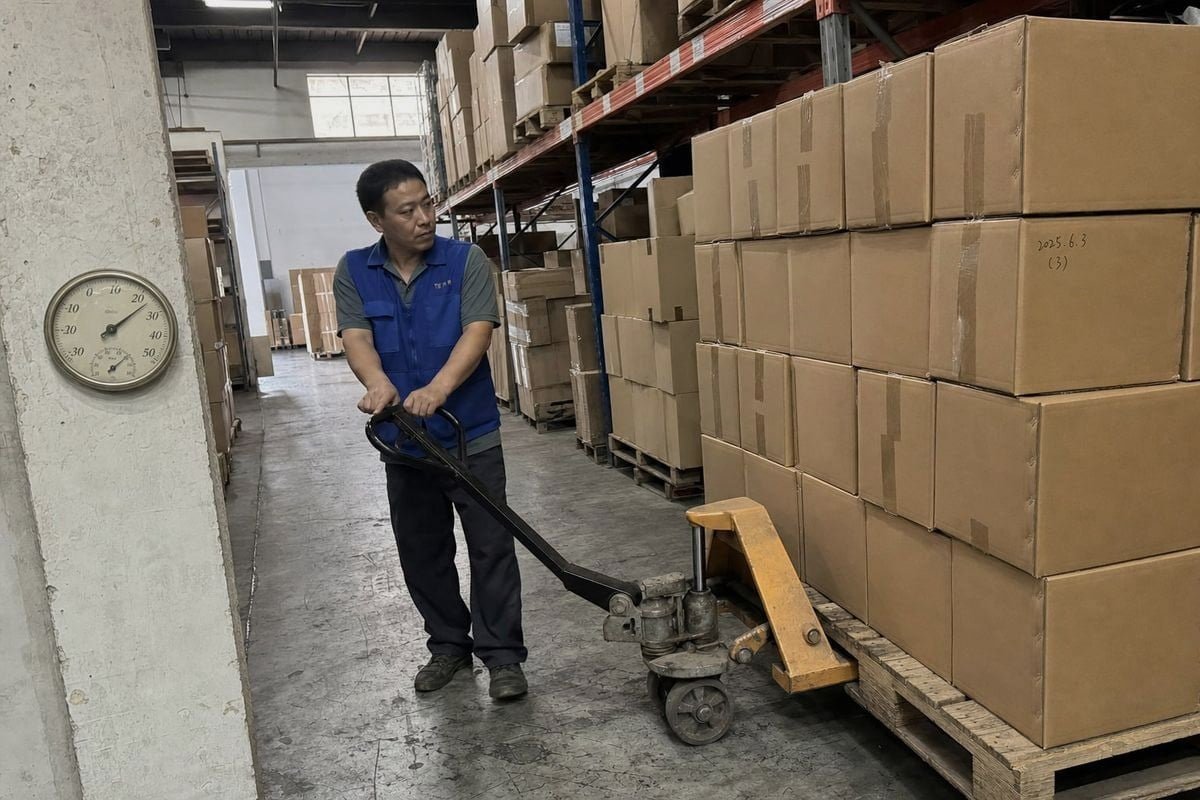
Good packaging buys you time. Good warehouse discipline makes that time count. Even a strong barrier film breathes slightly under repeated temperature swings, so the environment around the package still matters. We ship to 30+ countries, and the storage conditions at the destination often decide how the product looks a year later.
Set the Right Environment First
The most protective target is below 50% RH. If your facility cannot hold that year-round, treat 60% RH as your hard ceiling. Temperature should stay between 15°C and 25°C, and stability matters as much as the number itself. Daily hot-cold cycles 5 cause containers to "breathe" and can create condensation inside packaging. So keep pallets away from loading dock doors, sunlit walls, and heating units.
Build Simple Handling Habits
These low-cost habits prevent most caking problems:
- Elevate everything. Use pallets or shelving. Concrete floors wick moisture upward.
- Leave a wall gap. Keep at least a small air gap between stock and exterior walls.
- Portion for daily use. Decant into smaller sealed units instead of repeatedly opening bulk containers.
- Reseal fast. Every minute a container sits open in humid air, powder absorbs vapor.
- Keep tools dry. Never use damp scoops, and never store powder near sinks or wash stations.
- Run FIFO. Label cartons with packaging dates and ship the oldest stock first. Stagnant stock absorbs moisture gradually.
- Monitor with a hygrometer. A simple humidity and temperature logger costs little and warns you early.
We follow these same rules in our own finished-goods warehouse before export, because a product that leaves our factory dry should arrive on your shelf dry.
What Causes Magic Fire Powder to Absorb Moisture and Clump Over Time?
During product development, our engineers tested how fast unprotected color-flame granules pick up humidity. In a warm, wet room, the surface changed within days, not months.
Magic Fire powder clumps because its fine granules are hygroscopic and pull water vapor from ambient air. Absorbed moisture forms thin liquid bridges between particles, which stick them together. Over time, these bridges harden into lumps, reducing flowability and weakening the powder's color-flame performance.

Understanding the mechanism helps you fight it. The process follows a predictable chain, and each link is a chance to intervene:
- Humid air reaches the powder through a weak seal, an open lid, or permeable packaging.
- The fine crystalline granules absorb water vapor from that air.
- Moisture forms microscopic liquid bridges between neighboring particles.
- The particles stick together, and small soft clumps appear.
- As moisture cycles or the powder partially dries, those bridges recrystallize and harden.
- Flow worsens, hard cakes form, and dispersion in the flame becomes uneven.
Why This Matters for a Color-Flame Product
Magic Fire powder works by dispersing metal-salt granules 6 evenly into a fire. Caked powder does not scatter properly. So a customer pouring a clumped sachet into a campfire may see patchy, weak color instead of the vivid rainbow effect they paid for. That means returns, bad reviews, and a damaged brand. For our B2B buyers, the science translates directly into shelf life and customer satisfaction.
Risk Factors Ranked
| Risk Factor | Impact on Caking | How Controllable |
|---|---|---|
| Broken or weak package seal | Very high | Fully controllable at packing stage |
| Ambient humidity above 60% RH | High | Controllable with dehumidification |
| Frequent container opening | High | Controllable with portioning habits |
| Temperature cycling / condensation | Medium-high | Controllable with stable placement |
| Long stagnant storage time | Medium | Controllable with FIFO rotation |
| Contact with damp floors or walls | Medium | Fully controllable with pallets |
Watch for early warning signs: soft lumps, discoloration, a damp look on the granules, or powder that no longer shifts freely when you tilt the container. A quick pinch test every 30–60 days catches problems before they become hard caking. Powder with visible moisture damage should be evaluated or discarded, not shipped.
Can Sunrich Customize Moisture-Resistant Packaging for My Private-Label Magic Fire Products?
One UK camping brand came to us after their previous supplier's kraft bags failed in coastal shops. We rebuilt their packaging with a foil inner liner, and the complaints stopped.
Yes. Sunrich offers full OEM/ODM packaging customization for Magic Fire powder, including foil-laminated sachets, lined kraft pouches, gasket-sealed jars, and display boxes. We add your private-label branding, warning labels, and barcodes, with all products backed by ISO 9001, BSCI, CE, and SGS/Intertek certification.
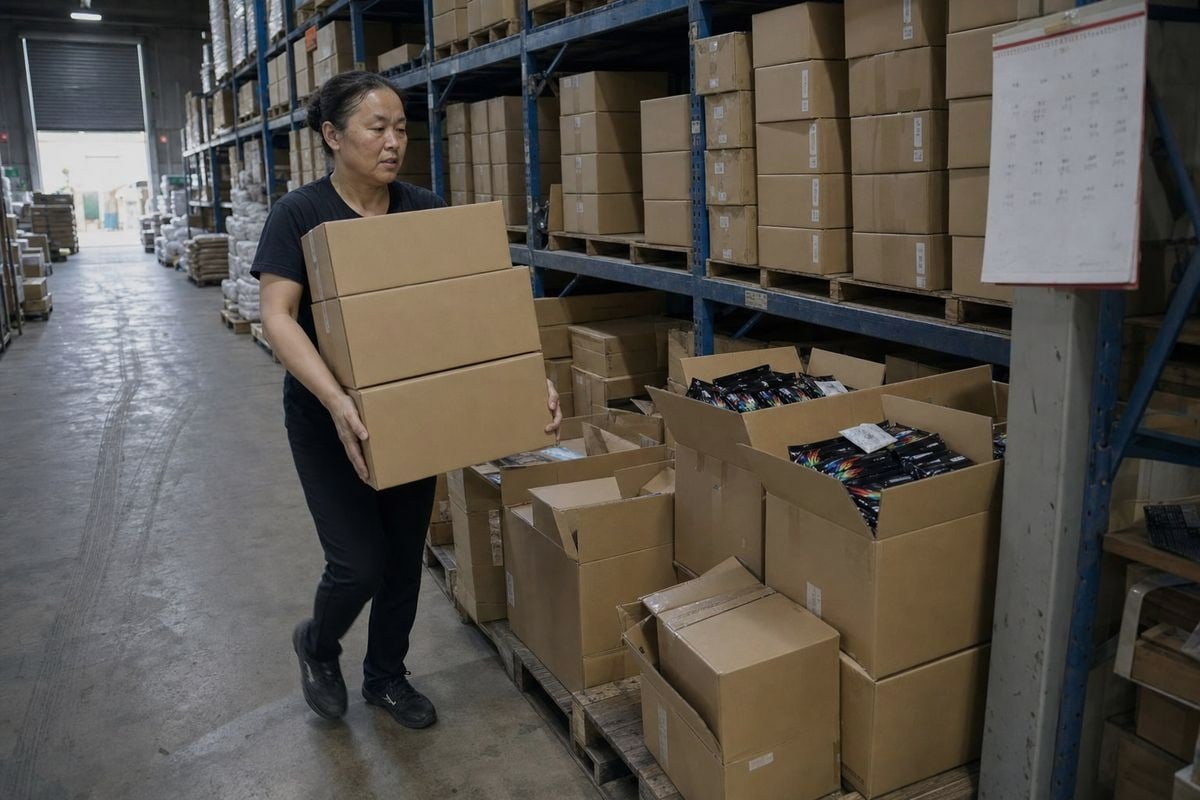
Packaging customization is where a factory partner earns its keep. As a real factory headquartered in Liuyang with production in Ningbo, we control the packing line directly, so barrier specs, seal settings, and label placement are decided with you, not by a middleman. Here is what that looks like in practice.
What We Can Customize
| Customization Area | Options Available | Moisture-Protection Benefit |
|---|---|---|
| Primary packaging | Foil sachets, multilayer plastic bags, kraft pouches with liners, plastic jars | Match barrier level to your climate and retail channel |
| Sachet format | Single-use packets or multi-use resealable pouches | Single-use packets eliminate repeated-opening risk |
| Retail display | Flip-top display boxes, custom cartons | Protects sachets from handling damage on shelf |
| Branding | Private-label printing, custom artwork, logo emblems | Shelf-ready product under your brand |
| Compliance | Warning labels, usage instructions, barcodes | Meets US and EU retail requirements |
| Logistics | Optimized carton sizing and pallet configuration | Reduces transit exposure and damage |
Why Certification Matters Here
Our buyers in the US, Germany, the UK, and beyond treat compliance as a hard requirement. Every Magic Fire product ships with test reports, and our ISO 9001 system covers packaging QC, not just the powder itself. That includes seal-integrity checks on every production batch, so the sample you approve reflects what mass production delivers.
If your market is humid — coastal Europe, Brazil, the Middle East — tell us upfront. We will recommend the barrier level, desiccant options, and carton design that fit your supply chain, and we support flexible MOQs so you can trial a format before committing to volume.
Conclusion
Moisture is the enemy of Magic Fire powder. Seal it well, store it dry and cool, add desiccants 7, handle it wisely, and inspect regularly — layered protection keeps every packet performing.
Footnotes
1. Explains the scientific concept behind why fine powders absorb ambient moisture and clump. ↩︎
2. Defines the technical measure used to compare barrier performance of packaging films. ↩︎
3. B2B sourcing platform representative of bulk moisture-barrier packaging options for shipments. ↩︎
4. Explains private-label manufacturing concept referenced for custom packaging buyers. ↩︎
5. EPA guidance on temperature-driven condensation and moisture control in enclosed containers. ↩︎
6. Background on how metal salts produce colored flames, explaining product function. ↩︎
7. Defines desiccant materials referenced as a moisture-control method for powder storage. ↩︎



 English
  Spanish
  German
  French
  Arabic
  Portuguese
Join the Conversation