






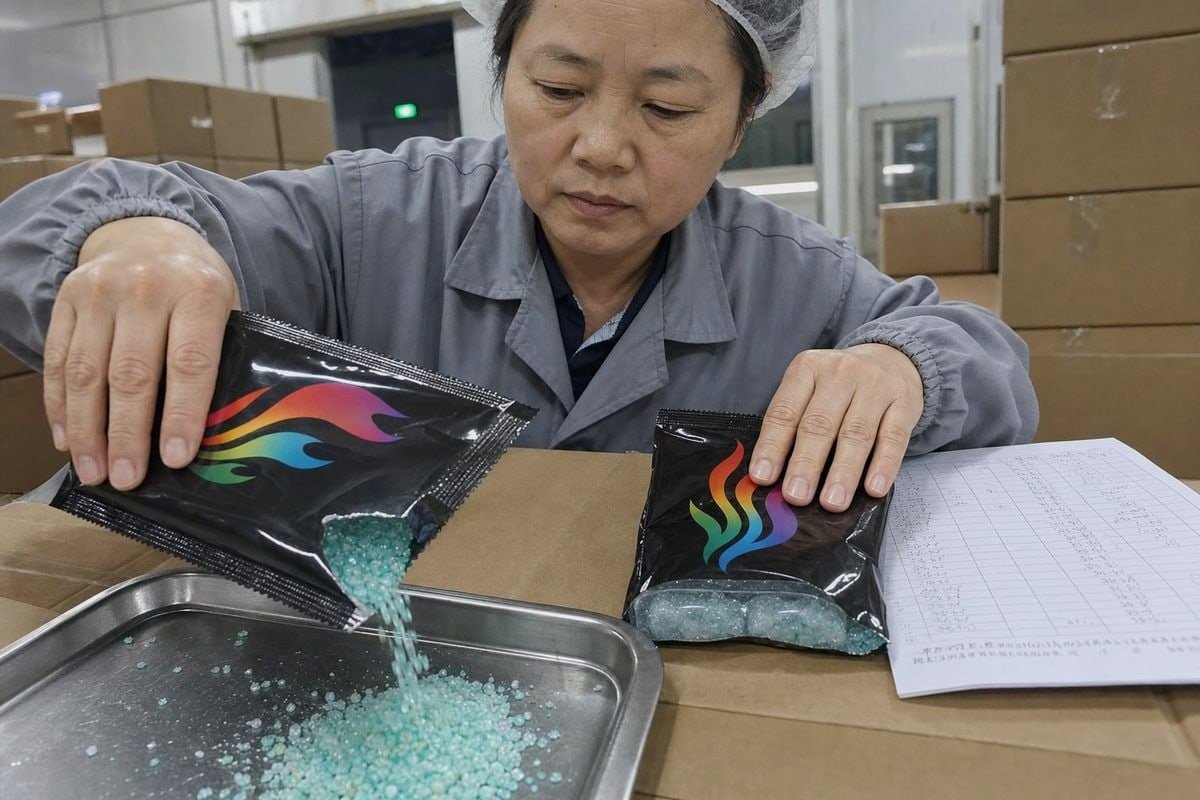
A single damp pallet of magic fire powder can quietly ruin a whole retail season. On our production line in Ningbo, we have seen exactly how that happens.
Magic fire powder has gotten damp or spoiled if the granules form hard clumps, feel sticky or heavy, show color shifts or condensation inside the packet, or burn with weak, delayed, or uneven flame color. Free-flowing, dry, vibrant crystals indicate the product is still good.
The good news is that moisture damage is easy to detect and even easier to prevent. Below, I will walk you through the warning signs, sample testing, packaging standards, and what to do if spoiled stock still reaches your warehouse.
What Are the Warning Signs That My Magic Fire Powder Has Absorbed Moisture?
A buyer in the Netherlands once sent me a photo of a packet that felt "like a small brick." Our QC team diagnosed it in seconds: classic moisture absorption from a broken seal.
Damp magic fire powder shows hard rock-like clumps, a sticky or squishy packet, condensation inside the pouch, faded or shifted granule color, hissing sounds in the fire, delayed color onset, washed-out flame color intensity, and a shorter burn time than the normal 15–30 minutes.

Color-changing flame salts are hygroscopic by nature. That is a technical way of saying they pull water out of the air. Their hygroscopic properties 1 are the root cause of almost every complaint we investigate. Once water gets in, the crystals dissolve slightly, re-bond, and harden. That is why caking and hardening are the first things your warehouse team should look for.
Visual and Physical Signs
Check these signs before the product ever goes near a fire:
| Warning Sign | What You See or Feel | Severity |
|---|---|---|
| Chemical clumping | Hard chunks instead of free-flowing grains | Moderate to high |
| Solidified mass | The whole packet feels like one brick | High |
| Squishy or heavy packet | Powder has turned pasty or wet | High — discard |
| Condensation inside pouch | Droplets or fog on the inner film | High |
| Granule color shift | Pale crystals turning deep blue or dull | Moderate |
| Sticky residue on packaging | Powder clinging to the pouch walls | Moderate |
Performance Signs During Burning
Some damage only shows up in the flames. Damp powder hisses and pops as trapped water flashes into steam. The colored flames appear late, look spotty, and fade fast. This happens because wet salts cannot vaporize evenly, so combustion efficiency 2 drops and flame color intensity falls with it. In our factory burn tests, we compare every batch against a reference sample for exactly this reason. If your customers report dull green or weak purple flames, moisture is the most likely culprit — not the formula itself.
How Can I Test a Sample Batch Before Accepting a Full Container Shipment?
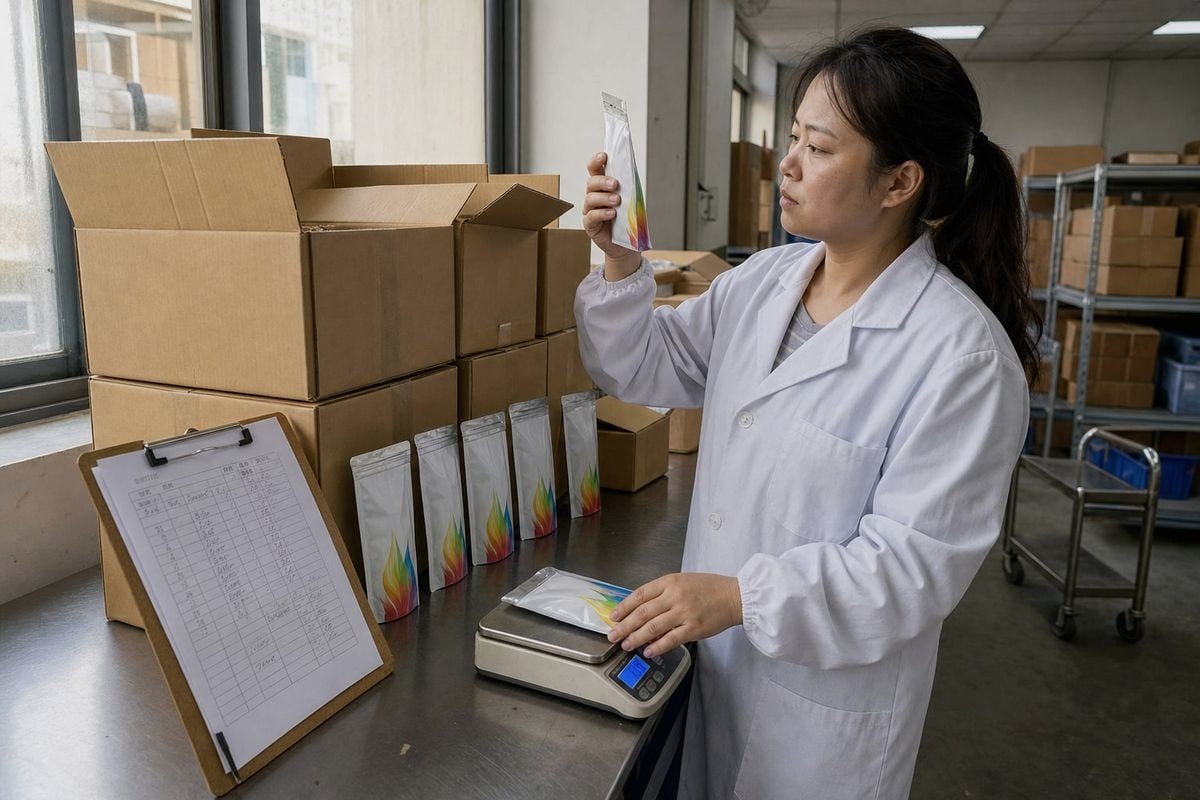
Before any container leaves our Ningbo facility, we pull random packets from finished cartons and burn them side by side. I always tell buyers to do the same on arrival — trust, then verify.
Test a sample batch by pulling random packets from multiple cartons, checking seal integrity and packet weight, feeling for free-flowing granules, then running an outdoor burn test to confirm color onset within one to two minutes, vibrant hues, and a full 15–30 minute burn duration.

A structured acceptance test protects you far better than a quick glance at one packet. Over 17 years of exporting to the US, Germany, and the UK, we have refined this into a simple process that any purchasing team can run in under an hour.
A Five-Step Acceptance Test
- Random sampling. Pull packets from at least five different cartons, including corners and the center of the pallet. Moisture damage is rarely uniform.
- Seal and weight check. Inspect crimped edges for gaps. Weigh several packets. An unusually heavy packet often means moisture absorption has already started.
- Tactile check. Squeeze gently. You should feel loose, crystalline grains shifting freely, not a solid or pasty mass.
- Open-packet inspection. Cut one packet open. The granules should pour cleanly, with consistent color and no odd or musty smell.
- Outdoor burn test. Place the packet in a small, controlled outdoor fire. Time the color onset, judge the vibrancy, and note the total burn duration.
What Good Results Look Like
Fresh product ignites its color effect quickly, holds strong hues, and does not hiss or spit. When we develop OEM formulas for outdoor and camping brands, we document these benchmarks in the SGS or Intertek 3 test reports so your incoming QC has objective numbers to compare against. Never test indoors, never add water to "see what happens," and never mix the powder with accelerants. A clean, repeatable outdoor burn test tells you everything you need to know before you sign off on the shipment.
What Packaging Standards Should I Require to Prevent Moisture Damage During Long-Distance Shipping?
There is a trade-off we weigh on every order: thicker barrier film 4 costs more per unit, but a container crossing the equator can hit brutal humidity swings. We learned early on that skimping on packaging is the most expensive saving in this business.
Require multi-layer foil laminate sachets with verified heat seals, desiccant in master cartons, moisture-barrier carton liners, sealed pallet wrap, and clearly printed storage instructions. Airtight storage at every packaging level is the single most effective defense against moisture damage in transit.

Long-distance ocean freight exposes cargo to condensation cycles, often called container rain. Warm humid air inside the container condenses on cold steel walls at night, then drips onto cartons. Your packaging specification is the only thing standing between that water and your product's shelf life.
The Four Layers of Protection
| Packaging Level | Standard to Require | Why It Matters |
|---|---|---|
| Primary sachet | Multi-layer foil laminate, heat-sealed on all edges | The foil layer blocks water vapor; single-layer plastic film does not |
| Inner packaging | Resealable kraft or plastic pouch, or sealed jar with liner | Protects packets after retail opening and adds a second vapor barrier |
| Master carton | Desiccant packs plus a poly liner bag | Absorbs residual humidity and blocks container condensation |
| Pallet | Stretch wrap, no floor contact, ventilation gap | Prevents wicking from wet container floors |
Details Worth Writing Into Your Purchase Order
Ask your supplier for seal-strength checks on the sachet line and random leak testing per batch. At our factory, every production run includes seal integrity sampling, because one micro-gap in a crimp can undo the entire barrier system. Also specify humidity-resistant printing and warning labels, since damp cartons can smear compliance text — a real problem for CE-marked goods 5 entering the EU. Finally, require that shelf life and storage guidance appear on both the retail packet and the master carton. Clear airtight storage instructions protect the product long after it leaves your warehouse and reaches the end customer's garage or camping kit.
What Should I Do If I Discover Spoiled Stock After It Arrives at My Warehouse?
Years ago, a Canadian distributor called us about clumped packets in two cartons out of a full container. Because we photograph and retain samples from every batch, we traced the issue to transit damage within a day — and that shaped the claims process I recommend below.
Quarantine the affected cartons immediately, document everything with photos and lot numbers, notify your supplier and freight insurer within the claim window, burn-test samples from unaffected cartons, and dispose of confirmed spoiled powder through local household or hazardous waste rules — never down a drain.
Speed matters here. Most freight insurance and supplier warranty claims have short reporting windows, and undocumented damage is nearly impossible to recover.
Step-by-Step Response Plan
| Step | Action | Timeframe |
|---|---|---|
| 1 | Isolate suspect pallets away from good stock | Same day |
| 2 | Photograph cartons, seals, lot numbers, and the powder itself | Same day |
| 3 | Notify the supplier with batch codes and evidence | Within 48 hours |
| 4 | File a carrier or insurance claim if transit damage is suspected | Within the policy window |
| 5 | Burn-test random samples from visually clean cartons | Within one week |
| 6 | Sort stock into sellable, degraded, and discard categories | After testing |
Sorting and Safe Disposal
Not every carton in a wet container is ruined. Cartons far from the damage point often test perfectly. That is why sampling by zone matters. For confirmed spoiled stock, follow safe disposal methods: keep the powder dry and contained, check your local waste regulations 6, and never flush it or dump it in bulk outdoors. Our packets use eco-friendly formulations with no harmful chemicals, which simplifies disposal in most markets, but local rules always take priority. Whatever you do, resist the temptation to oven-dry clumped powder and resell it. Even if the crystals look restored, the burn behavior stays unpredictable, and one bad customer experience costs more than the salvaged inventory is worth. A supplier with real batch traceability 7 should also help you here — when we can match your lot numbers to our retained samples and QC records, claims get resolved in days instead of months.
Conclusion
Damp magic fire powder announces itself through clumping, heavy packets, and dull flames. Inspect samples, demand foil-barrier packaging, act fast on damaged stock, and partner with a certified factory that stands behind every batch.
Footnotes
1. Explains the scientific property of the salts absorbing moisture from the air. ↩︎
2. Defines the technical term for how effectively a fuel burns and produces heat or color. ↩︎
3. Reference to a global leader in inspection, verification, testing, and certification services. ↩︎
4. Explains the use of specialized materials to prevent moisture ingress in product packaging. ↩︎
5. Official European Commission page explaining compliance requirements for products sold in the EU. ↩︎
6. Official EPA resource for identifying and managing hazardous waste disposal. ↩︎
7. Explains the importance of tracking production lots to identify and resolve quality issues. ↩︎


 English
  Spanish
  German
  French
  Arabic
  Portuguese
Join the Conversation