







Layered use of Magic Fire powder worries many buyers. On our production line, we hear this question weekly: will stacked packets turn a rainbow into muddy brown flames?
Yes, layered use of Magic Fire powder can cause color conflicts and abnormal effects. Dominant metal salts like sodium and copper can mask weaker hues, producing muddy or washed-out flames. Sealed single packets used as directed avoid this, because dosage and separation are built into the design.
The answer depends on chemistry, packet design, and how you layer. Let me walk you through each part, so you can source with confidence and advise your end customers correctly.
How can I layer Magic Fire color-flame packets without the colors muddying together?
During a burn test at our Ningbo facility last spring, we stacked three different flame colorant packets in one fire pit. The result taught us plenty about timing and spacing.
To layer without muddying, add one sealed packet at a time, wait for each color to fully fade before adding the next, and place packets at least 30 centimeters apart in larger fires. Never open packets and mix loose powders, as overlapping metal salts produce dull, grayish flames.

The core problem is that flame colors are not paint. In additive color mixing 1 on a screen, red plus green makes yellow. In a fire, metal salt combustion 2 does not blend that politely. One emitter simply overpowers another. Sodium is the classic bully: even trace sodium from wood ash can wash out a delicate purple or blue. So when two packets burn side by side, the stronger emitter dominates the shared flame zone, and the visible result is often a muted in-between shade rather than two crisp colors.
Practical layering rules we validate in our burn room
We run batch burn tests on every production run, and these habits consistently protect color clarity:
- Use sequential timing. Toss one packet, enjoy the color for its full burn window, then add the next after it fades.
- Keep spatial separation. In a wide fire pit or bonfire, physically separate packets so their combustion zones do not overlap.
- Keep packets sealed. The sachet acts as a dosing and release-control device. Opening it causes uneven scatter, flare-ups, and patchy color bursts.
- Match packet size to fire size. An oversized dose in a small fireplace concentrates salts and can shift the hue or create excess smoke.
Timing guide for sequential color displays
| Step | Action | Typical wait time | Why it matters |
|---|---|---|---|
| 1 | Establish a hot, stable bed of coals | 20–30 min | Cold fires give weak, flickering color |
| 2 | Add first sealed packet | — | Full color develops in 1–3 min |
| 3 | Let color fade completely | 20–45 min per packet | Prevents spectral overlap |
| 4 | Add next packet in a fresh flame zone | — | Reduces residue carryover |
What causes abnormal flame effects when I mix different color-flame products in one fire?
A German distributor once emailed us photos of sputtering, popping flames after his customer combined our packets with a competitor's loose powder. The diagnosis was straightforward once we saw the formulas.
Abnormal effects come from chemical interaction effects between incompatible formulas: mismatched oxidizers change combustion rate, hygroscopic salt deposits trap moisture and cause sputtering, thick powder crusts insulate the wood and delay ignition, and overlapping emitters wash colors into dull white or brown.

Different brands use different chemistry. That is the root cause. When you combine products in one fire, you are running an uncontrolled experiment. Here are the main failure modes we have documented in seventeen-plus years of burn testing.
Combustion rate changes
High concentrations of metal salts can act as a combustion catalyst. The wood burns faster and hotter than intended. A hotter flame shifts the visible hue, because emission intensity 3 varies with temperature. Some formulas also include oxidizer components 4 with very different behavior, similar to how pyrotechnic guidance treats potassium perchlorate 5 and potassium chlorate compositions as entirely separate systems with separate priming rules. Layering order genuinely matters in combustion chemistry.
Moisture and sputtering
Many colorant salts are hygroscopic. Layered salt deposits on the wood surface pull in atmospheric moisture. When the fire heats up, that trapped water flashes to steam. The result is abnormal popping and sputtering sounds, plus erratic flame behavior.
Thermal lag and crusting
A thick buildup of unreacted powder can form a non-combustible mineral crust. This crust insulates the fuel. The fire appears to die down, then the color suddenly activates. End customers read this as a defective product, when it is really a dosing problem.
Common abnormal effects and their causes
| Abnormal effect | Likely cause | Prevention |
|---|---|---|
| Muddy brown or gray flame | Overlapping emitters from mixed products | Use one product type per fire |
| Washed-out white flame | Spectral saturation from too many colorants | Reduce dose, sequence packets |
| Popping and sputtering | Hygroscopic salt deposits trapping moisture | Store dry, avoid loose sprinkling |
| Fire dies then flares | Mineral crust causing thermal lag | Never pile powder in one spot |
| Excess dark smoke | Incomplete combustion of over-dosed salts | Match packet size to fire size |
We also remind buyers about toxic fume safety. Smoke from a treated fire carries vaporized metal salts, so the fire should be outdoors or well ventilated, and nobody should cook over it. Our own formulas exclude harmful additives, but mixed-brand fires void that assurance.
Which color combinations should I avoid when sourcing Magic Fire powder for layered use?
When we develop private-label assortments for camping brands, one trade-off comes up every time: which colors survive layering, and which get crushed by their neighbors.
Avoid pairing sodium-based yellow with any other color, since sodium masks everything. Avoid simultaneous copper blue and strontium red, which wash to pale violet-gray. Avoid green plus purple, which mutes both. Safest layered pairs are visually distant, thermally similar colors used sequentially.

Flame color comes from specific emitters. Copper sulfate blue flames sit at one end of the visible spectrum. Strontium chloride red fire sits at the other. Barium compounds give green, and potassium leans lilac. Each has a different emission intensity at a given temperature. Pyrotechnic color blending is a genuine engineering discipline for exactly this reason: a formulator cannot just add two colorants and expect a clean intermediate hue.
The dominance hierarchy
In our burn-room observations, colors follow a rough pecking order. Sodium yellow dominates almost everything. Copper blue-green is strong. Strontium red holds its own in hot flames. Potassium purple and delicate blues are the most fragile and are easily contaminated. Even fire pit residue from a previous session can tint the next burn, so we advise end users to clear old ash before switching colors.
Sourcing guidance by combination risk
| Combination | Risk level | What happens | Sourcing advice |
|---|---|---|---|
| Yellow (sodium) + any color | High | Sodium masks the partner color | Sell yellow as a standalone SKU |
| Blue (copper) + red (strontium) | High | Washes to grayish violet | Sequence only, never simultaneous |
| Green (barium/copper) + purple (potassium) | Medium-high | Both hues go dull | Separate fires or long gaps |
| Blue + green | Medium | Blends acceptably to teal | Usable if blend is intentional |
| Red + orange | Low | Adjacent hues merge naturally | Safe for layered assortments |
For B2B buyers, the practical takeaway is to build assortments around sequential use. We design our multi-packet display boxes with clear per-packet instructions for exactly this reason. When a Home Depot-type retail channel asked us for a rainbow variety box, we specified single-packet dosing on the warning label, not simultaneous use. That one label decision cut their customer complaints about muddy colors before they ever started.
How do I get test reports confirming color stability before placing a bulk order?
A UK importer once told me his previous supplier's samples burned brilliant blue, but the container shipment burned pale teal. Batch drift like that is precisely what documented testing prevents.
Request third-party test reports from SGS or Intertek, a Material Safety Data Sheet, and batch burn-test records before ordering. Reputable factories provide these with pre-shipment samples, and you should verify that the tested batch number matches your production batch.
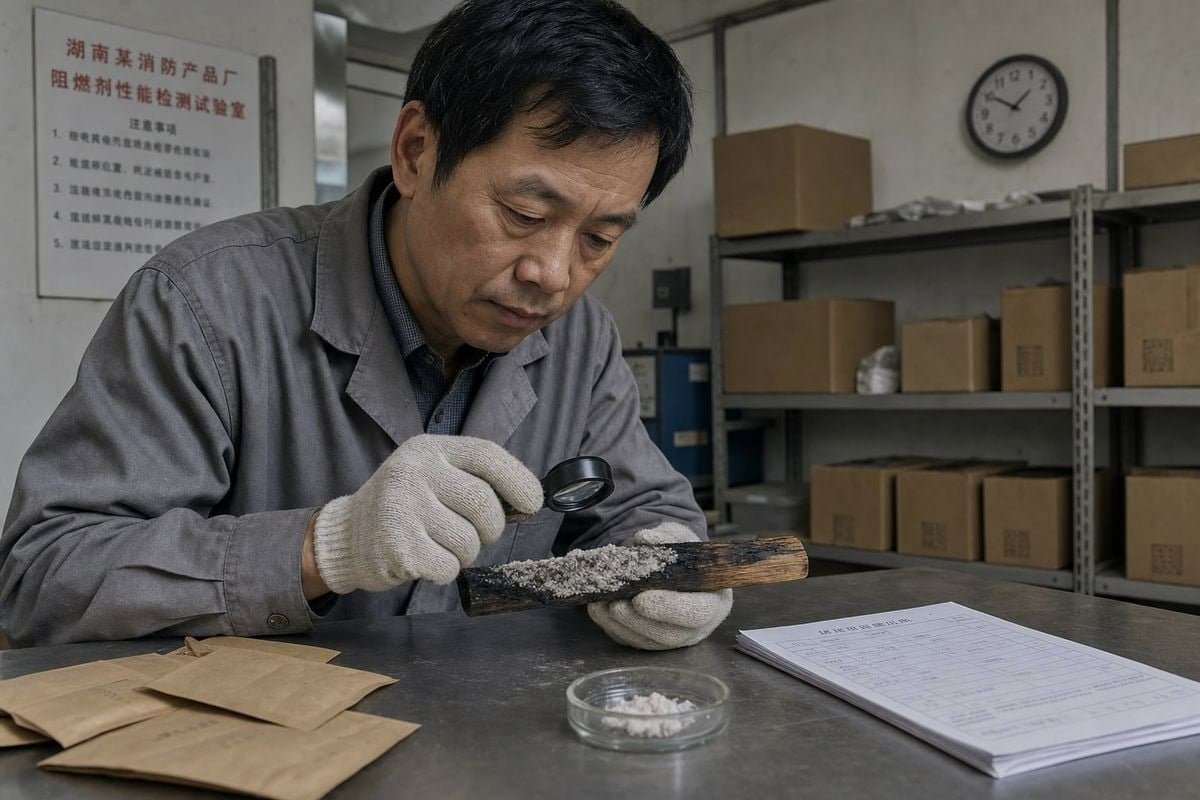
Color stability is a manufacturing discipline, not luck. It depends on raw-material purity 6, granule sizing, moisture control, and consistent blending. At our factory, we hold ISO 9001 certification and BSCI social compliance 7, and our flame colorant packets carry CE marking with SGS and Intertek test reports. Here is the verification process I recommend to every purchasing manager, whether you buy from us or anyone else.
A five-step verification process
- Request the document package first. Ask for the Material Safety Data Sheet, third-party chemical analysis, and heavy-metal screening results. A factory that hesitates here is telling you something.
- Match batch numbers. A test report is only meaningful if it corresponds to the formula and batch you will actually receive. Ask how often testing is repeated.
- Order burn samples from a current production run. Test them in the same fire conditions your end customers will use: fire pit, fireplace, and campfire. Film the burns for your records.
- Ask about batch-to-batch quality control. We photograph and log burn tests for every production lot, so the first sample reliably reflects mass-production quality. Ask your supplier to show you this kind of record, not just a one-time certificate.
- Confirm compliance for your specific market. US, EU, UK, and Australian requirements differ on labeling, warning text, and chemical restrictions. We prepare market-specific warning labels and barcodes as part of our OEM package, because a compliant product that cannot pass customs helps nobody.
For trial orders, negotiate a flexible MOQ so you can run real-world validation before committing to a container. In our experience exporting to thirty-plus countries, the buyers who invest two weeks in sample testing almost never face returns for color inconsistency later.
Conclusion
Layered Magic Fire powder can conflict, but sequencing, spacing, and verified formulas prevent it. Source certified, batch-tested flame colorant packets, and your customers get clean colors every time.
Footnotes
1. Describes the process of combining light colors to create new hues, contrasting with chemical flame colors. ↩︎
2. Explains the chemical process where metallic elements produce characteristic colors when heated in a flame. ↩︎



 English
  Spanish
  German
  French
  Arabic
  Portuguese
Join the Conversation