







Liability and compensation for delayed delivery of Magic Fire powder is a question I hear often at our Liuyang factory pro forma invoice 1. One missed shipment can wreck a whole retail season. Vague promises will not protect you. A clear contract will.
To specify liability and compensation for delayed delivery of Magic Fire powder, define a firm delivery date in the purchase agreement, add a liquidated damages clause of 0.5–1% of order value per day, cap total liability at 5–10%, list force majeure exceptions, and reserve termination and refund rights.
That is the short answer. But each of those pieces needs careful wording, or the clause will fail when you need it most. Let me walk you through how to build each part, based on what actually works between factories and importers.
What clauses should I include in my contract to protect against delayed delivery of Magic Fire Powder?
A few years back, one of our German distributors sent us a two-page late-delivery annex before placing his first container order. Our sales team studied it carefully. It taught us what serious buyers demand.
Your contract should include a fixed delivery date, a time-is-of-the-essence clause, a liquidated damages formula, a liability cap, a narrowly drafted force majeure clause, an Incoterms designation, a notice-of-delay obligation, and preserved rights to cancel, get a refund, or buy substitute goods.

The biggest mistake buyers make is relying on a proforma invoice that only says "lead time: 30 days." That sentence creates almost no enforceable liability. If the supplier ships in 60 days, you have to prove a breach of contract 2, prove your loss, and prove the loss was foreseeable. That is expensive and slow. A properly drafted late-delivery section does that work for you in advance.
The core clause checklist
Here is the clause package I recommend to every buyer who orders color-flame powder from us or from anyone else:
| Clause | What it should say | Why it matters |
|---|---|---|
| Delivery date | A fixed calendar date or a defined window, tied to Incoterms (e.g., FOB Ningbo by June 15) | Removes any argument about when delay starts |
| Time is of the essence | Late delivery is a material breach, not a minor one | Lets you cancel instead of just claiming small damages |
| Liquidated damages 3 | Fixed amount per day or week of delay | Avoids the burden of proving actual loss |
| Liability cap | Maximum exposure, typically 5–10% of contract price | Sellers rarely sign uncapped delay clauses |
| Force majeure clause 4 | Lists excused events; excludes ordinary supply chain disruption | Stops the seller stretching the excuse |
| Notice of delay | Seller must give written notice within 24–48 hours of foreseeing delay | Triggers your mitigation options early |
| Cover remedy | Right to buy substitute goods and charge the price difference | Protects you if the season cannot wait |
| Cancellation and refund | Full refund plus deposit return after a drop-dead date | Your exit if the order becomes useless |
Define when delivery is "complete"
Also specify the delivery point precisely. Under FOB terms 5, our obligation ends when the goods cross the ship's rail in Ningbo. Under DDP, the seller carries transit risk all the way to your warehouse. Delay liability should follow the same line. If the vessel is late but the factory shipped on time, your remedy sits with the carrier, not the supplier — and carrier liability for hazardous materials shipping 6 is often capped by convention. Say all of this in the purchase agreement terms, in writing, before you pay a deposit.
How do I calculate fair compensation rates when my supplier misses agreed shipment dates?
Setting the rate is always a negotiation. When buyers push us for aggressive penalty numbers, we push back with production data — and usually we meet somewhere both sides can live with.
Fair compensation is typically 0.5–1% of the delayed order value per day, or 1–2% per week, capped at 5–10% of the total contract price. Beyond the cap, the buyer should gain the right to cancel, recover the deposit, and claim documented cover costs.

Why these numbers? Because they balance two opposing interests. Buyers want open-ended damages, since a delayed container of flame-color packets can kill a Christmas retail program or a festival contract. Sellers want capped, predictable exposure, because delay losses can be wildly disproportionate to the product value. A per-day percentage with a cap splits the difference, and it is the structure courts are most comfortable enforcing.
A worked example
Take a $40,000 order of private-label 7 Magic Fire sachets:
| Delay length | Rate applied | Compensation | Buyer's position |
|---|---|---|---|
| 5 days | 0.5% per day | $1,000 | Deducted from balance payment |
| 14 days | 0.5% per day | $2,800 | Deducted; buyer may demand air freight upgrade |
| 20+ days | Cap reached (5%) | $2,000–$4,000 max | Right to cancel, refund, and cover purchase opens |
What about losses beyond the cap?
Liquidated damages compensate for the delay itself. They usually do not cover consequential damages, such as lost retail listings or cancelled event contracts. If those risks are real for you — say the powder is for a specific LARP festival date — negotiate a performance utility clause. It states that if delivery misses the event date, the goods lose their purpose, and compensation escalates to a full refund plus agreed cancellation costs. Also address who pays if you must "cover" by buying equivalent special effects material at a higher market price; the standard rule is that the defaulting seller pays the difference between the contract price and your reasonable replacement cost. Finally, require the compensation to be settled by deduction from the outstanding balance, not by a separate wire. Deduction is fast. Chasing a refund across borders is not.
What lead time guarantees should I request from a Magic Fire Powder manufacturer before signing an order?
Our production planners in Ningbo quote lead times in stages, not as one blurry number. That habit came from seventeen years of learning where delays actually hide — and it is exactly what you should ask any supplier to break down.
Request a stage-by-stage lead time: sample approval, raw material procurement, production, quality inspection, packing, and handover to the carrier. Get each stage in writing with a total binding lead time, a shipment deadline tied to Incoterms, and a buffer for peak season.
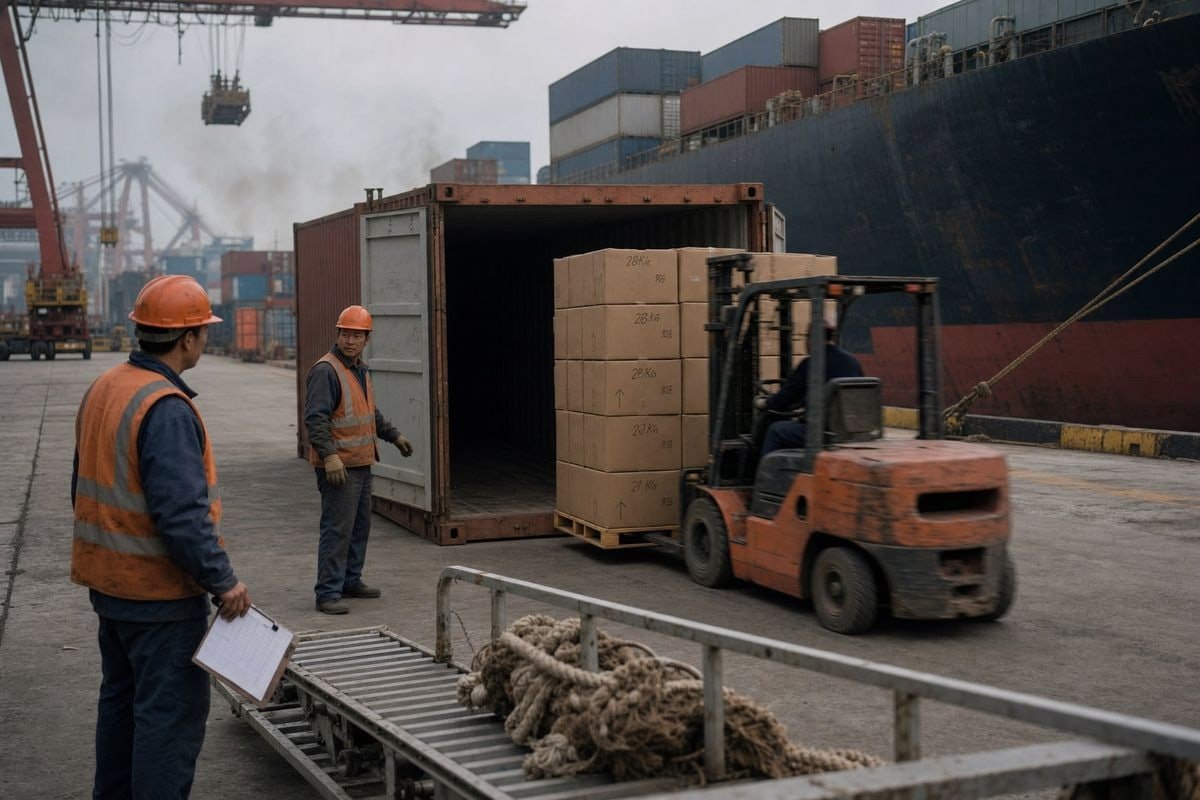
A single "30–45 days" answer hides everything that matters. When we quote a private-label order — custom foil pouches, warning labels, barcodes, display boxes — the printing of packaging often takes longer than blending the color-flame compound itself. If your supplier cannot break the lead time into stages, that is a warning sign that they may be a trading company reselling from an unknown workshop, with no real control over the schedule.
The lead time structure to demand
| Stage | Typical duration | What to lock in writing |
|---|---|---|
| Pre-production sample | 5–7 days | Buyer approval required before mass production clock starts |
| Materials and custom packaging | 7–15 days | Longer for first-time private-label artwork |
| Production and filling | 10–20 days | Depends on order volume and pouch vs. jar format |
| QC inspection and test reports | 3–5 days | Third-party inspection (SGS/Intertek) slot booked in advance |
| Packing and booking | 3–7 days | Extra time for hazardous materials shipping paperwork if classified |
Guarantees that give the lead time teeth
A lead time without a remedy is just a hope. Attach three things to it. First, a written confirmation that the clock starts on deposit receipt plus artwork approval, so neither side games the start date. Second, an early-warning duty: the factory must notify you within 48 hours of any event likely to push the schedule. Third, an escalation ladder: small delay triggers liquidated damages; medium delay triggers a freight upgrade at the seller's cost, for example partial air shipment; long delay past the drop-dead date triggers cancellation and full refund. For very large programs, some buyers also ask for a performance bond from the factory. Most mid-size orders do not need one, but the escalation ladder is non-negotiable. And always add seasonal realism: quotes given in September for October production collide with China's peak export season and holiday shutdowns, so build that buffer into the contract, not into your hopes.
How can I verify my supplier's production capacity to avoid liability disputes over late deliveries?
Every year, a handful of buyers visit our Ningbo production lines before placing their first container. The ones who audit first almost never end up in a delay dispute — because they sized their orders to real capacity.
Verify capacity through a factory audit or live video tour, certifications such as ISO 9001 and BSCI, monthly output data against your order size, existing client references in your market, and a review of the factory's raw material and packaging supply chain.

Here is the uncomfortable truth: most late deliveries are not caused by bad luck. They are caused by a supplier accepting an order it could never produce on time. When that happens, the liability clause becomes a battlefield. The seller reaches for the force majeure clause, blames port congestion or raw material shortages, and you spend months arguing instead of selling. Verification up front is cheaper than any lawsuit afterward.
A practical verification sequence
- Confirm the seller is a real factory, not a trader. Ask for the business license, factory address, and photos or live video of the production lines. business licenses 8 A trader adds a layer you cannot audit and cannot hold accountable.
- Check certifications with documents, not logos. ISO 9001 shows a functioning quality system. BSCI shows audited working conditions, which large retail sourcing channels require. Ask for the actual certificates and current SGS or Intertek test reports for the flame-color product itself.
- Compare capacity to your order. If a factory produces a known monthly volume of packets and your order equals two months of output, the quoted 25-day lead time is fiction. Ask directly: what percentage of monthly capacity does my order consume?
- Probe the upstream supply chain. Custom pouches, kraft bags, jars, and display boxes come from packaging sub-suppliers. Ask how packaging lead time is managed, because that is where private-label orders most often slip.
- Request references and order history. A factory that has shipped to your market for years understands its labeling rules, its customs quirks, and its seasonality.
- Order a trial run first. A small trial order tests real-world lead time, batch consistency, and communication speed before you commit a full container.
Document the answers. If the supplier claims a certain capacity in writing and later blames "unexpected volume" for a delay, that written claim closes the escape hatch. Verification does not just prevent delays — it makes your compensation clause enforceable when a delay happens anyway.
Conclusion
Late Magic Fire powder shipments destroy seasonal sales. Protect yourself before payment: fix the delivery date, set liquidated damages with a cap, define force majeure narrowly, and verify real factory capacity first.



 English
  Spanish
  German
  French
  Arabic
  Portuguese
Join the Conversation