







A purchase contract for Magic Fire Powder built on a nickname alone invites disputes. I've watched vague POs cost buyers real money before our factory ever shipped a single carton.
A Magic Fire Powder purchase contract should define the product by exact formulation and specifications in an exhibit, then lock in certification requirements, batch-level quality control standards, MOQ and lead time commitments, payment terms, and detailed private-label packaging requirements before you sign.
Below, I walk through the four contract areas that matter most. Each section gives you plain-English clause concepts you can adapt with your own legal counsel.
What Certification and Compliance Clauses Should I Include to Protect My Shipments?
A German distributor once told me his previous shipment sat in customs for six weeks. The supplier had promised compliance verbally but never put document delivery into the contract. We fixed that in writing.
Require the supplier to warrant compliance with all applicable consumer safety and transport rules, and to deliver a current Safety Data Sheet, GHS-compliant labels, third-party test reports, and certificates of analysis with every shipment. Make missing documentation a valid ground for rejection or delayed payment.

Compliance is the first thing our serious buyers ask about, and it should be the first schedule in your contract. In our experience exporting color-flame packets to the US, Germany, the UK, and 27 other markets, the buyers who never face customs holds are the ones whose contracts spell out documents, not just promises.
Name the Documents, Not Just the Standards
A clause that says "supplier shall comply with all laws" is too soft on its own. Pair it with a document delivery obligation. List each item, when it must arrive, and what happens if it does not.
| Document | When Required | Contract Consequence if Missing |
|---|---|---|
| Safety Data Sheet 1 (current version) | Before first shipment and on any formulation change | Buyer may refuse shipment |
| Third-party test report (SGS or Intertek type) | Before mass production approval | Order not confirmed |
| Certificate of analysis with batch number | With every shipment | Payment milestone paused |
| GHS-compliant labels 2 and warning text | On all retail units | Rejection of nonconforming units |
| Transport classification statement | With shipping documents | Supplier bears rerouting costs |
Address Transport Classification Directly
Hazardous materials shipping 3 rules turn on how the product is classified. Your contract should require the seller to state, in writing, the correct transport classification and to confirm whether the product falls under flammable solids classification or ships as non-dangerous goods. Our eco-friendly formulations are designed to avoid harmful chemicals, but we still put classification confirmation into every buyer's document package, because carriers and customs officers do not accept verbal assurances.
Add a Regulatory Compliance Warranty and Indemnification
Include a regulatory compliance warranty covering CPSC compliance 4 for US-bound goods and equivalent rules for the EU. Then back it with an indemnification clause: if the supplier's noncompliance causes fines, recalls, or third-party claims, the supplier bears those costs. A liability waiver alone protects nobody; paired warranties and indemnities allocate risk fairly.
How Do I Define Quality Control and Batch Consistency Standards in the Contract?
On our Ningbo production line, we weigh, blend, and seal by documented batch procedures, because we learned early that color-flame effects live or die on consistency between lot one and lot fifty.
Define measurable acceptance criteria in a specification exhibit: chemical composition ranges, particle size distribution, moisture limits, color output, and burn duration. Require batch numbers on every carton, a certificate of analysis per lot, buyer inspection rights, and replacement or refund remedies for nonconforming product.

Quality clauses fail when they describe outcomes with adjectives instead of numbers. "Vivid rainbow flames" cannot be tested. "Blue-green flame effect sustained for a defined minimum burn time per 25-gram packet" can be. Your product specifications exhibit should turn every performance promise into something a lab or a fire pit test can verify.
Build the Specification Exhibit Around Testable Values
Here is the structure we recommend to buyers drafting a spec schedule for color-flame powder:
| Specification Item | Why It Matters | How to Verify |
|---|---|---|
| Composition ranges (with trade-secret ratios protected) | Controls the color effect and safety profile | Certificate of analysis |
| Particle size distribution 5 | Inconsistent granule size changes burn behavior | Sieve or PSD test report per batch |
| Moisture content limit | Damp powder clumps and underperforms | Moisture analysis at packing |
| Color effect and burn duration | The consumer-facing promise | Sample burn test, documented |
| Net weight per sachet with tolerance | Prevents short-fill disputes | Random weight checks |
| Shelf life and storage conditions | Protects retail inventory | Stability data and date coding |
Lock in Batch Traceability and Inspection Rights
Require lot numbers printed on every sachet or master carton. Then give yourself inspection rights: a defined window after arrival to test samples against the exhibit, plus the right to reject, demand replacement, or claim a refund for failures. Our quality control standards include batch-to-batch testing precisely so the first sample a buyer approves reflects mass production. Put that principle into the contract: mass production must match the approved golden sample, and deviations require written buyer approval. Also ban substitutions. If the seller swaps a colorant or binder without notice, that alone should count as a material breach.
What MOQ, Lead Time, and Payment Terms Should I Negotiate for a Trial Order?
There is a trade-off I discuss with almost every new buyer: a smaller trial Minimum Order Quantity raises unit cost slightly, but it lowers your risk far more than it raises your price.
For a trial order, negotiate a reduced Minimum Order Quantity in writing, a fixed lead time with a stated grace period, a modest deposit with balance against shipping documents, and a clause converting trial pricing to volume pricing on your first repeat order. Add force majeure language covering seasonal fire bans.

Trial orders exist to test three things: product performance, factory reliability, and communication. Your contract should make all three measurable. At our factory in Liuyang, with production in Ningbo, we deliberately keep trial MOQs flexible because we would rather earn a long-term buyer than win one oversized first order.
A Realistic Framework for Trial Terms
- State the trial MOQ explicitly. Do not rely on the supplier's website. Write the exact quantity, packaging format (plastic bag, kraft bag, or jar), and unit price into the PO.
- Fix the lead time from a defined start point. Lead time should run from deposit receipt and artwork approval, not from the order date. Vague start points cause most "late" delivery arguments.
- Stage the payment. A common trial structure is a deposit on order confirmation and the balance against the bill of lading copy. This protects both sides without escrow complexity.
- Define shipping terms precisely. State the Incoterm 6, the port, and when title and risk of loss pass. For a first order, many buyers choose FOB so their own forwarder controls the freight.
- Pre-agree the scale-up. Include a clause stating that if the trial passes acceptance testing, repeat orders receive the quoted volume price and the same specifications automatically.
Handle Delay and Force Majeure Fairly
Add a short grace period for delivery, then remedies: expedited freight cost-sharing, price reduction, or cancellation for extended delay. Balance this with a force majeure 7 clause. For fire-related goods, it is reasonable to include regional fire bans or transport restrictions as qualifying events, provided the supplier gives prompt written notice and mitigates where possible.
How Do I Specify Private Label and Packaging Requirements to Avoid Misunderstandings?
A UK buyer once sent us "brand colors" as a phone photo of an old sachet. We asked for Pantone codes and a dieline instead. That one email saved his entire retail launch.
Attach a packaging exhibit specifying artwork files, Pantone colors, sachet or jar format, warning text placement, barcodes, master carton markings, and moisture-proof sealing standards. Require pre-production packaging samples for written approval, and make the approved sample the binding reference for the full run.
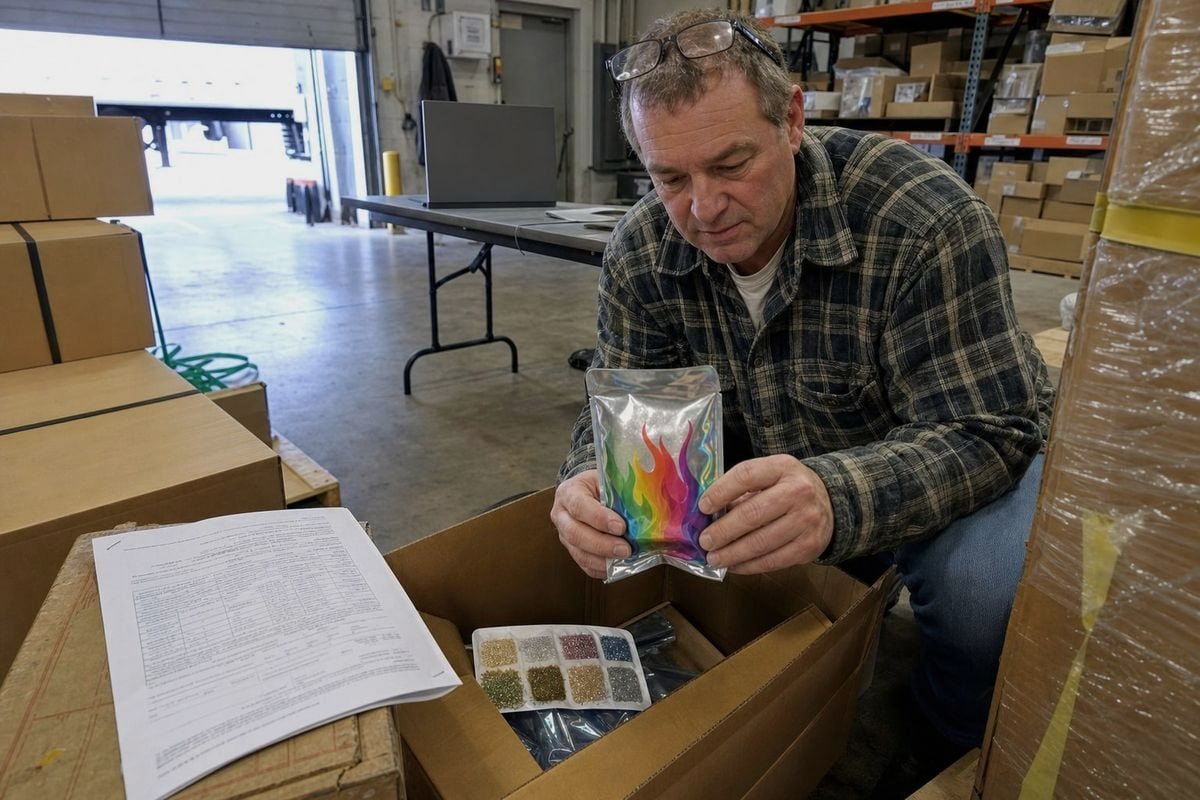
Private-label disputes almost never come from bad faith. They come from assumptions. The buyer assumes the printer will match screen colors. The supplier assumes the buyer's warning text is legally sufficient. A packaging exhibit removes those assumptions. Our one-stop OEM/ODM work covers custom sachets, kraft bags, jars, display boxes, warning labels, and barcodes, so we have seen exactly where the gaps appear.
What the Packaging Exhibit Must Cover
| Element | Specify in Contract | Common Misunderstanding It Prevents |
|---|---|---|
| Artwork and brand assets | Vector files, Pantone codes, dieline approval | Color drift between sample and mass run |
| Packaging format | Foil sachet, kraft pouch, jar, or display box with dimensions | Wrong retail-shelf presentation |
| Sealing and barrier standard | Moisture-proof, airtight crimped seal | Clumped or degraded powder in transit |
| Warning and usage text | Exact wording, language versions, placement, GHS elements | Retailer rejection for label gaps |
| Barcodes and retail codes | EAN/UPC numbers, print position, scan verification | Unsellable stock at big-box channels |
| Master carton and pallet spec | Markings, counts, weight limits, palletization | Warehouse receiving delays |
| Inner display packaging | Flip-top counter box layout and count | Mismatched merchandising plans |
Make Approval a Formal Gate
Require the supplier to produce a physical pre-production sample of the final packaging: printed sachet, sealed, filled, and labeled. Your written approval of that sample becomes the contractual reference standard. Then state that packaging defects, including seal failures that let moisture in, count as nonconforming goods with the same rejection and replacement remedies as the powder itself. Assign responsibility clearly: the supplier is liable for damage caused by improper packing. Finally, confirm ownership of your artwork and brand in an intellectual property clause, so your private label stays exclusively yours.
Conclusion
A vague PO for Magic Fire Powder risks customs holds, quality drift, and packaging disputes. Define the product in exhibits, demand documents, and lock in testable terms before signing.
Footnotes
1. Explains the standardized document format required for hazardous chemical shipments. ↩︎
2. Official OSHA portal for GHS hazard communication and labeling standards. ↩︎
3. US DOT hazmat resource relevant to transport classification requirements discussed in the contract. ↩︎
4. Official CPSC page detailing US consumer product safety regulations referenced in the clause. ↩︎
5. Comprehensive and accessible reference for particle size measurement principles. ↩︎
6. Background on international commercial trade terms used to define shipping responsibility. ↩︎
7. Wikipedia explains the legal concept underlying contract clauses for unforeseeable disruptions. ↩︎



 English
  Spanish
  German
  French
  Arabic
  Portuguese
Join the Conversation