







Buyers often ask our Ningbo production team about phased multi-warehouse delivery for wood fire starters 1. [Poorly planned split shipments](https://sunrichfire.com/how-negotiate-split-shipments-wood-fire-starters-ease-inventory-pressure/) cause congestion, missed launch dates, and compliance gaps. Here is how to structure the request properly.
To request phased multi-warehouse delivery from wood fire starter suppliers, issue one master purchase order with a warehouse matrix listing each ship-to address, quantity, delivery window, labeling requirement, and freight term. Confirm inventory reservation, per-location MOQs, and split shipment coordination fees in writing before production begins.
That is the short answer. The rest of this guide breaks it down. I will cover compliance, scheduling, MOQs per phase, and the documentation you need for each shipment.
What should I include in my request to ensure each phased shipment meets compliance and labeling standards?
A German distributor once returned an entire pallet to us over a missing warning label variant. Since then, our factory locks labeling specs per destination before any carton is packed.
Your request should include destination-specific warning labels, barcodes, language requirements, certification references (CE, SGS, or Intertek test reports), carton markings, and pallet specs for each warehouse. Attach a labeling matrix to the master PO so every phased shipment is packed against the correct compliance profile.
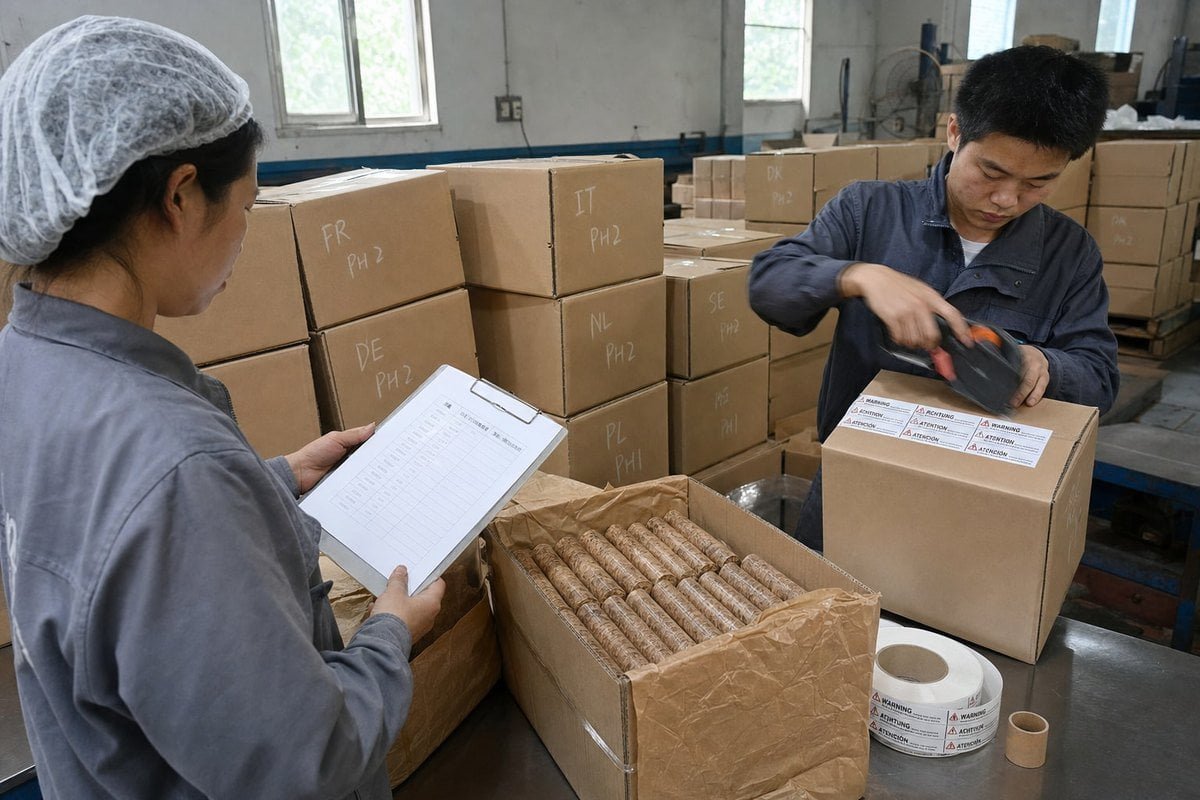
Compliance is not one checklist when you ship to multiple warehouses. It is several checklists, and each phase must match its destination. In our 17 years exporting fire-starting goods to the US, Germany, the UK, and 30+ other markets, the most common failure point is simple. The buyer assumes one label works everywhere. It rarely does.
Build a labeling matrix, not a labeling note
A single line in an email saying "standard labels please" is not enough. Give the supplier a table. Here is the structure we ask our own OEM clients to complete before we schedule production:
| Item | Warehouse A (US East) | Warehouse B (US West) | Warehouse C (EU) |
|---|---|---|---|
| Warning label language | English | English + Spanish | German + French |
| Barcode format | UPC | UPC | EAN-13 |
| Certification reference | SGS report on file | SGS report on file | CE marking on retail box |
| Carton marking | PO + phase number | PO + phase number | PO + phase + importer address |
| Pallet spec | 48x40 in, heat-treated | 48x40 in, heat-treated | EUR pallet, ISPM-15 |
Tie compliance to the production schedule
Wood fire starters made from wax-dipped wood rolls or compressed wood fiber with paraffin are regulated as flammable consumer goods in most markets. That means test reports and safety data must travel with each phase, not just the first one. Ask the supplier to confirm which certifications apply, and request that batch numbers on each phased shipment link back to the same tested production run. This protects you if customs or a retail auditor questions a later phase. At our plant, ISO 9001 2 batch controls make this traceability routine, but you should never assume it. Put it in the PO. Supply chain optimization 3 starts with paperwork, not pallets.
How do I coordinate delivery schedules across multiple warehouses without disrupting my inventory flow?
There is a trade-off we discuss with almost every large fireplace distributor: tighter delivery windows lower your carrying costs, but they raise the risk of a missed dock appointment during peak season.
Coordinate schedules by mapping each warehouse's inventory replenishment cycles against the supplier's production lead time, then setting staggered delivery windows with buffer days. Share a seasonal demand forecast early, confirm receiving hours and dock constraints, and require advance shipping notices before every phase.
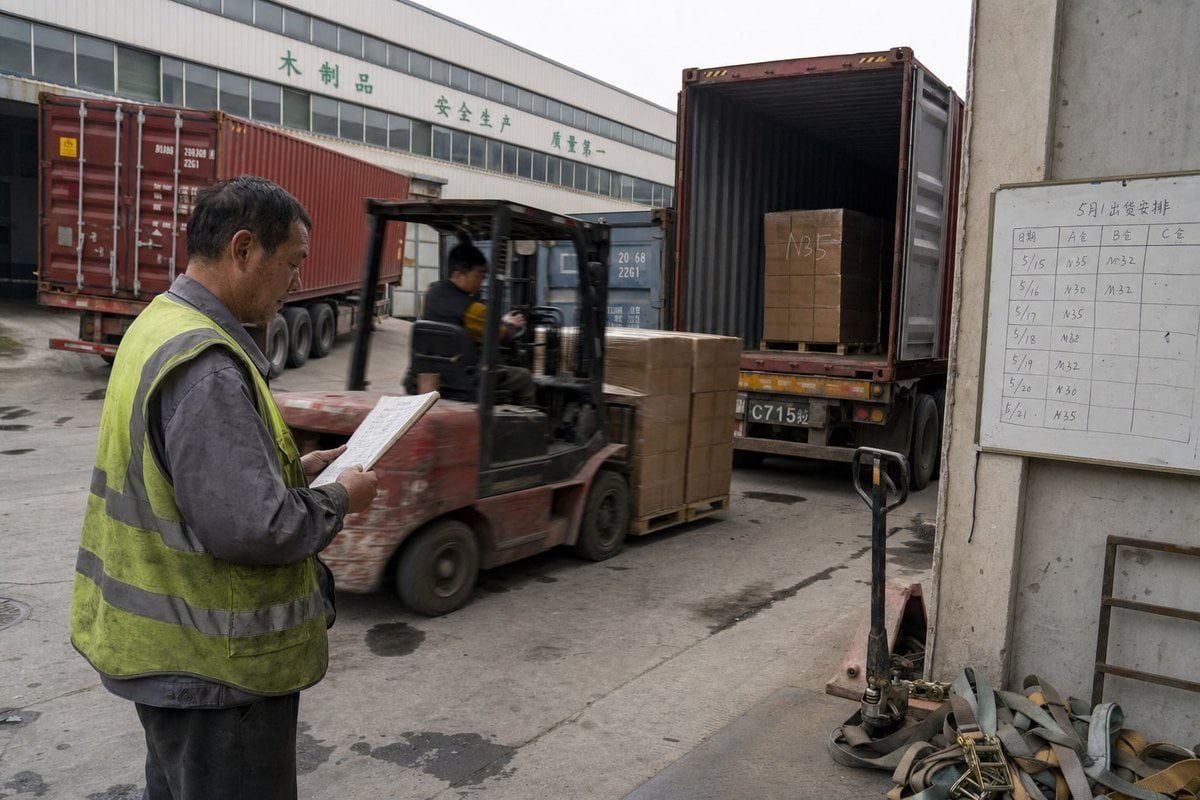
Fire starters are seasonal. Demand spikes hard from September through January in the US and Europe. If all your inventory lands in one warehouse in August, you pay storage on slow-moving stock. If it lands too late, you miss the season. Phased delivery solves this, but only when the schedule is built around real constraints on both sides.
Start with lead time, then work backward
Lead time management is the foundation. Our production lines in Ningbo typically need a defined production window per order, plus ocean transit of several weeks to the US or EU, plus inland freight to each fulfillment center. Work backward from each warehouse's required in-stock date. A simple planning sequence looks like this:
- Fix the in-stock date for each warehouse.
- Subtract inland transit and receiving time.
- Subtract ocean or air transit.
- Subtract production and QC time.
- The result is your PO release deadline for that phase.
Use forecasts and buffers, not hope
Send the supplier a seasonal demand forecast with your RFQ. This lets the factory reserve raw materials, like wood shavings, wax, and packaging, before peak season crowds the schedule. Then build buffer days into each window. We recommend at least five working days of buffer per phase for ocean freight destinations. Some buyers run a Just-in-Time 4 (JIT) inventory model on later phases once the first shipment validates transit times. Others route a bulk load through a third-party logistics (3PL) hub and cross-dock it into regional micro-deliveries. Both work. What breaks inventory flow is silence: no advance shipping notice, no tracking, no confirmed dock appointment. Require ASN data for every phase so your warehouse management system 5 can plan receiving labor before the truck arrives.
Can I set different MOQs for each phase when working with a wood fire starter supplier?
A Canadian camping brand recently asked us for a small first drop to their eastern warehouse and larger follow-on releases out west. We said yes, with conditions, and those conditions are worth understanding.
Yes, most wood fire starter suppliers accept different MOQs per phase if the total order meets their overall minimum. Negotiate a blanket purchase order with per-location release quantities, and expect each phase to meet a freight-viable floor, typically a full pallet or container share per warehouse.
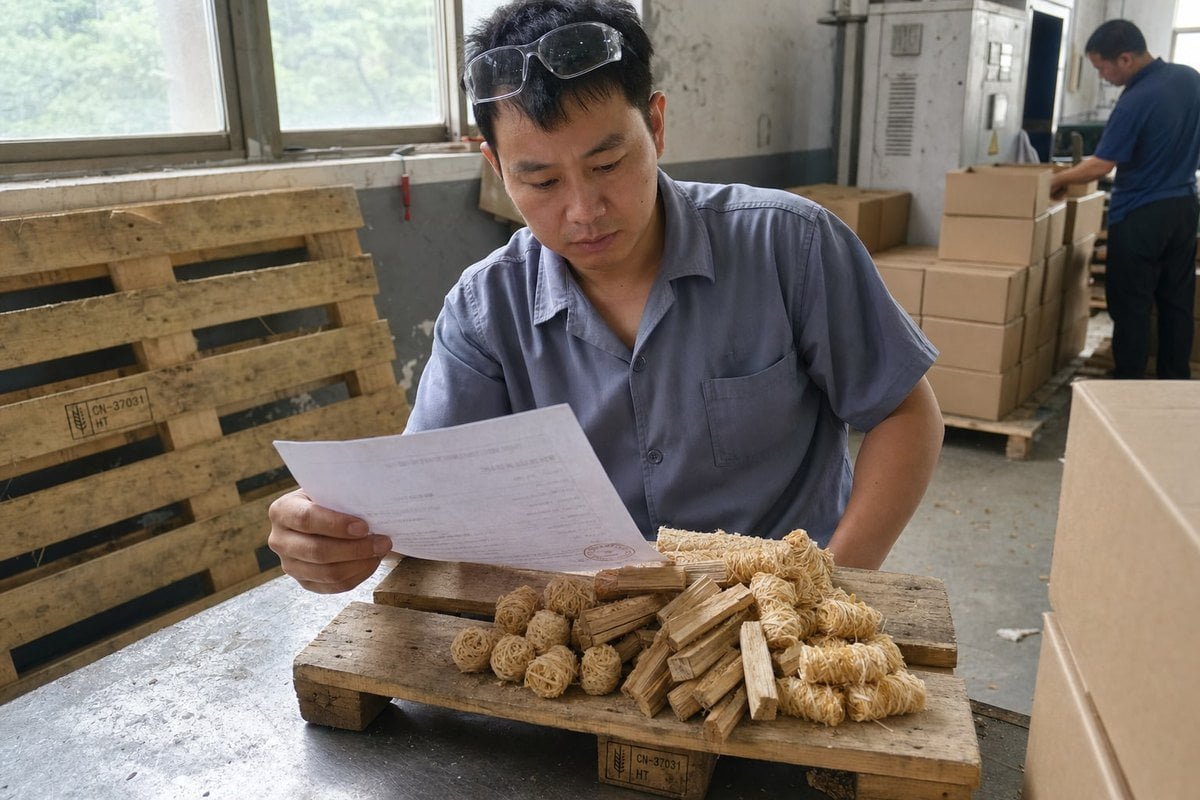
MOQs exist for two reasons: production efficiency and freight economics. A factory can run one large batch of wax-dipped wood rolls efficiently, but a carrier cannot profitably deliver half a pallet to a remote warehouse. So the real question is not "can MOQs differ per phase" but "what floor makes each drop viable."
How per-phase MOQs usually work
Blanket purchase orders 6 are the cleanest tool here. You commit to a total volume at bulk pricing, and the supplier releases goods in agreed quantities per warehouse. This is a core bulk procurement strategy 7: you lock the price, and the supplier holds finished stock against scheduled releases. The table below shows a realistic structure we see in fire starter procurement:
| Order element | Typical expectation | Negotiation lever |
|---|---|---|
| Total order MOQ | Supplier's standard bulk minimum | Higher totals unlock lower unit price |
| Per-phase minimum | One full pallet per warehouse drop | Consolidate small warehouses onto one truck |
| First trial phase | Sometimes below standard MOQ | Offer to pay a small handling premium |
| Stock holding period | 30–90 days for reserved inventory | Confirm storage conditions in writing |
| Late-release penalty | Storage fee after grace period | Fix the fee schedule up front |
What suppliers weigh before agreeing
From the factory side, we look at three things. First, does the total volume justify one production run? If yes, splitting releases is mostly a warehousing question. Second, can we store finished fire starters properly? Paraffin-based products need dry, moderate-temperature storage, so ask about moisture-controlled holding for later phases. Third, who pays incremental handling? Split shipments mean extra picking, palletizing, and documentation. Buyers who acknowledge this cost and offer to share it get flexible terms faster. Buyers who demand consumer-style free split shipping usually get a polite no. Freight cost reduction comes from consolidating dates and destinations where possible, not from pushing all handling costs onto the supplier.
What documentation should I request for tracking and quality control across split shipments?
Years of running batch-to-batch QC on our fire starter lines taught us one lesson: if a document is not tied to a batch number, it cannot protect you in a dispute.
Request a packing list, commercial invoice, ASN, batch-linked QC report, and certification copies for every phase, plus a master shipment tracker covering all releases. Each phase's carton and pallet labels should show the PO number, phase number, and batch code for full traceability.
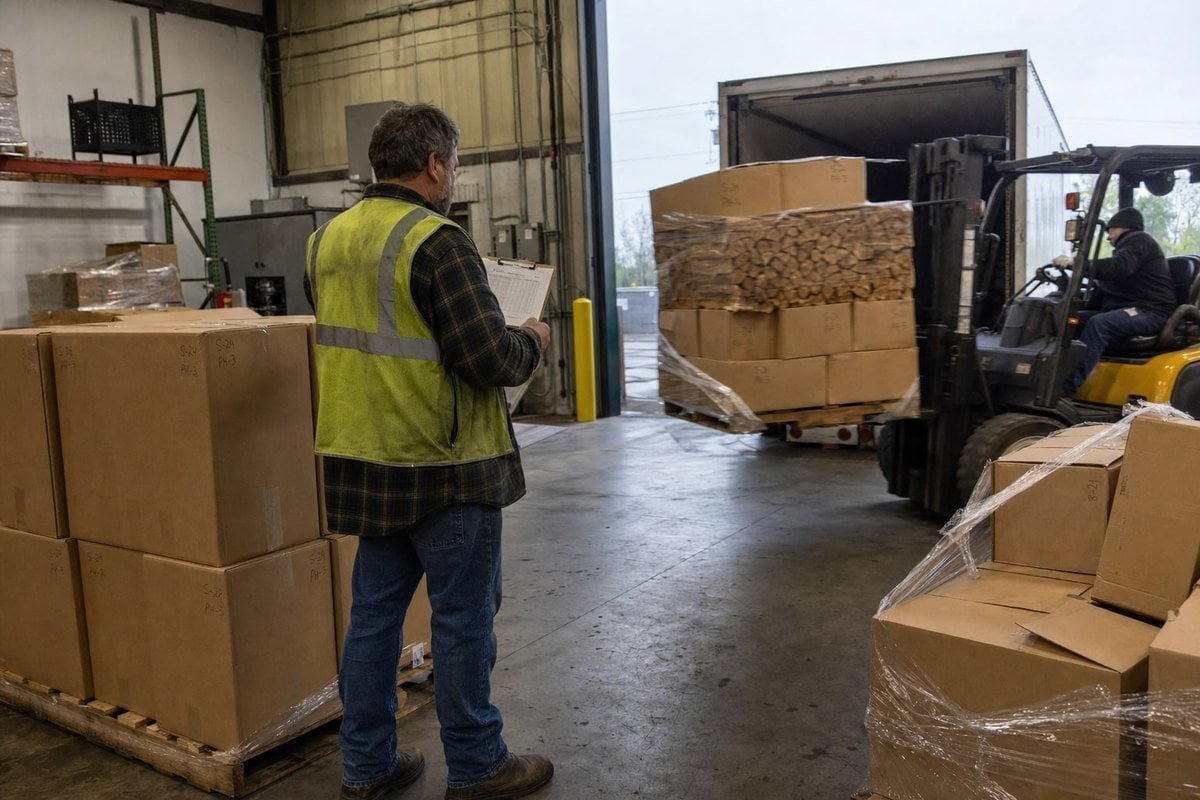
Documentation is where phased delivery either becomes manageable or becomes chaos. One PO now generates multiple shipments, multiple invoices, and multiple customs entries. If you do not standardize the paperwork, your accounting team and your receiving docks will feel it within weeks.
The per-phase document set
Ask for the same document package on every release, formatted the same way. Consistency matters more than volume. Here is the set we prepare for our own export clients:
| Document | Purpose | When you should receive it |
|---|---|---|
| Advance shipping notice (ASN) | Lets each fulfillment center plan receiving labor | Before the shipment departs |
| Packing list (phase-specific) | Verifies cartons, quantities, and pallet count on arrival | With the shipment and by email |
| Commercial invoice per phase | Customs clearance and payment reconciliation | Before customs entry |
| Batch-linked QC report | Proves the phase matches tested production quality | Before release from factory |
| Certification copies (CE, SGS/Intertek) | Satisfies customs and retail compliance audits | With the first phase, referenced thereafter |
| Photo record of loading | Evidence for damage or shortage claims | At container or truck loading |
Tie quality control to phases, not just to the order
A QC report for "the order" is weak. A QC report for "phase two, batch 0417" is strong. Insist that inspection records reference the specific batch shipping in each phase. This matters for wood fire starters because ignition performance can drift if wax ratios or moisture levels vary between runs. Our ISO 9001 process controls keep batches consistent, and we photograph loading for every container, but buyers should verify rather than trust. Also request one master shipment tracker, a shared sheet showing every phase, its status, tracking number, and documents. It costs the supplier little and gives your team full split shipment coordination visibility across all fulfillment center distribution points.



 English
  Spanish
  German
  French
  Arabic
  Portuguese
Join the Conversation