




Provisioning for losses on non-resellable hazardous material returns keeps many of our distribution partners up at night. One damaged pallet of Magic Fire packets can quietly erase a season's margin. Without a structured reserve, that loss hits your books all at once — and our factory has seen exactly how painful that surprise can be for buyers.
To provision for losses on non-resellable hazardous material returns, write returned inventory down to net realizable value — often zero — then book a separate accrual for disposal, handling, and compliance costs. Use an allowance based on historical return rates, and review the reserve quarterly against actual outcomes.
That short answer hides real complexity. Below, I break the problem into four practical questions: how to size the reserve, how to classify returns, how documentation cuts losses, and how supplier agreements shift risk.
How should I calculate an adequate loss reserve for hazardous returns I can't resell?
During a QC review 1 last year, one of our German distributors asked me why his write-offs kept exceeding his reserve. His numbers only covered inventory cost. They ignored everything that happens after the return arrives.
Calculate the reserve in two layers: first, estimate the inventory write-down using lower-of-cost-or-NRV, often writing non-resellable units to zero; second, accrue expected reverse logistics costs, hazardous waste disposal fees, and handling charges. Base the rate on historical returns and update it quarterly.

The core mistake I see is treating hazardous returns like ordinary customer returns. They are not. A returned color-flame packet with a compromised seal cannot legally re-enter stock in most markets. So the accounting shifts from returns processing to GAAP inventory valuation discipline: lower of cost or net realizable value.
Step one: value the inventory loss
Start at item level. Identify the SKU, lot number 2, condition, and location. Then ask what the unit can realistically become. There are only four outcomes: return to compliant stock after rework, sell at a discount in a restricted channel, recover scrap value, or destroy at cost. For most non-resellable hazardous returns, the honest answer is destruction. If NRV is zero or negligible, record a full write-off, not a partial inventory write-down.
Step two: accrue the disposal and handling layer
Here is where reserves fail. Disposal is not free. Hazardous waste disposal fees, certified carrier surcharges 3, quarantine storage, and destruction certificates all cost money. These should be expensed or accrued separately — they are a liability, not part of inventory cost.
| Reserve Layer | What It Covers | Typical Treatment |
|---|---|---|
| Inventory impairment | Lost product value (cost minus NRV) | Write-down or write-off to COGS |
| Reverse logistics | Freight, hazmat carrier surcharges, intake handling | Operating expense or accrual |
| Disposal obligation | Destruction fees, environmental remediation costs | Separate liability accrual |
| Contingency | Regulatory fines, unexpected testing | Contingent liability reserves if probable and estimable |
One useful benchmark from public disclosures: some companies book a returns provision 4 around 3.5% of gross sales, reviewed quarterly. Your rate for hazardous categories should reflect your own history — our long-term buyers typically see lower rates because compliant products generate fewer disputed returns in the first place.
What factors determine whether a color-flame or firestarter return counts as non-resellable?
The trade-off we weigh constantly at our Ningbo production lines is packaging robustness versus cost — because packaging integrity is usually the deciding factor in whether a returned unit stays sellable.
A color-flame or firestarter return is non-resellable when the seal is broken, contents are contaminated or moisture-damaged, labels or warnings are missing or illegible, the product was temperature-abused, or regulations bar restocking opened chemical goods. Any single failure typically forces disposal.

Classification is where money is won or lost. If your intake team defaults everything to "destroy," your write-off rate balloons. If they restock questionable units, you take on compliance risk. So you need clear, written criteria.
The five disqualifying conditions
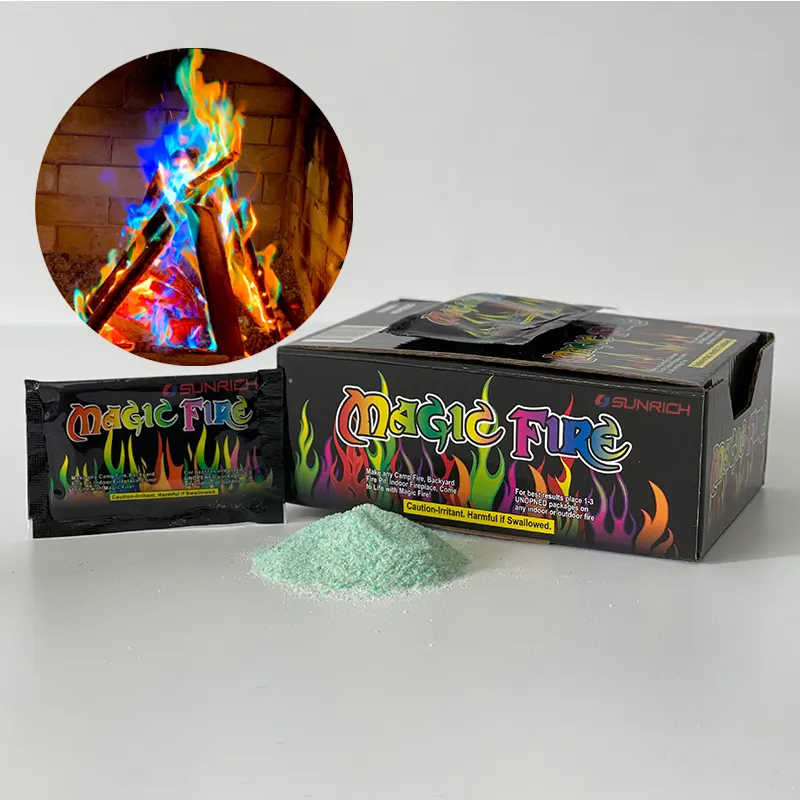
For products like our Magic Fire packets — foil sachets holding crystalline flame-coloring granules — I recommend distributors assess five things at intake:
- Seal integrity. A crinkled foil pouch with any breach means possible moisture ingress and contamination. Non-resellable.
- Label and warning condition. If the caution label or instructional text is torn, faded, or missing, the unit fails Safety Data Sheet compliance expectations and cannot go back on a shelf.
- Contamination evidence. Loose powder outside the sachet, mixed lots, or foreign material means destruction.
- Storage history. Heat or humidity abuse can degrade granules even inside intact packaging. If chain of custody documentation shows uncontrolled storage, treat it conservatively.
- Regulatory channel rules. Some jurisdictions prohibit restocking any returned consumer chemical product, regardless of condition. Know your market's rules before assuming rework is an option.
Where the gray zone lives
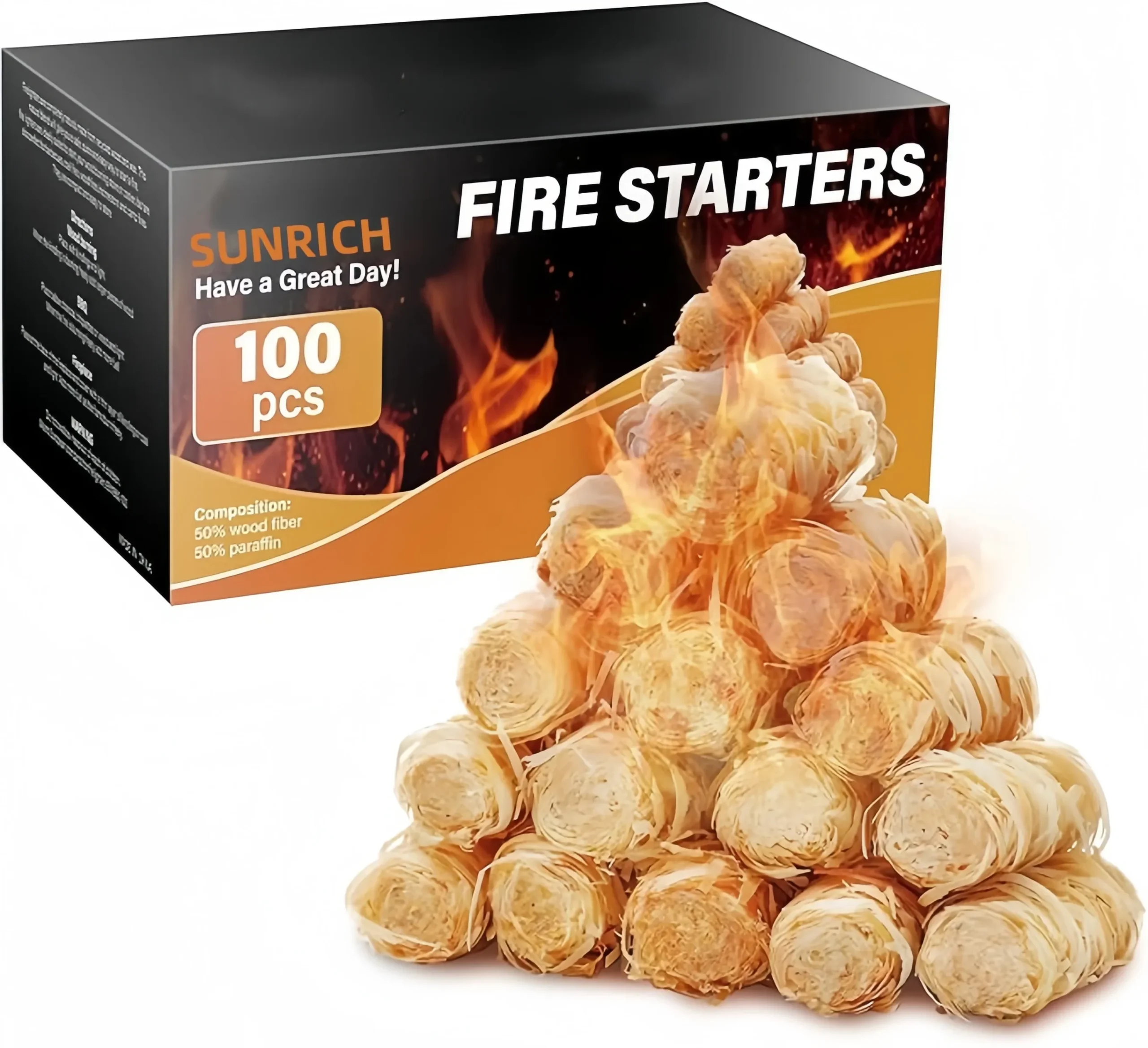
Wax-dipped firestarters and wax torches are more forgiving. They are solid, sealed in wax, and rarely contaminated by a return trip. A dented outer box may only need repackaging. That difference matters for your salvage value assessment: firestarter returns often justify a write-down to a discounted resale value, while opened powder sachets almost always justify a full write-off. Building this product-level distinction into your policy prevents both over-provisioning and compliance exposure.
Can better compliance documentation reduce my write-off rate on hazardous product returns?
A lesson we learned early in our 17-plus years exporting fire products: buyers who demand full test reports and certificates up front dispute fewer shipments later. Documentation is not paperwork — it is loss prevention.
Yes. Strong documentation — SGS or Intertek test reports, batch records, chain of custody documentation, and clear warning labels — reduces write-offs by preventing regulatory rejections, supporting salvage decisions, enabling supplier claims, and giving auditors defensible evidence for smaller, more accurate reserves.
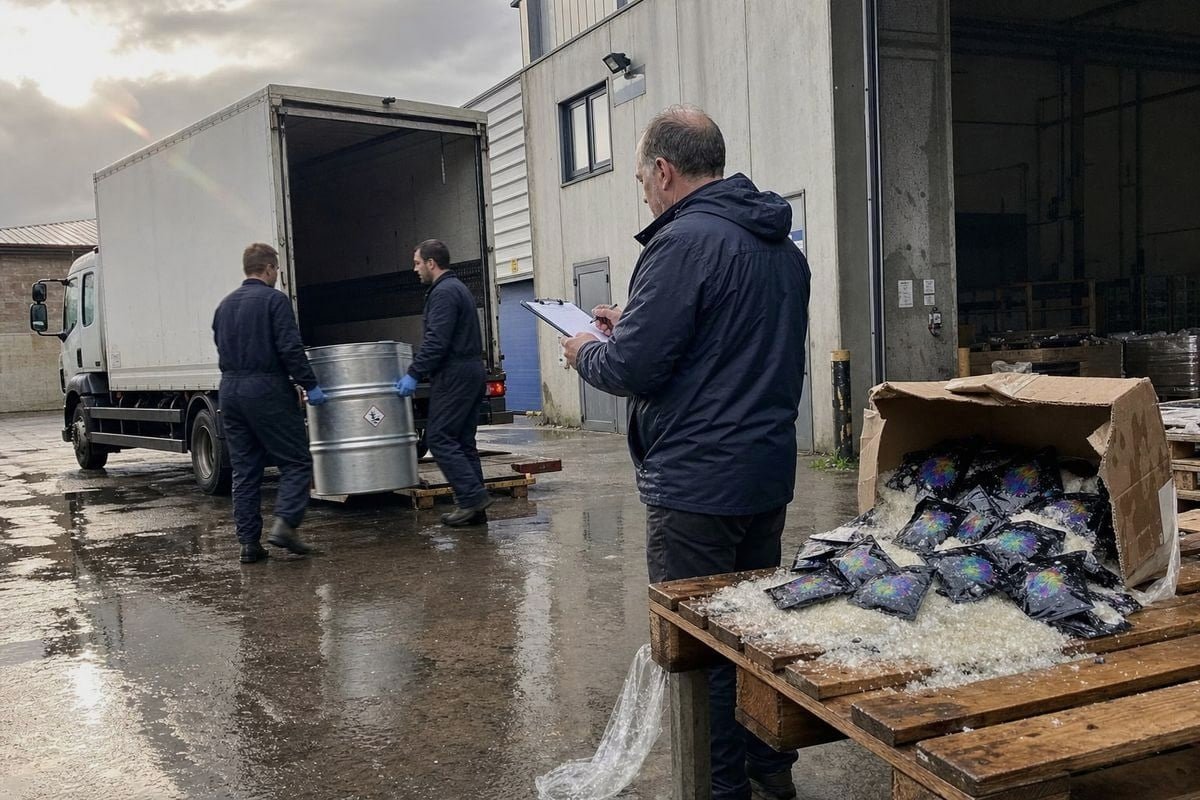
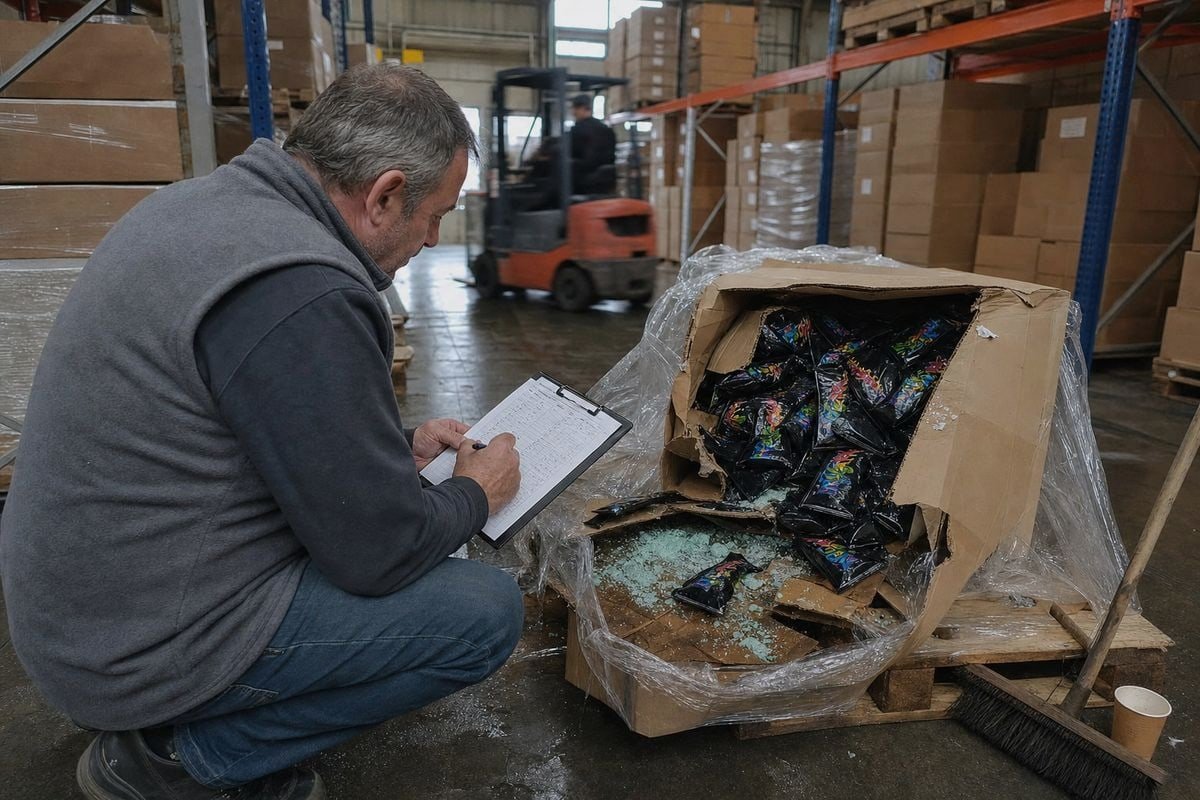
Think about why hazardous returns become total losses. Often it is not the product's physical condition. It is the inability to prove the product's condition. Without lot-level records, an intake inspector cannot verify what a returned unit contains, so the safe choice is destruction. Documentation converts "unknown, must destroy" into "verified, can salvage or reclaim."
Documentation that directly cuts losses
| Document | How It Reduces Write-Offs |
|---|---|
| Batch test reports (SGS/Intertek) | Proves composition, supports resale of intact returns and defends against regulatory fines |
| Safety Data Sheet compliance files | Speeds classification at intake; avoids default destruction of ambiguous units |
| Chain of custody documentation | Confirms storage conditions, enabling restock decisions for sealed units |
| Disposal certificates | Closes the audit trail and prevents double-provisioning for already-destroyed stock |
| Inspection photos and notes | Supports supplier or insurer recovery claims on defective lots |
The audit and regulatory dividend
There is a second-order benefit. Under HazMat shipping regulations 5, returns of damaged or improperly labeled goods can trigger penalties from agencies like PHMSA or the EPA. Documented, compliant intake and disposition dramatically lowers that contingent exposure, which means smaller contingent liability reserves on your books. In our experience shipping to 30-plus countries, distributors who maintain ISO 9001-aligned record discipline 6 also negotiate better terms with waste contractors, because certified processors price uncertainty into their fees. Clean records mean predictable disposal quotes — and a reserve you can actually defend when your auditor asks how you estimated it.
When a Dutch importer first asked us to put return-risk terms into our OEM contract, I welcomed it. Clear risk allocation protects both sides, and it is only workable because our batch QC makes defect attribution provable.
Structure the agreement around defect attribution: the supplier bears costs for manufacturing defects proven by batch records, while the buyer bears transit and retail damage. Add a defective-allowance percentage, lot-level traceability requirements, documented claims procedures, and agreed remedies like credits or replacement stock.
Risk-sharing only works when both parties can prove cause. That is why the foundation of any agreement with us is traceability. Every Magic Fire lot we produce carries batch records, QC checkpoints, and retained samples. If a return wave traces to a manufacturing fault — say, a heat-seal failure in one production run — the records show it, and the cost sits with us. If damage came from a wet warehouse or rough retail handling, the records show that too.
The clauses that matter
- Defect definition. Specify exactly what counts as a manufacturing defect versus handling damage, referencing agreed inspection standards and Safety Data Sheet compliance criteria.
- Defective allowance. Negotiate a small percentage credit built into pricing to cover routine, low-level defects without claims friction on every order.
- Evidence and claims procedure. Require photos, lot numbers, and intake inspection notes within a defined window. This mirrors the chain of custody discipline discussed above.
- Remedy menu. Credits on future orders, free replacement units in the next shipment, or shared disposal costs — cash refunds are rarely the most efficient remedy for either side.
- Disposal cost allocation. Because returning hazardous goods across borders multiplies reverse logistics costs, agree that verified defective units are destroyed locally with certificates, and costs split per the attribution rules.
Why compliance depth changes the math
One honest objection I hear: "Why negotiate risk-sharing when I could just buy cheaper and self-insure the losses?" The numbers rarely support it. A low-price supplier without CE marking 7, BSCI auditing, or third-party test reports produces returns you cannot classify, cannot claim against, and cannot defend to regulators — so every ambiguous unit becomes a full write-off plus disposal fees. Our compliance stack exists precisely so our buyers' provisions stay small and their claims stay provable. That is the real economics of a manufacturing partner versus a cheap vendor.
Conclusion
Non-resellable hazardous returns punish unprepared books. Provision in two layers — NRV write-downs plus disposal accruals — classify returns rigorously, document everything, and share risk contractually. Our compliance-first production exists to keep those reserves small.
Footnotes
1. Defines the quality control review process used to identify production and inventory discrepancies. ↩︎
2. Explains the identification system used for tracking specific batches of products through the supply chain. ↩︎
3. Details the additional fees applied by carriers for the specialized handling of hazardous material shipments. ↩︎
4. Explains the accounting treatment for anticipated future losses or liabilities related to product returns. ↩︎
5. Official government eCFR site for Title 49, the primary source for US hazardous materials regulations. ↩︎
6. Authoritative overview of the ISO 9001 standard for quality management and documentation discipline. ↩︎
7. Official European Commission guidance on the safety and compliance marking required for the European market. ↩︎



 English
 Spanish
 German
 French
 Arabic
 Portuguese
Join the Conversation