






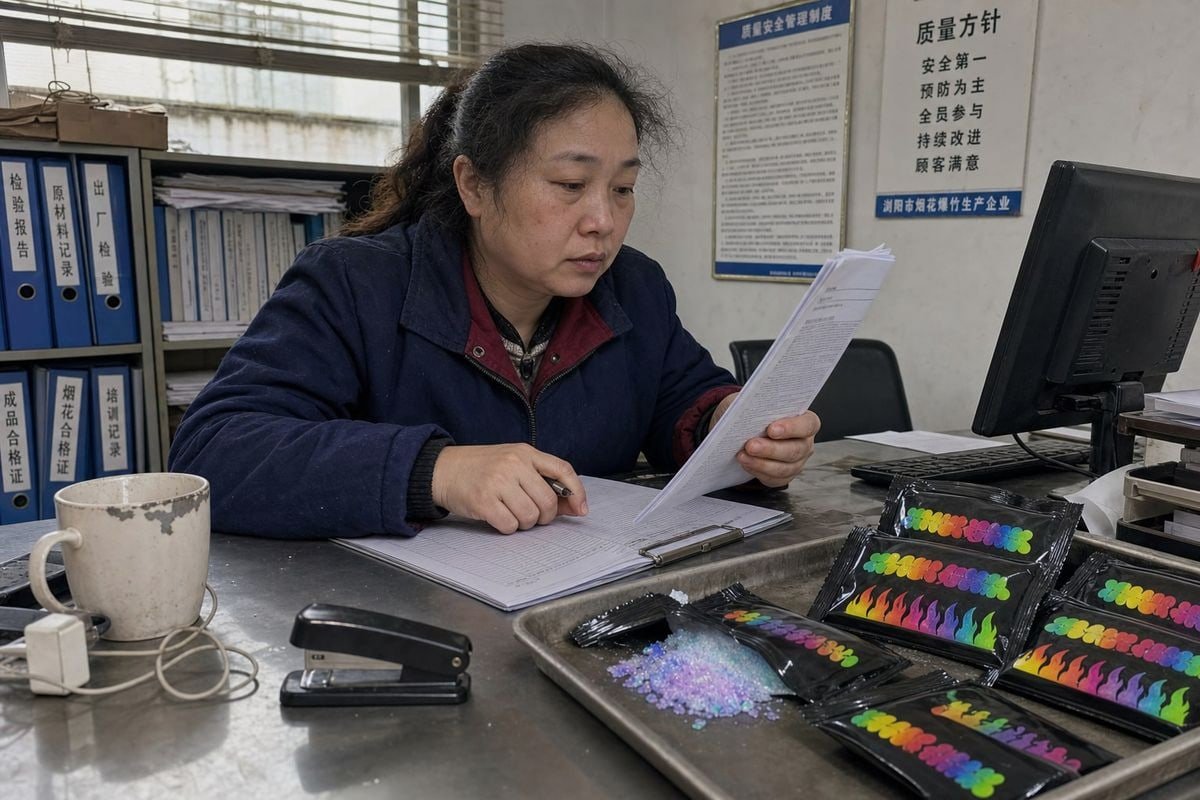
Every week, buyers ask our Liuyang factory the same worried question: how do I prove Magic Fire Powder actually meets chemical safety standards before customs or retailers reject it?
To verify Magic Fire Powder complies with chemical safety standards, request the current Safety Data Sheet (SDS), third-party lab reports from SGS or Intertek covering REACH, CPSIA, or EN requirements, heavy metal testing results, full metal salt composition disclosure, and GHS-aligned labeling that matches your target market's regulations.
That is the short answer. Below, I will walk you through each document, each test, and each red flag, step by step, based on what our compliance team handles every single day.
What certifications should I request to confirm compliance with international chemical safety standards?
A German distributor once told me he had lost an entire container at Hamburg port because his previous supplier's "certificate" was a self-issued PDF social compliance audit 1. That lesson shaped how our factory documents everything.
Request ISO 9001 for quality management, BSCI for factory audits, CE marking for European market access, and third-party test certificates from accredited labs like SGS or Intertek. Together, these prove the manufacturer's system, facility, and product all meet international chemical safety standards.

Certificates fall into three layers, and you need all three. Many buyers only check one layer and get burned later. Let me break the layers down.
Layer 1: Factory-level certifications
These prove the manufacturer runs a controlled, audited operation. ISO 9001 shows a documented quality management system 2. BSCI shows the factory passed a social compliance audit. Neither certificate is about the powder itself. But they tell you the supplier can produce consistent batches. In our 17+ years of exporting to 30+ countries, we have seen that suppliers without factory-level audits usually cannot keep batch-to-batch consistency either.
Layer 2: Product-level certifications
This is where CE marking 3 and product test certificates live. For color-flame products sold in Europe, CE documentation confirms the product meets applicable EU directives. In the US, ASTM D4236 certification matters if the product could be treated as a consumer craft or novelty item, because it confirms a toxicological risk assessment was performed on the formula.
Layer 3: Third-party verification
Self-declared compliance is not enough. Ask for reports issued directly by accredited labs. Then verify them.
| Certificate | What It Proves | Who Issues It | Red Flag If Missing |
|---|---|---|---|
| ISO 9001 | Quality management system | Accredited certification body | Inconsistent batch quality |
| BSCI | Ethical factory conditions | Amfori-approved auditors | Retailers may refuse listing |
| CE documentation | EU market conformity | Manufacturer + notified body evidence | Blocked at EU customs |
| SGS / Intertek reports | Actual chemical test results | Independent accredited lab | No proof of formula safety |
| ASTM D4236 | Chronic hazard evaluation (US) | Board-certified toxicologist | US retailer rejection risk |
Always cross-check the certificate number with the issuing body. SGS and Intertek both offer online verification portals. A genuine supplier will hand over report numbers without hesitation. When our sales team sends test reports, we include the lab's verification link in the same email. Any supplier who resists that simple step is telling you something.
Which lab test reports prove my Magic Fire Powder supplier meets REACH, CPSIA, or EN standards?
There is a trade-off we weigh constantly at our Ningbo production site: testing every new packaging variant costs money and time, but skipping a report for one market can freeze a buyer's entire launch.
Ask for a REACH SVHC screening report for the EU, a CPSIA report with heavy metal testing (especially total lead) for the US, and relevant EN standard test results. Each report must name the exact product, batch, and an accredited lab such as SGS or Intertek.

Different markets demand different paperwork. The same sachet of Magic Fire Powder needs a different evidence file for Frankfurt than for Chicago. Here is how the three main frameworks compare.
| Standard | Market | What the Lab Tests | Key Pass Criteria |
|---|---|---|---|
| REACH (SVHC screening) | EU / UK-adjacent | Substances of Very High Concern in the formula | Each SVHC below 0.1% w/w, or full disclosure |
| CPSIA | United States | Total lead, phthalates, heavy metals | Lead under federal limits; tracking label present |
| EN standards | EU consumer goods | Flammability behavior, labeling, mechanical safety | Product-category-specific thresholds |
| GHS / CLP SDS review | Global / EU | Hazard classification of the mixture | Correct GHS classification and hazard statements |
How to read the report itself
A real lab report has five things you should check line by line. First, the applicant and manufacturer names should match your supplier. Second, the sample description should match your actual product, not a vague category. Third, the test methods should cite recognized protocols. Fourth, the results table should show measured values against limits, not just "PASS" stamps. Fifth, the report date should be recent — REACH compliance reports older than two years may miss newly added SVHC substances, because the candidate list updates twice a year.
Watch for borrowed reports
A common trick in this industry is showing a genuine report that belongs to a different product. We have had buyers forward us competitor documents where the tested sample was a plain firestarter, not a color-flame powder at all. The metal salt composition 4 is what drives the flame colors, so a report that does not test those salts proves nothing. Match the sample photo and description inside the report to the powder you are actually buying.
How can I check that raw materials used in color-flame powder are free from banned or harmful chemicals?
During a raw material intake at our factory last spring, our QC team quarantined an entire pallet of colorant because the supplier's incoming SDS did not match the declared CAS numbers 5. That pallet never touched our production line.
Cross-check the SDS ingredient list and CAS numbers against banned substance lists, confirm heavy metal testing covers lead, arsenic, cadmium, and mercury, and verify no chlorates, perchlorates, or restricted metal salts appear. Then request batch-level raw material traceability from the manufacturer.

The marketing name "magic fire" tells you nothing about chemistry. Two products with identical branding can use completely different formulas. One might use safe, coated mineral pigments. Another might contain water-reactive metal powders that demand industrial handling controls. So you must audit the ingredients, not the label.
Start with the SDS ingredient section
Section 3 of any GHS-format Safety Data Sheet (SDS) lists ingredients with CAS numbers and concentration ranges. Take each CAS number and check it against three lists: the REACH SVHC candidate list 6, your national hazardous substance regulations, and any retailer-specific restricted substance lists. Big-box retailers often ban substances that are still technically legal.
Know the high-risk ingredient categories
Not every chemical name is a problem, but some categories deserve extra scrutiny in flame-colorant products:
| Ingredient Category | Example Concern | What to Verify |
|---|---|---|
| Oxidizers | Chlorates, perchlorates | Should be absent; check GMP controls against cross-contamination |
| Heavy metals | Lead, arsenic, cadmium compounds | Heavy metal testing report below regulatory limits |
| Reactive metal powders | Magnesium, zirconium dust | Water reactivity and dust explosion classification on SDS |
| Colorant metal salts | Copper, strontium compounds | Concentration levels and GHS classification of the mixture |
| Fine particulates | Respirable silica or dust fractions | Particle size data and dust exposure guidance |
Ask about combustion behavior too
A raw material can be legal on paper yet create harmful combustion byproducts when burned. Ask your supplier whether the formula has been evaluated for emissions during use, not just at rest in the sachet. Our own color-flame packets are built from eco-friendly materials specifically because our US and EU buyers demand a clean burn profile, and environmental safety standards increasingly look at what leaves the flame, not only what sits in the pouch. Residual ash matters as well — metal salt residues left on grates are exactly why quality suppliers print "not for cooking fires" warnings on packaging.
What documentation should I require from my manufacturer before importing color-flame products to my market?
A Canadian importer we onboarded two years ago sent us a documentation checklist longer than his purchase order. Honestly, I respected it — and today we send that same style of compliance pack to every new buyer before their first trial order ships.
Require the current SDS with correct GHS classification, third-party test reports matching your market, full ingredient disclosure with CAS numbers, transport classification documents, compliant warning labels, batch traceability records, and the manufacturer's ISO 9001 and BSCI certificates before importing.
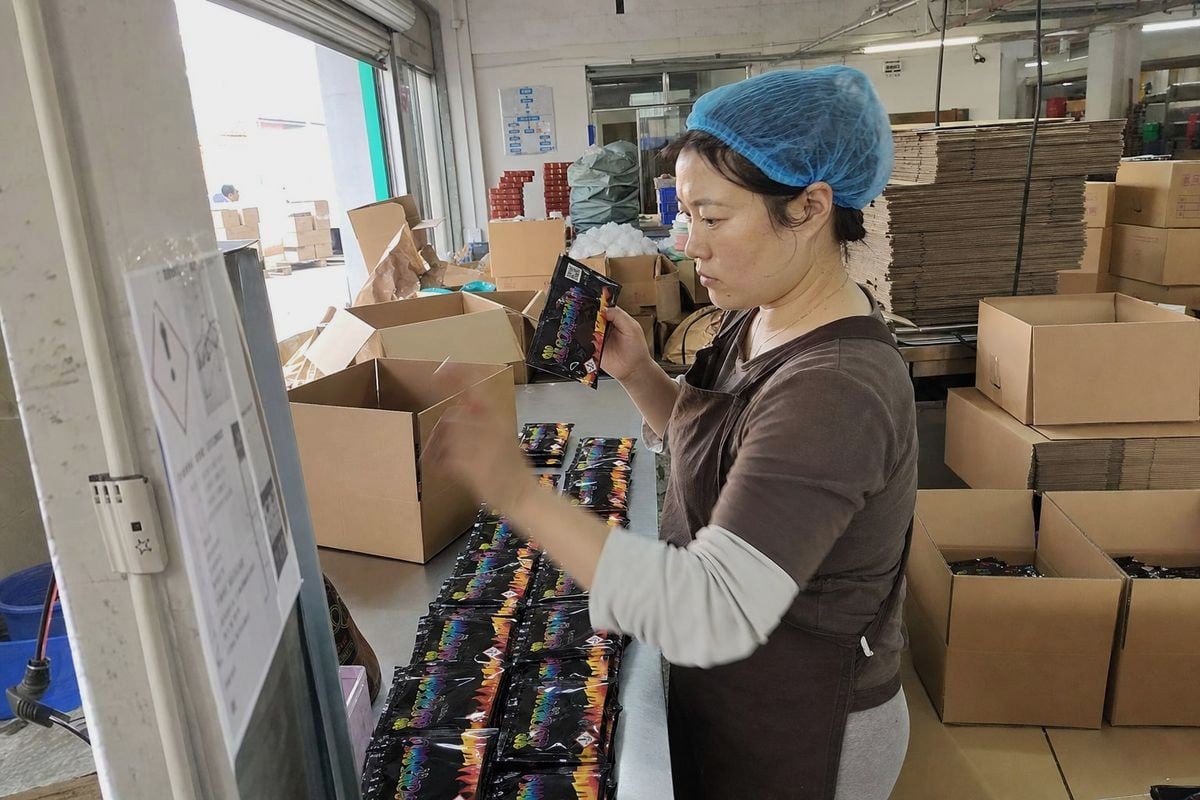
Think of your documentation file as insurance. If a customs officer, retailer auditor, or consumer safety agency ever questions your product, this file is what protects your business. Here is the sequence I recommend to every purchasing manager.
The seven-step documentation workflow
- Confirm exact product identity. Get the full product name, formula code, and batch numbering system in writing. Similar names hide different chemistries.
- Obtain the current SDS. It must show GHS classification, hazard statements, first-aid measures, handling, storage, exposure controls, and transport status. Check the revision date.
- Match test reports to your jurisdiction. REACH compliance evidence for the EU, CPSIA for the US, plus any EN or national standards your product category triggers.
- Verify transport classification. Confirm in writing whether the product is regulated as a flammable solid 7 under DOT/ADR rules or ships as non-dangerous goods. This affects freight cost, storage, and legality.
- Audit the label artwork. Warning text, pictograms, and precautionary statements 8 must match the SDS exactly. Inconsistency between label and SDS is a classic red flag inspectors look for. Statements like "do not breathe dust" or "keep away from children" should trace back to the SDS, not marketing whim.
- Secure batch traceability commitments. Your supplier should link every shipment to production records and raw material lots. This is where genuine manufacturing depth shows — trading companies usually cannot provide it.
- Collect factory certificates. ISO 9001 and BSCI copies with verifiable certificate numbers close the file.
Private-label buyers need one extra step
If you sell under your own brand, you become the responsible party in most markets. Confirm your manufacturer supports compliant private-label execution: correct warning labels in your market's language, barcodes, child-safety packaging considerations, and display-box artwork that carries the mandatory cautions. Our OEM team builds these elements into packaging design from day one, because fixing a non-compliant label after printing ten thousand boxes is painful for everyone. Also confirm who holds the technical file — for CE-marked goods in the EU, someone in the supply chain must be able to produce it on demand.
Conclusion
Marketing names prove nothing; documents do. Verify the SDS, third-party reports, ingredient disclosure, labels, and factory certificates before importing — and partner with manufacturers who volunteer that evidence upfront.
Footnotes
1. Official amfori page detailing the social audit standard for ethical supply chains. ↩︎
2. Authoritative Wikipedia entry for the ISO 9001 quality management standard. ↩︎
3. European Commission guide on CE marking requirements for products sold in the EEA. ↩︎
4. Wikipedia entry explaining how different metal salts produce specific flame colors. ↩︎
5. Official CAS registry information for identifying unique chemical substances and ingredients. ↩︎
6. Stable Wikipedia reference for substances of very high concern under REACH regulations. ↩︎
7. Official US government legal definition and classification for Class 4 flammable solids. ↩︎
8. OSHA overview of hazard communication standards including precautionary statements and labeling. ↩︎



 English
  Spanish
  German
  French
  Arabic
  Portuguese
Join the Conversation