







Preparing safety guidelines for staff shelving flammable wood fire starters is a question our buyers raise often OSHA 1910.106 1. One overlooked heat source or open carton can turn routine shelving into a real fire hazard — and after 17+ years producing wax-dipped wood firestarters, we have seen how simple written rules prevent that.
To prepare safety guidelines for staff shelving flammable wood fire starters, document the product's hazards from its Safety Data Sheet, train staff on ignition source control, store stock in cool, dry, labeled areas away from heat and oxidizers, and verify supplier compliance certificates before shelving.
That is the short answer. Below, I break each part down into practical steps you can adapt for your store or warehouse this week.
What safety documentation do I need before my staff start shelving wood fire starters?
A German distributor once told me his insurer refused coverage until he could show written storage procedures for our wood firestarters. That conversation shaped how we now brief every new buyer on documentation.
Before shelving begins, you need the product's Safety Data Sheet, a written shelving SOP, a fire hazard assessment of the storage area, GHS hazard labeling verification, an emergency response plan, and signed employee safety training records for every staff member handling stock.

Documentation is not bureaucracy. It is your defense when an inspector, insurer, or fire marshal walks in. Wood fire starters are designed to ignite easily. So regulators treat them as a combustible retail hazard, not a normal boxed item. Your paperwork must reflect that.
Start with the Safety Data Sheet
The SDS is the foundation of everything else. It tells you the flammable solids classification of the product, safe storage temperatures, incompatible materials, and firefighting measures. We supply SDS documents with every export shipment, because our US and EU buyers cannot legally stock the product without them. Read the SDS first. Then build your SOP around it, not the other way around.
Build the core document set
| Document | Purpose | Who Uses It |
|---|---|---|
| Safety Data Sheet 2 (SDS) | Defines hazards, storage limits, response steps | All staff, fire marshal |
| Shelving SOP | Step-by-step receiving, placement, replenishment rules | Warehouse and floor staff |
| Fire hazard assessment | Maps heat sources, sprinklers, exits near the display | Managers, insurers |
| Emergency response plan | Actions for damage, heat exposure, or ignition | All staff |
| Training log | Proof each employee was trained and signed off | HR, compliance auditors |
Check local code alignment
Your documents should reference the standards your jurisdiction applies. In the US, that usually means NFPA 30 standards 3 and OSHA 1910.106 for flammable material handling, plus local fire code limits on Maximum Allowable Quantities on the sales floor. Note in your SOP where cabinet storage or a dedicated stockroom becomes mandatory once floor quantities pass the threshold. Keep every document dated, version-controlled, and posted where staff can actually find it — not buried in a manager's drawer.
How can I train my warehouse team to handle flammable fire starter products safely?
During a factory audit in Ningbo, an Intertek inspector spent more time watching how our packing crew handled cartons than testing the product itself. Handling behavior, he said, causes more incidents than product defects. I agree.
Train your warehouse team through a documented program covering hazard awareness from the SDS, receiving inspections for damaged or leaking cartons, correct shelving technique, ignition source control, no-smoking rules, extinguisher locations, and emergency response steps — then verify understanding with sign-offs and refresher drills.

Good training is simple, repeatable, and enforced. Most fire incidents in retail storage start with a human shortcut — an open carton left near a heater, a pallet dragged across a live outlet, a cigarette break too close to receiving. Your program must target those behaviors directly.
Structure the training in stages
- Hazard briefing. Walk staff through the SDS. Explain that wax-and-wood-fiber products ignite readily and soften in heat. Keep it under thirty minutes.
- Receiving inspection. Teach staff to check every inbound carton for crush damage, wax leakage, missing GHS hazard labeling 5, and torn seals before it enters storage.
- Shelving practice. Demonstrate the approved shelf zone, stacking height limits, and the rule that cartons stay sealed until display.
- Ignition discipline. Cover no-smoking zones, non-sparking tool use, and keeping powered equipment away from the flammable bay.
- Emergency drill. Show extinguisher locations, isolation steps for damaged stock, and who to call. Run the drill, do not just describe it.
Reinforce and verify
Employee safety training fades fast without reinforcement. Require a signed acknowledgment after initial training. Schedule short refreshers quarterly. Add a five-minute flammables briefing to every new-hire onboarding. When we host buyer teams at our production site, we always stress this point: the first sample reflects mass-production quality only if handling stays consistent — and the same logic applies to shelf safety. Consistency beats intensity.
Common handling mistakes to warn against
Tell staff explicitly never to repack loose fire starters into unlabeled containers, never to store cartons on the floor near exits, and never to move stock closer to heaters to "dry it out" after moisture exposure. Each of these looks harmless and each raises real risk.
What storage and display precautions should I follow to reduce fire risk on the shelf?
Shelf placement is where I see the widest gap between buyers. Some of our US retail clients run dedicated flammables bays with floor markings; others, early on, shelved firestarters beside space heaters in the seasonal aisle. Only one of those setups survives a fire inspection.
Store wood fire starters in a cool, dry, well-ventilated area away from sunlight, heaters, and electrical fixtures; keep them in sealed, clearly labeled original packaging; separate them from oxidizers and aerosols; limit stacking height; maintain sprinkler clearance; and keep exits and aisles unobstructed.

The strongest storage guidance is remarkably consistent: cool, dry, ventilated, labeled, separated, and closed. Everything below is a practical expression of those six words.
Placement rules that matter most
| Rule | Specification | Why It Matters |
|---|---|---|
| Temperature control | Away from sun, heaters, water heaters, hot lighting | Wax-based starters soften and become easier to ignite when warm |
| Separation from incompatibles | Keep oxidizers and aerosols well apart — common SDS guidance cites 20 ft or a 5 ft fire-resistant barrier | Prevents a small fire from escalating fast |
| Sealed packaging | Original cartons or clearly labeled sealed containers only | Loose fibers ignite faster and confuse hazard identification |
| Stacking height | Keep stacks low and stable, well below sprinkler heads | Protects fire suppression systems 6 and prevents toppling |
| Dedicated zone | One bay or shelf section for fire-starting products | Simplifies audits, quantity tracking, and staff behavior |
| Egress clearance | Never block exits, aisles, or extinguisher access | Required by fire code and critical in an emergency |
Housekeeping is a fire control, not a chore
Cardboard inserts, shrink wrap, and broken pallets are fuel. Remove packing waste from the shelving zone immediately after restocking. Some retailers enforce a zero-combustible buffer around the flammable bay with high-visibility floor markings, which stops staff from staging temporary pallets there. Keep suitable extinguishers within easy reach, and confirm your fire suppression systems have the required clearance above the highest stored carton.
Watch quantity thresholds
Track how much product sits on the sales floor. Hazardous material storage rules cap non-cabinet quantities, and once you approach the Maximum Allowable Quantities for your occupancy type, excess stock belongs in an approved cabinet or a separate stockroom. Some larger operations now tie inventory software alerts to those thresholds — a simple, effective control.
Which compliance certificates should I request from my supplier to support my staff safety guidelines?
Certificate requests are usually the first email we receive from a new purchasing manager, often before pricing. That ordering of priorities is correct, and after exporting to 30+ countries, I can confirm that customs, insurers, and retail chains all ask for the same core paperwork.
Request an up-to-date Safety Data Sheet, third-party test reports from labs such as SGS or Intertek, CE documentation for EU markets, the supplier's ISO 9001 quality certification, BSCI social audit results, and GHS-compliant labeling artwork — all matched to the exact product batch you are buying.
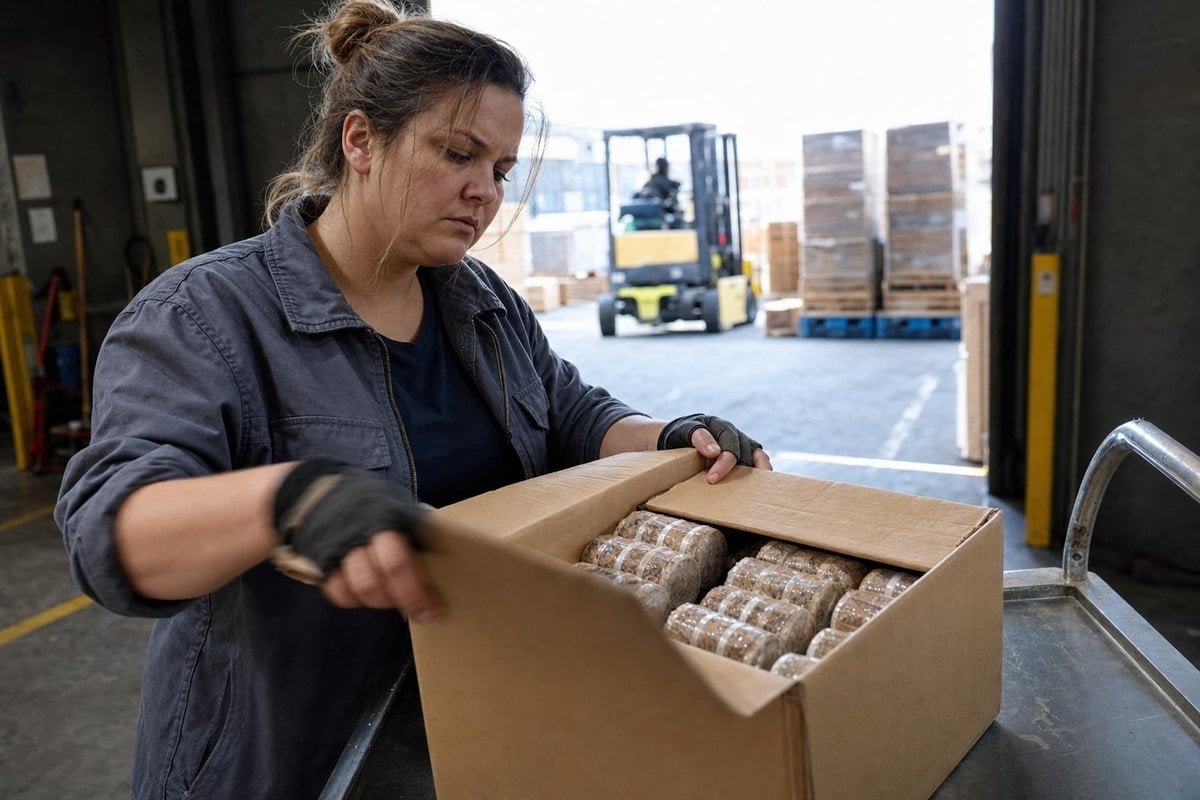
Your internal safety guidelines are only as strong as the supplier documents behind them. If the SDS is generic, outdated, or borrowed from a different product, every downstream procedure inherits that flaw. So verify, do not assume.
The core certificate set
| Certificate / Document | What It Proves | Red Flag If Missing |
|---|---|---|
| Safety Data Sheet | Hazard classification, storage, emergency data | You cannot write a compliant SOP without it |
| SGS / Intertek test reports | Independent verification of composition and burn behavior | Claims rest on the supplier's word alone |
| CE documentation | EU market conformity where applicable | Customs delays and retail delisting risk in Europe |
| ISO 9001 7 certificate | Consistent quality management across batches | First sample may not match mass production |
| BSCI audit report | Ethical, audited production conditions | Reputational risk for your retail brand |
| GHS labeling artwork | Correct hazard pictograms and warnings on packaging | Staff and customers misjudge the hazard |
How to verify, not just collect
Ask for certificate numbers and check them with the issuing body. Confirm the SDS matches the actual composition — for our wax-dipped wood rolls, that means wood fiber and paraffin, stated plainly. Request batch-level traceability so a damaged shipment can be tied back to a production date. At our factory in Ningbo, we maintain batch QC records precisely because our long-term buyers audit them; a supplier who resists this level of transparency is telling you something. Finally, ask whether the supplier can print your required warning labels, barcodes, and market-specific hazard text directly on the retail packaging. Shelf-ready compliance saves your team relabeling work and removes a common labeling failure point from your own warehouse.
Conclusion
Safety guidelines for staff shelving flammable wood fire starters come down to five habits: label it, separate it, keep it cool, keep it closed, and train every hand that touches it.
The risk is real but entirely manageable. A missing SDS, an open carton beside a heater, an untrained temp worker — any of these can undo years of careful retailing. Yet the fix is inexpensive: written documentation, verified employee safety training, disciplined shelf placement, and supplier certificates you have actually checked. In our years supplying wood firestarters and color-flame products to distributors across the US and Europe, the buyers who formalize these rules early are the ones who pass audits, satisfy insurers, and reorder with confidence. Start with the SDS, build the SOP, train the team, and demand full compliance paperwork from every supplier — including us.
Footnotes
1. Direct government regulation on flammable material handling mentioned in the text. ↩︎
2. Defines the core document standard referenced throughout the article's safety guidance. ↩︎
3. Official NFPA landing page for the Flammable and Combustible Liquids Code. ↩︎
4. OSHA program requiring SDS access and training for employees handling hazardous stock. ↩︎
5. Explains the international labeling system referenced multiple times for hazard communication. ↩︎
6. Background concept on sprinkler clearance and



 English
  Spanish
  German
  French
  Arabic
  Portuguese
Join the Conversation